For partners
The first adaptation programs for foreign schoolchildren appeared in the middle of the 20th century as a response to the growth of international migration and the development of the global educational space. Schools, especially in English-speaking countries, faced a new reality: children who spoke dozens of languages and grew up in different cultural traditions could study in the same class. It became clear that conventional teaching methods were not enough – a child who found himself in a different linguistic and social environment needed special support.
Thus, in several countries, adaptation programs for foreign children gradually appeared - a system of pedagogical, psychological and social measures aimed at ensuring that the child could be fully included in the educational process and school life. Today, such programs operate in almost all countries where there are international or private schools that accept students from abroad, their presence has become a sign of the maturity of the educational institution and its ability to work in a multinational environment, where not only the quality of knowledge is important, but also concern for the well-being of the student.


How adaptation programs appeared
The origins of modern adaptation programs are associated with the processes of post-war migration and the expansion of international exchange in the field of education.
In the 1950s and 1960s, the United Kingdom, the United States, and Canada began to accept significant numbers of children from families that had moved for economic or political reasons. For most of them, learning in a new language turned out to be a serious test: the child could know the subject well, but not understand the terms, educational formats and even the rules of behavior in the lesson.
The first steps towards solving this problem were made by US public schools - it was there that special language classes appeared for students who do not speak English. However, it soon became clear that language was only one side of adaptation: children needed support to help them navigate the new culture, build relationships with classmates, and feel confident.
At the same time, the British boarding school system developed its own model.
The traditional arrangement of dividing students into "Houses" (or faculties, as in Harry Potter), where everyone is under the care of an educator and senior mentors, has become a natural basis for the adaptation of foreign students. Here the attention was paid not so much to the language as to the gradual inclusion in the team, the cultivation of independence and respect for the general rules.
In the 1970s and 1980s, similar approaches began to develop in Canada and Western Europe. In Germany, preparatory classes for migrant children appeared, in France - special centers at lyceums, where the language and the basics of the country's culture were taught. Gradually, adaptation mechanisms became more and more complex: curators, psychologists, social pedagogues working with the child and his family appeared in schools. By the beginning of the XXI century, the idea of adaptation was finally consolidated as an obligatory part of the educational process. International schools working with multinational classrooms have included specialists in intercultural communication, and universities have included courses for teachers who teach how to work with children from different countries.
Comparison of approaches in different countries
United Kingdom

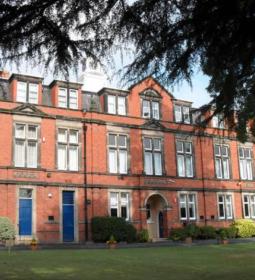
The British education system was one of the first to develop a sustainable model for the adaptation of foreign students. It is based on the structure of classical boarding schools, where educational work has always played no less a role than educational work. Each student belongs to his own "Home" - a small community with its own mentors, senior students and an educator responsible for the life, education and emotional state of the wards. This format has proven to be especially effective for foreign children: from the first days, they find themselves in an understandable, predictable and caring environment.
In addition, the UK has a developed institution of guardians - adult family members living in the country. The guardian solves household issues, contacts the school and accompanies the child during the holidays.
Most schools hold introductory weeks with field trips, language and cultural orientation classes. Flexible forms of support are used in the educational process: additional English lessons, the help of assistants in subject classes, tutor meetings. The philosophy of the British approach is based on a combination of discipline and personal attention. School not only teaches: but also fosters self-confidence, accustoming the student to order and responsibility.
North America: USA and Canada
The American model is diverse and flexible.
Each state and even each school district has its own rules, but the general principles remain the same: individualization, support for the individual, and encouragement of self-reliance.
Before starting education, a foreign student undergoes diagnostics - tests in language, reading and mathematics. Based on this data, the school draws up an individual plan: which subjects are temporarily studied in a simplified format, which require additional support. Many schools have special English as a Second Language (ESL) programs, and they do not isolate the child (as many people think), but include him in the general educational process.
In addition to language assistance, much attention is paid to the psychological state: counselors work in schools to help cope with anxiety, fatigue, and cultural barriers. The system of extracurricular activities — sports, theater, volunteering — is also seen as an important part of adaptation: it helps the child to establish connections with classmates and feel part of the community.
The American philosophy of adaptation is expressed simply: everyone has his own path and his own time. The main task of the school is to create conditions under which the child can show his abilities without feeling pressure and comparison with others.
The Canadian system of adaptation largely adopted American ideas, but developed them in a softer and more socially oriented way. Almost all public schools that accept foreign students have international departments responsible for accompanying children and interacting with families.

The most important feature is living with host families. This is part of the educational model: schoolchildren learn the language in the natural environment, master everyday culture, and participate in the life of the local community.
Canadian adaptation policy is based on the idea that success is possible only in an atmosphere of trust. Here they try not to push, giving time to get used to it, to feel stability and confidence.
Switzerland
The Swiss model of adaptation is unique in that it initially developed in a multilingual environment: in different cantons, the official languages are German, French, Italian and even Romansh, so the issue of including children who speak another language was relevant long before the emergence of international schools.
In Swiss boarding and private schools, adaptation is built into the very structure of the educational process. Newcomers go through an introductory semester, during which they learn the language, get acquainted with academic terms and the peculiarities of the local culture. Each student is assigned a mentor - a curator who monitors academic performance and daily life.
The educational philosophy of Switzerland is based on a combination of rigor and care. The day is scheduled by the minute: study, sports, independent work, rest - a clear routine reduces anxiety and creates a sense of stability.
Cultural adaptation goes through an educational system: etiquette classes, discussions, school projects, where children learn to respect differences and take a different point of view.
The Swiss approach can be described as care clothed in bureaucracy: discipline, brought to habit, becomes a pillar for inner peace.
France
In the French education system, the adaptation of foreign students is seen primarily as cultural inclusion. They are convinced that successful learning is possible only with an understanding of the language as part of national identity, which is why temporary intensive French classes (classes d'accueil) are created in lycées and colleges for new students. Learning in them is built not so much around grammar as around the ability to think and speak "in French": build reasoning, participate in debates, write essays. When the level of language proficiency reaches the required level, the child gradually moves to a regular class.
The French model focuses on social and cultural integration: students are explained how school life works, what kind of relationship is accepted between teacher and student, and what is considered the norm of behavior.
In addition, schools actively involve foreign students in cultural events - theaters, excursions, projects.

Germany
The German system of adaptation was formed under the influence of large-scale migration flows. Each federal state has its own support programs for foreign students, but the general principles remain.
Preparatory classes (Willkommensklassen) are set up for children who do not speak German, where they learn the language and learn about the studying standards. After a few months, after reaching the required level, the child is gradually transferred to a regular class, but at the same time retains support in language and subjects.
German schools pay great importance to the independence of the student: teachers help only at the beginning, then the child is offered to solve problems and make decisions on his own. This is how a sense of responsibility is formed, which is important for integration into the school and social community.
Since the 2010s, integration centers under the ministries of education have been operating in large states: they bring together teachers, psychologists and social workers who accompany not only the child, but also the family – from paperwork to the participation of parents in the life of the school.
UAE
There are already more than 500 international schools in the Emirates, where foreigners make up the majority of students, so adaptation here is not an exception, but an everyday practice. The process begins even before the family arrives: online meetings, acquaintance with the program, explanation of cultural norms. After arrival, introductory weeks and English classes are held; Each child is assigned a curator or a senior mentor.
A distinctive feature of the Middle East approach is family involvement: parents are invited to participate in meetings and school initiatives, creating an atmosphere of trust and respect. Adaptation is considered as a joint work of the school, the child and parents.

What does adaptation say about school?
Adaptation programs have long ceased to be an auxiliary element of the educational process — in a multinational environment, it is adaptation that determines how ready an educational institution is to work with cultural diversity and build trust. The experience of different countries shows that approaches may vary, but the goal is always the same – to help the student go from confusion to confidence. The British school relies on order and guardianship, the American school on an individual plan, the Canadian school on an atmosphere of care, the Swiss school on discipline, the French school on culture, the Asian school on results, the Australian school on internal balance, etc.
Different models reflect not only pedagogical traditions, but also the way of thinking of the society in which they arose. A good school does not measure adaptation by the speed of language acquisition or grades in a diary.
The main result is when the child begins to perceive himself as part of the school world, and not as an accidental guest.