

Best universities in England UK 2027
- How to apply to UK universities?
- Advantages and Disadvantages in British universities
- Internships at the Top 100 UK Universities
- How to Choose University from the UK's Top 100
- Best universities in the United Kingdom
- Why choose a UK universities?
- Programs and Subjects at UK universities
- Visa requirements to universities in UK
- Universities in the United Kingdom. Tuition cost for foreign students
- Visa requirements to universities in UK
- Accommodation at universities in the UK
- Literature and references
This content was developed and approved with active participation of Juliet Thondhlana.
In the process of preparing the material, we referenced the following sources:
- https://en.wikipedia.org/wiki/Education_in_England
- https://www.thecompleteuniversityguide.co.uk/student-advice/what-to-study/types-of-degrees-uk.
-
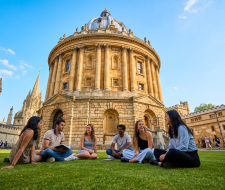 from 4000.00 £ / 3 weeks
 -
 Awarding body of University of the Arts London and Trinity College London
United KingdomCambridgeCurrently watching: 6from 14707 £ / semester
Awarding body of University of the Arts London and Trinity College London
United KingdomCambridgeCurrently watching: 6from 14707 £ / semester -
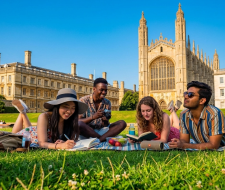 from 2100.00 £ / semester
 -
 #45 in the world
United KingdomLondonCurrently watching: 9from 4150.00 £ / term
#45 in the world
United KingdomLondonCurrently watching: 9from 4150.00 £ / term -
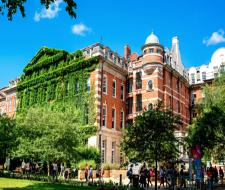 #40 in the world
United KingdomLondonCurrently watching: 8from 4000.00 £ / term
#40 in the world
United KingdomLondonCurrently watching: 8from 4000.00 £ / term -
 #2 Business School in Europe
United KingdomLondonCurrently watching: 7from 33600.00 £ / year
#2 Business School in Europe
United KingdomLondonCurrently watching: 7from 33600.00 £ / year -
 from 15220.00 £ / year
 -
 from 29500.00 £ / year
 -
 from 19690.00 £ / year
 -
 from 2100.00 £ / 6 weeks
British universities are recognized worldwide for higher education and are popular with international students. In the 2024/25 academic year, UK higher education institutions had 685,565 international students, representing 23.9% of all higher education students in the country. The share ranges from 14.6% in Wales to 25.7% in Scotland. At some individual universities in Great Britain, non-residents account for almost 90% of students. A degree from a UK university can support career development, with opportunities to gain practical experience at partner companies.
SMAPSE experts have prepared a list of TOP-100 universities in Great Britain where international students can pursue higher education.
Alternative destinations
How to apply to UK universities?
To enter one of these prestigious universities in Great Britain, foreign students need more than just the conventional documentation. They also require specific language and academic qualifications.
Required Documents Include:
- A copy of a passport or ID card,
- Bachelor’s degree applicants: A school certificate and taking either the Foundation program or the International Year One program,
- Master's degree applicants: A bachelor's degree diploma and, where necessary, completion of the pre-Masters program,
- An IELTS certificate acquired no more than 2 years before the application is submitted,
- Recommendation letters, typically from teachers of English and mathematics. For master's applicants, recommendations may also be sought from school principals or university deans,
- A comprehensive motivation letter,
- An online interview or an in-person meeting at the chosen educational institution.


What difficulties can await foreigners who have entered a British university?
Basically the same as everyone who moves to a new country! You can miss home, it will be difficult to adapt to a new place, language and culture, the style of teaching in the UK may seem unusual.
However, British universities are aware of these problems and are doing everything possible to help foreigners get used to it!
- At Suffolk University, we have an airport pick-up service and an introductory international week to help with adaptation. Then you will be waiting for special events where you will get to know each other and find new friends,
- Most universities have special staff responsible for caring for students,
- Most student unions include international society and sometimes national communities,
- Official social media often has "rookie groups" that can be joined before leaving your country – there you'll find plenty of advice on how to adapt more easily in the UK.
Usually the most difficult time is the first semester, and then you already adapt well and get used to it.
Advantages and Disadvantages in British universities
The top 100 UK universities, located across England, Scotland, and Wales, offer several advantages for international students. Beyond the undeniable international acclaim of Cambridge and Oxford, degrees from many other UK universities are valued by employers worldwide. Here's what studying in the UK can offer:
- Global Recognition: UK universities have an impressive global standing,
- Efficiency: Shorter program durations in the UK translate to reduced education and accommodation expenses,
- Skill Development: Enhance English language skills, amplifying employability prospects,
- Flexible Learning: Emphasis on student-teacher interactions, with the flexibility to integrate various subjects into one course,
- Financial Aid: A majority of UK universities provide scholarships and other financial aid options for foreign students, assisting with academic and living costs,
- Research Facilities: UK universities provide facilities for academic research,
- Cost Optimization: The top 100 UK universities often present opportunities for cost savings to international students, including eligibility for specific grants, contingent upon academic, professional, creative, or sports achievements.

UK universities combine historic libraries with modern laboratories.
Studying in British universities also involves some challenges:
- Compulsory pre-university preparation. To enter a Bachelor's program, make sure to meet certain requirements of educational institutions. For successful enrollment, it is necessary to attend one of the programs: A-Level, International Baccalaureate, Foundation program or International Year One. Preparatory courses can mean an extra year before a bachelor's program and additional tuition costs,
-
Employment and immigration requirements. According to British legislation, employment in a licensed company is required if you want to be issued a work visa. If there are equal qualifications, UK residents receive priority in employment. The Graduate Route launched in 2021. After completing studies, graduates can stay in the UK to look for a job through this route. A Graduate visa allows staying for 2 years if the application is submitted on or before 31 December 2026, or 18 months if submitted on or after 1 January 2027. Holders of a PhD or other doctoral qualification can stay for 3 years.
Internships at the Top 100 UK Universities

During their academic higher education in the United Kingdom journey, students at the best universities in England are encouraged to undertake internships. This hands-on experience, both on campuses and in partner organizations, is pivotal for gaining real-world skills in their chosen fields.
Benefits of Undertaking an Internship:
-
Enhances and complements academic studies.
-
Bolsters employability.
-
Enhances CV strength.
-
Develops a global skillset.
-
Increases confidence and skills in a professional setting.
How to Choose University from the UK's Top 100

Selecting from the top universities in the UK is no small feat. While universities in UK fees play a significant role in decision-making, other factors are equally crucial. To begin, identify the desired field of study and match academic qualifications with university requirements. Considering the university's location is also vital, given the varying cost of living across regions.
Although cost is a defining factor in England university ranking selection process, solely focusing on it can be misleading. Overemphasis on price may overshadow other essential factors, possibly diminishing the education's overall value. SMAPSE experts suggest thorough research and are available for personalized consultations.
Best universities in the United Kingdom
The UK is home to top universities, many of which occupy positions in the top 100 ranking. According to their foundation era, they can be categorized into five primary groups, each holding its unique traditions.
Ancient Universities: These institutions, founded before the end of the 16th century, are renowned worldwide. They have unique traditions and structures, making them distinct. Notable mentions include:
-
University of Oxford (1117),
-
University of Cambridge (1209),
-
University of St Andrews (1413),
-
University of Glasgow (1451),
-
University of Aberdeen (1495),
-
University of Edinburgh (1583).


Red Brick Universities: These universities, established pre-World War II, are anchored in industrial hubs and lean towards practical training. The term "Red Brick" comes from their distinct architectural style. The following prestigious universities are listed:
- University of Liverpool,
- University of Bristol,
- University of Sheffield.

Plate Glass Universities: Established in the 1960s, these institutions brought a new approach to British higher education. The name originates from their architectural preference for large glass sheets.
New Universities: While these institutions have existed for a while, they only received university status in 1992. Before this, they functioned as colleges. The Further Education Act granted them equality and state funding.
Recently Created Universities (2005): This category includes former colleges where students primarily earned bachelor's degrees.

The top UK universities include:
- University of East Anglia,
- University of Surrey,
- University of Kent.
Why choose a UK universities?

Navigating the list of universities in Great Britain can be a difficult process, taking into account the rich academic landscape. If you are interested in entering one of the top universities in the UK, please use this comprehensive guide for making an informed decision:
- Know Your Options: Explore the profiles, specializations, and programs of various UK universities. Narrow down the list of educational institutions to those, which align with the student's goals.
- Consult Renowned Rankings: Refer to reliable UK university ranking sources like "The Complete University Guide" and "The Times Subject Tables" to gauge the institutions' standings.
- Location Matters: Make a choice of a university location, which is convenient for you, considering factors like accessibility, travel costs, and personal preferences.
- Research Facilities and Opportunities: Investigate the resources, research infrastructure, and opportunities each university provides to its students. A solid academic and material foundation can enhance your learning experience.
- Policies for International Students: Understand the university's stance on international students. Learn about available scholarships and financial aid options, which can be awarded for an educational course you choose.
-
Quality Assurance Checks: Review the outcomes of official audits by the Quality Assurance Agency for Higher Education. This provides insights into the university's adherence to academic excellence.
-
Entry Requirements: Familiarize yourself with the admission criteria, especially for international students. Determine if you require any additional preparatory courses to study in the UK.
- Budgeting and Fees: Analyze universities in UK fees for your chosen course and any supplementary programs. Ensure the costs align with your budget.
- Comfortable Living: Investigate the living conditions in university residences. Understand their accommodation policies and the amenities they offer to ensure a comfortable stay during your academic journey.
Remember, while rankings and fees are essential, your personal preferences, career aspirations, and comfort should also play significant roles in your final decision.
Programs and Subjects at UK universities
To obtain higher education in Britain, prospective students should enroll in a Bachelor's degree. Studying under almost all bachelor’s programs lasts for 3 years. Medicine and architecture are excepted.
Upon graduation from the Bachelor program, alumni are awarded various qualifications, which are stipulated by the direction of the studying: Bachelor of Arts, Bachelor of Science, Bachelor of Education, Bachelor of Engineering or Bachelor of Laws.
To become a Master in the UK, applicants can enter academic programs and postgraduate courses with an emphasis on practice. .Typically, the duration of studying is 1 year. Types of Master's qualifications are divided in the following types:
- Academic master’s degrees. Under these programs, in-depth studying of disciplines, which were chosen at the Bachelor program, is provided. These programs are designed for developing academic and professional careers.
- Professional master’s degrees stipulate a narrow specialization. During studying, students acquire the professional skills for developing future careers, which often stipulates subsequent employment. This can also include postgraduate retraining courses, providing you with the opportunity to change your specialty.
The doctoral degree (PhD, DPhil) is the final stage in the British higher education system. There are PhD programs in all disciplines. The period of studying is usually 3 years, during which students do their own research, consult with a supervisor, publish articles, participate in conferences, and sometimes teach for bachelors. At the final stage, they will write a dissertation followed by an oral defense. In some cases (4-year PhD Program, Wellcome Trust Four year PhD scheme), doctoral programs are complemented by training courses, which increases the duration of study to 4 years.
Visa requirements to universities in UK
Applying for a student visa in the United Kingdom requires a Confirmation of Acceptance for Studies (CAS) from a higher education institution. All visa documents must be translated into English and notarized. A student visa allows international students to work up to 20 hours per week during their studies and full-time during vacations.
In addition to the general documents, a student visa application requires:
- Bank statement — £1,529 per month is required for studies in London (the City of London and the 32 London boroughs) and £1,171 per month outside London. The money should cover up to 9 months and be held in the account for at least 28 consecutive days, ending within 31 days of the application date. Additionally, the amount to be paid for one academic year at the university is indicated. You will find this information in the Confirmation of Acceptance for Studies (CAS), sent to you upon enrollment,
- Students under 18 must provide parental consent and a birth certificate to travel and live abroad.
Master's and PhD students may require an ATAS certificate. This is a document about the applicant's previous education and work experience.
Universities in the United Kingdom. Tuition cost for foreign students
The tuition fees at the best universities in Britain range from £ 10,000 to £30,000 per academic year (for medicine and interdisciplinary areas). The cost of studying may range, which is stipulated by the level of the educational institution, its ranking and specialization. For example, highly ranked universities among which are Oxford and Cambridge are more expensive than others.
Pay attention that tuition prices may change over time, so students should check the current cost of studying in advance. Also, foreign students are required to consider extra expenses, which include accommodation, meals, textbooks, and medical insurance. Accommodation costs vary widely, which is stipulated by the region of the university location and the certain conditions of living chosen by a student.
Deciding on study in Great Britain, foreign students should consider extra costs concerning visa application, air tickets, attending preparatory or language courses. Most British universities provide scholarships and other types of financial aid to foreign students. Awarding a scholarship allows to partly compensate for tuition fees. International students are also allowed to engage in part-time work on or off campus. As a result, they can partly compensate for tuition and accommodation costs.
Visa requirements to universities in UK
Deciding on education in Britain, students are required to obtain a visa. Prior to submission of documents, applicants should ensure compliance with the university requirements.
Prospective students aged 16 and above, wishing to enter British universities and attending a program with duration over 11 months, apply for a visa. It is a compulsory stage while entering university. Pay attention that the educational institution must be listed in the official register. Applicants can choose either programs, stipulating an academic degree or courses without it. Much attention is paid to the form of studying, from 15 hours of classes per week.
To obtain a student visa, it is required to prepare the package of documents, namely:
- Account statement — USD 1,490 per month for obtaining education in the British capital and USD 1,344 outside it. The amount should be enough for 9 months. Additionally, you need to have a sum, which is enough for paying studies during one academic year at the university. It will be indicated on the Confirmation of Acceptance for Studies (CAS), which the student will receive when enrolling;
- For students aged below 18 years of age: parental consent to travel and live abroad, birth certificate.
Master's and PhD students may require an ATAS certificate. This is a document concerning education in native country and work experience.
The condition for issuing a student visa stipulates obtaining a score of 70 points established by the Student route points-based system. Points are awarded according to three criteria:
- Admission to a university — 50 points are given for it;
- Confirmation of financial viability — 10 points;
-
English language at the B2 level is 10 points.
Accommodation at universities in the UK
If your chosen university has dormitories, living there can help you meet other students and settle into a new cultural environment. Rooms for international students often include standard furniture such as a bed, a desk and a chair.
This is a less expensive alternative to private housing and is easier for international students to arrange. British higher educational institutions often guarantee a dorm room for freshmen.
Accommodation prices depend on whether you choose a separate room or a shared apartment, and whether you want a room with a bathroom or a studio.
When students choose private renting instead of a dormitory, the budget depends heavily on the city. A one-bedroom apartment in a city center costs around £1,008 per month, while the same flat outside the center averages £821. For those sharing, a three-bedroom apartment in a city center runs about £1,651 per month and roughly £1,326 outside the center, so splitting the rent with flatmates noticeably reduces the cost per person.
Beyond rent, a single person spends about £831.7 per month on everyday living, while a family of four needs around £2,882.5 (both figures exclude rent). Basic utilities for an 85 m² flat add about £242 per month, broadband internet about £32 and a mobile plan with 10 GB or more around £13. A monthly public transport pass costs roughly £75.
Day-to-day spending is easy to estimate too. An inexpensive meal out is about £16, a three-course dinner for two at a mid-range restaurant around £65 and a cappuccino about £3.57. For self-catering, a liter of milk costs around £1.25, a 500 g loaf of fresh bread about £1.26, twelve eggs roughly £3.05 and a kilogram of chicken fillets about £6.72. For reference, the average net monthly salary in the UK is close to £2,467, which helps put these living costs into perspective.
General statistics on education in the UK-ratings, specializations, universities
Top 50 best universities in the UK 2027
| 1 | Cambridge |
| 2 | Oxford |
| 3 | St Andrews |
| 4 | London School of Economics |
| 5 | Imperial College London |
| 6 | Loughborough |
| 7 | Durham |
| 8 | Lancaster |
| 9 | University of Bath |
| 10 | East Anglia (UEA) |
| 11 | University College London |
| 12 | Warwick |
| 13 | Exeter |
| 14 | Birmingham |
| 15 | Bristol |
| 16 | Edinburgh |
| 17 | Leeds |
| 18 | Manchester |
| 19 | Southampton |
| 20 | Glasgow |
| 21 | King's College London |
| 22 | Nottingham |
| 23 | York |
| 24 | Newcastle |
| 25 | Royal Holloway, University of London |
| 26 | East Anglia (UEA) |
| 27 | Aberdeen |
| 28 | Queen's University Belfast |
| 29 | Sheffield |
| 30 | Heriot-Watt |
| 31 | Cardiff |
| 32 | Dundee |
| 33 | Swansea |
| 34 | Liverpool |
| 35 | Surrey |
| 36 | Queen Mary, University of London |
| 37 | SOAS University of London |
| 38 | Leicester |
| 39 | Reading |
| 40 | Sussex |
| 41 | Essex |
| 42 | Harper Adams University |
| 43 | Aston |
| 44 | University for the Creative Arts |
| 45 | University of Stirling |
| 46 | Nottingham Trent |
| 47 | Kent |
| 48 | Arts University Bournemouth |
| 49 | Oxford Brookes |
| 50 | Lincoln |
Higher education in UK-statistics
| Name | Bachelor |
|---|---|
| Deadline | March |
| The probability of admission | 63% |
| Duration | 3-4 years |
| Average cost | £15,000 |
| Expulsion statistics | 21% |
| Language of tuition | English |
| Minimum level of English | IELTS 6.5 |
| Job opportunity | 30% |
| Percentage of students enrolled in the master's program | 47% |
Best accounting and finance universities in Britain 2027 | Complete University Guide
|
Rank |
Institution |
|---|---|
| 1 | London School of Economics and Political Science, University of London |
| 2 | University of Bath |
| 3 | University of Warwick |
| 4 | University of Leeds |
| 5 | Queen's University Belfast |
| 6 | University of Manchester |
| 7 | University of Exeter |
| 8 | Lancaster University |
| 9 | University of Glasgow |
| 10 | City St George's, University of London |
| 11 | Loughborough University |
| 12 | King's College London, University of London |
| 13 | University of Liverpool |
| 14 | University of Birmingham |
| 15 | University of Strathclyde |
| 16 | University of Sheffield |
| 17 | Durham University |
| 18 | University of Nottingham |
| 19 | The University of Edinburgh |
| 20 | University of Bristol |
| 21 | Cardiff University |
| 22 | University of Southampton |
| 23 | University of Aberdeen |
| 24 | Newcastle University |
| 25 | University of Dundee |
| 26 | University of Surrey |
| 27 | Heriot-Watt University |
| 28 | Aston University, Birmingham |
| 29 | University of East Anglia UEA |
| 30 | University of Reading |
| 31 | University of Leicester |
| 32 | Ulster University |
| 33 | Swansea University |
| 34 | University of Stirling |
| 35 | Queen Mary University of London |
| 36 | University of Sussex |
| 37 | SOAS University of London |
| 38 | Nottingham Trent University |
| 39 | Royal Holloway, University of London |
| 40 | University of Portsmouth |
| 41 | Aberystwyth University |
| 42 | University of Kent |
| 43 | Liverpool John Moores University |
| 44 | Northumbria University, Newcastle |
| 45 | University of Chester |
| 46 | Glasgow Caledonian University |
| 47 | University of Essex |
| 48 | Manchester Metropolitan University |
| 49 | Liverpool Hope University |
| 50 | Keele University |
Top 3 best universities in Oxford 2027
| 1 | Oxford University |
| 2 | Oxford Brookes University |
| 3 | Ruskin College |
Statistics - Universities
| Universities in top 100 | 16 |
|---|---|
| Universities in top 200 | 26 |
| Universities in top 500 | 49 |
| Universities in top 1000 | 76 |
| Universities in top 5000 | 139 |
Cost of living in United Kingdom
| Expenses - USD/Month. | Min. | Med. |
|---|---|---|
| Accommodation | 306 | 398 |
| Food | 177 | 391 |
| Transportation | 59 | 180 |
| Communications and utilities | 74 | 104 |
| Clothing | 20 | 77 |
| Sports and leisure | 25 | 88 |
| Total | 662 | 1,239 |
| Accommodation in United Kingdom | USD/Month. | |
| Shared room outside of centre | 309 | |
| Shared room in city centre | 402 | |
| 1 bedroom apartment outside of centre | 596 | |
| 1 bedroom apartment in city centre | 723 |
