
Best universities in Bulgaria 2027
-

-
 from 5000.00 € / year
-
 from 12300.00 $ / year
-
 from 1500.00 € / year
-
-
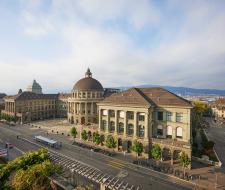 ranked 7th worldwide (first in Switzerland)
SwitzerlandZürich
-
-
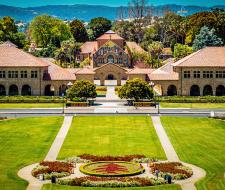
 #2 among U.S. national universities
USABoston, Massachusetts
-

-
 Top-50 best Marketing programs in the world
SpainBarcelona
-
-


Higher education in Bulgaria received its formed structure in the twentieth century, and since 2007, Bulgarian universities have switched to the Bologna education system in parallel with the country's accession to the European Union. Therefore, the diplomas issued to graduates by Bulgarian universities are recognized in all EU countries and in the world as a whole. Every year, about 300,000 students study at universities in Bulgaria.
Some universities in Bulgaria have agreements with foreign universities on the issuance of double diplomas to graduates, there is an opportunity to become a participant in exchange scholarship programs.
Now there are about 50 educational institutions in the country. Most universities in Bulgaria are state-owned, but there are also 9 private colleges.
Alternative destinations
How to apply to a university in Bulgaria
To apply to universities in Bulgaria, you need to provide:
- a completed application;
- a copy of an identity document (passport);
- a copy of the document on the education received (secondary or higher) and the transcript of grades (translated into Bulgarian);
- a medical certificate of health status, translated into Bulgarian and notarized;
- a document confirming no criminal record;
- a certificate with English language test results (if the student has chosen this language of instruction).
Some universities require entrance exams. Some universities may also require an apostille and a notarized translation of documents.
Top 5 Universities in Bulgaria
Sofia University, Sofia University (SU)
It was founded in 1888 and is considered the best university in Bulgaria. The campus has well-developed infrastructure: a large library, a sports complex, playgrounds, laboratories, and computer labs. The university provides foreign students with comfortable furnished dormitories. Sofia University is a member of the European University Association.
Varna University of Management, Varna University of Management
The university has established itself through quality training and international-level programs in IT, hospitality, management, and culinary arts. The university is included in international rankings. Extracurricular life is well developed: clubs and interest communities, sports sections, and dance clubs.
American University in Bulgaria, American University in Bulgaria
This is the first American educational institution specializing in English language and liberal arts studies in Eastern Europe. AUBG offers bachelor's programs in the liberal arts and awards a Bachelor of Arts degree. It is a private, nonprofit institution funded by independent sources. It began operating in September 1991. World-class faculty come from leading schools to create an innovative learning environment. AUBG students can choose fields of study and combine curricula in art, humanities, business, and technology.
Technical University of Sofia, Technical University of Sofia
This is the largest technical educational institution in Bulgaria and is included among the best universities in Bulgaria. The university is recognized as a leader in training specialists in virtual engineering, energy efficiency, renewable energy sources, environmental engineering, design, and mechanical engineering. The university received accreditation and became a member of the European Association for Quality Assurance in Higher Education. The Technical University of Sofia hosts the Community of Friends of the Technical University, whose main goal is to promote and develop the spiritual values of society, education, and modern technology.
Agricultural University Plovdiv, Plovdiv Agricultural University
It was founded in 1945 as the National Center for Agricultural Science and Education in Bulgaria. Today the university has integrated into the European educational space and has made a significant contribution to the sustainable and promising growth of agriculture, tourism, and regional development. The university currently offers educational programs in 20 bachelor's specialties, 28 master's programs, and 26 doctoral programs; graduates can work in agriculture, livestock farming and crop production, and food, feed, and biofuel quality assurance.
The quality of higher education in the country is overseen by the National Evaluation and Accreditation Agency (NEAA), a state body responsible for the evaluation, accreditation, and monitoring of universities and research organizations in Bulgaria. The agency is a member of the European Association for Quality Assurance in Higher Education (ENQA) and undergoes review for compliance with European ESG quality standards. In 2024, 18 Bulgarian universities received institutional accreditation from the NEAA. All universities in the country operate within the framework of the Bologna Process, so their diplomas are compatible with other European education systems and are recognized throughout Europe.
Education levels at universities in Bulgaria
Common European standards allow universities in Bulgaria to award diplomas of the following levels:
- College — 3 years of study. Usually considered the first level of higher education.
- Bachelor's degree — 3-4 years of study.
- Master's degree — 1-2 years of study. There is an option to complete a combined bachelor's and master's program for some disciplines.
- PhD doctorate — 3 years of study. Considered equivalent to postgraduate studies.
Advantages of higher education in Bulgaria
- The opportunity to work part-time while studying.
- The cost of education in Bulgaria is one of the main advantages for international students. Not all EU countries have English-language programs at an affordable price. Tuition costs range from 2,500 to 8,000 euros per year.
- There are additional scholarship programs for international students.
- Universities in Bulgaria offer programs in English, German, French, Russian, and Bulgarian.
- There is a chance to take part in a grant competition and a possibility of winning a grant to study at a university in Bulgaria for free.
- A lenient visa system for residents of Russia and Ukraine. Visa requirements are much less strict compared to Western European countries, and the document review period is only about four weeks.
Cost of living for students in Bulgaria
Bulgaria's main student cities are Sofia (the capital and largest city), Plovdiv, and Varna, joined by Burgas on the coast. Sofia and its surrounding region generate around 42% of national GDP with 22% of the population, and the southwestern region remains the most developed in the country. At the same time, Bulgaria is among the most affordable EU countries in terms of cost of living: in 2019, the cost of living was about 52.8% of the EU average. The estimated monthly budget in Sofia (data as of June 2026) for one person is around 2,470 BGN (BGN), and for a family of four, around 5,422 BGN. Excluding rent, monthly expenses are estimated at around 730 EUR for one person and 2,648 EUR for a family of four.
Housing. Renting a furnished 45 m² studio in a normal area of Sofia costs around 807 BGN per month. An 85 m² apartment in a normal area costs around 1,197 BGN, and in an expensive area, around 1,799 BGN per month. Utilities (heating, electricity, gas) for an 85 m² apartment for two people add around 248 BGN per month. On average, rent in Sofia is about 65.2% lower than in Amsterdam.
Transport. A monthly public transport pass costs around 48 BGN, and a liter of gasoline costs around 2.30 BGN.
Food. A business lunch with a drink in the business district costs around 25 BGN, a meal at an inexpensive restaurant costs around 13.90 EUR, and a three-course dinner for two at a mid-range restaurant costs around 50 EUR. A combo meal at a fast-food chain will cost around 10 EUR, and a cup of cappuccino around 3.09 EUR.
Top 14 best universities in Switzerland 2027
| 1 | Glion Institute of Higher Education Switzerland |
| 2 | Les Roches International School Montana |
| 3 | César Ritz Colleges Switzerland |
| 4 | IHTTI School of Hotel Management |
| 5 | Ecole Hoteliere de Lausanne |
| 6 | Geneva Business School |
| 7 | HIM Hotel Institute Montreux |
| 8 | Swiss Hotel Management School |
| 9 | Webster University Geneva |
| 10 | Business and Hotel Management School |
| 11 | Luzern IMI |
| 12 | Swiss Hotel Management School (SHMS) Caux |
| 13 | International University in Geneva |
| 14 | Culinary Arts Academy Switzerland |
Top 10 best universities in Netherlands 2027
Top 35 best universities and colleges in Canada 2027
| 1 | University of Toronto |
| 2 | McGill University |
| 3 | University of British Columbia |
| 4 | University of Alberta |
| 5 | Simon Fraser University |
| 6 | Montreal University |
| 7 | University of Windsor |
| 8 | York University |
| 9 | University of Guelph |
| 10 | McMaster University |
| 11 | University of Manitoba |
| 12 | University of Waterloo |
| 13 | Royal Roads University |
| 14 | Vancouver Film School |
| 15 | Kwantlen Polytechnic University |
| 16 | University of Calgary |
| 17 | Dalhousie University |
| 18 | Fanshawe College |
| 19 | University of Ottawa |
| 20 | Laval University |
| 21 | Sheridan College |
| 22 | University of Regina |
| 23 | Brock University |
| 24 | Thompson Rivers University |
| 25 | Humber College |
| 26 | Vancouver Island University |
| 27 | Mohawk College |
| 28 | Centennial College Toronto |
| 29 | Niagara College |
| 30 | Capilano University |
| 31 | Seneca College |
| 32 | Algoma University |
| 33 | Saint Clair College |
| 34 | Douglas College |
| 35 | LaSalle College |