

Study in Bulgaria. 6 best institutions in Bulgaria
-
 BulgariaSofiaCurrently watching: 1from 1120.00 € / 2 weeks
-

-
 from 5000.00 € / year
-
 from 12300.00 $ / year
-
 from 1500.00 € / year
-

-
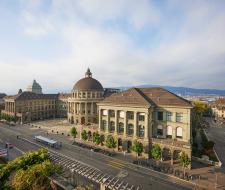 ranked 7th worldwide (first in Switzerland)
SwitzerlandZürich
-

-
 #2 among U.S. national universities
USABoston, Massachusetts
-

-
 Top-50 best Marketing programs in the world
SpainBarcelona
-
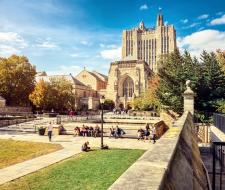
-

-
 #3. Europe University Rankings - Western Europe
SwitzerlandLausanne
Bulgaria is an attractive destination for high-quality education. The country's population has one of the highest literacy rates, as the state allocates significant sums annually to support the educational system to attract a large number of foreign schoolchildren and students. Bulgaria has an extensive set of resources for studying and conducting research in various fields, and diplomas from Bulgarian universities are recognized by employers around the world.
Education in Bulgaria offers preparation for foreign students in popular programs: mathematics, modern world languages, history, art, pedagogy, law, engineering. Extensive opportunities allow graduates to pursue careers in medicine, science, and research on an equal basis with local residents. The best student cities in Bulgaria are:
- Sofia
- Varna
- Plovdiv
- Gabrovo.
For schoolchildren and students, any directions are open to expand their horizons, since Bulgaria borders on a large number of countries with a high economy and developed infrastructure.

Alternative destinations
Cost of studying in Bulgaria
Studying in Bulgaria for foreign students in secondary schools depends on the chosen institution. The program cost for international students varies depending on specialization, language of instruction, and duration of study.
The fee for admission to a university of any type is paid twice — when applying for a visa and at the end of the 2nd semester. Studying in Bulgaria in the local national language is significantly cheaper than in English, German, and other foreign languages.
Admission requirements
The list of documents required for enrolling students in secondary schools includes:
- Birth certificate,
- Application in the school's form,
- Reference from the homeroom teacher,
- Medical record with vaccination notes,
- Transcript from the previous school's report card.
The list of documents for university admission and other enrollment conditions vary depending on the institution. Before applying, it is necessary to make sure that the available qualification, financial support, passport, and medical records meet the requirements of the chosen university. The document package usually includes:
- Resume,
- Photographs,
- Student visa,
- Motivation letter,
- Application in the university's form,
- Passport and its copy,
- Certificate of proficiency in the language of instruction (Bulgarian — the STBFL test, English — IELTS, TOEFL, Cambridge),
- Medical certificate of health,
- Bank statement confirming sufficient funds in the account,
- Certificate of complete secondary education,
- Transcript of grades from the school report card,
- Bachelor's degree diploma (for those applying to a master's program),
- Master's degree diploma (for enrollment in a doctoral program).
Documents are translated into Bulgarian, apostilled, and must be certified by an accredited specialist. When applying to state universities for publicly funded programs in Bulgarian, international students must meet the requirements of entrance exams (mathematics, chemistry, biology, and others).
Secondary education at schools in Bulgaria
According to the country's legislation, education in Bulgaria for children starts at age 7, and the maximum age for completing compulsory secondary education is 16. Academic year starts in mid-September and finish at different times depending on the grade:
- Primary grades — May 31,
- Middle school — June 15,
- High school — June 30.
Foreign children have access to:
- State schools — free of charge, teaching is conducted in Bulgarian, with mandatory English study from 2nd grade,
- Private schools — paid, studies in the national language, Russian, English, and other languages.
Education in Bulgaria is featured by its innovation: compared to other European countries, children are taught natural science, mathematics, and IT technologies from a very young age. Preschool education is not mandatory; children usually enter kindergarten from age 3, and most parents enroll their children in school starting from the zero grade (preparatory year). Types of preschool institutions are:
- Municipal — free (or the fee is minimal for foreign citizens), classes are conducted only in Bulgarian,
- Private — paid, classes are taught in foreign languages,
- Specialized — designed for children with health conditions,
- Seasonal — operate only during the summer, paid, perfectly suited for foreign children on vacation.
Studying in Bulgarian secondary schools consists of 3 stages:
- Primary school — grades 1-4,
- Middle grades — grades 5-8,
- High school — grades 9-12.
At the end of 4th grade, students take a mandatory English language exam to move to the next level. After 8th grade, students either move on to grades 9-12 or take a state exam and enter colleges of their choice.
Obtaining higher education at universities in Bulgaria
Bulgaria has about 40 higher education institutions, with more than 200,000 students enrolled. The country's educational institutions regularly improve their programs, annually attracting talented young people from all over the world with great opportunities. International students can study in Bulgaria at state and private universities, on a budget-funded or fee-paying basis.
Bulgarian higher education institutions are divided into:
- Colleges,
- Universities,
- Specialized higher schools.
Graduates are awarded a diploma of:
- Specialist — 3 years of study,
- Bachelor — 4 years of study,
- Master — 1 year of study,
- Doctor (PhD) — the degree is awarded after 3 years of study on the program, depending on the specialization.
Studies in Bulgaria across a wide range of programs are conducted in various languages. The most in-demand are:
- German,
- English,
- Bulgarian,
- French and other languages.
Many universities located in major cities award students double degrees.
Popular directions of study are:
- Sport,
- Science,
- Chemistry,
- Biology,
- Medicine,
- Economics,
- Engineering,
- Mathematics,
- Military science,
- Foreign languages,
- Business studies,
- Chemical engineering,
- Fine arts,
- Information technology.

Students at Bulgarian higher education institutions undergo internships in university laboratories, operating companies, organizations and universities in Europe and other countries.
A master's degree in Bulgaria is also a popular option thanks to the wide range of programs taught in English. Flexible options to earn a degree stipulate:
- Individual schedule,
- Combined classes — in-person and distance learning,
- Internships at operating companies.
Master's students:
- Study core subjects and electives,
- Take part in a large number of various events, including sports activities,
- Get to know the country by visiting local attractions.