
Best private schools in Austria 2027
- Exploring the Premier Austrian Private Schools for International Students
- How to Apply to best private schools in Austria for international students
- Tips on how to enter a private school in Austria from SMAPSE Experts
- Student visa and residence permit for studying in Austria
- Education in Austria in numbers
- Accreditations and quality markers of private schools in Austria
- Literature and references
This content was developed and approved with active participation of Alison Peacock.
In the process of preparing the material, we referenced the following sources:
- https://eurydice.eacea.ec.europa.eu/national-education-systems/austria/overview
- https://en.wikipedia.org/wiki/Category:Private_schools_in_Austria.
-
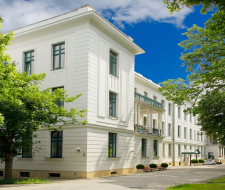 IB World School with an integrated Music and Arts Academy
AustriaViennaCurrently watching: 8from 19605 € / term
IB World School with an integrated Music and Arts Academy
AustriaViennaCurrently watching: 8from 19605 € / term -
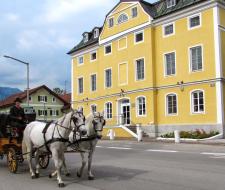 Middle States Association of Colleges and Schools accreditation
AustriaSalzburgCurrently watching: 10from 16000 € / term
Middle States Association of Colleges and Schools accreditation
AustriaSalzburgCurrently watching: 10from 16000 € / term -
 AustriaViennaCurrently watching: 8from 13350 € / term
 -
 from 25900.00 € / year
 -
 AustriaViennaCurrently watching: 1from 35000.00 € / year
 -
 from 19630.00 € / year
 -
 from 450.00 € / month
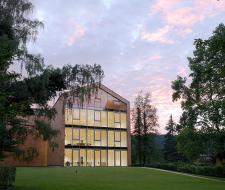

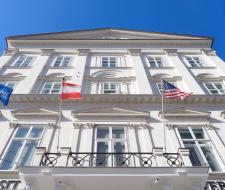
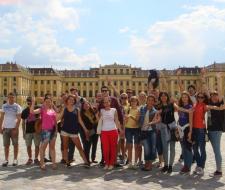

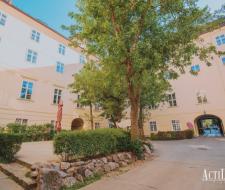
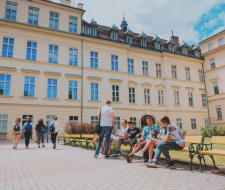

Nowadays, prestigious secondary private schools and colleges in Austria are considered to be most prestigious in Europe. They meet high academic standards that allow graduates to enter world leading universities. Austrian schools and colleges provide effective language preparation. Students have an opportunity to study both English and German. Full immersion into linguistic environment helps overcome the communication barrier, expand active vocabulary. Teaching is conducted in English, and the offered programs differ from school to school. Some institutions conduct studying under the International Baccalaureate (IB), which spans several stages from the Primary Years Programme to the Diploma Programme, while others follow an American college-preparatory curriculum with Advanced Placement courses. These programs have obtained global recognition, especially by English-speaking universities.
You are provided with the opportunity to select schools and colleges located in Vienna (Amadeus International School), in Salzburg (American International School of Salzburg), in St. Gilgen (Saint Gilgen International School).
Austrian private schools are among most equipped and technologically advanced. Educational process makes an emphasis on academic, creative and physical development of each student. Mountainous regions of the country are extremely popular among fans of hiking, trekking, mountain biking, snowboarding and alpine skiing. Beautiful nature and clean air make Austrian schools especially attractive for students from all over the world. Some secondary schools in Austria even offer accommodation in traditional chalets - this is an ideal place for effective studying and comfortable rest.


When is the best time to apply to Austrian schools? What should be prepared for admission?
Take enough time to get to know your chosen school. The relationship between parents, school and student should be neat, unhurried and reliable - you should have time to get to know the campus, with teachers, get answers to all important questions.
Many people think that international boarding schools are, if not the same, then similar, but this is not so. There can be strong differences in the curriculum, the value and qualifications of the diploma, the experience of teachers, and finally by location. We recommend that parents start their search for a suitable school after they have clearly defined their position on 4 main questions:
1. What do you want to give to your children through the school?
2. What do you expect in terms of care and concern, guidance, consideration of the social and academic needs of the child?
3. What expenses are you willing to pay?
4. Which environment do you prefer: city and country, cultural environment, district or region?
By clearly answering these questions, you can start choosing and make it really right.
We suggest following the following schedule:
- November-February: collection of facts and information, communication with representatives
- February-March: visits to schools, discussion of important issues with representatives and administration
- March-May: sending a package of documents and receiving a decision
- May: final review of the application, course payment and final enrollment.
If you need a visa, June, July and August you will devote specifically to visa issues and preparation for departure.
Alternative destinations
Exploring the Premier Austrian Private Schools for International Students
When considering the pursuit of an exceptional education, Austrian private schools shine as exemplars of excellence. Known for their academic distinction and comprehensive learning environments, these institutions provide an exceptional platform for students to excel both academically and personally.
Tuition and Fees to best private schools in Austria
While deciding on education abroad, much attention is paid to the cost of studying. In Austria's acclaimed private schools, renowned for their quality, tuition costs vary. For prestigious private institutions, providing comprehensive accommodations, the studying at secondary school will make up from 30,000 to 55,000 euros per academic year. As an illustration, for the 2026-2027 academic year the American International School in Salzburg charges from 24,000 euros for a day student to 51,000 euros for a full boarder, so day tuition runs at roughly half the full-boarding rate. Returning students there receive a 5% discount on the published annual tuition and fees. Despite high tuition fees, it is worth it to invest in the school education of your child, as he is guaranteed comprehensive development and excellent academic opportunities.
Why do parents choose primary and secondary schools in Austria?
The strategic location of Vienna and Austria, the increase in the number of emigrants - all this increases the frequency of choosing Austria as a place of education for their children. Parents are sure that their children will gain a diverse, comprehensive experience, because representatives of more than 50 nationalities study in the country! Different cultural origins make it possible to get acquainted with the big world.
How to Apply to best private schools in Austria for international students
To enter prestigious Austrian private schools, foreign students are required to pass quite a complicated application process. To apply, the following documents are required to submit:
-
Proof of Identity: Submission of a copy of the student's passport or ID card is a fundamental requirement to establish identity.
-
Academic Records: Providing school grades from the preceding two academic years, along with quarterly/trimester grades for the current year, demonstrates valuable insights into the student's academic trajectory.
-
-
Language Proficiency: Language certificates, preferably up-to-date, showcase the student's language prowess, a critical aspect for effective communication and integration.
-
Teacher Endorsements: Strong recommendation letters from English and mathematics teachers offer valuable perspectives on the student's abilities and character.
-
Statement of Purpose: While not invariably obligatory, a motivation letter allows applicants to articulate their aspirations and objectives.
-
Enrollment and School Forms: Completion of enrollment forms and institution-specific documents is a requisite step in the application process.
-
Personal Interaction: An online or in-person interview at the educational establishment fosters mutual understanding between the school and the student.
In addition to the requirements mentioned above, aspiring students should anticipate internal assessments in mathematics and English. These assessments gauge the student's preparedness for the academic rigor of private school education. By ensuring a solid foundation, the school lays the groundwork for students' success.
Tips on how to enter a private school in Austria from SMAPSE Experts
Navigating the application process and making informed choices can be intricate. Expert guidance and assistance are readily available from the SMAPSE professionals. They stand ready at all times to provide the information necessary for a confident and well-informed educational journey.
In conclusion, Austrian private schools offer an unparalleled educational experience that harmonizes academic distinction with comprehensive personal development. By comprehending the application requisites, fees, and the support available, you can embark on the path to securing a bright future at one of Austria's top private schools.
What are private schools in Austria?
Private schools in Austria are educational institutions that do not depend on government funding. They operate at the expense of parents, sponsors and, in some cases, charities. These schools may have a variety of curricula and teaching methods.
What are the advantages of studying at a private school in Austria?
Benefits include small class sizes, allowing for a more personalized approach to learning. Private schools can also provide rich resources and opportunities to develop students' interests and talents.
How much does it cost to study in private schools in Austria?
Tuition fees at private schools vary greatly. It depends on the level of education, the reputation of the school and its location. On average, private school tuition is more expensive than public school tuition.
What subjects are usually offered in private schools?
Private schools offer a wide range of subjects, including foreign languages, mathematics, science, art and music. Many schools also have specialized programs, such as arts or sports.
What opportunities for sports and extracurricular activities are there in private schools?
Many private schools actively support sports and extracurricular activities. They may have their own sports teams and clubs, such as choral groups, drama clubs, and science clubs.
What is the quality of teaching in private schools in Austria?
The quality of teaching is quite high, since private schools often attract experienced teachers. Small classes promote more personalized learning and greater interaction between teachers and students.
Can international students attend private schools in Austria?
Yes, many private schools welcome international students and provide programs in English and other languages. For international students, knowledge of the appropriate language or adaptation courses may be required.
What happens after leaving private school?
After graduating from private school, students can enroll in universities in Austria or other countries. A private school's test scores and academic reputation can have a significant impact on a student's future career.
Can children with special needs receive education in private schools?
Some private schools provide specialized programs for children with special needs. However, requirements and availability may vary, it is important to contact the individual school for more information.
Can private schools provide international educational programs?
Yes, best private schools in Austria provide the following international educational programs: International Baccalaureate (IB), American education system or British system (GCSE and A-levels). These programs can be especially useful for families planning to move or send children to study abroad.
Student visa and residence permit for studying in Austria
International students from third countries need the right entry document before starting studies at an Austrian private school. Which one depends on how long the stay lasts. For stays of up to 6 months a Visa C or Visa D is sufficient, while any stay longer than 6 months requires a Residence Permit – Student. Austria has also introduced the EU Entry/Exit System (EES), in force as of 12 October 2025, which records entries and exits of third-country nationals at the border.
The OeAD recommends contacting the chosen studying institution about a year in advance to plan the stay and select the appropriate residence title, and starting the visa process itself about three months before the planned entry to Austria. The decision period for the Residence Permit – Student is 90 days, extended by a further 90 days when additional documents need to be submitted, so early preparation matters.
Applicants must prove sufficient financial means for twelve months in advance, held in a bank account or savings book bearing the applicant's name and accessible from Austria. If accommodation costs exceed EUR 386.43 per month (as of 2026), additional funds must be shown. Health cover is also required: for entry, travel health insurance valid in Austria with cover well over EUR 30,000 is needed, and student self-insurance with the Österreichische Gesundheitskasse costs EUR 78.84 per month (as of 2026). For applications submitted from 1 January 2026 onwards a single, non-refundable application fee of EUR 218 applies, payable in full when the application is submitted.
Once approved, the representative authority issues a Visa D valid for four months to collect the residence title, and the Residence Permit – Student is then granted for a period of 12 months. After arrival, students must register with the local registration office (Meldezettel) within three working days. The permit also allows stays in other Schengen countries for a maximum of 90 days within any 180-day period.
Holders of the Residence Permit – Student may take up work for up to 20 hours per week, and this work permit is granted without a labour market check. For renewal, students must prove academic success of eight semester hours or 16 ECTS credits per academic year. Graduates holding the permit may renew it for another 12 months in order to look for a job or set up a business.
Education in Austria in numbers
A few figures help place Austrian private schools within the country's wider education landscape.
- Private schools account for roughly 10% of Austria's 6,800 schools and 120,000 teachers, with the Roman Catholic Church being the main provider.
- International presence is significant: at the start of 2024 there were 1.8 million foreign-born residents in Austria, or 22.3% of the total population.
- Investment in education reached 4.9% of GDP in 2021, with spending per student averaging around US$16,734.
- Early education is widespread: by 2018 about 90% of children aged three to five attended early childhood education.
- Vocational tracks remain popular: in 2021, 34.1% of upper-secondary students took part in the dual education system.
- Higher education has expanded strongly, with enrolment rising from about 19,000 in 1955-56 to more than 200,000 by 1991-92.
These figures show a well-funded system with broad access and a solid private-school segment, which is why Austria remains an attractive destination for international families.
Accreditations and quality markers of private schools in Austria
When choosing a private school in Austria, international accreditation is one of the best markers of quality. It confirms that a school meets recognized standards for teaching, safeguarding and student outcomes, and that its results are trusted by universities abroad.
Two accreditations carry particular weight for families looking at international education. The Council of International Schools (CIS) is a global membership community that grants CIS International Accreditation to schools, focused on developing socially responsible leadership through international education. A school that holds this status has passed an external review of its educational quality and governance.
The International Baccalaureate is the second key reference point. Schools officially authorised to provide IB programs become IB World Schools, part of a worldwide community of more than 6,000 authorised schools. Since teaching at many Austrian private schools is conducted in English under the IB program, IB authorisation shows that a school follows the standards required to offer this internationally recognized curriculum.
Looking for these accreditations helps parents compare schools on more than reputation alone, and gives a practical way to judge whether a school will prepare a child for admission to leading universities.
Top 4 best schools in Austria 2027
| 1 | Amadeus International School Vienna |
| 2 | Schloss Krumbach International School |
| 3 | American International School Salzburg AISS |
| 4 | St Gilgen International School |
Advantages and disadvantages of English schools
| Advantages | Disadvantages |
|---|---|
| The opportunity to enter the best universities in England, USA, Canada, Switzerland, Europe, the world | Expensive |
| High quality of education and academic standards | Strong workload |
| Perfect English after graduation | The need to change the social environment; it takes time to adapt |
| Useful contacts | The difficulty of choosing the most suitable school for the child, requires a qualified specialist |
Top 35 best schools in the USA - 2027 Smapse rankings
| 1 | North Broward Preparatory School |
| 2 | Phillips Academy Andover |
| 3 | The Storm King School New York |
| 4 | Red Bank Catholic High School |
| 5 | Windermere Preparatory School |
| 6 | Shattuck St Mary's School |
| 7 | Cheshire Academy |
| 8 | Cate School |
| 9 | Ross School |
| 10 | Deerfield Academy |
| 11 | The Village School |
| 12 | Amerigo Los Angeles – Bishop Montgomery High School |
| 13 | Webb Schools |
| 14 | Kent School USA |
| 15 | The Winchendon School |
| 16 | Darlington School |
| 17 | Marian Catholic High School Amerigo Education |
| 18 | Grier School |
| 19 | The MacDuffie School |
| 20 | CATS Academy Boston |
| 21 | The Cambridge School of Weston |
| 22 | Milton Academy |
| 23 | Amerigo Education Napa Valley |
| 24 | American Hebrew Academy |
| 25 | Northfield Mount Hermon School |
| 26 | Mater Dei Catholic High School San Diego Amerigo Education |
| 27 | American University Preparatory School Los Angeles |
| 28 | Webb Schools |
| 29 | Kent School USA |
| 30 | Groton School |
| 31 | Maine Central Institute |
| 32 | The Lawrenceville School |
| 33 | Grand River Academy Ohio |
| 34 | Saint John Paul II Academy |
| 35 | Chicago North Shore |
Top 14 best schools in Switzerland 2027
| 1 | College Du Leman |
| 2 | St. Georges School Montreux |
| 3 | Institut Monte Rosa |
| 4 | Lyceum Alpinum Zuoz |
| 5 | Saint-Charles Collège et Lycée |
| 6 | Leysin American School |
| 7 | Hochalpines Institut Ftan AG High Alpine |
| 8 | Aiglon College Switzerland |
| 9 | Institut Le Rosey School |
| 10 | Institut Montana Zugerberg |
| 11 | Champittet College |
| 12 | Brillantmont International School |
| 13 | Surval Montreux |
| 14 | Ecole Pre Fleuri |
