
Best private schools in Italy 2027
- Private Schools in Italy for international students
- Language and Cultural Options in Private Schools in Italy
- Application Requirements and Documentation for Admission in Private Schools in Italy
- Private Schools in Italy. Cost and Fees for international students
- Student Visa and Residence Permit for Foreign Pupils in Italy
- Top Italian Regions and Cities for International Private Schools
- The Italian Education System at a Glance
- Literature and references
This content was developed and approved with active participation of Esther Diaz.
In the process of preparing the material, we referenced the following sources:
- https://en.wikipedia.org/wiki/Category:Private_schools_in_Italy
- https://eurydice.eacea.ec.europa.eu/national-education-systems/italy/organisation-private-education
-
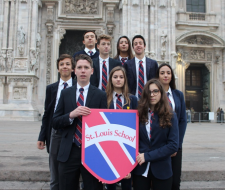 In 2022 an average IB score made up 37
ItalyMilanCurrently watching: 6from 8410 € / term
In 2022 an average IB score made up 37
ItalyMilanCurrently watching: 6from 8410 € / term -
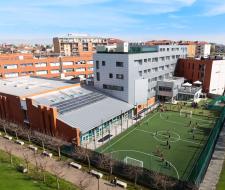 In 2022 an average IB score made up 34
ItalyMilanCurrently watching: 5from 12300.00 € / year
In 2022 an average IB score made up 34
ItalyMilanCurrently watching: 5from 12300.00 € / year -
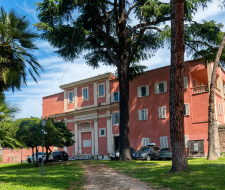 from 49413.00 € / year
 -
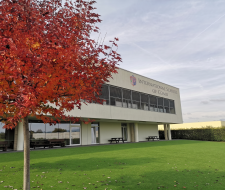 In 2022 an average IB score made up 37
ItalyMilanCurrently watching: 1from 12400.00 € / year
In 2022 an average IB score made up 37
ItalyMilanCurrently watching: 1from 12400.00 € / year -
 from 16000.00 € / semester
 -
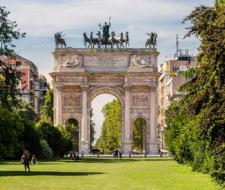 from 13430.00 € / year
 -
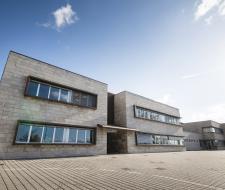 In 2022 an average IB score made up 33
ItalyFlorenceCurrently watching: 1from 11390.00 € / year
In 2022 an average IB score made up 33
ItalyFlorenceCurrently watching: 1from 11390.00 € / year -
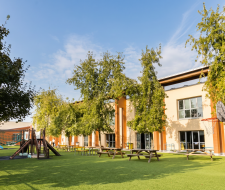 In 2022 an average IB score made up 35.5
ItalyBolognaCurrently watching: 1from 11750.00 € / year
In 2022 an average IB score made up 35.5
ItalyBolognaCurrently watching: 1from 11750.00 € / year -
 from 20250.00 € / year
 -
 In 2022 an average IB score made up 35
ItalyMilanCurrently watching: 1from 9700.00 € / year
In 2022 an average IB score made up 35
ItalyMilanCurrently watching: 1from 9700.00 € / year
Italy is a popular country among international students wishing to obtain high-quality education abroad. SMAPSE offers more than 19 best Italian private schools and colleges available for students from all over the world. Italy is famous for its interesting and bright culture, history, style and art. Nowadays, Italian schools and colleges provide balanced and advanced courses that meet high educational standards. After taking the course, students get a valuable diploma that increases chances to enter world leading universities. During their studies at Italian schools, students receive essential knowledge and skills for further successful studying.
In addition, Italian secondary private boarding schools are famous for a high level of language preparation, as all studies are conducted in English or Italian. At the same time, there is an opportunity to study other European languages. Moreover, beautiful nature, interesting culture and a wide range of entertainment facilities allow students to enjoy their free time. They usually visit new cities and cultural monuments, get acquainted with historical places and sights, and do sports.
Please, don't hesitate to contact SMAPSE at any time. Our experts are always ready to help you and answer all questions.
Exploring Global Education: Private Schools in Italy for Foreign Students and Boarding Schools in the USA.

Alternative destinations
Private Schools in Italy for international students
Italian private school system is a combination of the country's rich educational heritage and modern, dynamic approaches to learning. These institutions offer a diverse range of curricula, from the traditional Italian system to various international programs. Located in both urban and rural settings, Italian private schools are often characterized by smaller class sizes, personalized teaching methods, and a greater emphasis on holistic education, compared to their public counterparts. Many private schools in Italy cater specifically to the international community. They offer globally recognized curricula such as the International Baccalaureate (IB), British GCSEs and A-levels, or the American high school diploma. These international programs make it easier for students to transition to higher education institutions outside of Italy or to move between international schools globally. When choosing a private school, it's crucial for international students and their families to ensure the school's accreditation. It's also important to understand how its curriculum aligns with future academic or career aspirations.

What would you say is the most important when choosing a school?
This is the quality of support and work of the management, the opportunity to study at IB, the prestige of the school and the percentage of successful completion of the diploma stage of IB, recommendations for further universities. It is worth considering the national "recruitment" of campus students, opportunities for extracurricular development and activities, the availability of medical services and consultations, opportunities for language immersion. Is education at the chosen school based on the values you share? Is the school a close-knit community? Is academic support good?
Language and Cultural Options in Private Schools in Italy
Many private schools offer instruction predominantly in English, especially those with international curricula. But there is typically a strong emphasis on learning the Italian language and culture. This emphasis ensures that international students have the opportunity to immerse themselves in Italy's rich cultural heritage. Beyond the classroom, private schools often organize excursions, cultural events, and exchanges. It allows students to engage deeply with Italian history, arts, and society.
Tuition fees and Scholarships in Private Schools in Italy
Private education in Italy, especially schools catering to international students, can come with a significant cost. Tuition fees vary widely based on the school's reputation, location, facilities, and the curriculum. However, many private institutions provide scholarships, financial aid, or installment payment options to assist families in offsetting the expenses. It's advisable for international students to research thoroughly, request detailed fee structures, and inquire about available financial support, when considering private schools in Italy.
Application Requirements and Documentation for Admission in Private Schools in Italy
To enter a private Italian boarding school, prospective students must prepare a comprehensive set of documents. It includes:
- A copy of the student's passport or ID card
- Academic transcripts covering the last two academic years, along with quarterly or trimester grades for the current academic year
- Language certificates, preferably up-to-date ones
- Letters of recommendation from teachers in English and mathematics
- A motivation letter (although this may not always be obligatory)
- Completed registration forms and school-specific application forms
- A personal visit to the educational institution
In addition to these documents, applicants typically need to successfully pass the school's internal assessments in mathematics and English. These tests are designed to assess the applicant's readiness for entering a private school.
Private Schools in Italy. Cost and Fees for international students
When considering the best Italian full-board private schools, it's important to understand how much the tuition is. It typically ranges from €30,000 to €40,000 per year. These institutions offer a top-notch educational experience, making them highly sought-after by students and families.
Guideline from SMAPSE Experts to Private Schools in Italy
If you have any inquiries or require assistance throughout the application process, please don't hesitate to contact the experts at SMAPSE. They are ready to provide guidance and address any questions you may have. Your journey to a prestigious private school in Italy begins with the right support and information. Don't forget to explore our selection of private schools in Switzerland as well.
Private schools in Italy offer international students a unique educational experience, combining rigorous academic programs with profound cultural immersion. Their combination of traditional and contemporary teaching methods aims to equip students with both knowledge and life skills, preparing them for an increasingly globalized world.
Student Visa and Residence Permit for Foreign Pupils in Italy
Non-EU citizens must apply for a student visa at the competent Italian Consulate in their country of residence before travelling to Italy. The official visa procedure is handled through the Ministry of Foreign Affairs visa portal vistoperitalia.esteri.it. Holding a valid visa does not by itself guarantee entry, because Schengen border authorities may re-check the visa-application documents on arrival.
Non-EU students staying longer than three months must apply for a residence permit (permesso di soggiorno) within 8 working days of arrival, using the «yellow kit» available at post offices marked with a Sportello Amico sign. The residence permit for stays of up to one year generally costs €116.46 (€16 revenue stamp plus €70.46 for the electronic permit plus €30 shipping), while for studies shorter than one year it is usually around €40. Renewals must be requested at least 60 days before the permit expires.
EU students do not need a residence permit, but if they stay longer than three months they must register a temporary residence at the Anagrafe, and that registration lasts 12 months. All foreign pupils also need a Codice Fiscale, the Italian tax identification number of 16 alphanumeric characters, which is required to open a bank account, sign any contract, or register with the national health service. Voluntary registration with the Italian National Health Service (SSN) for students costs an annual contribution of approximately €700.
Top Italian Regions and Cities for International Private Schools
Italy consists of 20 regions, each with its own dialects, traditions and landscapes, and the country only became a unified state in 1861. This regional diversity shapes where international private schools are located and what daily life looks like for students who enter. The capital and largest city is Rome, while other major centres include Milan, Naples, Turin, Palermo, Bologna, Florence, Genoa and Venice.
Lombardy and its capital Milan form the strongest hub for international education. Milan has eight universities and the largest student community in Italy, home to Politecnico di Milano, Università degli Studi di Milano and Università Commerciale Luigi Bocconi, one of Europe's leading business universities. This concentration of higher education makes northern Italy a natural choice for families planning a route from school to university.
Higher education itself is concentrated in a handful of regions, with Lazio leading at 19 universities, followed by Lombardy with 12, Campania with 7, Apulia with 5, and Emilia-Romagna, Piedmont, Marche and Sicily with 4 each. Rome, in Lazio, combines this academic density with the country's political and cultural life, while Florence and the surrounding Tuscan area draw students interested in art and history.
Climate varies noticeably across the country. Italy has a broadly Mediterranean climate, but inland northern and central regions range from humid subtropical to humid continental and oceanic, while the coasts of Liguria, Tuscany and much of the south fit the classic Mediterranean pattern. Winter temperatures range from about 0 °C in the Alps to 12 °C in Sicily, and average summer temperatures run from 20 °C to over 25 °C, so students in the north face colder, foggier winters while the south stays milder and sunnier.
In addition to the classroom, Italy offers a strong cultural setting for international students. It has 61 UNESCO World Heritage Sites, the most of any country, and is the fourth most visited country in the world, giving students in any region ready access to art, architecture and history as part of everyday life.
The Italian Education System at a Glance
Private schools in Italy function under a national education framework that gives international families a clear sense of standards and structure. Education in Italy is compulsory from the age of 6 to 16 and is divided into five stages: kindergarten (scuola dell'infanzia), primary school, lower secondary school, upper secondary school and university. This progression shapes the curriculum offered by private institutions and helps foreign students map their studies against a recognised pathway.
The country places a strong emphasis on schooling. Italy's adult literacy rate stood at 99.2% in 2015, and the national education budget reached €65 billion in 2016, reflecting sustained public investment in teaching and infrastructure.
At the tertiary level, Italy is served by public universities, private universities and prestigious selective superior graduate schools such as the Scuola Normale Superiore di Pisa. Prospective families should be aware that a marked performance gap exists between secondary schools in the north, which perform close to the national average, and those in the south. Choosing a well-established private school helps international students access consistent quality regardless of region.
10 best private schools in Italy 2027 rankings
| 1 | St Louis School Milan |
| 2 | International School of Milan |
| 3 | St. Stephen's School |
| 4 | Florence University of Arts |
| 5 | International School of Como |
| 6 | Gentium Schola Opitergium |
| 7 | International School of Siena |
| 8 | Renaissance School |
| 9 | H-international School |
| 10 | Marymount School Rome |
Advantages and disadvantages of English schools
| Advantages | Disadvantages |
|---|---|
| The opportunity to enter the best universities in England, USA, Canada, Switzerland, Europe, the world | Expensive |
| High quality of education and academic standards | Strong workload |
| Perfect English after graduation | The need to change the social environment; it takes time to adapt |
| Useful contacts | The difficulty of choosing the most suitable school for the child, requires a qualified specialist |
Top 35 best schools in the USA - 2027 Smapse rankings
| 1 | North Broward Preparatory School |
| 2 | Phillips Academy Andover |
| 3 | The Storm King School New York |
| 4 | Red Bank Catholic High School |
| 5 | Windermere Preparatory School |
| 6 | Shattuck St Mary's School |
| 7 | Cheshire Academy |
| 8 | Cate School |
| 9 | Ross School |
| 10 | Deerfield Academy |
| 11 | The Village School |
| 12 | Amerigo Los Angeles – Bishop Montgomery High School |
| 13 | Webb Schools |
| 14 | Kent School USA |
| 15 | The Winchendon School |
| 16 | Darlington School |
| 17 | Marian Catholic High School Amerigo Education |
| 18 | Grier School |
| 19 | The MacDuffie School |
| 20 | CATS Academy Boston |
| 21 | The Cambridge School of Weston |
| 22 | Milton Academy |
| 23 | Amerigo Education Napa Valley |
| 24 | American Hebrew Academy |
| 25 | Northfield Mount Hermon School |
| 26 | Mater Dei Catholic High School San Diego Amerigo Education |
| 27 | American University Preparatory School Los Angeles |
| 28 | Webb Schools |
| 29 | Kent School USA |
| 30 | Groton School |
| 31 | Maine Central Institute |
| 32 | The Lawrenceville School |
| 33 | Grand River Academy Ohio |
| 34 | Saint John Paul II Academy |
| 35 | Chicago North Shore |
Top 14 best schools in Switzerland 2027
| 1 | College Du Leman |
| 2 | St. Georges School Montreux |
| 3 | Institut Monte Rosa |
| 4 | Lyceum Alpinum Zuoz |
| 5 | Saint-Charles Collège et Lycée |
| 6 | Leysin American School |
| 7 | Hochalpines Institut Ftan AG High Alpine |
| 8 | Aiglon College Switzerland |
| 9 | Institut Le Rosey School |
| 10 | Institut Montana Zugerberg |
| 11 | Champittet College |
| 12 | Brillantmont International School |
| 13 | Surval Montreux |
| 14 | Ecole Pre Fleuri |
