For partners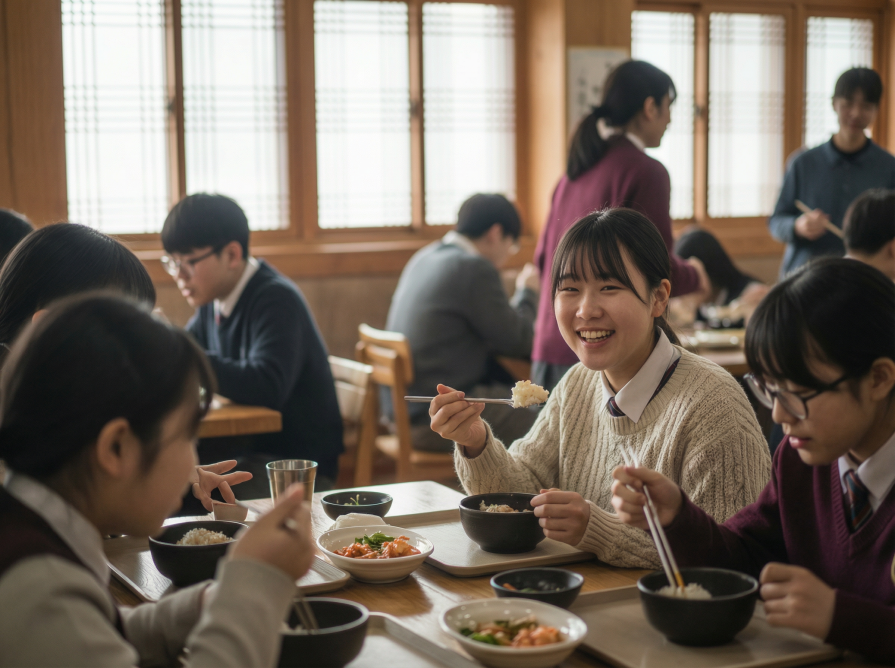
School meals rarely leave anyone indifferent: parents want to see a balanced lunch on the child's tray, children themselves dream of endless pizza and chips, and canteen employees are trying to meet the budgets and requirements of inspectors. As a result, every country, every school is a compromise between the possible and the desirable. Let's try to figure out what a typical school lunch looks like in different parts of the world and what features are behind this variety?


Asia: rice is the head of everything
Asian schools, despite the difference in cultures and budgets, surprisingly agree on one thing: rice here performs the same function as bread in other countries: it sets the structure of lunch, and everything else becomes its environment.
- Japan adheres to an almost standard approach: miso soup, pickled or fresh vegetables, sometimes a portion of fish or tofu, some dried seaweed and the obligatory milk in a box are added to the rice. Such a lunch looks modest, but gives a balanced set of nutrients.
- South Korea relies on a combination of rice and kimchi. Sauerkraut and spicy cabbage is a must-have on the plate, to which soy paste, simple stew, and fruit are added.
- Singapore traditionally combines rice with stew, salad and fruit: a minimum of aesthetics, a maximum of functionality.
- India serves richer dishes: legume stew, chickpeas or peas, rice, local dessert, fermented milk drink, crispy banana chips.
- Hong Kong allows itself variety: rolls and sushi are side by side with rice, vegetable stew in sauce and meat or fish.
- Vietnam, remaining faithful to rice, complements it with salad, chicken and fruit, that is, builds a simple but stable lunch formula.
Asia is characterized by a combination of consistency and local traditions: a set of products is familiar to a child from an early age, so the refusal rate is minimal.
USA: moving away from the "fast food myth"
American school meals are often presented as caricatures, like endless burgers and jelly in plastic cups. In practice, the gap between schools is huge: the menu depends on the district, budget and catering provider.
- In North Carolina, students are offered a tortilla salad, a dish of beans and a portion of fruit,
- In Ohio, lunch includes a hot dog, salad, cookies, jelly with fruit and milk - a set of simple and inexpensive dishes,
- In the state of Washington, the menu is noticeably richer: salad, boiled vegetables, fried chicken with mashed potatoes, bread and pudding for dessert.
This difference is understandable: the catering system is decentralized, so the quality depends on which contractor won the tender and how the school organizes the control.
Europe: from austerity to gastronomic tradition
If Asia clings to rituals, then Europe relies more on local habits.

- The UK offers children boiled potatoes or peas, beans in tomato sauce, cauliflower with cheese, and sausages or nuggets in the non-vegetarian version. Puree soup or vegetable salad serves as an addition, for dessert - an apple or a piece of cake.
- Romania shows a minimalist approach: schoolchildren receive a bagel and a carton of milk.
- France, on the contrary, is considered a model: meat or fish, pasta or potatoes, a portion of broccoli, salad, a small dessert and, of course, a piece of crusty French bread are always present in lunch. Here, nutrition is part of the educational culture, and not just a mandatory afternoon snack.
- Spain relies on balance: fried fish, pasta, salad, fruit and bread.
- Sweden offers cabbage or cucumber salad, potatoes, stewed beans or potato cutlets, meatballs with lingonberry sauce and a simple dessert. This set looks restrained in a Scandinavian way, but nutritious.
- Finland focuses on hot soup: thick pea soup with smoked meats, pie or pudding, milk and vegetables are a familiar structure for schoolchildren.
- The Czech Republic adheres to a hearty version: puree soup, stew, vegetables, potato dumplings and fruit.
Latin America: simplicity as the norm
In Brazil and Colombia, lunches often look almost identical: rice, stew with legumes, salad, and some fruit. It is a practical kit for regions where legumes are an affordable source of protein and school feeding programmes are often closely linked to national agricultural initiatives.
What do different approaches have in common?
Against the backdrop of all the differences, one thing is noticeable: countries are forced to balance between budgets, cultural habits and dietary requirements. Somewhere preference is given to simplicity, somewhere to tradition, and somewhere to a dense hot meal. But in the end, the criteria for success turn out to be surprisingly similar. A good school lunch is not frills, but a clear set: a source of animal protein, fresh vegetables, complex carbohydrates and dairy products. Everything else is a matter of organization.
It is in this universal set that lies the answer to the long-standing dispute between parents, children and schools: when the diet is thought out, children are less likely to reject meals, and adults will have less reason to worry about the quality of nutrition.