For decades, environmental studies existed on the edges of academia, a niche concern for biologists and geographers, usually framed through a lens of pure conservation. That era is definitively over. Now a deep change is rolling through higher education, because climate change has moved from the protest line, to the classroom, and it’s becoming the central, unifying idea of what feels like a brand new academic revolution. The growth of climate-focused university programs is not only a schooling fashion. It’s more like a systemic response to the most urgent existential problem we face, and it’s already reshaping how we teach, how we learn, and how we prepare for what comes next.


This shift is a real break from the siloed, single-discipline approach of the past. The climate crisis is a “wicked problem” , and it doesn’t stay put. Its reach spreads into economics, public health , engineering, political science, law, sociology, and data science. So universities are creating interdisciplinary degrees that match the challenge’s messy complexity. For example, a student studying a Bachelor of Science in Climate and Sustainability might follow a curriculum that includes atmospheric physics, environmental economics, and climate justice, learning not only the science of a melting glacier, but the human systems that cause the melt, plus the social weaknesses that get exposed along the way. This broad model shows up in programs like Erasmus Mundus MESPOM—an alliance of four European universities that prepares students to tackle environmental issues from both a scientific angle, and a policy angle. Similarly, Columbia University’s new Climate School in the US and the University at Albany have launched comprehensive climate degrees that integrate climate dynamics, chemistry, and social governance, proving that deep expertise must now be paired with broad collaborative skills. This "T-shaped" skillset is becoming the gold standard for the climate-educated graduate.
The drivers behind this academic boom are multifaceted, not just one simple thing. For one, there is an undeniable shift in student demand. Today’s youth have basically grown up with climate change as a defining reality in their lives, so they’re not only anxious, they’re determined to be agents of change. They want careers with real meaning, and in their minds universities are the launchpad for that mission. As a result there’s been a clear surge in enrollment in environmental and climate programs, which then forces institutions to expand what they teach, just to attract and retain top talent.
Prospective partnerships of universities amid new challenges
So universities abroad are responding in a way that is more flexible than before. Not only are they adding entirely new majors, they are also building more innovative dual-degree structures. For example, Columbia’s partnership with Sciences Po in Paris now lets students earn two master’s degrees in just two years—one in climate science from New York, and another in ecological governance from France. It’s basically designed for students who refuse to pick just one side of the equation, like understanding the physical world versus shaping the policies that govern it.
In addition to it, the market is demanding this new breed of graduates. The green economy is no longer some futuristic idea; it is a booming present-day reality. Companies across almost every sector—from finance and technology to manufacturing and agriculture—are dealing with net-zero targets, ESG reporting, and climate risk assessment. They are urgently searching for people who grasp the nuances of climate policy, can compute carbon footprints, design sustainable supply chains, or even build renewable energy solutions.

Universities are responding by crafting programs that are explicitly career-oriented. Imperial College London, for instance, offers specialized master’s tracks in Climate Change, Management and Finance, and Cleantech Innovation. Meanwhile, German universities like the University of Potsdam and the University of Bayreuth have developed programs in Climate, Earth, Water, and Sustainability that are tightly linked to the country's booming renewable energy sector, ensuring that graduates walk straight from the lecture hall into high-demand green jobs.
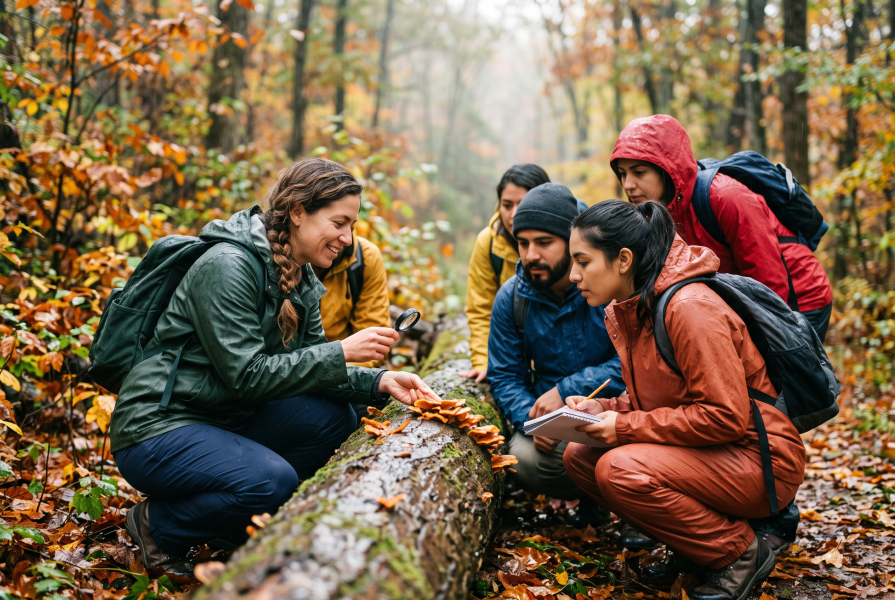
However, the rise of these programs is about more than just career preparation; it represents a fundamental shift in the ethos of a university education. The traditional university was often seen as an ivory tower, a place for detached intellectual pursuit. Climate-focused programs are inherently action-oriented. They emphasize real-world problem-solving, community engagement, and policy advocacy. They often involve "living labs," where students work on tangible sustainability projects on campus or in local communities, from installing solar arrays to designing flood resilience plans. This pedagogical shift is creating a generation of graduates who are not just thinkers but doers. This is evident in the TRACEE program, a transdisciplinary master’s initiative from the CIVIS European University Alliance, which allows students to choose from nine different study tracks across eleven partner universities—from Climate Change Science to Environmental Law and Renewable Energy Policy. The emphasis is always on applying knowledge to real societal transitions. Similarly, York University in Canada takes students out of the classroom entirely with its Las Nubes program in Costa Rica, where they live with local families and conduct fieldwork on food sovereignty and water politics, experiencing community resilience firsthand.
Of course, this rapid expansion is not without its challenges. Critics argue that the curriculum can sometimes be too broad, lacking depth in core scientific or technical rigor. Others point out the danger of creating a sense of "eco-anxiety" among students without providing the tools and resilience to manage it. There is also the significant challenge of ensuring equity and access to these programs, as a narrow focus on elite institutions risks creating a climate elite, separate from the frontline communities most affected by the crisis.
Conclusion
Despite these hurdles, the momentum is still undeniable, even if it feels a bit uneven at times. From specialized masters in Climate Finance and degrees in Urban Resilience— all the way to minors in Environmental Humanities and Climate Communication— the academic landscape is being remade. The rise of climate-focused university programs is not only about creating a new field of study, it is also about reshaping education itself, sort of a quiet reframe. It signals a recognition that every discipline, from art history to medicine, now has a role to play in comprehending and responding to our shifting planet.
Ultimately, it is a kind of testament to the enduring force of education as a tool for hope, a belief that the next generation, armed with knowledge and intent, can chart a course toward a more sustainable, and more just future.