

University preparation in England UK for international students
- Understanding the UK Educational System
- Navigating University Admissions Post-School in the UK
- UK University Preparation for Foreign Students: A Comprehensive Guide
- Preparing for University in the UK: 7 Key Steps to Consider
- UK Student visa requirements after university preparation
- Comparing routes to a UK university: A-Level, IB, BTEC and Foundation pathways
- Literature and references
This content was developed and approved with active participation of Sarah Jayne Blakemore.
In the process of preparing the material, we referenced the following sources:
- https://en.wikipedia.org/wiki/Education_in_the_United_Kingdom
- https://www.britishcouncil.co.zw/exam/ielts/prepare.
-
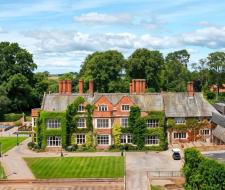 "5th Highest Performing School by A Level results in 2023" – The Telegraph.
United KingdomYorkCurrently watching: 10from 23330.00 £ / term
"5th Highest Performing School by A Level results in 2023" – The Telegraph.
United KingdomYorkCurrently watching: 10from 23330.00 £ / term -
 In 2023 100% of students achieved A*– B grades at A-level
United KingdomLondonCurrently watching: 8from 20300 £ / term
In 2023 100% of students achieved A*– B grades at A-level
United KingdomLondonCurrently watching: 8from 20300 £ / term -
 55% of A Level students achieved A*- A results among top UK schools in 2023
United KingdomCambridgeCurrently watching: 9from 37600.00 £ / year
55% of A Level students achieved A*- A results among top UK schools in 2023
United KingdomCambridgeCurrently watching: 9from 37600.00 £ / year -
 75% of our A-Level students achieved A*-A in 2022
United KingdomCanterburyCurrently watching: 8from 16991 £ / term
75% of our A-Level students achieved A*-A in 2022
United KingdomCanterburyCurrently watching: 8from 16991 £ / term -
 In 2023 - 98% pupils gained places at their first choice University
United KingdomCambridgeCurrently watching: 9from 20338 £ / term
In 2023 - 98% pupils gained places at their first choice University
United KingdomCambridgeCurrently watching: 9from 20338 £ / term -
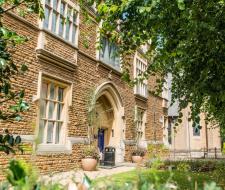 In 2023 - near 66% of A Level students achieved A*- A grades
United KingdomNorthamptonCurrently watching: 7from 14500 £ / term
In 2023 - near 66% of A Level students achieved A*- A grades
United KingdomNorthamptonCurrently watching: 7from 14500 £ / term -
 In 2023 results either for IB (33) and A Level (73% - A*-C) are higher than UK average
United KingdomBristolCurrently watching: 7from 17030 £ / term
In 2023 results either for IB (33) and A Level (73% - A*-C) are higher than UK average
United KingdomBristolCurrently watching: 7from 17030 £ / term -
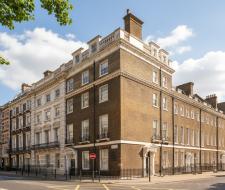 In 2023, in University Foundation Programme 50% of students achieved an A*- A
United KingdomLondonCurrently watching: 8from 19631 £ / term
In 2023, in University Foundation Programme 50% of students achieved an A*- A
United KingdomLondonCurrently watching: 8from 19631 £ / term -
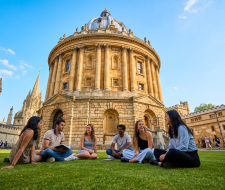
-
 Awarding body of University of the Arts London and Trinity College London
United KingdomCambridgeCurrently watching: 10from 14707 £ / semester
Awarding body of University of the Arts London and Trinity College London
United KingdomCambridgeCurrently watching: 10from 14707 £ / semester
Undoubtedly, each student, preparing for final exams at school, looks forward to entering universities in Great Britain. It goes without saying that England is a recognized world leader in high-quality secondary and higher education. There is a great deal of famous scientists, politicians, financiers and artists among essential graduates from prestigious British universities. Nowadays, British universities accept foreign students for education, and our SMAPSE team knows everything about how to be fully prepared for entering university in Great Britain and to get excellent education in England after school.
There are many academic programs in TOP-100 schools and colleges in the UK that are focused on preparation to enter universities in the United Kingdom by improving basic linguistic and academic knowledge. Below we will discuss how to enter the universities in England, as well as required documents for universities in the UK.
Alternative destinations
Understanding the UK Educational System
The UK's educational framework consists of four main sectors: primary education, secondary education, further education, and higher education. From ages 5 to 16, students undergo primary and secondary education, culminating in their General Certificate of Secondary Education (GCSE).
The decision post-GCSE is crucial: continue studies or enter the workforce. Those aiming for higher education start their journey by preparing for university in the UK, often through courses such as A-Levels, GNVQ's, or BTEC's. The A-Level course, a two-year program focusing on vocation-related topics, is pivotal. This is largely why UK universities often require international students to undergo additional preparation.
After completing school in another country, students typically need to take specialized university preparation courses to align their education with international norms. These courses empower students to bolster their English proficiency swiftly, recognize and rectify knowledge gaps, and familiarize themselves with the terminology of their desired profession. In the UK, each pre-university program involves an in-depth exploration of 3-5 subjects, culminating in exams.

Navigating University Admissions Post-School in the UK
Many foreign students and their parents aspire to enter a prestigious UK university. Currently, UK institutions offer diverse programs from traditional bachelor's degrees to PhDs. A diploma from these institutions often opens vast career prospects.
Securing a spot in these universities, however, has its own set of requirements. A proficiency in English language, usually at an "advanced" level, is compulsory. Language courses, including those cataloged by the SMAPSE team, are traditional options to achieve this.
Yet, linguistic prowess isn't the only requirement. Equalizing one's native education to UK standards is vital, making special university preparation courses essential. The SMAPSE team highly recommends opting for these courses either in the UK's top private boarding/day schools or in the very colleges or universities you aim to attend. Numerous international centers also offer these programs.

For international students, there are three primary options:
-
Transition from a home country university to a UK one, usually requiring a step back in one's academic year. This involves clearing several subject exams and demonstrating English fluency.
-
Complete a university preparation course in the UK and subsequently enroll in the relevant UK university faculty.
-
Obtain a specialist diploma or bachelor's degree at home, followed by applying for a master's in the UK.
Undoubtedly, the most efficacious way to secure admission in the UK lies in the specialized programs many universities offer. Potential students need to be fluent in English and must hold a certificate with scores leaning towards "excellent".
With guidance from the SMAPSE experts, international students can choose from the top 100 schools and colleges, where they can undertake preparation courses, ensuring a seamless transition into the UK's elite universities. Also university preparation course fees can vary, but are often seen as a worthy investment in one's future.
The UK remains one of the most popular destinations for international applicants. In the 2024/25 academic year there were 685,565 foreign students at UK higher education institutions, equal to 23.9% of all higher education students, with the share ranging from 14.6% in Wales to 25.7% in Scotland. The largest source countries were India with 146,480 students (21.4%) and China with 143,200 (20.9%), followed by Nigeria with 38,040 (5.5%). Although enrolment dipped slightly from 729,850 in 2023/24, UCAS projects that international applications will climb roughly 60%, from around 150,000 in 2022 to 240,000 by 2030.

What advice do you have for those who want to go to top universities in the UK?
Carefully consider all the information about the university of interest, including the cost - prices vary greatly, so you need to understand what options you will financially pull. Carefully prepare for tests in English (IELTS in the first place) - this will be needed for admission to any British university. Consider the courses that interest you more than others, and check the academic requirements for them, make sure that you have time to study this area well in your high school.
UK University Preparation for Foreign Students: A Comprehensive Guide

University Prep Courses UK: Foundation Certificate (UFC)
The University Foundation Certificate (UFC) is a prominent university preparation course in the UK tailored for international students. Designed for versatility, the UFC provides an avenue for students to adapt their prior learning to the British academic environment and refine their English proficiency.
Key features of the UFC include:
-
Introducing UK teaching methods to international scholars.
-
Enhancing existing knowledge in relevant fields.
-
Opportunities to immerse in the local academic atmosphere, linguistic setting, and campus life.
-
A curated list of disciplines based on specific institution requirements, with both mandatory and elective modules.
Despite its wide recognition, it's notable that elite universities like Cambridge and Oxford have distinct, more elaborate pre-university courses, such as the Pre-U.
Explore TOP-100 institutions offering the UFC program here.

International Diploma Program (IDP)
The IDP, a recent innovation, offers a blend of the Foundation course (UFC) and the first year of an undergraduate program. Intended to enable students from British boarding and day schools to directly enter the second year at a university, this program emphasizes both linguistic mastery and in-depth subject knowledge.
View institutions offering the International Diploma Program here.
A-Level Program
The A-Level program is a two-year curriculum aimed at preparing students for university in the UK. Students delve into up to six core disciplines, with examinations equivalent to matriculation tests. Based on the results, university admissions make decisions on entry, making the A-Level an essential criterion for numerous prestigious British institutions.
Browse educational institutions offering the A-Level program here.

International Baccalaureate (IB)
The IB stands as a universally acknowledged pre-university preparatory program. This two-year curriculum equates international education to the UK standard. Notable for its rigorous standards and objectivity, the IB encompasses both internal evaluations and assessments from external examiners in the UK. A multifaceted program, the IB covers core subjects, a variety of electives, and courses like the Theory of Knowledge and Creativity, Action, Service (CAS).
Check out institutions offering the International Baccalaureate program here.
Pre-Master’s Programme
Ideal for those possessing a bachelor's degree but seeking to improve their English competency for a master’s, this program offers intensive prep for international language examinations. Benefits include:
-
Access to higher-ranking British universities.
-
Enhanced English proficiency and meeting IELTS master's level requirements.
-
Introduction to new academic disciplines for specialization changes.
-
Familiarization with the UK academic environment.
Discover educational institutions offering the Pre-master’s program here.

International Year One Programme
This program corresponds to the first year of university education. Successful completion allows students to transition to the second year of a bachelor's program, effectively reducing the cost of preparing for university in the UK and the study duration from four to three years. Designed to bridge the educational gap, many UK universities offer this to ensure a smoother transition for international students.
For detailed insights on the International Year One Programme, the SMAPSE team is at your service.

Final Thought: Those who've completed the A-Level, IB, or any other Pre-University programs stand a good chance of gaining admission to top-tier universities in the UK, the US, and globally.
Preparing for University in the UK: 7 Key Steps to Consider
Choosing the right university preparation course in the UK can be daunting. It's crucial to identify your top-choice institution before diving into the selection process. The experts at SMAPSE have broken down the journey into seven clear steps:
1. Research and Prioritize Universities
Delve into comprehensive details about various UK universities and the university prep courses they offer. Once you've garnered ample information, shortlist several institutions based on your personal and academic preferences, ranking them by priority.
2. Rankings and Reputation
Evaluate the selected institutions based on their quality and educational standards. Reliable sources for such evaluations include “The Times Subject Tables” and “The Complete University Guide”. Remember, the UK's educational quality is upheld by its designated national agencies, ensuring you get value for your investment.
3. Consider Location
Estimate the convenience of each university's location. Factors to consider include proximity to amenities, transport links, and any personal preferences or needs.
4. Infrastructure and Faculty
Investigate the material resources and scientific foundations of your shortlisted institutions. Equally important is to gather insights about the teaching staff – their qualifications, experience, and expertise can significantly impact your learning experience.
5. Policies for International Students
As an overseas student, it's essential to familiarize yourself with the university's stance towards international attendees. This can include support services, integration programs, and any specific guidelines.
6. Admission Requirements
Understanding the specific criteria and prerequisites for applicants ensures you're well-prepared when applying. This could range from academic qualifications to proficiency tests.
7. Budgeting: University Preparation Course Fees & Living Expenses
Lastly, acquiring a clear picture of the cost of preparing for university in the UK is vital. This encompasses both the university preparation course fees and the expenses associated with living on campus or in university residences.
By following these steps, you'll be well on your way to making an informed choice and successfully preparing for your educational journey in the UK.

What documents are required for enrollment?
To apply to a British university, you will need to apply through UCAS (Universities and Colleges Admissions Service). Key documents include evidence of A-levels or equivalent qualifications, letters of recommendation, motivational essays and English language tests (e.g. IELTS). It is important to familiarize yourself thoroughly with the requirements of each specific institution.
What are the application deadlines?
Application deadlines vary by program and university, but applications are generally accepted from fall to winter. It is recommended to start the application process early, as some programs have a limited number of places and may require competition for places.
What are the English language requirements?
Most universities in the UK require the results of English language proficiency tests such as IELTS or TOEFL. Exact scores vary by university and program, but a minimum score of 6.0 or higher on IELTS is usually required. English language preparation courses are also available for students whose language skills do not meet these requirements.
Beyond the university's own threshold, the UK student visa sets a separate English requirement on the CEFR scale: level B2 for study at degree level or above, and B1 for study below degree level. This can be met by passing an approved Secure English Language Test (SELT), or proven another way — through a UK school qualification (GCSE, A level, Scottish National 4–5 or Higher), a degree from a UK institution, or an English-taught degree awarded abroad. A degree taught in English but awarded outside the UK must be assessed for equivalence by Ecctis (UK ENIC), which confirms it equals a UK bachelor's degree or higher and was taught in English.
Nationals of majority English-speaking countries such as the USA, Australia, New Zealand, Ireland and Caribbean states, as well as nationals of Canada, do not need to confirm their knowledge of English for the visa.
What are the costs of training?
The cost of studying in the UK varies greatly depending on the program and university chosen. The average annual cost for international students is around £12,000-£25,000 but can be higher at some prestigious institutions. It is important to check the exact costs for your chosen program.
Are there scholarships for international students?
Yes, there are scholarships and financial support available for international students in the UK. Many universities offer scholarships based on academic achievement and student need. You can also look for external organizations and foundations that provide financial assistance.
Can I work during my studies?
As a general rule, international students are allowed to work while studying in the UK. However, restrictions and conditions may vary depending on the type of visa and level of study. For example, undergraduate students can work up to 20 hours per week during semester and full-time during vacations. Under a Student visa you cannot be self-employed, claim public funds or benefits, or work in certain jobs such as a professional sportsperson or sports coach, though you may work as a student union sabbatical officer. After successfully completing the course, the Graduate visa lets you stay in the UK to work or look for work for 2 years if you apply on or before 31 December 2026 and for 18 months if you apply on or after 1 January 2027, while holders of a PhD or other doctoral qualification can stay for 3 years.
What clubs and societies are available to students?
British universities offer a variety of clubs and societies that can include sports teams, academic clubs, drama studios, hobby clubs and even political organizations. This is a great opportunity to broaden your social circle and delve into areas of interest.
What opportunities for internships and traineeships do universities provide?
Many universities in the UK have internship and apprenticeship programs that allow students to gain work experience in their field before graduating. This can be a great opportunity to expand your professional skills and contacts.
What are the opportunities for traveling and exploring the country?
There are plenty of places to travel and explore culture in the UK. You can visit museums, galleries, historical sites and natural attractions. Plan free time to explore the country and experience its unique aspects.
What are the career opportunities after studying?
The UK offers many career opportunities including internships, full-time jobs and further education. Career support is available through University Services, which helps students with job searches, CV writing and interview preparation.
UK Student visa requirements after university preparation
After completing a university preparation program, most international students need a Student visa to begin their degree studies in the UK. This visa has replaced the former Tier 4 (General) student visa. An applicant must be 16 or over, hold an offer from a licensed student sponsor, have enough money to support themselves and pay for the course, and be able to speak, read, write and understand English.
The English requirement is related to the level of study. For a degree-level course or above the standard is equivalent to CEFR level B2, and for study below degree level it is CEFR level B1. English can be confirmed by a UK school qualification (GCSE, A-level, Scottish National 4-5 or Higher), a degree from a UK institution, an English-taught degree from an institution outside the UK, or by passing an approved Secure English Language Test (SELT).
Timing matters when planning the application. From outside the UK a student may apply at the earliest 6 months before the course starts, and from inside the UK at the earliest 3 months before. A decision usually arrives within 3 weeks for applications made outside the UK and within 8 weeks for those made inside the UK. The visa allows a degree-level student aged 18 or over to stay for up to 5 years, while a course below degree level usually permits a stay of up to 2 years. On arrival a student may enter up to 1 week before the course start if the program lasts 6 months or less, or up to 1 month before if it lasts more than 6 months, and must not travel before the visa start date.
Costs and finances are documented in advance. The application fee is £558 when applying from outside the UK and £558 to extend or switch from inside the UK, with the Immigration Health Surcharge (IHS) payable in addition. The maintenance requirement is £1,529 per month for up to 9 months for courses in London and £1,171 per month for up to 9 months for courses outside London, where London means the City of London and the 32 London boroughs. These funds must be held in the applicant's account for at least 28 consecutive days, with the 28-day period ending within 31 days of the application date, and the student must also be able to cover course fees for one academic year of up to 9 months as stated on the CAS.
Plans for staying after graduation are worth noting too. A Graduate visa allows a student to remain in the UK after successfully completing the course for 2 years if the application is made on or before 31 December 2026, 18 months if made on or after 1 January 2027, and 3 years for those who completed a PhD or other doctoral qualification.
Comparing routes to a UK university: A-Level, IB, BTEC and Foundation pathways
Students aiming for a degree in Great Britain can enter a university through several recognized pathways. The UK organizes education in five stages — early years, primary, secondary, further education and higher education — and the final secondary stage is where the choice of preparation route is made. Understanding how the main options differ helps applicants pick the path that matches their academic background and target program.
Qualification-based routes
The most common academic option to enter a UK university concerns passing A-levels, taken after GCSE secondary education. Alongside A-levels, UK universities widely recognise equivalent qualifications such as the International Baccalaureate (IB) and vocational BTEC diplomas, so applicants are not limited to a single program. These qualifications are designed to be read directly by admissions teams as evidence of readiness for higher education.
Preparation and bridging routes
For international students whose schooling does not map onto A-levels, dedicated university preparation routes such as Foundation programs (also called University Foundation Courses, UFC) and International Year One courses act as bridges into degree study. They build the academic and English-language groundwork needed before, or in place of, the first year of a chosen degree.
How applications are handled
Whichever route a student follows, undergraduate applications to almost all UK universities are managed centrally by UCAS (the Universities and Colleges Admissions Service), so the qualification differs but the application channel is shared. It is also worth noting that the «university» title and degree-awarding powers in the UK are protected by law — institutions are established by royal charter, by Act of Parliament or under the Further and Higher Education Act 1992 or the Higher Education and Research Act 2017 — which is why the qualifications these institutions accept are scrutinised closely.
General statistics on education in the UK - ratings, specialties, universities
Secondary education in the UK
| World Ranking | 1 |
|---|---|
| Foreign students | 20% |
| Minimum age | 4 years+ (age 11-14) |
| Tuition language | English |
| Minimum English level | beginner&higher (depends on the school) |
| Tuition cost | £17,000-50,000 |
| Cost of living (year) | £10,000-25,000 |
| Mandatory subjects | English, Mathematics, Science |
Advantages and disadvantages of English schools
| Advantages | Disadvantages |
|---|---|
| The opportunity to enter the best universities in England, USA, Canada, Switzerland, Europe, the world | Expensive |
| High quality of education and academic standards | Strong workload |
| Perfect English after graduation | The need to change the social environment; it takes time to adapt |
| Useful contacts | The difficulty of choosing the most suitable school for the child, requires a qualified specialist |
Top 33 best schools and colleges in and near London 2027
| 1 | Abbey DLD College London |
| 2 | Sevenoaks School |
| 3 | Chelsea Independent College |
| 4 | ACS Cobham International School |
| 5 | MPW College London |
| 6 | Westminster School |
| 7 | Mill Hill School |
| 8 | St Pauls School London |
| 9 | Kensington Park School |
| 10 | Harrow School |
| 11 | CATS College London |
| 12 | David Game College London |
| 13 | Hurtwood House School |
| 14 | Brentwood Private School |
| 15 | Bellerbys College London |
| 16 | Caterham School |
| 17 | International Community School |
| 18 | TASIS the American International School in England |
| 19 | City of London Freemen’s School |
| 20 | Dulwich College |
| 21 | Ashbourne College |
| 22 | Epsom College |
| 23 | Royal Russell School |
| 24 | Rochester Independent College |
| 25 | Worth School |
| 26 | Felsted School |
| 27 | Queenswood private boarding school |
| 28 | LVS Ascot School |
| 29 | Eaton Square Private School London |
| 30 | Cambridge Tutors College |
| 31 | Marymount International School London |
| 32 | St Christopher School Letchworth |
| 33 | King Edward's Witley Private School |
Cost of living in United Kingdom
| Expenses - USD/Month. | Min. | Med. |
|---|---|---|
| Accommodation | 306 | 398 |
| Food | 177 | 391 |
| Transportation | 59 | 180 |
| Communications and utilities | 74 | 104 |
| Clothing | 20 | 77 |
| Sports and leisure | 25 | 88 |
| Total | 662 | 1,239 |
| Accommodation in United Kingdom | USD/Month. | |
| Shared room outside of centre | 309 | |
| Shared room in city centre | 402 | |
| 1 bedroom apartment outside of centre | 596 | |
| 1 bedroom apartment in city centre | 723 |
Higher education in UK-statistics
| Name | Bachelor |
|---|---|
| Deadline | March |
| The probability of admission | 63% |
| Duration | 3-4 years |
| Average cost | £15,000 |
| Expulsion statistics | 21% |
| Language of tuition | English |
| Minimum level of English | IELTS 6.5 |
| Job opportunity | 30% |
| Percentage of students enrolled in the master's program | 47% |
Learning programs-summary information
| Name | Meaning | Equivalent | Min. age | Duration, years |
Next stage | Cost |
|---|---|---|---|---|---|---|
| GCSE | General certificate of secondary education | secondary education (non-accomplished) | 14 | 1–2 | A-Levels | 15,000 USD+ |
| A-Levels | Advanced level | secondary education (accomplished) | 16 | 2 | University | 15,000 USD+ |
| BTEC | Business and Technology Education Board | secondary special education | 14 | 2–3 | University/ work | 15,000 USD+ |
| Oxbridge Preparation | Preparing for Oxford and Cambridge | secondary education (accomplished) | 17 | 1 | University | 15,000 USD+ |
| International Baccalaureate | International baccalaureate | secondary education (accomplished) | 16 | 2 | University | 18,000 USD+ |
| Foundation/ Pathway Year | Preparatory year | admission to the 1st year of university | 17 | 1 | University | 14,000 USD+ |
| NCUK | The Northern consortium | 2 year university | 17,5 | 1 | 2 year University of NCUK | 13,000 USD+ |
| Special Preparation (Medics/Math/Business) | Specialized training | - | 14 | optional | optional | 4,000 USD+ |
| Academic English | Academic English | Language school | 8 + | 6–12 months | School or University | 8,000 USD+ |
