

University preparation in Luxembourg for international students
-
 from 600.00 € / month
-

-
 Ranked #26 worldwide for joint-EMBA programmes
LuxembourgLuxembourg Сity
Ranked #26 worldwide for joint-EMBA programmes
LuxembourgLuxembourg Сity -
-
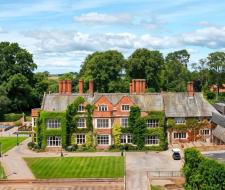 "5th Highest Performing School by A Level results in 2023" – The Telegraph.
United KingdomYork
"5th Highest Performing School by A Level results in 2023" – The Telegraph.
United KingdomYork -
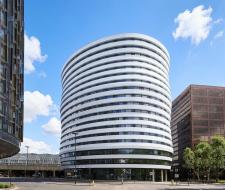 In 2023 100% of students achieved A*– B grades at A-level
United KingdomLondon
In 2023 100% of students achieved A*– B grades at A-level
United KingdomLondon -
 55% of A Level students achieved A*- A results among top UK schools in 2023
United KingdomCambridge
55% of A Level students achieved A*- A results among top UK schools in 2023
United KingdomCambridge -
 75% of our A-Level students achieved A*-A in 2022
United KingdomCanterbury
75% of our A-Level students achieved A*-A in 2022
United KingdomCanterbury -
 Leading boarding school right in the heart of Manhattan
USANew York
Leading boarding school right in the heart of Manhattan
USANew York
Luxembourg had its own higher education only 20 years ago, in 2003, along with the first state university – until this year, Luxembourgers studied at universities in other countries. In 2023, there are several state, private, and international universities in the country.
Universities in Luxembourg provide students with high-quality higher education, being popular not only among locals, but also among foreign students, and both categories of students can study in the country on a state-funded basis.
Alternative destinations
Advantages of studying in Luxembourg
- Programs and courses in English are widely available at universities and educational institutions in the country, which makes studying easier for international students — they do not face language barriers.
- In global safety and happiness indices, Luxembourg frequently ranks very well. Students can study in a calm and safe environment, where they have access to top-quality healthcare, convenient transport, etc.
- Students can officially work part-time while studying in Luxembourg, including international students.
- Luxembourg's central location makes it an excellent starting point for traveling around Europe. During breaks from studies (weekends, holidays), students can easily explore neighboring countries.
- After graduating from a Luxembourg university, a foreign national can stay in the country for 12 months to look for work.
Where to start preparing for studying in Luxembourg?
Currently, more than half of all students at Luxembourg universities are foreigners, which proves how realistic it is to gain admission to this European country. However, competition among international students exists, so proper preparation is essential for successful admission.
One of the first stages of preparation is studying the organizational aspects. During the academic year in Luxembourg, there are two application intake periods for international students: summer and winter intakes. For the summer intake, international students can submit applications for courses from the beginning of January to the end of February. For the winter intake — from July to the end of September. For a master's degree, applications can be submitted throughout the entire calendar year.
For an international applicant to be successfully enrolled in a course, they must meet the criteria established by the university. Admission requirements are divided into categories:
- General. Each educational institution sets benchmarks for all levels of study to ensure that applicants have the basic skills and knowledge to begin the course and successfully complete it in the future. These benchmarks are the general admission requirements. For example, to enroll in an undergraduate program, a student must have completed twelve years of secondary school education, have a good command of the English language, and have a strong academic record.
- Specific. These requirements include compulsory subjects that depend on the specialization of the course. For example, to study medicine or engineering at the undergraduate level, it is necessary to have taken biology and mathematics in secondary school. The same rule with special admission requirements applies to obtaining a master's degree, where the compulsory subjects are specified within each course.
Preparation for universities in Luxembourg also stipulates submission of the necessary documents — the basic package includes:
- An officially issued secondary school certificate or higher education diploma.
- Personal biography and a motivation letter.
- One academic reference letter and one personal recommendation letter.
- Confirmationof language proficiency at the required level.
- A paid receipt for tuition for the course in which the applicant has been enrolled.
Top 3 tips for preparing for university in Luxembourg
- Carefully study the characteristics of the university and program you plan to apply to. Keep in mind that some universities in Luxembourg are stronger in technical sciences, while others are stronger in the humanities. Compare and analyze different universities on your own or with the help of assistant services for international applicants.
- Choose a study format that suits you: part-time, full-time, or a combination of both.
- Think about your future career even before applying. In Europe, what is valued is not just a specialist's diploma, but their applied skills that are relevant to future work. Plan your career path during the application process, study the disciplines that will be useful to you in practice, and assess the university's additional opportunities for developing practical skills.
Learning programs-summary information
| Name | Meaning | Equivalent | Min. age | Duration, years |
Next stage | Cost |
|---|---|---|---|---|---|---|
| GCSE | General certificate of secondary education | secondary education (non-accomplished) | 14 | 1–2 | A-Levels | 15,000 USD+ |
| A-Levels | Advanced level | secondary education (accomplished) | 16 | 2 | University | 15,000 USD+ |
| BTEC | Business and Technology Education Board | secondary special education | 14 | 2–3 | University/ work | 15,000 USD+ |
| Oxbridge Preparation | Preparing for Oxford and Cambridge | secondary education (accomplished) | 17 | 1 | University | 15,000 USD+ |
| International Baccalaureate | International baccalaureate | secondary education (accomplished) | 16 | 2 | University | 18,000 USD+ |
| Foundation/ Pathway Year | Preparatory year | admission to the 1st year of university | 17 | 1 | University | 14,000 USD+ |
| NCUK | The Northern consortium | 2 year university | 17,5 | 1 | 2 year University of NCUK | 13,000 USD+ |
| Special Preparation (Medics/Math/Business) | Specialized training | - | 14 | optional | optional | 4,000 USD+ |
| Academic English | Academic English | Language school | 8 + | 6–12 months | School or University | 8,000 USD+ |
Top 21 boarding colleges in England 2027
| 1 | Cardiff Sixth Form College |
| 2 | National Mathematics and Science College |
| 3 | Abbey College Cambridge |
| 4 | d'Overbroeck's College |
| 5 | MPW London |
| 6 | CATS Cambridge |
| 7 | Kensington Park |
| 8 | DLD London |
| 9 | King's College St Michael’s |
| 10 | Bellerbys Cambridge |
| 11 | Chelsea Independent College |
| 12 | MPW Cambridge |
| 13 | Bellerbys Brighton |
| 14 | CATS London |
| 15 | St Clare's Oxford |
| 16 | Bishopstrow College |
| 17 | CATS Canterbury |
| 18 | Bellerbys London |
| 19 | Ealing Independent College |
| 20 | Cambridge Tutors College |
| 21 | Abbey Manchester |
Top 35 best universities and colleges in Canada 2027
| 1 | University of Toronto |
| 2 | McGill University |
| 3 | University of British Columbia |
| 4 | University of Alberta |
| 5 | Simon Fraser University |
| 6 | Montreal University |
| 7 | University of Windsor |
| 8 | York University |
| 9 | University of Guelph |
| 10 | McMaster University |
| 11 | University of Manitoba |
| 12 | University of Waterloo |
| 13 | Royal Roads University |
| 14 | Vancouver Film School |
| 15 | Kwantlen Polytechnic University |
| 16 | University of Calgary |
| 17 | Dalhousie University |
| 18 | Fanshawe College |
| 19 | University of Ottawa |
| 20 | Laval University |
| 21 | Sheridan College |
| 22 | University of Regina |
| 23 | Brock University |
| 24 | Thompson Rivers University |
| 25 | Humber College |
| 26 | Vancouver Island University |
| 27 | Mohawk College |
| 28 | Centennial College Toronto |
| 29 | Niagara College |
| 30 | Capilano University |
| 31 | Seneca College |
| 32 | Algoma University |
| 33 | Saint Clair College |
| 34 | Douglas College |
| 35 | LaSalle College |