
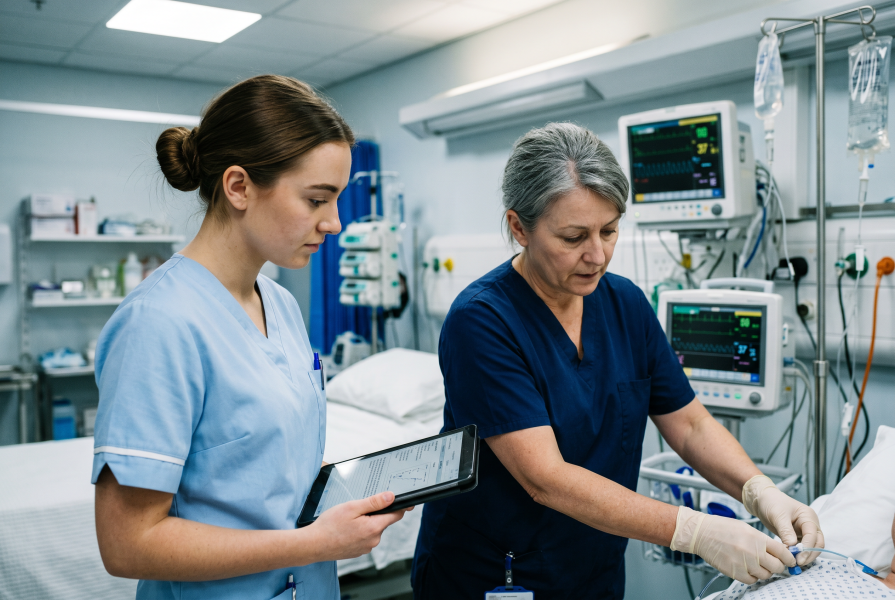
The career of a nurse is one of the most prestigious and rewarding professions in the realm of healthcare. Nurses are highly valuable professionals when it comes to providing medical services, assisting the family of the patient, and working with other professionals in the healthcare industry. Due to growing demands in healthcare because of the aging population and development of the healthcare industry,
If you are a student in high school and would like to get some guidance on choosing your profession, then becoming a nurse is a good idea.


Why Choose a Career in Nursing?
Nursing requires science and compassion, communication, and critical thinking skills. Every day, nurses assist patients in overcoming their illnesses, managing their chronic diseases, and taking care of their overall health.
Some of the most significant advantages of being a nurse are:
-
Great job opportunities
-
High salary rates
-
Career growth
-
High level of demand for nursing specialists
-
Flexibility
-
The ability to affect people’s lives
Furthermore, many nurses feel personally fulfilled working in this sphere, since they get to make a difference in people’s lives.
Step 1: Complete Your Secondary Education
The very first step in joining the nursing profession is to complete your secondary education or high school education. Those students who wish to pursue a career in nursing will do well by concentrating on disciplines that will give them a solid scientific background in:

-
Biology
-
Chemistry
-
Mathematics
-
Physics
-
English
-
Health Sciences
Both communication and analytical skills are important since nurses need to communicate health care information effectively and make well-informed decisions.
Step 2: Earn a Nursing Degree
After graduating from secondary school, aspiring nurses have to join a registered nursing course. This may differ according to the specific country and what the prospective nurse intends to achieve but may include the following courses:
Associate Degree in Nursing (ADN)
The Associate Degree will take about two to three years to complete and is meant to qualify individuals for basic nursing jobs. It involves both classroom learning and clinical training.
Bachelor of Science in Nursing (BSN)
The Bachelor of Science in Nursing program usually takes four years to complete and provides more training in nursing care, research, management, and leadership in the health care industry.
A lot of companies nowadays are increasingly opting for BSN holders due to the additional education they have.
Step 3: Gain Clinical Experience
Practical training is an important aspect of nursing training. This involves working under the guidance of professional nurses in hospitals, clinics and community health centers.
Clinical training enables students to learn necessary skills including:

-
Observing the health condition of patients
-
Giving medications to patients
-
Helping in medical procedures
-
Recording data about patients
-
Communicating with the healthcare team
-
Supporting the mental wellbeing of patients and their relatives
All these practical sessions prepare students for entry into the labor market.
Step 4: Obtain Professional Licensure
Attending the graduation ceremony from the nursing program is just the beginning. In most countries, nurses have to clear a licensure examination conducted at the national level before practicing their profession.
Examples include:
-
United States: NCLEX-RN
-
Canada: NCLEX-RN (provincial registration required)
-
United Kingdom: Registration with the Nursing and Midwifery Council (NMC)
-
Australia: Registration with the Australian Health Practitioner Regulation Agency (AHPRA)
Licensure ensures that nurses meet national standards for safe and effective patient care.
Essential Skills Every Nurse Needs
Competent nurses are those who are skilled in both technical and personal skills. The following are some of the important skills that nurses have:

-
Empathy and compassion
-
Critical thinking
-
Being detail-oriented
-
Communicating
-
Working as a team
-
Time management
-
Resilience
-
Problem solving
-
Adaptability
As the environment in healthcare institutions is unpredictable, nurses need to stay cool when making important clinical decisions.
Nursing Specializations
After gaining more experience, many nurses decide to specialize in a certain area of healthcare. Some areas in which nurses can specialize are:
-
Emergency nursing
-
Pediatric nursing
-
Critical care nursing
-
Surgical nursing
-
Onco-nursing
-
Mental health nursing
-
Maternity and neonatal nursing
-
Geriatric nursing
-
Community health nursing
-
Cardiovascular nursing

It is possible that some specialization needs further training and education.
Career Opportunities Beyond Hospitals
Though hospitals have several nurses working for them, there are many job opportunities available in various healthcare environments.
Some of the places where nurses may work include:
-
Hospitals
-
Primary care centers
-
Schools and Universities
-
Nursing Homes
-
Rehabilitation centers
-
Public Health Services
-
Military healthcare services
-
Research facilities
-
Pharmaceutical firms
-
Tele-health services
Increasing use of digital healthcare has provided more job prospects in remote patient monitoring and virtual nursing.
Continuing Education and Professional Development
The field of healthcare keeps changing, and this means that there is a need for continuous learning for nurses. Some nurses seek to further their education to be updated on recent developments and improve their skills.
Examples of advanced studies include:

-
Master of Science in Nursing (MSN)
-
Doctor of Nursing Practice (DNP)
-
Advanced practice certifications
-
Healthcare management
Through continuing education, one can work as a nurse practitioner, clinical nurse specialist, educator, administrator, or researcher.
Challenges of the Profession
However, nursing may be stressful at times since nurses work long hours, care for sick patients and respond to medical emergencies.
Some of the most common problems in nursing are:
-
Heavy workloads
-
Shift work (especially night and weekend shifts)
-
Emotional stress
-
Physical strain
-
Care for multiple patients at once
The presence of good support networks, personal growth and self-care practices play a key role in sustaining wellness in the field of nursing.
The Future of Nursing
The future for the nursing profession appears bright, as healthcare organizations adapt to changes brought about by an aging population, chronic disease management, and innovations in technology. While developments in artificial intelligence, health records, telemedicine, and wearable technology are changing patient healthcare, they will not substitute the compassion offered by nurses.
The nurses of the future will work alongside technological advancements while providing personalized healthcare services.
Conclusion
To be a nurse, one needs dedication, knowledge and readiness to assist others. All the process from earning a degree in nursing and getting licensure, to getting clinical experience and education for life makes one prepared for a career which combines scientific background and compassion.
Nursing can be considered as one of the most attractive professions nowadays because of the bright future perspectives, specialization options and opportunity to influence the patients’ life. Thus, for everyone who wishes to improve people’s lives and assist them, there is no more honorable profession than nursing.