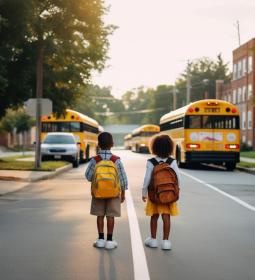

For more than 100 years, schools have relied on a familiar schedule. People plan around a 180-day year. Classes often run for about 50 minutes. Many programs still assume a four-year track. In that setup, a student’s move to the next step is tied to how much time they spend in a classroom. It is not always tied to whether they truly understand the work.
Now a new push is starting to question that plan. It is often called Competency-Based Education, or CBE. The main idea is simple. What if the goal is learning, not time?

Principles of Competency-Based Education
In CBE, students do not just wait for the next date on the calendar. They move forward after they show mastery of a skill. That mastery is checked in a direct way. Students study, practice, and then demonstrate what they can do. They continue only after they can show they understand and can use the knowledge.
This approach rests on a few key principles, which are usually listed first.
-
Mastery is the Goal: The primary metric of success is demonstrated proficiency, not a letter grade or a passing time.
-
Pacing is Flexible: Students can accelerate through material they grasp quickly and take more time on concepts that are challenging, eliminating the "Swiss cheese" effect of learning gaps.
-
Learning is Explicit: Competencies are clearly defined, measurable, and often aligned with real-world applications, making the purpose of each lesson transparent.
-
Assessment is Ongoing: Rather than a single high-stakes test, CBE uses a variety of assessments to continuously gauge a student's progress and provide targeted support.
The Promise of a CBE Future
CBE draws support because people think it can make school abroad fairer and work better. Supporters also say it fits students in a more practical way.
One big claim is that it helps students learn at their own pace. In a typical class, the teacher often has to aim at the average learner. That means some students wait around, while others fall behind. With CBE, the work can be set to match what each student needs. Help and practice can shift as a student improves.
Another claim is that it can help narrow achievement gaps. CBE asks for real mastery before a student moves ahead. This can stop students from passing along with weak understanding. That matters a lot in areas such as math and science, since later topics build on earlier ones. When a student reaches a solid grasp of fractions before algebra, the next step is much easier.
Furthermore, CBE is highly relevant to the modern workforce. By focusing on explicit, demonstrable skills—like critical thinking, collaboration, or coding—it creates a direct line between education and career readiness. For adult learners and non-traditional students, this model is a game-changer, allowing them to earn credentials for skills they already possess and to fit learning around their busy lives.
The Hurdles on the Path to Transformation
Even with its potential, CBE has hurdles that slow uptake. One key issue is the old setup that is already in place. Most of what we do in education is tied to the Carnegie Unit, meaning the credit hour. Admissions rely on it, money for school follows it, and graduation rules depend on time in a seat. Moving to a model based on skills would mean changing many rules that are already locked in. It would also require a new way to pay for learning.
Assessment is another hard part. Good checks are not easy to build. They must be fair and dependable, and they should test whether a person can do the task. They should not reward memorizing facts for a test. Doing that well takes time, money, and expert work. It is more complex than a typical multiple-choice exam.
CBE also changes what teachers have to do. In this model, teachers guide students instead of only lecturing. The class can include learners who are at very different stages. That pushes teachers to adjust lessons often. It also asks for strong data skills and the ability to teach in more than one way. Many schools do not give enough preparation or ongoing help to meet this need.
The Verdict: The Future is Mixed
Is Competency-Based Education the Future? Maybe, but it is not that simple. Swapping out the old system all at once would be a bad idea. The current setup has real value. Still, CBE looks like it will matter more and more in what comes next.
A mixed approach seems more likely. Some schools may keep the familiar structure, but they will borrow ideas from CBE. Students may get learning paths that fit them better. They may move ahead after they show they understand the work. Schools could also allow more choice in how students learn and show growth.
Picture a classroom day that does not look the same every hour. One part could be group work and hands-on projects. Another part could be time on a digital tool that checks skills step by step. CBE would also fit well in places where proof of skills is already expected. That could include professional certificates, company training, and other programs that award credit based on what someone can do.
CBE is more than a passing phase. It pushes people to ask a hard question: are students really learning, or are they just passing time? Moving toward this model will not be easy. But the main ideas point to a clearer goal. The hope is a school system where students succeed because they have learned, not only because the schedule says they should. The real shift is not just where or when learning happens. It is whether the learning actually took place.