
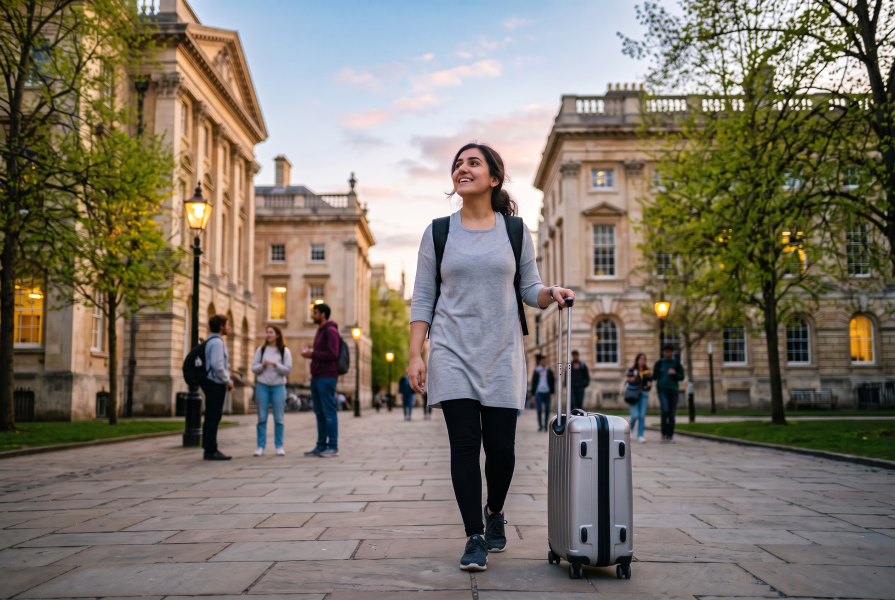
Attending school abroad is an exciting opportunity for students to get an education of the highest caliber, meet new people, learn about different cultures, and create global employment opportunities. Before beginning this journey, however, one of the most important steps is obtaining the correct student visa.
The specific requirements may vary depending on the country where you want to study, but the general idea of applying for a student visa is the same everywhere. It is very helpful to know all the details about getting a student visa.


What Is a Student Visa?
A student visa is an official document or permit that enables an international student to travel and study in another country for a certain period. Some countries give students a visa prior to traveling, but other countries grant a residence permit or study permit upon arriving.
The issuance of a student visa is often connected with enrollment in an accredited educational establishment and comes with certain terms and conditions.
Who Needs a Student Visa?
Whether you need a student visa depends on your nationality and your study destination.
For instance:
-
Students from any European Union (EU) member state usually do not need a visa to pursue studies in another EU member state.
-
Citizens of countries that are not members of the EU will normally need a student visa or study permit to pursue their studies in Europe.
-
International students hoping to study in countries like the US, Canada, Australia or the UK need a student visa prior to visiting.
When Should You Apply?
Perhaps one of the largest mistakes that the applicants make is starting the visa application too late.
It is suggested by many embassies that applicants should start their visa applications immediately upon receiving the letter of admission from the university. Visa applications can vary greatly in length from a few weeks to several months.
Applying in advance provides the applicants with enough time to submit other documents if needed.

Common Documents You'll Need
While there are differences from country to country, a majority of the documentation needed for a student visa application remains the same.
They typically include:
-
Valid passport
-
Acceptance/Admission letter from the university
-
Completed visa application form
-
Passport-sized photographs
-
Proof of financial resources
-
Health insurance
-
Proof of accommodation
-
Academic transcript/certificates
-
Test scores of English proficiency (if applicable)
-
Visa processing fee
In some cases, additional documents such as police clearance certificates, medical examinations, or certified translations of official documents may be asked for.
Proving Financial Support
All nations expect students to prove that they are financially capable of supporting themselves while pursuing their education.
These documents should include the following:

-
Personal bank statements
-
Scholarship confirmation letters
-
Sponsorship documents
-
Approval for loans
-
Financial guarantees from the student’s guardian or parent
The exact financial requirement differs according to the destination country and cost of living.
Providing clear, well-organized financial documents strengthens your application.
Health Insurance Requirements
International students are expected to have health insurance in many countries.
Depending on the country that you will be travelling to, you might need:
-
Private international health insurance
-
Government-approved health insurance for students
-
National health service registration
-
European Health Insurance Card (EHIC) or its equivalents for eligible students
Always ensure that your insurance policy meets the minimum coverage required by immigration authorities.
Accommodation Matters
Visa applications often demand evidence that you have already made arrangements for your accommodation.
These can include:

-
Confirmation of university accommodation
-
Rental contract
-
Host family confirmation
-
Short-term accommodation arrangement
It shows that you have made proper plans for your visit.
Preparing for a Visa Interview
Some countries insist on interviewing applicants at their embassies or consulates.
During this interview, questions will arise about:
-
The university you have decided to attend
-
Your study plans
-
Why you chose that particular country
-
Finances for studying
-
Accommodation
-
Career plans in the future
Give honest answers. Make sure that they coincide with information in your application.
Understanding Visa Conditions
Getting your student visa is just the start. All visas come with certain conditions that need to be met.
Some examples include:

-
Full-time enrolment
-
Satisfactory academic performance
-
Observing restrictions on work
-
Having up-to-date health insurance
-
Reporting any address changes
-
Updating or renewing your visa or residence permit
Violating visa conditions could affect your immigration status or future applications.
Can You Work While Studying?
Many countries permit international students to engage in part-time employment while studying.
Nevertheless, the differences are considerable in regard to:
-
Maximum number of working hours
-
Working while on vacation
-
Rules for internship
-
Tax obligations
-
Types of allowed employment
Students must become acquainted with local laws before taking up any job.
After You Arrive

There is usually a need for some other administrative procedures to be completed upon arrival in most countries.
These include the following:
-
Registering your address
-
Getting a residence permit
-
Opening a bank account
-
Getting a tax or identification number
-
Registering with the national health care system
-
Getting your biometric residence card.
Completing these requirements promptly helps avoid future complications.
Common Mistakes to Avoid
Visa applications can be turned down or delayed for reasons that could have been avoided.
These include, among others, the following:
-
Applying too late
-
Incompleteness of documents
-
Insufficient proof of finances
-
Purchase of wrong health insurance policy
-
Giving inconsistent information
-
Missing interview appointments
-
Failing to translate the documents required
-
Not following the instructions of the embassy
Careful preparation and attention to detail significantly improve your chances of approval.
Tips for a Successful Student Visa Application

A successful application is usually dependent on good preparation.
Here are some useful tips:
-
Begin the application process early.
-
Familiarize yourself with all the visa requirements.
-
Make copies of every document you submit.
-
Double-check names, dates, and passport details.
-
Have organized proof of finances.
-
Be punctual for all your appointments.
-
Check the status of your application from time to time.
-
Follow any additional instructions from the embassy or immigration authorities.
Looking Ahead
As international education keeps expanding, it becomes common for many countries to upgrade their visa procedures, introducing online application and scheduling systems, among others. Moreover, as immigration regulations keep changing, it becomes crucial for students to familiarize themselves with the current conditions before submitting their visa application forms.
Acquaintance with the visa process will not only help to avoid stress but will make the whole experience easier for students.
Conclusion
Obtaining a student visa is one of the major components of preparation before traveling to other countries to pursue higher education. Even though there are different laws regarding immigration in each country, a well-planned application is based on the thoroughness of the process.
In this way, all the necessary documents will be properly prepared and submitted for consideration in accordance with the requirements. This will help international students concentrate on the real purpose of their trip.