

Study in Saudi Arabia. 13 best institutions in Saudi Arabia
- Language courses in Saudi Arabia
- Admission requirements
- Tuition fees
- Scholarships
- Knowledge assessment
- Available international programs in private schools
- Higher education
- Benefits of studying in Saudi Arabia
- Education system in Saudi Arabia
- Student visa to Saudi Arabia
- Saudi Arabian universities in the 2026 world rankings
-

-

-

-
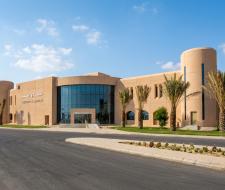 from 1000.00 $ / year
-
 Saudi ArabiaJeddahCurrently watching: 1
-

-

-
 from 1000.00 $ / year
-

-
 from 1000.00 $ / year
Saudi Arabia is a state in which education is constantly undergoing changes. The country is actively modernizing the education system and improving the skills of the population, which is considered critical for the economic transition of the kingdom to a new era.
The government is implementing education reforms: these include the introduction of modernized school curricula with an emphasis on critical thinking, teacher retraining, the construction of new schools, and the decentralization of a rigid, centrally managed school system. This ensures that Saudi youth are prepared for the future of the knowledge-based economy. Local schools and universities are a great way to experience Arab culture.

Alternative destinations
Language courses in Saudi Arabia

Arabic courses
Since almost half a billion people speak Arabic across a large region, the language has many variations. It is divided into three main forms:
- Quranic Arabic — the Arabic used in the Quran and during prayer,
- Modern Standard Arabic, also called Fusha, — the language used in official settings such as the media and government correspondence. Although most native speakers understand Fusha, they rarely use it,
- Colloquial Arabic — the language of everyday life, which varies considerably between countries and regions. For example, the Arabic spoken in Saudi Arabia sounds completely different from the language spoken in Syria.
Saudi Arabia is home to speakers of other dialects, including Najdi and Hejazi. That is why studying Arabic in the Kingdom specifically is an excellent idea for those who want to learn the «original» local language.
Educational institutions offer different types of courses:
- Group,
- Individual tuition,
- Intensive,
- Business and professional programs,
- Online courses.
On the following topics:
- Economics,
- Politics,
- Health,
- Tourism,
- Students and student life,
- Media,
- Work,
- Business.
The following types of courses are the most popular among foreigners:
University courses
Several universities in Saudi Arabia offer Arabic courses for non-native speakers. Saudi universities such as King Abdulaziz University and Alfaisal University are considered among the best.
Language centers
These types of organizations hold varying numbers of classes per week, so students can choose whether to attend during the day, in the evening, or on weekends. This is a great option for those who teach English in Saudi Arabia and want to improve their Arabic in their free time.
Freelance tutors
With their help, you can actively develop a specific aspect of the language: listening, writing, or grammar.
English courses
English courses are also very popular in Saudi Arabia. The general goals of English language programs are as follows:
- help students use the language for academic tasks,
- develop students' ability to express their ideas fluently, accurately, and confidently,
- foster mutual cultural understanding and respect between peoples,
- improve cognitive and problem-solving skills for academic and professional growth,
- develop an understanding of the importance of English as a means of international communication,
- strengthen a positive attitude toward learning English.
Admission requirements
If a student is studying on an A-level or International Diploma program, they can apply for direct admission to the first year of a bachelor's degree at a university. For admission to medicine and dentistry, only A-Level and International Diploma will be considered. SAT I and SAT II tests are not required, but are considered a bonus (provided the student has the minimum average score). Additionally required:
- Language proficiency certificate,
- Transcript of grades (translated and notarized),
- Foreign passport and copies of it,
- Copies of Russian passport,
- Portfolio of achievements (not always, but if possible),
- Completed application form.
Separately, requirements for the language of instruction should be taken into account. To obtain a long-term student visa, in addition to educational documents, proof of proficiency in the language of instruction will be required; an exception is made only for those planning to study Arabic. The visa document package is accompanied by a medical certificate confirming the absence of infectious diseases and medical insurance for the student and accompanying persons.
Tuition fees

40% of private schools in Saudi Arabia charge fees ranging from 10,000 to 20,000 Saudi riyals per year ($2,600-5,300/year). According to a study, 94% of private schools in the Kingdom charge fees above 10,000 riyals, while 6% charge less, reports the newspaper Al-Watan.
The study "Examining the Current State of the Private and International Education Sector in the Kingdom of Saudi Arabia" was prepared by the National Committee for Private Education and Training under the Federation of Saudi Chambers in cooperation with one of the expert centers. The study found that 63% of private schools use the Saudi curriculum, 33% of schools use the American curriculum, and 17% follow the British one.
Public education in Saudi Arabia is free for students at all levels. Public schools are free and any Saudi student is entitled to attend them; when places are available, foreign students may also enroll free of charge. In addition, fully funded scholarships are available for non-Saudi students, allowing them to study at Saudi universities, colleges, academies, and institutes without paying tuition and covering all study-related expenses, including accommodation. There are also partially funded scholarships and self-funded paid programs.
Private schools (following the local Saudi curriculum), which are open to both Saudis and foreigners, charge fees to non-Saudis that include a 15% VAT. Fees range from about $1,000 per year in kindergarten and elementary school up to $2,000 in middle and high school (and this is the lowest starting price); fees at top private schools, such as Kingdom Schools and Riyadh Schools, can start from $10,000 and reach up to $50,000 per year.
International schools (either schools run by embassies, or the Indian International School, which operates according to the Indian academic year and curriculum, or private schools operating under the British or American curriculum) charge from $2,000 to $12,000/year in addition to the cost of textbooks, which can amount to about $1,000. These fees can be paid as follows:
- Cash — this is possible but not recommended, as the country is rapidly moving toward a cashless economy,
- Debit cards — when using a credit card, additional fees may be charged (approximately 2%),
- Bank transfer to the school's account — the most common option.
The cost of university education directly depends on the chosen program (bachelor's, master's, or doctoral degree), the location of the institution, and its prestige. Prices usually start from $1,000/year.
Scholarships

The Kingdom carries out its core mission at the international and regional level in service to Islam and Muslims in all areas, including the development and training of personnel, by providing scholarships to attract foreign students who have excelled in theoretical, scientific, and research disciplines, for study at state institutions.
The Ministry of Education of the Kingdom's efforts are aimed at achieving the goals of the scholarship program and are in line with the country's vision through 2030, through the support and involvement of graduates.
Types of scholarships
State scholarships for foreign students come in two types:
- Internal — for foreign students residing in the Kingdom with permanent residency,
- External — for non-Saudi foreign students.
Scholarships at Saudi Arabia's state universities come in two main types:
- Full, in which the student receives all benefits — these cover everything necessary,
- Partial, in which the student receives only some benefits.
What are the admission requirements for receiving a scholarship?
The same admission requirements that apply to Saudi students will also apply to scholarship recipients at higher education institutions:
- The candidate's age must be no less than 17 and no more than 25 for the bachelor's level and the Institute of Arabic Studies or its equivalent; 30 for a master's degree and 35 for a doctorate, respectively,
- Candidates who are not citizens of Saudi Arabia must obtain approval from the competent authorities in their countries, if required there, in order to travel to study in Saudi Arabia,
- The candidate must not be receiving a scholarship from another educational institution in Saudi Arabia,
- Certificates and credentials must be certified by the competent authorities designated by the educational institution,
- The candidate must not have been expelled from an educational institution in Saudi Arabia.
Knowledge assessment

Saudi Arabia has two national exams administered upon completion of senior secondary school for admission to higher education institutions. The exam tasks test a limited set of skills and are sometimes internally inconsistent, usually showing very high pass rates, which can keep them from motivating students to apply.
To strengthen the national exams, Saudi Arabia should, going forward, develop an exam that aligns with the curriculum and selects applicants for higher education institutions. While it is being developed, a number of assessment experts could conduct a thorough analysis of the GAT and the Standard Achievement Admission Test (SAAT) and make the appropriate adjustments.
Available international programs in private schools
International Diploma
The International Diploma program is an academic course that places special emphasis on writing, critical thinking, creativity, and extracurricular activities. The diploma is widely used in universities around the world and is considered rigorous and comprehensive. Students study language and literature, mathematics, natural sciences, and art; upon completing secondary school, they take a difficult exam to obtain the diploma. In Saudi Arabia, 19 schools offer this program.
British GCSE (IGCSE) and A-level
The International General Certificate of Secondary Education follows the British curriculum model. After completing it, the student begins pursuing the A-level qualification, which allows them to apply to university in that field: students can study English language and literature, mathematics, natural sciences, and a foreign language.
Students typically take the IGCSE in the first two years of secondary school through the Cambridge International Examinations board.
Many expat parents who want their students to study at British schools prefer to enroll their students in IGCSE schools to ease the transition to university.
American High School Diploma and Advanced Placement
The American academic structure divides students into elementary, middle, and high school. Subjects vary, but usually include natural sciences, mathematics, social sciences, English, and a foreign language.
American schools are convenient in that they usually offer students Advanced Placement courses and exams, which can count as college credit in the US, as well as SAT preparation courses.
Higher education

In the Kingdom of Saudi Arabia, university education marks the completion of the 6-3-3-4 education system adopted by the Ministry of Education. Under this system, students are expected to spend four years on courses in the humanities and five years in fields such as engineering, architecture, and medicine. The country has 24 public universities, and in total, including private ones, there are more than 50 universities, many of which are included in respected world rankings. In addition to these, there are around 150 vocational training centers.
Most colleges offer two-year programs leading to diplomas in education, business administration, communication, and many other fields. Many of these mid-level colleges are state-owned, but there are also private colleges offering similar courses.
Most students at these universities (more than 70%) take courses in the social sciences and humanities. Women make up about 60% of students at Saudi universities, and among university graduates their share reaches almost 2/3. Students study at various universities in the country in bachelor's, master's, and doctoral programs across various fields. The government also offers a wide range of scholarships for students wishing to study abroad: the United States, the United Kingdom, Canada, France, Germany, Switzerland, New Zealand, and Australia are popular destinations (other students fund their study abroad themselves). Some local universities have exchange programs with international universities, which makes it easier to send local students to study at these universities abroad.
Higher education structure
Associate diploma
This is a one-year program (30 ECTS credits) that requires completion of secondary education for admission. It is designed either as an extension of general education beyond secondary level or as preparation for work in an administrative or semi-professional field requiring limited specialized knowledge, and often serves as a basis for further study.
Associate degree
This is a two- or three-year qualification (from 60 to 90 credits), mainly awarded by technology colleges and junior colleges. These programs either provide employment-oriented training, including internships in specific professions, or provide general foundational knowledge for use during the first two years of corresponding bachelor's programs (transfer programs). Associate degrees may also be awarded as exit qualifications within incomplete bachelor's programs.
Bachelor's degree
These are generally designed for four years in general academic fields (120 credits or more, not including a preparatory year). Curricula are typically specialized and include a relatively small number of general education courses beyond the preparatory year (if required). A thesis is usually not required for the diploma, and programs in applied disciplines may include an internship. A final cumulative GPA of 2.0 or higher is usually required for the diploma.
Programs in engineering, architecture, medicine, or pharmacy are designed for five years.
Higher Diploma
A Higher Diploma is awarded upon completion of short postgraduate programs, which usually require a bachelor's degree for admission but are intended for students who do not meet the requirements for admission to a master's program or do not wish to undertake the research or major project work required for admission. They usually last one year (a minimum of 24 credits) and may require completion of a research project.
Master's programs
These require a bachelor's degree with a sufficiently high GPA for admission and last from one to two years. According to official NCAAA guidelines, research-oriented programs require a minimum of 24 credit hours of coursework plus a thesis, while other programs may be completed with 39 credit hours of coursework plus a substantial project. Graduation usually requires a minimum GPA of 3.0.
Doctoral programs
These require a master's degree for admission and take at least two years, usually including 12 to 30 credits of coursework, followed by the preparation and defense of a dissertation. The most common credential awarded is the Doctor of Philosophy (PhD), but there are also professional doctoral degrees, such as the Doctor of Engineering or Doctor of Business Administration.
Medical education programs
These courses lead to the award of a Bachelor of Medicine and Surgery degree. They last six years, followed by a mandatory one-year clinical internship. To practice, physicians must pass a licensing exam administered by the Saudi Commission for Health Specialties. Certification in medical specialties takes an additional two to five years of clinical training (depending on the specialty).
Benefits of studying in Saudi Arabia
Strong funding
Many universities in Saudi Arabia want to attract more international students, and the best way to do this is to provide more funding opportunities. Most universities offer a scholarship to cover tuition costs.
Affordable cost of living
The cost of living in Saudi Arabia remains moderate. Renting a one-bedroom apartment in the city center costs on average around 2,200 SAR per month, and outside the center — about 1,630 SAR. Basic utilities for an 85 m² apartment cost around 366 SAR per month, and unlimited internet — about 260 SAR. A meal at an inexpensive restaurant costs around 25 SAR, and the average net salary after taxes is about 7,380 SAR per month. A student will be able to afford their education without going broke while maintaining a high standard of living.
Strong STEM education
Saudi Arabia is known for its outstanding STEM education, as the government increases spending on higher education in this field. The country's leading universities already hold high positions in international rankings: King Fahd University of Petroleum and Minerals (UPM) is in the top 70 of the QS World University Rankings (67th place, 2026) and is recognized as the best university in the Arab region according to QS, King Saud University (KSU) ranks 143rd, and King Abdulaziz University (KAU) — 163rd in the same ranking.
Prospects for employment in the country and other states
An excellent way to improve your resume and make yourself more desirable in the job market is to get an education abroad. When you study abroad, you gain valuable social skills: confidence, independence, flexibility, resourcefulness, and much more.

Education system in Saudi Arabia
School education — public and private schools
Education in Saudi Arabia falls under the authority of the Ministry of Education, the Ministry of Higher Education, and the Technical and Vocational Training Corporation (TVTC). The Supreme Committee for Education Policy, established in 1963, serves as the highest body in Saudi Arabia for managing and regulating the education system.
The academic year in Saudi Arabia starts in September and ends in June — both in the school system and in the higher education system. Students attend school five days a week, from Sunday to Thursday. In most cases, the academic year is divided into two semesters of 18 weeks each: from September to December and from January to June.
Saudi Arabia's education system is generally divided into public and private schools, and private schools in the Kingdom are divided into Saudi and international ones.
According to data published by the International Schools Consultancy (ISC), by January 2015 Saudi Arabia had about 203 international schools.
For schools, Saudi Arabia's education system is divided into three levels:
- Primary education, grades 1-6 — ages 6 to 12,
- Middle school, grades 7-9 — ages 13 to 16,
- High school, grades 10-12 — ages 17 to 19.

The Kingdom has several public, private, and foreign nurseries (for children aged 0 to 3), as well as kindergartens or preschools (for children aged 3 to 5). They are not mandatory and are not separated by gender, and only women teach there.
In Saudi Arabia, primary education is compulsory for all students aged 6-12, and English is introduced at the start of grade 4 in public schools.
All public schools are free, separated by gender, and follow a curriculum in Arabic with a strong focus on the study of Islam, so they mainly serve Saudi citizens and resident students.
After finishing middle school, public school students take the General Aptitude Test (GAT) — a verbal and quantitative exam required for admission to many Saudi universities. Students who want to study at a university abroad must meet the admission requirements of the college and country they are applying to. After finishing the middle level, students can enter schools with a specific specialization (arts, sciences, or commerce) or choose a particular vocational training program.
There are many private schools throughout the Kingdom: some follow Saudi Arabia's national curriculum, while others offer an international curriculum. Although most private schools are privately run, the government provides free textbooks and an annual financial aid package. At each private school, the government also selects and pays for a certified principal.
The language of instruction in Saudi Arabia's public schools is Arabic. In higher education, Arabic is increasingly being replaced by English, especially in medicine, engineering, and science.
Primary level
The official education system in Saudi Arabia begins with primary school. A mandatory condition for entering first grade is the student's age (6 years). All public primary schools offer day schooling only. It is important to note that at the primary education level, co-educational programs are not offered, especially in public schools. Among other things, this means that students at this stage are not supposed to formally take part in extracurricular activities such as soccer, music festivals, or athletics.
However, this does not mean that institutions prohibit participation in such activities during leisure time! Children in primary schools are allowed to play various games during recess. The point is simply that they cannot organize an inter-school competition in any of these co-educational activities while the children are still at this stage.
The final stage of primary education is sixth grade. In sixth grade, students take a final exam to obtain a primary education certificate. Those who fail are required to repeat sixth grade in order to pass the exams before moving on to the next level.

Middle level
Middle school in Saudi Arabia lasts three years. Students at this stage are not expected to specialize in any particular subject: at this stage, they receive a classic general education.
After completing three years of «intermediate school», a student moves on to high school or a vocational-technical institution, depending on their academic performance and personal preferences. Those who successfully pass the final exams enter high schools. Those who do not meet the established requirements enter vocational institutions. However, a student who passes the intermediate exams may choose to enter a vocational institution for personal reasons — the government has nothing against such decisions.
Final grades
The final grades — this is the third stage of education, which lasts three years. Secondary education in this country is divided into two categories:
- A student may decide to pursue a general education (especially those who excelled in the intermediate exams).
- Alternatively, one can go to technical secondary institutions for specialized training, especially in technical fields such as trade, agriculture, or industry.
There is no fixed age for students entering the senior grades, although most students are 17 years old. It is at this stage that young people are strongly encouraged to take part in co-curricular activities. The government has clearly structured a range of extracurricular activities to help students discover their special talents: some teenagers see their future in sports, music, or acting, so they develop precisely in these directions.
Student visa to Saudi Arabia
To study in Saudi Arabia, a foreign student needs to obtain a student visa. The type of visa depends on the length of the program:
- Short-term is suitable for studies, internships, and exchange programs of up to 6 months and is convenient for language courses and short-term programs. Validity period — up to 6 months, with the option to extend for another 6 months.
- Long-term visa is intended for studies, work, or research lasting more than 1 year, and covers bachelor's, master's, and doctoral programs. The visa is issued for 1 year with annual renewal.
Basic requirements for applicants: age 16 and older, a valid international passport with at least 6 months of remaining validity, confirmation of admission from a licensed accredited educational institution, and proof of financial sufficiency. For persons under 18, written consent from a guardian is required. For a long-term visa, a medical certificate confirming the absence of infectious diseases, health insurance, and proof of proficiency in the language of instruction (except for those planning to study Arabic) are additionally required.
Application deadlines are tied to the academic calendar. In 2026, adding preferences opens on April 19, applications open on May 20, and the submission deadline is May 31 (for international students and resident graduate students).
Saudi Arabian universities in the 2026 world rankings
Leading universities in Saudi Arabia are prominently featured in international rankings. KFUPM holds the top position — it is ranked in the QS World top 100 and is recognized as the leading university in the Arab region according to QS.
| University | QS World 2026 | THE World | Arab region (QS) |
|---|---|---|---|
|
King Fahd University of Petroleum and Minerals (UPM) |
67 | =184 (2026) | 1 (2026) |
|
King Saud University (KSU) |
143 | 401–500 (2024) | 4 (2024) |
|
King Abdulaziz University (KAU) |
163 | 251–300 (2024) | 5 (2024) |
King Abdulaziz University is also featured in the global USNWR ranking — 65th place (2023). These figures reflect the steady presence of Saudi universities among the leaders of the Arab region and their notable rise in global rankings.