

Study in Italy. 130 best institutions in Italy
This content was developed and approved with active participation of Esther Diaz.
In the process of preparing the material, we referenced the following sources:
- https://en.wikipedia.org/wiki/Education_in_Italy
- https://www.statista.com/topics/3960/education-in-italy/
-
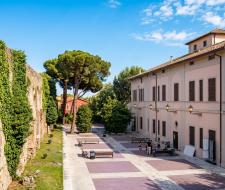 The university ranks the position 17th as one of the Top 25 Best Fashion Universities
ItalyRomeCurrently watching: 6from 16400 € / semester
The university ranks the position 17th as one of the Top 25 Best Fashion Universities
ItalyRomeCurrently watching: 6from 16400 € / semester -
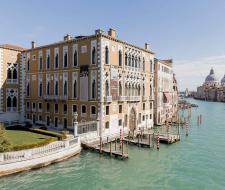 The university ranks the position 17th as one of the Top 25 Best Fashion Universities
ItalyVeniceCurrently watching: 5from 17000.00 € / year
The university ranks the position 17th as one of the Top 25 Best Fashion Universities
ItalyVeniceCurrently watching: 5from 17000.00 € / year -
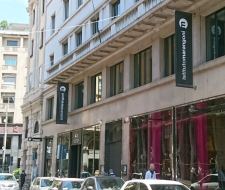 Cooperation with Valentino, Chanel, Dior, Dolce & Gabanna, Gucci, Fendi, Versace
ItalyMilanCurrently watching: 4from 13300 € / semester
Cooperation with Valentino, Chanel, Dior, Dolce & Gabanna, Gucci, Fendi, Versace
ItalyMilanCurrently watching: 4from 13300 € / semester -
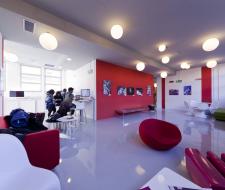 The university ranks the position 17th as one of the Top 25 Best Fashion Universities
ItalyMilanCurrently watching: 4from 8100.00 € / semester
The university ranks the position 17th as one of the Top 25 Best Fashion Universities
ItalyMilanCurrently watching: 4from 8100.00 € / semester -
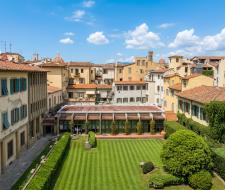 The university ranks the position 17th as one of the Top 25 Best Fashion Universities
ItalyFlorenceCurrently watching: 6from 8100.00 € / semester
The university ranks the position 17th as one of the Top 25 Best Fashion Universities
ItalyFlorenceCurrently watching: 6from 8100.00 € / semester -
 Individual lessons with the teacher are developed for each student.
ItalyRomeCurrently watching: 3from 1210.00 € / week
Individual lessons with the teacher are developed for each student.
ItalyRomeCurrently watching: 3from 1210.00 € / week -
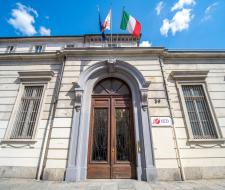 The university ranks the position 17th as one of the Top 25 Best Fashion Universities
ItalyTurinCurrently watching: 3from 15450 € / semester
The university ranks the position 17th as one of the Top 25 Best Fashion Universities
ItalyTurinCurrently watching: 3from 15450 € / semester -
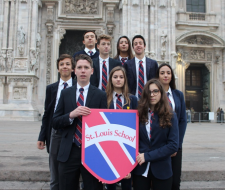 In 2022 an average IB score made up 37
ItalyMilanCurrently watching: 3from 8410 € / term
In 2022 an average IB score made up 37
ItalyMilanCurrently watching: 3from 8410 € / term -
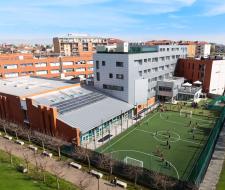 In 2022 an average IB score made up 34
ItalyMilanCurrently watching: 5from 12300.00 € / year
In 2022 an average IB score made up 34
ItalyMilanCurrently watching: 5from 12300.00 € / year -
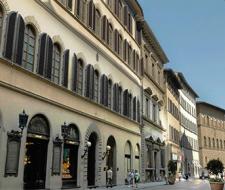 Cooperation with Valentino, Chanel, Dior, Dolce & Gabanna, Gucci, Fendi, Versace
ItalyFlorenceCurrently watching: 5from 16300 € / semester
Cooperation with Valentino, Chanel, Dior, Dolce & Gabanna, Gucci, Fendi, Versace
ItalyFlorenceCurrently watching: 5from 16300 € / semester
Italy attracts international students due to its architecture, music, fashion, cuisine and European education. The qualifications awarded in this country are recognized throughout the EU and in many other countries, which increases its attractiveness as a place of study.
Studying in Italy can combine education with travel, thanks to its many cultural and historic attractions. The catalog brings together schools, colleges and universities so families can compare available studying options.
Alternative destinations
Education System in Italy
Education System in Italy
Italy has a broad education system that includes public, private, international, and boarding institutions. Italian is the main language of instruction, while some programs are conducted in English.
Italian Educational Structure
Education in Italy is compulsory from ages 6 to 16. The system has five stages: kindergarten (scuola dell'infanzia), primary, lower secondary, upper secondary, and university.
International and private schools vary in curriculum, boarding arrangements, student support, and extracurricular activities. Families can compare these features according to the learner's needs.

Italian Boarding Schools
Italian boarding schools may follow curricula similar to those of public institutions while adding residential provision. Families can compare academic options, accommodation, supervision, and activities at each school.
Secondary Education in Italy
Secondary education lasts eight years and has two stages. Lower secondary school lasts three years, usually from ages 11 to 14. Upper secondary school lasts five years, usually from ages 14 to 19. At the end of this stage, students take the esame di maturità. The examination is conducted between June and July and grants access to university. Students usually enter higher education at age 19.
The first stage covers core subjects. At the next level, classical lyceums focus on humanities, linguistic programs involve languages and cultural history, while technical or vocational institutions prepare learners in specific fields.
Italian Language Schools
Language schools can help international students develop Italian skills and study subjects such as art or design. For a study visa for an Italian-language course, applicants must already have at least an intermediate level. The course must be full-time and fixed-term. The Universities for Foreigners in Perugia and Siena, together with Roma Tre, offer CLIQ certification aligned with the Council of Europe's CEFR scale.
Higher Education in Italy
Higher education in Italy includes academic institutions and other postsecondary providers. Programs may be taught in Italian or English. The bachelor's degree is the Laurea. The master's qualification is the Laurea magistrale. The Laurea magistrale a ciclo unico combines both levels in a five-year program.

Benefits of Studying in Italy's Top 70 Institutions
- Bilingual Education: Students can study in Italian or English, with proficiency in the latter verified through TOEFL or IELTS,
- Specialized Programs: Italian institutions offer courses in fashion, design, and technology,
- Rapid Language Acquisition: Immersion in an Italian-speaking environment accelerates language learning and develops communication skills,
- Scholarship Options: Each year, the Italian government offers scholarships to foreign nationals and Italians living abroad for full-time courses or participation in bilateral or multilateral study and research programs,
- MAECI Grant Call: The application round listed by Study in Italy has closed, and the page does not state current eligibility rules or award details,
- Affordable Tuition: Studying in Italian schools or universities is more cost-effective than in many European countries and the USA.
Cost and Fees for Studying in Italy
- Secondary Education: Tuition ranges from 22,000 to 30,000 euros annually, including accommodation and meals,
- Holiday Camps and Children's Schools: Prices range from 700 to 1200 euros per week, all-inclusive except for flights,
- Language Courses for Teenagers and Adults: These courses typically cost between 120 to 200 euros per week.

The options above cover secondary education, holiday camps, and language courses.
Student Living Costs in Italy
Costs vary between Italian study cities, so national averages work best as a starting point for planning.
- Monthly budget: about €894.5 for one person, excluding rent, compared with €3,196.6 for a family of four,
- One-bedroom apartment: €727.79 in a city center and €568.21 outside it,
- Three-bedroom apartment: €1,279.48 in a city center and €942.50 outside it,
- Food: €17.75 for a meal at an inexpensive restaurant and €70 for a three-course dinner for two at a mid-range venue,
- Transport: €1.70 for a one-way local ticket, while gasoline averages €1.79 per liter.
General educational statistics in Italy
Statistics of English courses in Italy
| Programs | Intensity | Group | Language requirements | The minimum cost of the week |
|---|---|---|---|---|
| Standard courses | 20 | 8-10 | Beginner | €140+ |
| Intensive courses | 25-30 | 5-10 | Beginner | €250+ |
| Super-Intensive courses | 30-35 | 5-10 | Beginner | €340+ |
| Exam Preparation | 30-35 | 5-10 | Elementary | €280+ |
| Specialization Courses | 20-25 | 8-10 | Upper-Intermediate | €190+ |
| Professional Courses | 25-30 | 8-10 | Intermediate | €430+ |
| Italian for Business | 20-30 | 8-10 | Intermediate | €430+ |
| Senior 50+ | 20-25 | 8-10 | Beginner | €340+ |
| Italian course + | 20 | 8-10 | Beginner | €230+ |
| One-to-one tuition | individual | 1 | Beginner | €40+ - lesson |
Students Accommodation Options in Italy
| Accomondation | Meals | Number of people per room | Cost per week/min | Cost per week/max |
|---|---|---|---|---|
| Homestay | full Board or half Board | 1-2 | €204 | €276 |
| Hotel | optional | 1-2 | €50/day | €100/day |
| Appartment | funded by a student | 1-3 | €144 | €250 |
Literature and references
-
List of the best universities in Italy — QS

-
QS World University Rankings-2021 — Italy
-
Best Universities & Colleges in Italy
-
Study in Italy — QS Top Universities
-
Best Global Universities in Italy — US News
-
Study in Italy — THE
-
Italian high school vs. American high school
-
Education in Italy — Statistics & Facts
-
Higher education in Italy — Wiki
-
Education in Italy — Wiki