
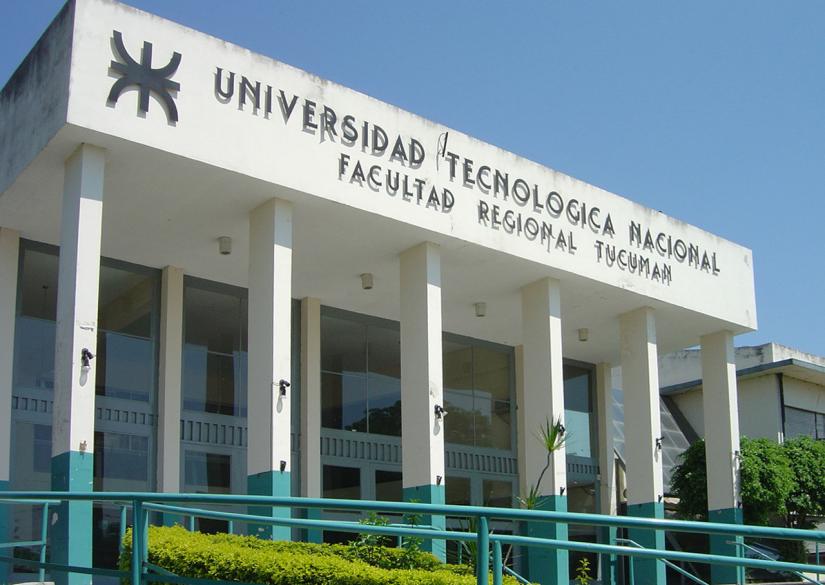
Universidad Tecnologica Nacional






Programs and prices, tuition fees in Universidad Tecnologica Nacional


Specify information on the training program on the official site of an educational institution.
Specify information on the training program on the official site of an educational institution.
Description of Universidad Tecnologica Nacional
A nonprofit higher education institution located in Argentina. This university begins its career since 1948. The campus is located in beautiful Buenos Aires.
- Academic structure: 30 regional faculties (Facultades Regionales) across the country,
- Type: nonprofit, state-run university.
Universidad Tecnológica Nacional (UTN) is a nonprofit, state-run university with a central Rectorado. Rather than operating from a single campus, UTN delivers its degree programs through a network of 30 regional faculties across Argentina. The university also maintains the university-wide Library Network (Red de Bibliotecas), an inter-institutional resource that supports teaching, learning, research, and academic management across the regional faculties.
UTN's Rectorado has been active in institutional partnerships focused on gender equity, accessibility, and human rights. In July 2026, representatives of UTN's Secretariat for Gender, Accessibility and Human Rights (GADDHH) and Secretariat for Culture and University Extension (CEU) met with Red VEGA, an association of women leaders from the public and private sectors, to develop joint institutional cooperation. In June 2026, the GADDHH secretariat participated virtually in the Buenos Aires Province Disability Forum. It joined an Education, Labor and Technology Commission alongside representatives of other national universities to help develop proposals for a more accessible and inclusive province.
Faculties and colleges
Rather than operating from a single central campus, UTN offers its programs through 30 regional faculties (Facultades Regionales) across Argentina:
- Bachelor's degree programs (carreras de grado),
- university technical programs (tecnicaturas universitarias),
- curriculum completion cycles (ciclos de complementación curricular),
- postgraduate programs (posgrado).
The university organizes distance learning through its Institutional Distance Education System (Sistema Institucional de Educación a Distancia, SIED).
Scientific achievements
At its 3rd ordinary session, held virtually on June 24, 2026, UTN's University Council (Consejo Superior) unanimously voted to award the title of Honorary Doctor (Doctora Honoris Causa) to Estela Barnes de Carlotto, president of the Grandmothers of Plaza de Mayo association, and the title of Honorary Doctor (Doctor Honoris Causa) to Adolfo Pérez Esquivel, an Argentine sculptor and artist and the 1980 Nobel Peace Prize laureate. The decision marked the 50th anniversary of the 1976 military coup and recognized their contributions to memory, truth, and justice. Secretary for Gender, Accessibility and Human Rights Prof. Gabriela Mariño proposed the distinction, and UTN Rector Eng. Rubén Soro recommended it.
On August 4, 2026, a ceremony at the headquarters of the Grandmothers of Plaza de Mayo association in Buenos Aires formally conferred the Honorary Doctorate on Estela Barnes de Carlotto. She became the first woman to receive this distinction at UTN. The award had been approved by Resolution No. 1198/2026. Rector Rubén Soro, Secretary for Gender, Accessibility and Human Rights Prof. Gabriela Mariño, and Secretary for University Coordination Prof. Juan Carlos Agüero attended the ceremony.
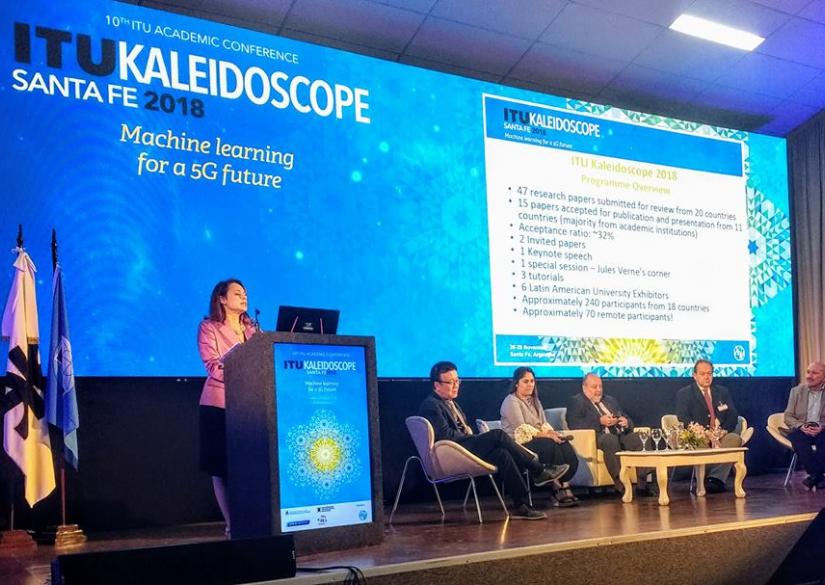
Researchers Diego Bolatti, Reinaldo Scappini, and Sergio Gramajo conducted research at the Center for Applied Research in Information and Communication Technologies (CInApTIC) at UTN's Facultad Regional Resistencia (Regional Faculty of Resistencia, one of the university's 30 regional faculties). The International Telecommunication Union (ITU) accepted the research, which is advancing toward international standard status as a future ITU-T Recommendation (Y.4817) on intelligent detection of threats and anomalous behavior in Internet of Things (IoT) devices. The research began at UTN Resistencia in 2015. Early results were presented in Barcelona at the Kaleidoscope international congress, and a technical report (ITU-T YSTR-IADIoT) was published in 2024. China Unicom researcher Xiongwei Jia also backed the proposal.
Advantages
It is known that Tecnol o gica Nacional from year to year falls into the top twenty of the most popular educational institutions, it is also among the top five universities according to the world classification. Based on these studies, the university is valued in the eyes of potential employers from all over the world.
Within the university there is a unique library numbering tens of thousands of books that will help students master the specialization.
The university belongs to the non-commercial type. Religious restrictions are not intended, students with any religion are accepted. Gender restrictions are not observed. Accreditation passed.
Facilities and equipment at Universidad Tecnologica Nacional
By law, this university should be considered the largest higher institution, and this is not accidental, since it has more than 46,000 students. The team of teachers has over 6,000 teachers of the highest category.
Another advantage of this institution is the possibility of an actual student exchange program. This is a great chance to gain invaluable experience and knowledge.
Entry requirements, how to apply, what is required to enrol
Admission is based on the results of examinations, the student chooses the discipline based on the chosen direction. The cost of training will be 1 000 USD for 1 academic year (bachelor). It is noteworthy that not all applicants have the same opportunity to attend full-time education, so interested people are offered the option of remote training. By the way, on the official website, each of the entrants has the opportunity to find answers to all questions of interest, including calculating the exact cost based on the chosen specialization.
It is extremely important to pay special attention to filling out the package of documents. In addition, it is necessary to take into account that within the framework of admission it is necessary to overcome competitions with students of different levels of training. Do not forget about the language barrier, it must be overcome as quickly as possible. We are ready to solve all the above tasks as soon as possible within a reasonable budget.
Institution on the map
Residence permits, citizenship and other services
- Guardianship services during the studies
- Student supervision
Review about Universidad Tecnologica Nacional
Recommendations on when to apply
| Language courses, schools and children's language camps | Primary and secondary education - private schools | Preparation programmes for entering universities - higher education | Higher education (after completing accredited programs A-level, IB, High School) - Bachelor, Master, MBA |
| - we recommend to apply 6-9 months before the start of the course (some camps and schools offer discounts for early booking or for lengthy study programs) - there are some very popular and high demand children's camps, where the applications need to be submitted 1 year in advance (in particular Switzerland , Great Britain , USA , Canada , Austria) | - we recommend to apply one year before the start of the training program, - some schools have a specific time frame (September-November - please specify an individual school) - some schools require tests in several stages (UKISET, internal tests of the school: English, mathematics, logics, subjects, interview, some require a personal visit) | - we recommend to apply one year before the start of the program, - for Foundation and Pathway programs, IELTS and TOEFL certificates are usually required, respectively | - recommended submission one year before the start of the program, - the deadline normally closes in January, for TOP HEIs and, as a rule, in March in other universities - for a bachelor, a Foundation or Pathway preparatory program a completed A-level, IB, High School + IELTS / TOEFL are required - for Masters you need a graduated higher education, in some cases you need a pre-Masters program - MBA requires completed higher education, work experience preferably at least 2-3 years, etc. |