For partners
When oil made the Emirates one of the richest countries in the world in the 1970s, few could have imagined that half a century later, the main strategic resource of the state would be not barrels, but knowledge! In recent years, Dubai and Abu Dhabi have been building an entire ecosystem of universities, research centers and innovation hubs, gradually turning the UAE into an educational crossroads between the West and the East. The Education 33 strategy, presented by the UAE Ministry of Education, was a logical continuation of the long-term UAE Vision 2031 course and the national Centennial 2071 program. The goal is ambitious, but specific: by 2033, the country should become one of the world leaders in terms of quality, accessibility and innovation of education. It is not just about reforming schools or universities, but about building a new model of society, where education is the main engine of economic development, technology and cultural influence.

What is the essence of the Education 33 strategy?
The Education 33 Strategy program is a ten-year plan to modernize the entire educational system of the Emirates: from kindergartens to universities and vocational centers. The key idea is "quality and innovation at every level". By 2033, the UAE should have world-class schools and universities, and graduates should have competencies that are in demand in the global market. Among the priorities are the introduction of advanced teaching technologies, strengthening the research base of universities, the development of digital skills and artificial intelligence, and improving the qualifications of teachers.
Special attention is paid to international integration: the UAE plans to increase the number of partner universities, branches and joint programs with the world's leading universities - from the USA and Great Britain to Singapore and Australia. Already, the campuses of the Sorbonne, New York University, and Herriot-Watt are operating in the country.
Priorities and directions
The strategy is based on four key areas: quality, digitalization, personnel and international cooperation.
Quality and infrastructure
The main goal is to bring the UAE education system to the level of the best world standards. Schools, colleges and universities are being built and modernized, modern laboratories and STEM centers are being created. The Ministry of Education is tightening accreditation criteria, introducing uniform standards for assessing knowledge, quality control is now entrusted to independent agencies - KHDA (Dubai) and ADEK (Abu Dhabi). Particular attention is paid to the development of engineering and scientific areas, the introduction of artificial intelligence in the educational process.

Digitalization
As part of the strategy, online platforms and hybrid learning formats are being actively developed: national educational databases are being created, personal digital profiles of students are being introduced, and systems that use artificial intelligence to track progress and select individual trajectories are being tested in schools and universities.
Human resources
A special block of the strategy is dedicated to teachers: a system of continuous professional development is being introduced for them, preparing and remuneration standards are being raised. The UAE actively attracts foreign teachers and researchers, forming an international academic community, but at the same time, the number of programs to prepare its own personnel — future teachers, engineers, specialists in AI and educational technologies — is growing.
International cooperation
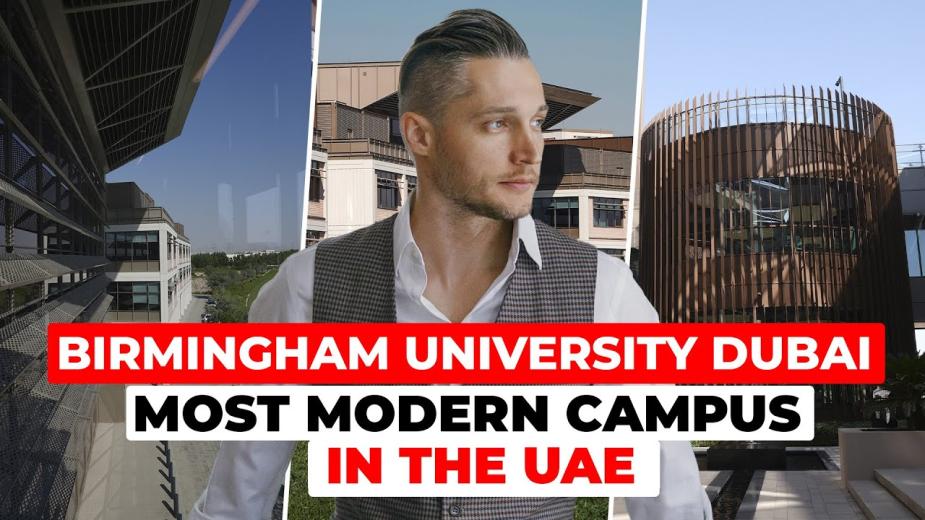
The UAE is betting on global openness. The country already has campuses of the Sorbonne, New York University, Birmingham and Herriot-Watt universities, and all new agreements provide for joint research centers, faculty exchanges, and participation in world rankings. The UAE intends to enter the TOP-10 countries in terms of international competitiveness of education, which is supported by growing investments in research and innovation projects.
What does the economy have to do with it?
Education 33 is not seen as a social institution, but rather as an engine of the economy. The program is directly related to the tasks of transition to a knowledge economy, where the key resource is people – the bearers of competencies, technologies and entrepreneurial thinking. Educational institutions are increasingly forming programs for the needs of priority industries: renewable energy, digital technologies, medicine, logistics, and creative industries. Engineering schools, research centers and artificial intelligence laboratories are developing, accelerators and startup incubators operating under the patronage of the state are opening for graduates.
Educational clusters are becoming an important tool for implementing the strategy: Dubai Knowledge Park, Sharjah Research and Technology Park, Masdar City Education Hub. Such zones bring together universities, research institutes, IT companies and investors, turning education into part of the innovation ecosystem.

Impact on international students and prospects for studying in the UAE
One of the goals of Education 33 is to turn the Emirates into a global destination for academic mobility. Students from more than 150 countries are already studying at the country's universities, and their number is growing every year. The program relies on the internationalization of education: English-language programs are actively opening in the country, the number of campuses of foreign universities and double degrees is growing. Visa procedures are simplified for international students - a resident visa to study is valid until the end of the program, and after graduation, you can get a one-year Graduate Visa to look for a job.
The government is introducing new grant and scholarship programs financed jointly with universities and private foundations. The main focus is on engineering, IT, environmental and business areas, where the UAE plans to become a center of competence for the Middle East region.
Bottlenecks
The project is large-scale, and the Emirates will almost certainly have enough money. At the same time, there are still a number of unresolved problems and challenges.
- The main one is the balance between the speed of reforms and the quality of education. The UAE is looking to scale innovation quickly, but risks facing a shortage of qualified teachers and administrators. They are trying to correct this through accelerated studying programs, including through online platforms and international trainings.
- Another problem is dependence on foreign specialists. In order not to be limited to the import of expertise, the Emirates are developing their own pedagogical schools and centers for research in the field of education, stimulating the participation of citizens of the country in academic careers through grants, postgraduate studies and scholarships for teachers.
- The third challenge relates to the adaptation of international standards to the local cultural and religious environment. The UAE solves it through a flexible accreditation system: universities maintain Western academic standards, but introduce modules that reflect the values of the region and the policy of inclusive development.
If these challenges can be overcome, education will become the very non-financial capital that will ensure the sustainable development of the UAE after the oil era.