

University preparation in Germany for international students
- Prep Courses in Germany for Foreign Students
- The Cost and Fees of Preparing for University in Germany
- The Importance of Language Preparation in Germany
- Preparing for University in Germany
- Navigating University Preparation Course with SMAPSE Experts
- Student Visas for University Preparation in Germany
- Literature and references
This content was developed and approved with active participation of Sam Jones, who is a Recruitment Director for partnership with INTO Universities.
In the process of preparing the material, we referenced the following sources:
- https://www.topuniversities.com/universities/germany?country=[DE]
- https://www.timeshighereducation.com/student/best-universities/best-universities-germany.
-
 Top-50 best Marketing programs in the world
GermanyMunichCurrently watching: 9from 3450 € / term
Top-50 best Marketing programs in the world
GermanyMunichCurrently watching: 9from 3450 € / term -
 from 11500 € / semester
 -
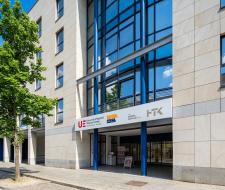 Top 10 in business studies in Germany
GermanyBerlinCurrently watching: 8from 9000.00 € / 9 months
Top 10 in business studies in Germany
GermanyBerlinCurrently watching: 8from 9000.00 € / 9 months -
 26th in Europe per the Full-time MBA
GermanyBerlinCurrently watching: 6from 9950.00 € / 44 weeks
26th in Europe per the Full-time MBA
GermanyBerlinCurrently watching: 6from 9950.00 € / 44 weeks -
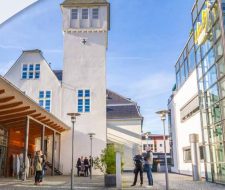 Best Private University among the universities of applied Science 2018
GermanyBonnCurrently watching: 3
Best Private University among the universities of applied Science 2018
GermanyBonnCurrently watching: 3 -
 ranked #42 in the QS Global MBA Rankings 2022
GermanyHannoverCurrently watching: 6from 9950.00 € / year
ranked #42 in the QS Global MBA Rankings 2022
GermanyHannoverCurrently watching: 6from 9950.00 € / year -
 from 4500.00 € / year
 -
 from 15750.00 € / year
 -
 from 6200 € / semester
 -
 from 4500.00 € / year
German education is highly valued in the world, TOP-10 German universities are included in prestigious international ratings, and most of them are open today for foreign students all over the world, who most often choose to study in Germany after high school. But not every student knows how to enter the university in Germany. Nowadays, TOP-10 German universities are attractive for international students due to their tuition and high-quality education.

If you are planning to enter German higher educational institutions, you must understand that due to probable differences in educational system you need to have the appropriate document. Besides, every country has its own specific school-leaving certificates and, not all of them can be equal to a German and some foreign school-leaving certificates are not recognized or partially recognized in Germany.
The German educational system provides for a 13-year secondary education cycle. As a result, to enter a university in Germany, some graduates need to compensate for two missing years of studying. So, admission to educational institutions in Germany requires a deeper and fuller preparation from the student.
Alternative destinations
Prep Courses in Germany for Foreign Students
If a foreign student is interested in pre-university preparation in Germany, educational institutions offer diverse options to choose from after completing their 11th grade. The most popular options are:
-
To enter a national state or accredited private higher education institution in the home country, in which the duration of studying is two years. Educational process must emphasize a specialty, complying with their preferred direction of study in Germany.
-
To complete a full-time German Studienkolleg program lasting 1 year after graduating from the 11th grade.
-
Attending senior-level programs such as the International Baccalaureate (IB) in English or the Abitur in German, usually studying is conducted in German private schools.
The Studienkolleg option is considered the best one among foreign students, allowing students to transition to a German university after just one additional year of study. Also students can overcome the language barrier and immerse in academic environment.

Admission and University Preparation Course
Admission to German universities after completing a Studienkolleg course is generally determined by the results of a qualifying exam. Most institutions don't require additional entrance examinations, although some may conduct interviews. Another common requirement is the TestAS, which is a specialized assessment test designed for foreign applicants. Additionally, the average grade from the student's school certificate is often taken into account when considering their application.

What firstly should be considered when choosing a university?
It depends on the student - everyone determines the most important criteria for himself. I would advise you to take several rankings and compare them with each other, plus take into account the cost of the course, the location of the university and its scale, the percentage of graduates' employment. See where graduates continue their studies or where they go to work.
The Cost and Fees of Preparing for University in Germany

The cost of pre-university preparation courses can range significantly, it's important to consider all expenses concerning preparation for university in Germany. These costs may include tuition for the Studienkolleg, TestAS fees, and potentially other costs related to language courses, educational materials, and living expenses.
By carefully considering these factors and understanding the associated university preparation course fees, foreign students can make informed decisions about their educational journey in Germany.

The Importance of Language Preparation in Germany
To enter a German higher education institution, it is necessary not only to be fluent in German. In many cases, language barriers prevent future students from obtaining a prestigious European education. SMAPSE experts recommend specialized university prep courses in Germany to help students become proficient in the language.
In the SMAPSE catalog, you'll find some of the most prestigious German language schools. These specialized centers offer academic programs in German for both teenagers (16 and up) and adults. These courses not only enhance current language skills but also equip students with the essential skills required for further education.
For German-taught programs, applicants usually need to pass the TestDaF, which is offered in around 100 countries, or the DSH, which has to be taken in Germany. Reaching at least the intermediate level in all parts of these exams covers the language requirements of the vast majority of degree programs. Several other certificates are usually recognized as well, including the Goethe-Zertifikat C2, the telc Deutsch C1 Hochschule and the Deutsches Sprachdiplom level II, while some programs also accept the Goethe-Zertifikat B2 and C1 or the ÖSD Zertifikat B2 and C1. International degree programs taught in English can usually be entered without confirmation of German, but they require proof of English instead.
Many German universities also use the TestAS, an aptitude test for international applicants that assesses general and subject-specific ability to study and helps institutions make fair and objective admission and selection decisions. The TestAS can be taken in German or English at a language level of A2–B2 CEFR, and a strong result improves the chances of admission to Bachelor programs. Upcoming test dates are 24.10.2026, 26.11.2026 and 25.02.2027.

Preparing for University in Germany
Offered by SMAPSE, these German schools give foreign students an opportunity to study in university-like conditions. This immersive experience allows students to quickly adapt to a new academic and cultural environment, learn local traditions, and get accustomed to university rules and discipline. These courses offer intensive daily practice and often include a combined program featuring both language modules and courses relevant to the students' chosen field of study. This comprehensive approach is designed to prepare students not just for university admission, but also for the educational journey that lies ahead.
Navigating University Preparation Course with SMAPSE Experts
The SMAPSE catalog makes it incredibly easy to choose the right program and school for Studienkolleg courses after the 11th grade. Its user-friendly interface features filters on the left panel that let you sort information by program type and school location.
Customized selection options are also available on the site. To get started, simply fill out the short form or contact us via email, chat, or phone. SMAPSE specialists have extensive knowledge about how foreign students can enter universities in Germany and are eager to share their expertise with you. They can also provide details on the cost of preparing for university in Germany, giving you a clear understanding of what to expect financially.
Student Visas for University Preparation in Germany
Before starting a preparation course in Germany, international students should understand the country's entry rules. Citizens of Australia, Canada, Great Britain, Israel, Japan, New Zealand, South Korea and the United States (as well as Andorra, Brazil, El Salvador, Honduras, Monaco and San Marino) can enter Germany without a visa, but anyone staying longer than three months must apply for a residence permit at the local Ausländerbehörde.
A Schengen visa covers only short visits of up to three months, such as holidays, language courses or business trips, and cannot be extended. For longer studies a national visa is required. Applicants who still need to enrol, complete a language course or attend a Studienkolleg can use a prospective student visa, which is valid for up to nine months and gives time to arrange a place at a higher education institution.
Students who already have a study place usually apply for a student visa under Section 16b of the Residence Act at the German embassy or consulate in their home country. It can take months for a visa to be issued, so applying in advance is essential, and a tourist visa cannot be converted into a student visa later on.
Students from outside the EU and EEA must also prove they can support themselves financially. As of 1 January 2025 the required amount is 992 euros per month, typically demonstrated through a blocked account (Sperrkonto). Banks charge a fee of between 70 and 150 euros to set up such an account.
Top 6 best schools in Germany 2027
| 1 | Schule Schloss Salem |
| 2 | Zinzendorfschulen |
| 3 | Berlin Brandenburg International School |
| 4 | Gymnasium Stift Neuzelle |
| 5 | St George's International School Cologne |
| 6 | CJD International School Braunschweig Wolfsburg |
Learning programs-summary information
| Name | Meaning | Equivalent | Min. age | Duration, years |
Next stage | Cost |
|---|---|---|---|---|---|---|
| GCSE | General certificate of secondary education | secondary education (non-accomplished) | 14 | 1–2 | A-Levels | 15,000 USD+ |
| A-Levels | Advanced level | secondary education (accomplished) | 16 | 2 | University | 15,000 USD+ |
| BTEC | Business and Technology Education Board | secondary special education | 14 | 2–3 | University/ work | 15,000 USD+ |
| Oxbridge Preparation | Preparing for Oxford and Cambridge | secondary education (accomplished) | 17 | 1 | University | 15,000 USD+ |
| International Baccalaureate | International baccalaureate | secondary education (accomplished) | 16 | 2 | University | 18,000 USD+ |
| Foundation/ Pathway Year | Preparatory year | admission to the 1st year of university | 17 | 1 | University | 14,000 USD+ |
| NCUK | The Northern consortium | 2 year university | 17,5 | 1 | 2 year University of NCUK | 13,000 USD+ |
| Special Preparation (Medics/Math/Business) | Specialized training | - | 14 | optional | optional | 4,000 USD+ |
| Academic English | Academic English | Language school | 8 + | 6–12 months | School or University | 8,000 USD+ |
Top 21 boarding colleges in England 2027
| 1 | Cardiff Sixth Form College |
| 2 | National Mathematics and Science College |
| 3 | Abbey College Cambridge |
| 4 | d'Overbroeck's College |
| 5 | MPW London |
| 6 | CATS Cambridge |
| 7 | Kensington Park |
| 8 | DLD London |
| 9 | King's College St Michael’s |
| 10 | Bellerbys Cambridge |
| 11 | Chelsea Independent College |
| 12 | MPW Cambridge |
| 13 | Bellerbys Brighton |
| 14 | CATS London |
| 15 | St Clare's Oxford |
| 16 | Bishopstrow College |
| 17 | CATS Canterbury |
| 18 | Bellerbys London |
| 19 | Ealing Independent College |
| 20 | Cambridge Tutors College |
| 21 | Abbey Manchester |
Top 35 best universities and colleges in Canada 2027
| 1 | University of Toronto |
| 2 | McGill University |
| 3 | University of British Columbia |
| 4 | University of Alberta |
| 5 | Simon Fraser University |
| 6 | Montreal University |
| 7 | University of Windsor |
| 8 | York University |
| 9 | University of Guelph |
| 10 | McMaster University |
| 11 | University of Manitoba |
| 12 | University of Waterloo |
| 13 | Royal Roads University |
| 14 | Vancouver Film School |
| 15 | Kwantlen Polytechnic University |
| 16 | University of Calgary |
| 17 | Dalhousie University |
| 18 | Fanshawe College |
| 19 | University of Ottawa |
| 20 | Laval University |
| 21 | Sheridan College |
| 22 | University of Regina |
| 23 | Brock University |
| 24 | Thompson Rivers University |
| 25 | Humber College |
| 26 | Vancouver Island University |
| 27 | Mohawk College |
| 28 | Centennial College Toronto |
| 29 | Niagara College |
| 30 | Capilano University |
| 31 | Seneca College |
| 32 | Algoma University |
| 33 | Saint Clair College |
| 34 | Douglas College |
| 35 | LaSalle College |
Literature and references
-
How to Prepare For a Bachelor’s Degree in Germany

-
Education in Germany — Wiki
-
10 Reasons Why Germany Is The Best Place To Study (International Students)
-
How Much Does it Cost to Study in Germany? — QS
-
German School System — How to Germany
-
Best universities in Germany 2023 — THE
-
List of German universities — QS