

1 best international colleges in Berlin 2027

-
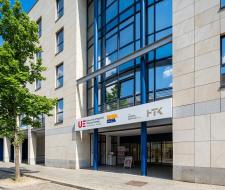
-

-

-
 School is in top 10 best bilingual boarding schools in Germany
GermanyBerlin
-

-

-
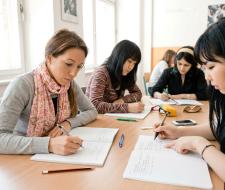 The school is conveniently located in the central part of picturesque Berlin
GermanyBerlin
-

College in Germany is a kind of bridge for the transition to the next stage of education - studying at a university. In total, there are about 30 such educational institutions in the country. A German college (Studienkolleg) can be public or private and function at universities and universities of applied sciences, but the latter option does not make it possible to continue education at a university.
Studienkolleg are very popular among foreign students thanks to a number of advantages:
- Studying in college gives you the opportunity to enter a university and obtain a higher education,
- Excellent academic profile preparation for further education,
- In a short period of time, the level of foreign languages (German and English) increases significantly,
- The opportunity to gradually adapt to a new country, other living and learning conditions,
- Constant presence in the language environment.
Alternative destinations
Admission to colleges in Berlin
Each college has its own admission rules. Depending on the policy of the specific institution, applying may require submitting documents directly to the college itself, through a centralized system, or through a university that can issue the student a referral to the college.
Regardless of the college admission procedure, the student must submit the following documents:
- A copy of the international passport,
- A certificate of complete secondary education,
- A German language exam certificate, DaF or DSH, confirming a language proficiency level of at least B2,
- An English language exam certificate, IELTS or TOEFL (upon request),
- A motivation letter and resume (upon request).
Your document package must include notarized copies with attached translations, which must also be certified. If you already have translations into English, there's no need to duplicate them in German — English-language copies are accepted in Germany as well. In rare cases, an apostille is required.
A student visa for Germany is issued at the embassy: essentially, it's a national visa that allows you not only to study in Germany but also to travel throughout the European Union.
Students whose documents have been approved by the college are assigned entrance exams: depending on the college and the future studying course, a student may be assigned an exam in German only or in several subjects at once.
Students whose entrance exam results meet the college's requirements are admitted for study.
Cost of studying at a Studienkolleg
Education at state colleges in Germany is free. The cost of a semester of study at all other colleges can vary, averaging from €100 to €400.
While studying at a Studienkolleg, an international student covers all expenses for accommodation, food, and related costs: to cover these expenses, a student in Germany needs around €700 a month.
Unlike state Studienkolleg programs, private ones are paid, with the price per year starting from €3,000 and reaching up to €11,000. Some programs include accommodation in the cost, but this is rare. At the same time, university dormitories are almost not common in Germany, so housing payments make up the bulk of a student's expenses.
Additional monthly expenses when studying at a Studienkolleg
In addition to tuition, the student also needs to consider the costs of accommodation, meals, and health insurance, which amount to approximately:
|
Accommodation |
€300-€700 |
|
Utilities |
€220 |
|
Food |
€150-€200 |
|
Health insurance |
€105 |
|
Entertainment |
€50-150€ |
|
Total per month |
€830-€1378 |
Education in Berlin colleges
In German schools, children study for 12-13 years before starting higher education. Colleges in Berlin are an excellent option for international students to mitigate this difference in schooling. In this sense, these institutions can be considered pre-university preparation.
College programs last 1 year — 2 semesters, during which students undergo intensive subject-specific and language preparation. Exams are taken not only at the end, but also after the 1st semester (a progress exam). If a student passes it successfully, they move on to the 2nd semester. A failing grade on the exam means starting over — repeating the first semester.
The second part of the program ends with tests, after which students take the final subject-specific exam (Feststellungsprüfung — FSP). If a student fails this exam, they may repeat the second semester once more. Each semester may be repeated only once. The FSP grade serves as the admission score (NC-Note) for applying to a German university.
Upon admission to college, students are assigned courses based on their future university major. The program is divided into 5 courses based on the most in-demand majors at colleges in Berlin:
- W (economics and social sciences),
- T (technical, mathematical, and natural sciences),
- G (linguistics, humanities, and arts),
- M (medicine, pharmacy, and biology),
- S (languages).
During their studies at the college, students gain professional knowledge that makes further study at a German university easier. Here, students are given an excellent opportunity to get acquainted with the various forms of learning and teaching used in the German education system.
The teaching itself is similar in principle to school. Classes are conducted only in the morning and are mandatory to attend. In addition, students cannot shape a studying plan on their own: they complete various assignments in class, get homework, prepare papers, work in groups, and so on. Naturally, a great deal of attention is given to learning German.
Which subjects are studied in each course?
- W course: German (10 hours per week), mathematics (6 hours), political economy (6 hours), economics and production organization (4 hours), sociology (6 hours),
- T course: German (10 hours per week), mathematics (8 hours), physics (7), chemistry (3), computer science (4),
- G course: German (10 hours per week), history (6 hours), German literature (6 hours), sociology (6), statistics (2),
- M course: German (10 hours per week), mathematics (5 hours), physics (5 hours per week), chemistry (5), biology (5).
The best colleges in Berlin differ from one another in admission requirements, enrollment procedures, the learning process, and the courses offered.

What should be considered when choosing a German school?
Beyond academic knowledge, parents should pay attention to ethics, values, the student-to-teacher ratio, opportunities for extracurricular activities, and the overall atmosphere and culture of the school.
Private colleges in Berlin
The principle of operation of private colleges differs little from public ones. Private Studienkolleg programs are more focused on popular directions: technical and economic programs, and private colleges can also offer an accelerated 6-month course.
The total academic load is 28-32 hours depending on the type of course and the number of subjects to be taken in the FSP exam. The standard lesson duration is 45 minutes. The course structure is set up so that German classes are held every day — up to 10 hours per week in total.
Many private colleges offer one- and two-week pre-university preparation programs in German and mathematics. The courses are paid, with prices ranging from €900 to €2,000. Some private Studienkolleg programs offer German language courses from scratch, with prices starting from €546.
When choosing a private college in Berlin, it's important to check that it offers the FSP exam, which is recognized throughout Germany.
Top 21 boarding colleges in England 2027
| 1 | Cardiff Sixth Form College |
| 2 | National Mathematics and Science College |
| 3 | Abbey College Cambridge |
| 4 | d'Overbroeck's College |
| 5 | MPW London |
| 6 | CATS Cambridge |
| 7 | Kensington Park |
| 8 | DLD London |
| 9 | King's College St Michael’s |
| 10 | Bellerbys Cambridge |
| 11 | Chelsea Independent College |
| 12 | MPW Cambridge |
| 13 | Bellerbys Brighton |
| 14 | CATS London |
| 15 | St Clare's Oxford |
| 16 | Bishopstrow College |
| 17 | CATS Canterbury |
| 18 | Bellerbys London |
| 19 | Ealing Independent College |
| 20 | Cambridge Tutors College |
| 21 | Abbey Manchester |
Top 35 best universities and colleges in Canada 2027
| 1 | University of Toronto |
| 2 | McGill University |
| 3 | University of British Columbia |
| 4 | University of Alberta |
| 5 | Simon Fraser University |
| 6 | Montreal University |
| 7 | University of Windsor |
| 8 | York University |
| 9 | University of Guelph |
| 10 | McMaster University |
| 11 | University of Manitoba |
| 12 | University of Waterloo |
| 13 | Royal Roads University |
| 14 | Vancouver Film School |
| 15 | Kwantlen Polytechnic University |
| 16 | University of Calgary |
| 17 | Dalhousie University |
| 18 | Fanshawe College |
| 19 | University of Ottawa |
| 20 | Laval University |
| 21 | Sheridan College |
| 22 | University of Regina |
| 23 | Brock University |
| 24 | Thompson Rivers University |
| 25 | Humber College |
| 26 | Vancouver Island University |
| 27 | Mohawk College |
| 28 | Centennial College Toronto |
| 29 | Niagara College |
| 30 | Capilano University |
| 31 | Seneca College |
| 32 | Algoma University |
| 33 | Saint Clair College |
| 34 | Douglas College |
| 35 | LaSalle College |
Literature and references
-
Hochschulen und Forschungseinrichtungen in Berlin — Wiki

-
Hochschule in Berlin — Wiki
-
Staatliche Hochschulen — Hochschulen Berlin Universitäten und Hochschulen in Berlin
-
Staatliche Hochschulen in Berlin — Studis online
-
Graduate employability: top universities in Germany ranked by employers 2022
-
Best universities in Europe 2024