Technische Universität Berlin (TU)





Programs and prices, tuition fees in Technische Universität Berlin (TU)


Information on the program can be found on the official website of the school.
Information on the program can be found on the official website of the school.
Description of Technische Universität Berlin (TU)
Technische Universität Berlin is one of Germany’s leading universities. Founded in 1770 as the Berlin Higher Technical School, it gained university status in 1946.
The university community includes 43,000 people from 150 countries, including faculty, students, and administrative staff.
Educational process
TU Berlin recognizes previously earned credits when the corresponding modules differ little or not at all from those in the chosen degree program. The recommended deadline for recognition of previous coursework and examination results is the end of the second semester.
Results cannot be recognized once the examination process for the relevant module has begun. Professional and other non-university qualifications may account for no more than 50% of the credit points in a degree program.
Faculties and colleges
- TU Berlin's catalog lists 50 bachelor's programs,
- The catalog includes 92 master's programs,
- One pre-study orientation program is available before degree studies begin,
- 117 programs are taught in German, 19 in English, and 7 in both German and English,
- 88 programs have open admission, while 55 have restricted admission.
Scientific achievements
- Berlin University Alliance successfully qualified for a second funding phase under the federal and state strategy to support research excellence,
- Following a positive review every seven years, the alliance can receive up to 28 million euros annually from the federal government and the state of Berlin,
- During the first competitive phase, Technische Universität Berlin participated in three interdisciplinary clusters, each of which received up to 10 million euros a year from 2019 through 2025,
- Technische Universität Berlin participates in the Matters of Activity: Image Space Material cluster, led by Humboldt-Universität zu Berlin.
Things to know about
- The Berlin University Alliance funding period covers 2027–2033.
Accommodation, meals, prices
StudierendenWERK Berlin offers 9500 rooms and apartments in 33 residence halls. These accommodations are available to students at all Berlin universities.
A limited number of places in StudierendenWERK Berlin residence halls is reserved for TU Berlin exchange students.
Activities Technische Universität Berlin (TU)
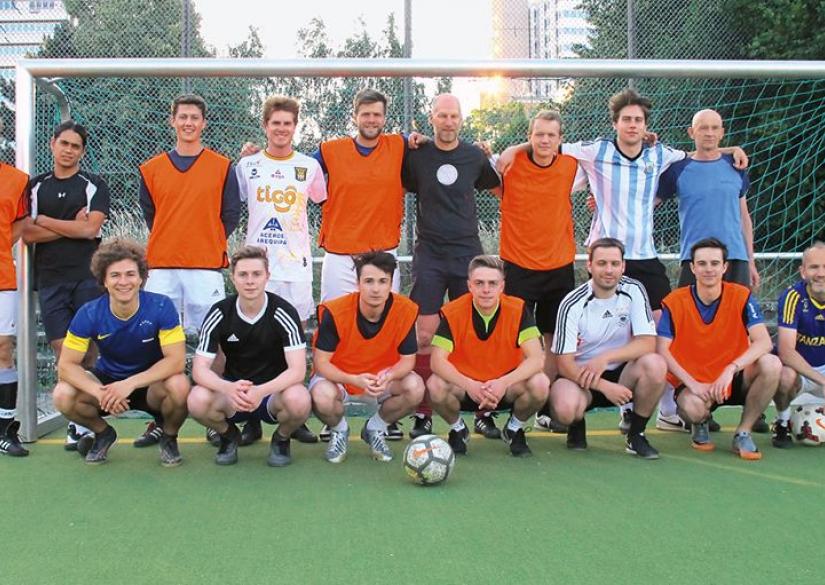
TU Sport offers a wide variety of sports courses for different groups and ages.
Advantages
The Technical University of Berlin is known all over the world. In the university there are some programs for highly qualified specialists interested in international companies of high rank, for example - Telekom, Bosch, Siemens and others. It is famous not only for the level of teaching of technical programs, but also for the worthy education of students studying social and fundamental sciences.
The main advantages of the university and interesting facts:
- The teaching staff includes a large number of Nobel Prize laureates and pioneers.
- The institution is famous for the development of weapons of mass destruction, nuclear bombs, modern aircraft and ballistic missiles.
- Environmental protection programs are being developed here.
- The university offers students the opportunity to obtain double diplomas.
- Students receive internship opportunities in international companies.
- Technische Universität Berlin has a strong research base.
- The University maintains relations with many European universities.
In its country the university is at the moment on the 15th place. And in the international ranking it occupies the 236th position. The educational institution conducts active research activity and has exclusive educational programs. A feature of this university is the presence of a summer school. This allows students to improve their knowledge of selected subjects.
Facilities and equipment at Technische Universität Berlin (TU)
The main campus of Technische Universität Berlin is territorially located in Berlin. Its structure includes 40 research institutes, a chic library containing millions of books and valuable works, sports complexes, cultural centers, public catering facilities. Foreign citizens are offered a furnished comfortable hostel, the cost of which is from 652 to 1237 USD per month.
The University is a member of the European University Association, the Conference of the European Schools for Advanced Engineering Education and Research, TU9. This opens up good prospects for the institution's students.
Enrolment process
Admission decisions follow an application. Successful applicants receive a deadline for enrollment. Smapse specialists will guide you through every stage of the admissions process.
Entry requirements, how to apply, what is required to enrol
Since in Germany schooling lasts 13 years - for admission to the Technische Universität Berlin it will take 2 years of full-time study in any university or 1 preparatory year in Studiencenclaw (that is equivalent to two years of study). In general, the education is conducted in German, and some programs are in English. Therefore, you will need to provide a certificate of knowledge of languages. When enrolling in some areas, the applicant is required to present a motivation letter and a letter of recommendation.
How is the education conducted?
The school year is traditionally divided into semesters. The education is free, but there is a compulsory contribution of € 279,40.
The educational institution offers education in the following faculties:
- humanitarian sciences;
- mathematics and science;
- production direction;
- electrical engineering and informatics;
- transport and mechanical engineering;
- construction, geology and architecture;
- economics and management.
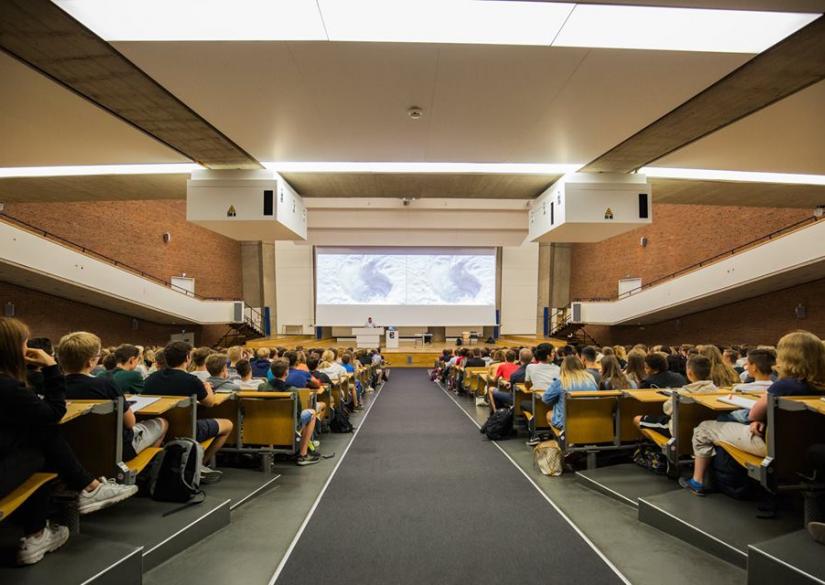
In total, the institution has more than 31,000 students and 2,500 teachers. Foreign citizens account for about 17% of the total number of students. Education in the university can be held not only internally, but also remotely. Thanks to the student exchange program, students can be educated in other European universities.
Famous graduates
Technische Universität Berlin is proud of a large number of graduates who have gained worldwide popularity. For example:
- Abdul Kadyr Khan (engineer, nuclear weapons developer);
- Albert Speer (architect, Minister of War Industry);
- Walter Dornberger (major general, ballistic missile designer);
- Werner von Braun (engineer, designer of the V-2 ballistic missile and jet aircraft);
- Werner Hartmann (physicist);
- Christoph Hohhusler (director, screenwriter, film critic);
- Hans Geiger (physicist, inventor of the Geiger counter for measuring radioactive particles and gamma radiation);
- Henry Marie Coanda (creator of the jet plane)
- Gustav Ludwig Hertz (physicist, Nobel laureate);
- Dennis Gabor (scientist, Nobel laureate in physics);
- Ida Noddak (physicochemist);
- Karl Bosch (chemist, engineer, Nobel Prize winner in chemistry);
- Konrad Zuse (creator of the first computer and programming languages);
- Lev Lvovich Sedov (politician);
- Nicodemus Caro (chemist-scientist);
- Eugen Zenger (physicist in the field of aviation and cosmonautics);
- Thomas Barth (mineralogist, geochemist);
- Roland Huttenrauch (physicist);
- Fritz Haber (chemist, winner of the Nobel Prize for the synthesis of ammonia);
- Heinz Barvich (physicist);
- Hans Birsch (physicist, discovered laser and electron radiation);
- Ernst Ruska (physicist, Nobel Prize winner);
- Ernst Fiala (designer, the developer of the car "Volkswagen").
Many university graduates became Nobel laureates in various fields of activity.
Institution on the map
Residence permits, citizenship and other services
- Guardianship services during the studies
- Student supervision
Review about Technische Universität Berlin (TU)
Recommendations on when to apply
| Language courses, schools and children's language camps | Primary and secondary education - private schools | Preparation programmes for entering universities - higher education | Higher education (after completing accredited programs A-level, IB, High School) - Bachelor, Master, MBA |
| - we recommend to apply 6-9 months before the start of the course (some camps and schools offer discounts for early booking or for lengthy study programs) - there are some very popular and high demand children's camps, where the applications need to be submitted 1 year in advance (in particular Switzerland , Great Britain , USA , Canada , Austria) | - we recommend to apply one year before the start of the training program, - some schools have a specific time frame (September-November - please specify an individual school) - some schools require tests in several stages (UKISET, internal tests of the school: English, mathematics, logics, subjects, interview, some require a personal visit) | - we recommend to apply one year before the start of the program, - for Foundation and Pathway programs, IELTS and TOEFL certificates are usually required, respectively | - recommended submission one year before the start of the program, - the deadline normally closes in January, for TOP HEIs and, as a rule, in March in other universities - for a bachelor, a Foundation or Pathway preparatory program a completed A-level, IB, High School + IELTS / TOEFL are required - for Masters you need a graduated higher education, in some cases you need a pre-Masters program - MBA requires completed higher education, work experience preferably at least 2-3 years, etc. |