

University preparation in Australia for international students
- What you should know about Preparing for University in Australia
- Admission requirements to Australian Universities
- Universities Preparation courses for foreign students in Australia
- International students in Australia: the numbers
- Student visa and post-study options in Australia
- Foundation vs direct entry: two paths into an Australian university
- Literature and references
This content was developed and approved with active participation of Sam Jones, who is a Director of the International School of Bremen
In the process of preparing the material, we referenced the following sources:
- https://en.wikipedia.org/wiki/Tertiary_education_in_Australia
- https://www.bupa.com.au/health-insurance/oshc/members-help-guide/10-reasons-students-choose-australia-to-study
-
 from 23000.00 $AUD / year
 -
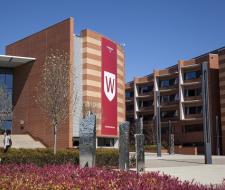 #1 best university in Business Faculties in Australia
AustraliaSydneyCurrently watching: 5from 15188.00 $AUD / 37 weeks
#1 best university in Business Faculties in Australia
AustraliaSydneyCurrently watching: 5from 15188.00 $AUD / 37 weeks -

-
 #1 of Design and Architecture in Australia
AustraliaGold CoastCurrently watching: 6from 24000.00 $AUD / year
#1 of Design and Architecture in Australia
AustraliaGold CoastCurrently watching: 6from 24000.00 $AUD / year -

-
 from 22302.00 $AUD / year
 -
 top 2% of universities worldwide
AustraliaBrisbaneCurrently watching: 4from 23000.00 $AUD / 2 terms
top 2% of universities worldwide
AustraliaBrisbaneCurrently watching: 4from 23000.00 $AUD / 2 terms -
 ranked #62 in Best Global Universities
AustraliaCanberraCurrently watching: 5from 31500.00 $AUD / year
ranked #62 in Best Global Universities
AustraliaCanberraCurrently watching: 5from 31500.00 $AUD / year -
 from 38800.00 $AUD / year
 -
 from 28800.00 $AUD / year
Nowadays, Australia is chosen by many foreign students due to a wide range of high-quality educational courses. SMAPSE offers the best colleges and schools in Australia where foreign students can take preparation courses that will help to enter prestigious universities in Australia and abroad. Using the list of top colleges and schools in Australia, you will definitely choose the most appropriate option.
Alternative destinations
What you should know about Preparing for University in Australia
Entering the path of higher education in Australia marks the beginning of a promising career. The southern continent boasts some of the world's finest universities, supported by generous government funding of nearly 3 million Australian dollars annually. This financial backing fuels innovative teaching methods and ensures a rigorous standard of education. The result? Over a decade of consistent representation by at least six Australian universities in the prestigious TOP-100 global rankings.
Globally Recognized Credentials:
Diplomas of Australian universities hold international prestige, with major corporations eagerly recruiting graduates from these institutions. Remarkably, students can begin professional work as early as their second or third year at university, often juggling work commitments alongside their studies.
Preparing for University Entry:
So, you've set your sights on entering an Australian university. How do you prepare for the admissions process? Firstly, it's crucial to assess your English proficiency level. All Australian universities require confirmation of English level through certificates obtained from recognized international exams:
-
TOEFL. The minimum passing score is 78. Its validity is 2 years.
-
IELTS. The minimum score for admission is 6.0. It is also valid for 2 years.
-
CAE (Cambridge Advanced English) is another language certificate that all universities in Australia accept. It is cheaper and valid for a lifetime (unlike TOEFL and IELTS), but not all European countries recognize it. If you plan to stay on the southern continent, then CAE is the best option.
Once you've secured your language proficiency certificate, the next step is to select courses in other subjects or acquire them after completing your secondary education in Australia.

What firstly should be considered when choosing a university?
It depends on the student - everyone determines the most important criteria for himself. I would advise you to take several rankings and compare them with each other, plus take into account the cost of the course, the location of the university and its scale, the percentage of graduates' employment. See where graduates continue their studies or where they go to work.
Admission requirements to Australian Universities
To enter Australian universities, you must meet the following requirements:
-
Secondary Education Diploma: Australian students undergo 12 years of schooling. Therefore, applicants must have a high school diploma along with a certificate from either the first year of university or preparatory courses in Australia.
-
Letter of Recommendation: A recommendation letter from your most recent employer or educational institution is essential. The university's admission committee may provide a sample letter upon request.
-
Motivation Letter: While not always mandatory, a well-crafted motivation letter can significantly increase your chances of admission or even make you eligible for scholarships. This letter is typically composed in a free-form style, where you articulate why you wish to attend university. Your reasons could range from enjoying the living conditions to aspiring to work in a specific field or fluently speaking English.
Opportunities for Free Study in Australian Universities
International students can reduce or cover the cost of study in Australia through a range of scholarships offered by the government and individual institutions. Among the main government programs are the Australia Awards, the Australia for ASEAN scholarships, and the Australian Government Research Training Program (RTP), which supports international students undertaking research masters and research doctorate degrees. The Quad Fellowship supports STEM students who are citizens or legal permanent residents of Australia, India, Japan, or the United States and hold a bachelor's degree or its equivalent in a STEM field. In addition, Australian education providers regularly offer their own scholarships to qualifying international students based on academic merit.
To improve your chances of receiving a scholarship, you will typically need:
-
Outstanding academic performance with strong scores across your assessments.
-
Submission of a formal scholarship application, which for institutional awards is often possible after the first year of university.
-
Successful competition against fellow applicants for a place in the program.
Seize the opportunity to unlock your potential through higher education in Australia, where excellence knows no bounds. Your journey to academic success begins here.
Universities Preparation courses for foreign students in Australia
|
Name, location |
Cost |
Description of programs |
Duration |
|
University Preparation College, Bankstown, Surry Hills (New South Wales) |
365-5000AUD / course |
Intermediate to Advanced (Upper-Intermediate to Advanced) Studying the specifics of university studies:
|
10-20 weeks. |
|
Language Studies International, Brisbane |
from 485AUD / week |
|
7days-4 months - TOEFL, IELTS 10 weeks. |
|
Language Links Education, Perth |
1223AUD / wk |
|
4-52 weeks. |
|
Taylors College Melbourne |
from 495AUD / week |
International foundation Preparation for entering universities. College Standard Technological, exact, humanitarian sciences. One subject of choice:
16 lessons / week TOEFL, IELTS Courses (TOEFL, IELTS Exam Preparation Courses) Programs developed in conjunction with Monash University, Deakin University |
from 14 days. |
|
Kaplan international colleges (Sydney, Melbourne, Perth, Brisbane, Cairns, Adelaide) |
from 1743/2 weeks. |
|
IELTS - from 14 days CAE, FCE - 3 months. |
Each of the schools / universities listed in the review offers dozens of courses, and programs with a narrow theme (in a particular specialty). Qualified teachers prepare students for exams, tests, identify weaknesses. After a year of study in the courses, taking notes at the university will not cause any particular difficulties. Communication with teachers and classmates will become comfortable, the assimilation of materials in English is effective.
At what age can I go to university in Australia?
In Australia there is no age limit for entering university. Most students begin their higher education after graduating from high school, usually between the ages of 18 and 19. However, the country also provides opportunities for adult students, who can enter university after some work experience or through adult training programs. As such, age is not a barrier to higher education in Australia and universities welcome students of all ages.
What documents are needed for admission?
To successfully enroll in an Australian university, you will need certain documents. The most important ones are a high school diploma or equivalent and standardized test scores. For foreign students, it is mandatory to provide results of English language exams such as IELTS or TOEFL. You may also need letters of recommendation and a personal statement outlining your motivation and preparation for the chosen program. These documents play an important role in your admission decision, so it is important to prepare them carefully.
What are the application deadlines?
Application deadlines for Australian universities may vary depending on the individual institution and program chosen. Typically, the main application deadline for the fall semester, which begins in February, ends in July, and the application deadline for the spring semester, which begins in July, ends in November. However, some programs may have different deadlines, so it is recommended to study the information on the official websites of universities in a timely manner and begin the application process in advance in order to have enough time to prepare the necessary documents and go through all stages of admission.
How much does it cost to study at Australian universities?
The cost of studying in Australia can vary significantly depending on the university chosen, the program and your status as a student (local or international). The average cost of studying for international students in Australia is between 20,000 and 45,000 Australian dollars (AUD) per year. However, the cost may be higher for some programs (eg medical). It is also important to consider the additional costs of housing, food, books and other expenses associated with living as a student in Australia.
Can I get financial support?
Yes, many Australian universities provide various forms of financial support for international students. These may include scholarships, grants and financial aid. Before applying for admission, it is worth researching the financial support opportunities offered by a particular university or program. It is also worth looking for external funding sources, such as government or private organizations, that can provide financial support based on the student's merit and need.
Can I work while studying?
Yes, international students have the right to work in Australia while studying. Under a student visa (subclass 500) they can work up to 48 hours per fortnight (every two weeks) during studies and unlimited hours during scheduled academic breaks. Students enrolled in a Masters by Research or Doctoral program may work more than 48 hours per fortnight at any time. While working, students have the same rights and protections as anyone else employed in Australia, which makes part-time work a reliable way to earn extra money and gain experience useful for a future career. Many universities also publish information about on-campus job openings, making it easier to find work.
After finishing their studies, graduates with a bachelor's, master's or doctoral degree may be eligible for the Temporary Graduate visa (subclass 485) under the Post-Study Work stream, allowing them to stay and work in Australia for a period after graduation. Other pathways include employer sponsorship and submitting an Expression of Interest (EOI) through SkillSelect for a skilled visa.
What level of English is required for admission?
To gain admission to an Australian university, international students are usually required to provide results from English language tests such as IELTS or TOEFL. English level requirements may vary from university to university and program to program. However, in general, an IELTS score of 6.0 or an equivalent TOEFL score is required. A high level of English is important not only for successful learning, but also for successful adaptation and interaction in an English-speaking environment.
How long is the bachelor's program?
The duration of a bachelor's program in Australia is usually from 3 to 4 years, depending on the chosen specialty and university. For example, most science and engineering programs typically last 4 years, while arts and humanities programs may last 3 years. It is important to estimate the length of a specific program before applying for admission so that you have an idea of the time it will take to complete your studies.
Can I transfer from a university in another country to Australia?
Yes, many Australian universities welcome international transfer students. If you have already started studying at a university in another country and decide to transfer to an Australian university, you may need to provide academic documents and go through a credit recognition process. Universities typically evaluate your previous academic achievements and determine which courses and grades can be transferred for credit.
Are there student exchange programs in Australia?
Yes, many Australian universities participate in student exchange programs. These programs allow students to spend a period of study in another country, enriching their academic and cultural experience. Exchange programs provide students with a unique opportunity to explore a new academic and cultural environment, broaden their horizons and develop international skills.
International students in Australia: the numbers
Australia is one of the world's leading destinations for international education. In 2023, 786,891 foreign students were enrolled in educational programs across the country, which was 27% higher than the previous year. Relative to its population, Australia has by far the highest share of international students in the world, with one foreign student for every 33.6 residents in 2023.
China remains the most significant source of international students, followed by India, Nepal, Colombia and the Philippines. New South Wales, Victoria and Queensland attract the largest portion of newcomers, together accounting for the majority of enrolments.
International education is one of the country's largest exports, generating over 5 billion AUD in 2018. Foreign students are a substantial part of campus life as well — in 2019 they represented an average of 26.7% of the student community at Australian universities. These figures show a mature, well-established system that welcomes applicants from abroad, including those arriving through university preparation courses.
Student visa and post-study options in Australia
International students who complete a University preparation course and enrol in a degree program in Australia study on the Student visa (subclass 500). Before applying for the visa you need to enrol in a course and receive a Confirmation of Enrolment (CoE), and you must submit the electronic CoE together with a compulsory English language proficiency test score to lodge the application.
The subclass 500 visa lets you stay in Australia for the full duration of your course, up to a maximum of five years, and travel in and out of the country during that period. From 1 July 2026 the fee is from AUD 2,500 per visa application. Two conditions apply after you arrive — you must notify your education provider of your residential address within 7 days of arriving, and maintain adequate health insurance (Overseas Student Health Cover) for the whole of your stay.
After graduation there are several ways to remain in the country. Holders of a bachelor's, master's or doctoral degree may be eligible for the Temporary Graduate visa (subclass 485) under the Post-Study Work stream. Other pathways include employer sponsorship and submitting an Expression of Interest (EOI) through SkillSelect for a visa to live and work in Australia.
Foundation vs direct entry: two paths into an Australian university
International students have two main options to an Australian university. The first is a foundation (university preparation) program, which bridges the gap between a home-country school certificate and Australian first-year requirements. It is designed for students whose academic background or English level does not yet meet direct-entry standards, and many Australian universities either run their own foundation courses or accept those from partner colleges before admission to a bachelor's degree.
The second option is direct entry into the first year of a bachelor's program, available to students whose secondary qualifications and English are already recognised as equivalent to Australian requirements. It saves time but leaves less room to adapt to the local academic style.
When choosing between the two, it helps to keep the overall structure of Australian higher education in mind. An undergraduate bachelor's degree usually takes 3 years, or 4 years for a Bachelor Honours degree, with the academic year built around 2 semesters and study typically starting in March. Postgraduate study runs 1 to 2 years, and a doctoral degree takes 3 years plus 1 year for review. A foundation course adds roughly a year before the bachelor's stage, so students can weigh that extra time against the smoother transition it provides.
Learning programs-summary information
| Name | Meaning | Equivalent | Min. age | Duration, years |
Next stage | Cost |
|---|---|---|---|---|---|---|
| GCSE | General certificate of secondary education | secondary education (non-accomplished) | 14 | 1–2 | A-Levels | 15,000 USD+ |
| A-Levels | Advanced level | secondary education (accomplished) | 16 | 2 | University | 15,000 USD+ |
| BTEC | Business and Technology Education Board | secondary special education | 14 | 2–3 | University/ work | 15,000 USD+ |
| Oxbridge Preparation | Preparing for Oxford and Cambridge | secondary education (accomplished) | 17 | 1 | University | 15,000 USD+ |
| International Baccalaureate | International baccalaureate | secondary education (accomplished) | 16 | 2 | University | 18,000 USD+ |
| Foundation/ Pathway Year | Preparatory year | admission to the 1st year of university | 17 | 1 | University | 14,000 USD+ |
| NCUK | The Northern consortium | 2 year university | 17,5 | 1 | 2 year University of NCUK | 13,000 USD+ |
| Special Preparation (Medics/Math/Business) | Specialized training | - | 14 | optional | optional | 4,000 USD+ |
| Academic English | Academic English | Language school | 8 + | 6–12 months | School or University | 8,000 USD+ |
Top 21 boarding colleges in England 2027
| 1 | Cardiff Sixth Form College |
| 2 | National Mathematics and Science College |
| 3 | Abbey College Cambridge |
| 4 | d'Overbroeck's College |
| 5 | MPW London |
| 6 | CATS Cambridge |
| 7 | Kensington Park |
| 8 | DLD London |
| 9 | King's College St Michael’s |
| 10 | Bellerbys Cambridge |
| 11 | Chelsea Independent College |
| 12 | MPW Cambridge |
| 13 | Bellerbys Brighton |
| 14 | CATS London |
| 15 | St Clare's Oxford |
| 16 | Bishopstrow College |
| 17 | CATS Canterbury |
| 18 | Bellerbys London |
| 19 | Ealing Independent College |
| 20 | Cambridge Tutors College |
| 21 | Abbey Manchester |
Top 35 best universities and colleges in Canada 2027
| 1 | University of Toronto |
| 2 | McGill University |
| 3 | University of British Columbia |
| 4 | University of Alberta |
| 5 | Simon Fraser University |
| 6 | Montreal University |
| 7 | University of Windsor |
| 8 | York University |
| 9 | University of Guelph |
| 10 | McMaster University |
| 11 | University of Manitoba |
| 12 | University of Waterloo |
| 13 | Royal Roads University |
| 14 | Vancouver Film School |
| 15 | Kwantlen Polytechnic University |
| 16 | University of Calgary |
| 17 | Dalhousie University |
| 18 | Fanshawe College |
| 19 | University of Ottawa |
| 20 | Laval University |
| 21 | Sheridan College |
| 22 | University of Regina |
| 23 | Brock University |
| 24 | Thompson Rivers University |
| 25 | Humber College |
| 26 | Vancouver Island University |
| 27 | Mohawk College |
| 28 | Centennial College Toronto |
| 29 | Niagara College |
| 30 | Capilano University |
| 31 | Seneca College |
| 32 | Algoma University |
| 33 | Saint Clair College |
| 34 | Douglas College |
| 35 | LaSalle College |
Statistics of English courses in Australia
| Programs | Intensity | Group | Language requirements | The minimum cost of the week AU$ |
|---|---|---|---|---|
| Standard English | 20 | 6-15 | Beginner | 230 + |
| Intensive courses | 30 | 6-14 | Elementary | 350 + |
| Semi-intensive | 24-25 | 6-14 | Elementary | 304 + |
| English for Business | 25-28 | 6-15 | Low intermediate | 418 + |
| English for Specific Purposes | 25 | 6-15 | Intermediate | 335 + |
| English for Academic Purposes | 28 | 6-15 | Low intermediate | 330 + |
| Exam preparation courses | 20 | 6-15 | Low intermediate | 330 + |
| English in Action | 15-30 | 6-15 | Beginner | 340 + |
| One-to-one lessons | individual | 1 | Beginner | 95 + |
Students Accommodation Options in Australia
| Accomondation | Meals | Number of people per room | Cost per week/min AU$ | Cost per week/max AU$ |
|---|---|---|---|---|
| Homestay | breakfast | 1-2 | 200 | 400 |
| School residence | - | 1-2 | 165 | 350 |
| Appartment | - | 1-2 | 300 | 500 |
| Hotel | optional | 1-2 | 160 | 250 |
