Army and Navy Academy













In the process of preparing the material, we referenced the following sources: Wikipedia, Alphapedia
Programs and prices, tuition fees in Army and Navy Academy


Grades 7-9, grades 7-9
- Age - from 13 years,
- The term of study is three years.
Education in grades 7-9 gives students a solid academic foundation and an idea of a variety of areas, one of which the student will have to choose to continue his educational path. The curriculum consists of a variety of subjects taught in an interdisciplinary approach – in this way, students gain applied knowledge that is applicable in real life.
Grade 9 is the starting point for preparing for college or university. Cadets are faced with new academic opportunities for academic and extracurricular activities. This year, it is necessary to build a solid academic foundation by taking five academic courses + electives in art.
Grades 10-12, grades 10-12
- Age - from 16 years,
- The term of study is three years.
Starting from the 10th grade, each pupil of the academy chooses six disciplines in each semester, diluting them with optional modules. The main subjects are:
- Higher mathematics
- Languages: Spanish, French, English to choose from,
- History of Europe and the United States,
- Fine Arts,
- Chemistry
- Physics
- Statistics
- Psychology
- English literature.
Some of the electives are:
- Aviation
- Aviation: unmanned aerial systems,
- Informatics
- Information security,
- Game development,
- Video production and more.
A set of training and additional classes will help students develop their strengths and strengthen their weaker ones, find the path that the graduate will follow after graduation.
Description of Army and Navy Academy
- Language of instruction: English;
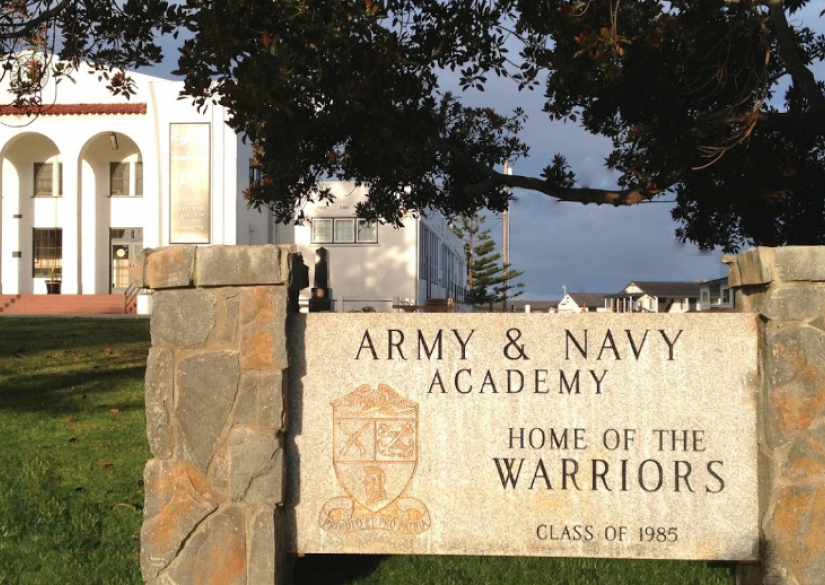
- Established in 1910;
- Location: Carlsbad, California, USA;
- Students age: from 13 to 18 years;
- Study programs: US High School Diploma (middle and high school);
- Total number of students: 320 people (90% of them at the boarding house, 25% - foreign students);
- Type of study: single (boys only);
- Type of accommodation: residence (board from age 13).
- School type: private college-preparatory military boarding school for boys,
- Grades: 7-12,
- Options: boarding and day,
- Founded: 1910 by Colonel Thomas A. Davis.
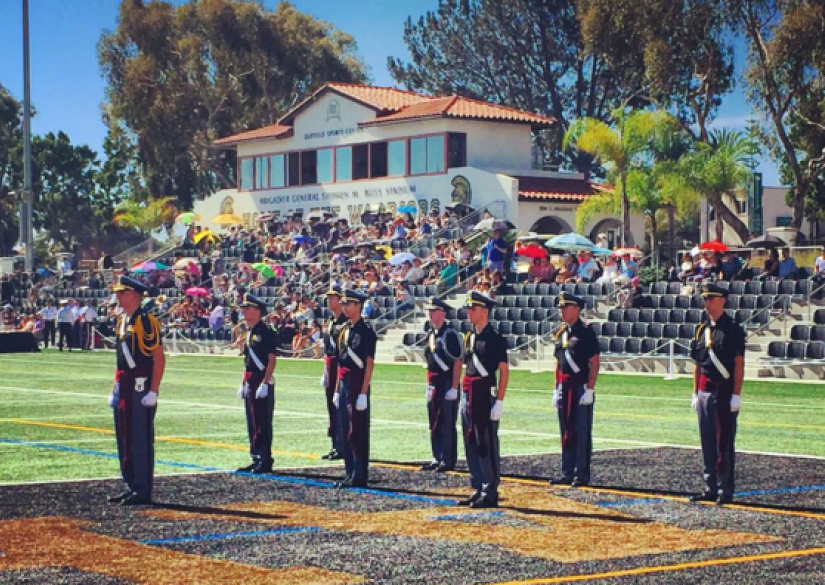
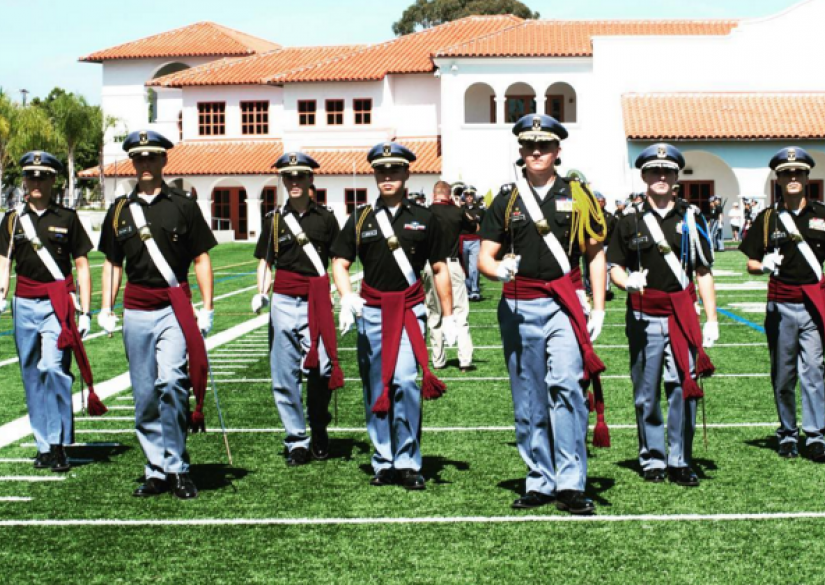
The academy's mission is to forge virtuous young men. It combines rigorous academics, athletics, and character-building in a structured environment. Its evidence-based curriculum is designed around how boys learn and includes JROTC leadership courses. Trainer, Advisor, Coach (TAC) Officers mentor cadets academically and in residential life.
The academy's core values are Honor, Integrity, Respect, Commitment, Courage, and Gratitude.
Scientific achievements
One cadet in the Class of 2025 received combined athletic scholarships from West Point, Columbia University, The Citadel, and Western Colorado University. Another received a scholarship from the United States Naval Academy.
Things to know about
The academy is among the best military schools in the United States.
University destinations
Graduates currently attend:
- Stanford, Dartmouth, the University of Chicago, the United States Naval Academy, and West Point.
Class of 2025 acceptances and offers included:
- U.S. service academies: the United States Military Academy at West Point and the United States Naval Academy,
- All five senior military colleges: Texas A&M, Norwich University, The Citadel, Virginia Military Institute, and the University of North Georgia,
- Research universities: the University of Southern California, New York University, Purdue University, Penn State, Rutgers, and the University of Toronto,
- STEM-focused institutions: Embry-Riddle Aeronautical University, Virginia Tech, and Binghamton University,
- Other acceptances: campuses within the University of California and California State University systems, the University of Arizona, Arizona State University, Boise State, Clemson, and Brigham Young University.
Accommodation, meals, prices
Most students are housed in on-campus housing. Local students who have a home near the school have access to the day study format, which means staying on campus only during the daytime. The barracks distribute students by age: middle and high school students are housed in separate buildings.
Students live in fully furnished two-, three-bed rooms: each boy has his own bed and storage closet, and self-study desks are shared by residents. TAC staff members - mentors who provide 24/7 support and security in the residence - move in next door to the students.
All students have a clear schedule each day: wake up, eat, attend academic and elective classes, and go to bed at a certain time. On weekends students feel a little more free, as on Saturdays and Sundays instead of classes there are excursions, hikes, trips home.
All students are offered full board - three meals a day in the large dining room on school days. The daily updated menu includes healthy and nutritious meals: soups, salads, fruits and vegetables, meat and dairy products. If a student has any dietary or medical conditions, qualified kitchen staff provide alternative meals.
Subjects and sports
Activities Army and Navy Academy
- Weekly interactive sessions with guest speakers focused on the academy's core values,
- Study expeditions, including a trip to the Galápagos Islands for biological research,
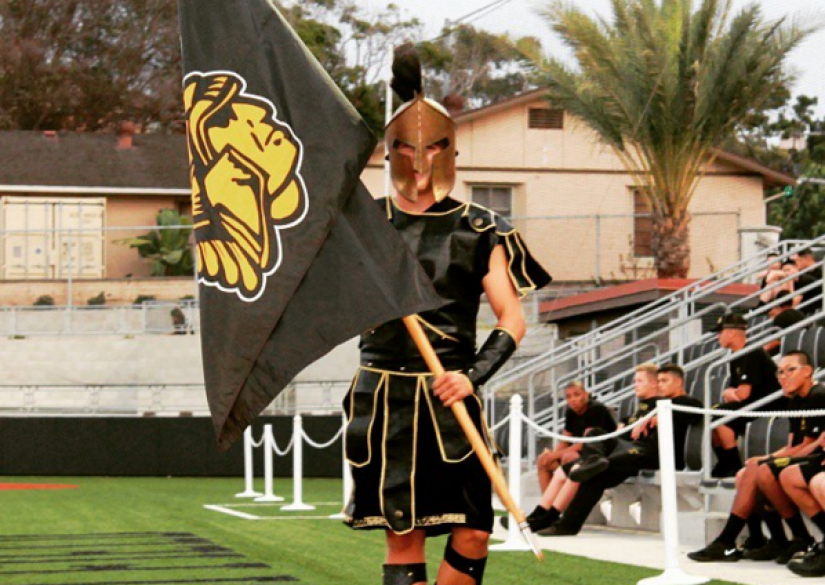
- Seventeen sports teams, including water polo, surfing, football, and lacrosse,
- Clubs including robotics, aviation, and Harvard Model Congress.
Advantages
- One of only two Gurian Centers for Excellence in the United States, using research-based teaching methods informed by how boys learn,
- Accredited by the Western Association of Schools and Colleges (WASC), affiliated with the California Association of Independent Schools (CAIS), and a member of the Association of Military Colleges and Schools of the United States (AMCSUS) and the Western Boarding Schools Association (WBSA),
- Courses in economics and leadership training, plus electives in aviation, computer science, cybersecurity, game development, and video production,
- An approximate student-teacher ratio of 13:1.
Facilities and equipment at Army and Navy Academy
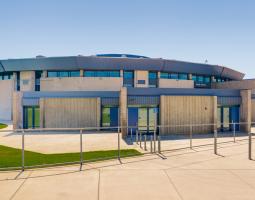
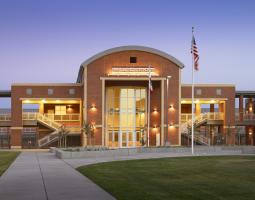
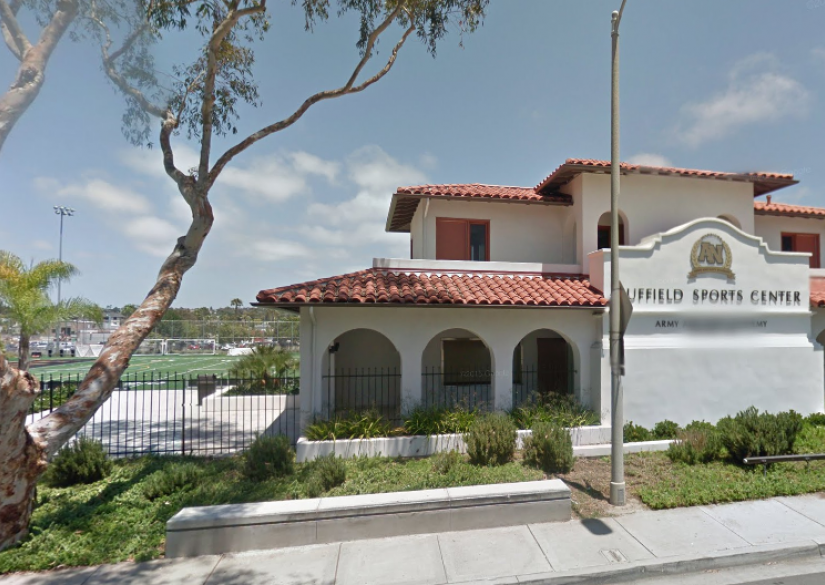
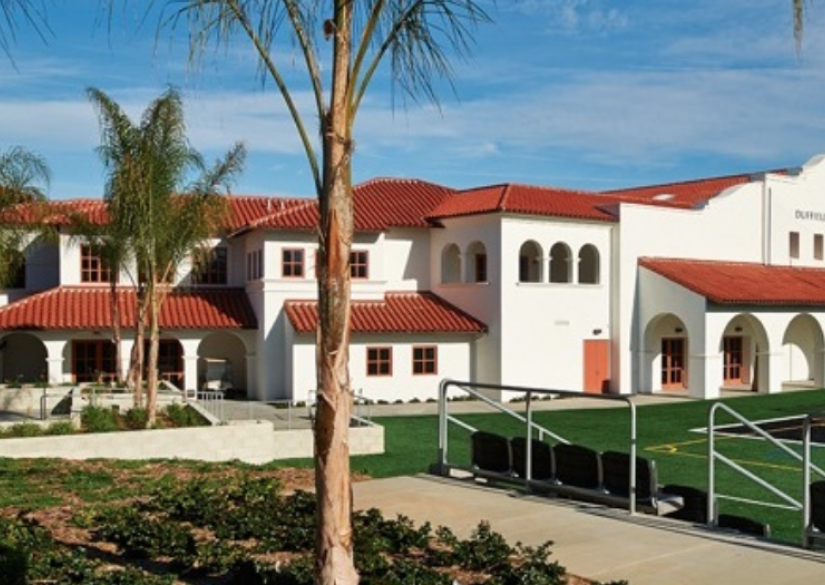
The academy has a 15.1-acre beachfront campus in Carlsbad, California. Its facilities include:
- A maker space,
- Aviation simulators, drones, smart boards, and robotics labs,
- Music technology equipment and video production studios,
- A student enrichment center for leadership training.
Admission dates and extra charges
A nonrefundable enrollment deposit is required when the enrollment contract is completed and applies to every payment option.
Enrolment process
The admission process includes submitting an application and the requested school records. It also includes conversations with the student and parents, along with a review of the student's academic preparation, conduct history, recommendations, goals, and readiness for residential life. Smapse specialists will guide you through every stage of enrollment.
Perspectives
The 58 cadets in the Class of 2025 were accepted to 98 unique institutions, including top universities, U.S. service academies, and all five senior military colleges.
Entry requirements, how to apply, what is required to enrol
Applicants must be boys entering grades 7-12. The academy assesses each candidate's academic capability, maturity, desire to attend, and capacity to thrive in a highly structured military boarding school with rigorous academics.
After an application is submitted, an admissions counselor helps families gather supporting documents. These include:
- A Therapy Practitioner Form for applicants who have regularly or recently undergone therapy,
- A copy of immunization records,
- A copy of the front and back of the applicant's health insurance card.
International applicants should verify the current test requirements. The academy's official guidance mentions TOEFL and Duolingo for non-U.S. citizens.
Scholarships Army and Navy Academy
The academy offers need-based financial aid. Its Financial Assistance Committee reviews the family's financial picture alongside the student's full academic record, disciplinary history, and commitment to attend.
Requests are considered only after a family has completed the application and enrollment contract and paid the initial deposit. The Clarity Financial Aid application is submitted only after the student has been accepted. Its application fee is charged per household and covers all participating Clarity schools to which the family applies.
Literature and references

Institution on the map
Residence permits, citizenship and other services
- Guardianship services during the studies
- Student supervision
Review about Army and Navy Academy
Recommendations on when to apply
| Language courses, schools and children's language camps | Primary and secondary education - private schools | Preparation programmes for entering universities - higher education | Higher education (after completing accredited programs A-level, IB, High School) - Bachelor, Master, MBA |
| - we recommend to apply 6-9 months before the start of the course (some camps and schools offer discounts for early booking or for lengthy study programs) - there are some very popular and high demand children's camps, where the applications need to be submitted 1 year in advance (in particular Switzerland , Great Britain , USA , Canada , Austria) | - we recommend to apply one year before the start of the training program, - some schools have a specific time frame (September-November - please specify an individual school) - some schools require tests in several stages (UKISET, internal tests of the school: English, mathematics, logics, subjects, interview, some require a personal visit) | - we recommend to apply one year before the start of the program, - for Foundation and Pathway programs, IELTS and TOEFL certificates are usually required, respectively | - recommended submission one year before the start of the program, - the deadline normally closes in January, for TOP HEIs and, as a rule, in March in other universities - for a bachelor, a Foundation or Pathway preparatory program a completed A-level, IB, High School + IELTS / TOEFL are required - for Masters you need a graduated higher education, in some cases you need a pre-Masters program - MBA requires completed higher education, work experience preferably at least 2-3 years, etc. |