
 Spain
Spain
 For partners
 Study in Netherlands. 34 best institutions in Netherlands
This content was developed and approved with active participation of Sam Jones, who is a Director of the International School of Bremen
In the process of preparing the material, we referenced the following sources:
- https://en.wikipedia.org/wiki/Education_in_the_Netherlands
- https://www.nuffic.nl/en/subjects/study-holland/education-in-the-netherlands
-
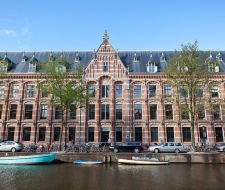 #15 in the Europe and #55 in the world
NetherlandsAmsterdamCurrently watching: 7from 10900 € / terms
#15 in the Europe and #55 in the world
NetherlandsAmsterdamCurrently watching: 7from 10900 € / terms -
 INTERNSHIPS AT NIKE, GOOGLE AND MICROSOFT
NetherlandsAmsterdamCurrently watching: 9from 7845 € / semesters
INTERNSHIPS AT NIKE, GOOGLE AND MICROSOFT
NetherlandsAmsterdamCurrently watching: 9from 7845 € / semesters -
 is in the Top 10 Countries to Study Abroad 2023
NetherlandsHagueCurrently watching: 4from 9405 € / terms
is in the Top 10 Countries to Study Abroad 2023
NetherlandsHagueCurrently watching: 4from 9405 € / terms -
 #4 in the Netherlands, #72 Worldwide
NetherlandsRotterdamCurrently watching: 3from 9300.00 € / year
#4 in the Netherlands, #72 Worldwide
NetherlandsRotterdamCurrently watching: 3from 9300.00 € / year -
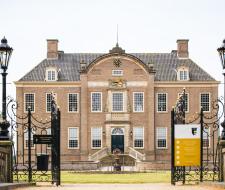 Accredited by Council of International Schools (CIS)
NetherlandsEnschedeCurrently watching: 4from 0.00 € / year
Accredited by Council of International Schools (CIS)
NetherlandsEnschedeCurrently watching: 4from 0.00 € / year -
 from 3380 € / 2 weeks
 -
 ranked 21st in the Netherlands
NetherlandsHagueCurrently watching: 5from 8634.00 € / year
ranked 21st in the Netherlands
NetherlandsHagueCurrently watching: 5from 8634.00 € / year -
 from 9250.00 € / year
 -
 ranking is #39 in the Best Global Universities list
NetherlandsAmsterdamCurrently watching: 3from 12500.00 € / year
ranking is #39 in the Best Global Universities list
NetherlandsAmsterdamCurrently watching: 3from 12500.00 € / year -
 Programs are accredited by NVAO and FIBAA
NetherlandsApeldoornCurrently watching: 3from 6200 € / terms
Programs are accredited by NVAO and FIBAA
NetherlandsApeldoornCurrently watching: 3from 6200 € / terms
Studying in the Netherlands is becoming more popular every year: foreign students choose local schools, colleges and universities to receive high-quality education abroad and build an international career. Dutch studying courses have been created according to European educational standards, their academic programs are annually checked for relevance, supplemented with modern methods and practical formats. The country's leadership is responsible for the quality of Dutch education, which regularly monitors the effectiveness of education in institutions.
The Dutch diploma of higher education is quoted in many world countries. The situation is similar with school certificates and certificates — they open the doors to hundreds of leading world universities for foreign applicants.
Alternative destinations
The structure of education in the Netherlands
The Dutch education system is characterized by constitutional freedom (this applies to the establishment of schools, colleges, and other institutions, and the choice of their principles of operation), and is dynamically developing. Such features of education in the Netherlands explain the wide variety of studying institutions in a small European country. About 70% of government institutions are private, and foreign students can study here.
Admission is available at the following levels of institutions:
- Initial;
- Average;
- The highest.
Specialized centers and schools, in particular language schools, have also been opened in the country.
- Primary education is provided to children aged 4-12 years. The first eight-year school cycle involves academic preparation of students in geography, mathematics, writing, reading, social studies, physics, Dutch and English.
- The middle stage has three directions: preparatory (MAVO, four–year course), general (HAVO – 5 years of study), pre-university (VWO - 6 years). Schools in the Netherlands are distinguished by the high quality of teaching services, service and conditions of stay.
- Bachelor's and master's degrees in the country can be obtained at a university, polytechnic, or international studying institute. Institutions of the first type are distinguished by a humanitarian, scientific and research profile. Polytechnic hogescholen graduates specialists in various fields of economics. International institutions accept mostly international students from developing countries for bachelor's and master's degree programs.
Foreign students are also given the opportunity to improve Dutch and English in language courses – in this regard, studying in the Netherlands is very beneficial. Private schools offer a wide range of programs:
- Year-round short-term courses for adults (18+);
- Programs for children and adolescents aged 9-17 years (lasting from a week to a year);
- Preparatory pre-university courses (language learning for academic purposes);
- Individual programs;
- Business courses.
English-language education is well developed in the country: English can be the main language of instruction in schools, specialized institutions, universities, institutes, and studies are very democratic.
Advantages of studying in the Netherlands
The main advantages of studying in the Netherlands are:
- The country does not accept the division of universities into prestigious and ordinary ones, as in the UK or the USA. Diplomas of all polytechnics, universities, and institutes are characterized by the same value here. This allows students to choose a university not by ranking, but by profile, convenience of location, and other priority criteria.
- There are few university and school campuses, and students are invited to live in families, apartments, and hotels during their studies, which contributes to the realization of the idea of full immersion in the cultural environment of the country.
- Universities in the Netherlands are famous for their practice-oriented courses and progressive teaching methods. At all educational levels, special attention is paid to the development of not only academic and professional, but also social skills of the student, which is why many seek to study in this country.
- Obtaining a Dutch certificate is a variety of career opportunities. There are about 7,000 international companies operating in the country alone. Certificates and diplomas obtained in the Netherlands are accepted by many employers all over the world.

What difficulties can foreign students face while studying at an university?
Differences in cultures, educational systems, academic standards - and even personal expectations - can be shocking and hindered at getting started. Of course, there is also a difference between high school and university, and then there is an adaptation to a new country and a new language, which is also unusual. Many students also suffer from such seemingly trifles as different weather, food, time zones, etc.
The importance of this cannot be overestimated: according to our statistics, students who quickly and effectively overcome difficult adaptation learn better (higher average score) and subsequently build their careers more successfully.
Secondary education in the Netherlands: prestigious standards and programs
You can get secondary education in the Netherlands in different institutions: in public and private schools. At the end of their studies, both give graduates state-issued certificates that help foreign students enter colleges and universities in the Netherlands or other countries around the world.
When enrolling in a school in the Netherlands, a student's parents can choose a standardized course that their child will take. Dutch schools most often offer the following programs that meet European and American quality standards:
- GCSE (General Certificate of Secondary Education) is a British educational program designed for secondary school students. The course consists of compulsory subjects and optional subjects. After obtaining a diploma of completion of this program, the student can transfer to the senior classes (Sixth Form).
- IGCSE is an international standard program that was created at the University of Cambridge back in the last century. The course appeared after the standard GCSE and became its counterpart with a more intensive academic format. The final tests at the end of this program also have a higher level of difficulty. In recent years, IGCSE has become significantly more popular than before.
- A-level is a British curriculum for high school students. It is considered the "gold standard" in the educational field, because it allows students to study a number of subjects at a specialized level: students immerse themselves in the material not at school, but practically at the university level, thus preparing themselves for further studies at the university. Successful completion of the course and passing the subject exams is a guarantee of admission to the world's leading colleges and institutes.
- International Baccalaureate is an international—level program that is taught in thousands of global schools. You can take the IB course at all levels: from elementary to high school. Career variations of the IB Diploma are available for adult learners. The IB Diploma Program is a personal program for high school students, the IB stage, which helps foreign students successfully enter a university abroad. During the 2 academic years, students study basic and narrow-profile subjects, and they can additionally take several electives.
- Advanced placement (High School Diploma) is an educational program available only to high school students, created according to American and Canadian (to a lesser extent) standards. The studying course consists of intensive in-depth classes and basic lessons, and teenagers have both general and selective subjects in their schedules.
Advantages of higher education in the Netherlands
Higher education in the Netherlands is one of the world's top educational institutions: local universities annually reach the top of international rankings, and more than 100,000 students from other countries study here at the same time. Dutch institutions regularly update academic programs, take into account the experience of foreign colleagues and expand educational horizons for their students. For example, they offer courses in different languages: English and German, while Dutch remains the main language in the country.
Dutch universities actively attract foreign specialists to their work, and the teaching staff is particularly proud - many of them have achievements in various fields of science and knowledge. A big advantage is that students have the right to work while studying in the Netherlands. There are special employment programs here: After completing their bachelor's degree, graduates can stay in the country for a year and have free access to the labor market. Universities in the Netherlands are divided into polytechnics, classical and international, especially famous for innovative approaches in the fields of education, engineering, architecture. In addition to all of the above advantages, a university degree in the Netherlands for foreign students has favorable prices both in terms of tuition fees and living and food expenses.
General educational statistics in Netherlands
Statistics of English courses in Netherlands
| Programs | Intensity | Group | Language requirements | The minimum cost of the week |
|---|---|---|---|---|
| Basic courses | 2-2,5 | 4-10 | Elementary | € 30/week |
| English Conversation Courses | 2 | 4-10 | Intermediate | €15/week |
| Intensive English Courses | 25-30 | 4-8 | Beginner | €420/week |
| Business English | 25 | 6-8 | Upper-Intermediate | €395/week |
| Exam Preparation | 20 | 4-8 | Pre-Intermediate | €390/week |
| Intensive Exam Preparation | 25 | 4-8 | Intermediate | €450/week |
| Private lessons | 45 min. | 1 | Beginner | €43/lesson |
Language-General statistics
| Official language | Dutch |
|---|---|
| English Speaker Percentage | 89% |
| Average course cost per week | €390 |
| Visa Application Deadline | 4 days |
Accommodation in Netherlands per month
| Shared room outside of centre | 331$ |
|---|---|
| Shared room in city centre | 451$ |
| 1 bedroom apartment outside of centre | 604$ |
| 1 bedroom apartment in city centre | 822$ |
Literature and references
-
Study in Netherlands — QS Top Universities

-
Best universities in the Netherlands 2022 — THE
-
Education in the Netherlands — Invest in Holland
-
The Netherlands ranks in the top 10 best countries for students — I Am Expat
-
Education in the Netherlands
-
Education in the Netherlands — Wiki
-
List of universities in the Netherlands — Wiki