
Best private schools in Canada 2027
- Best Private Schools in Canada: Complete Guide
- Why Choose the Best Private Schools in Canada?
- Highlights of Private Schools in Canada for International Students
- Private schools in Canada. Cost and fees
- How to apply to private schools in Canada?
- Study permit for private school students in Canada
- Do you need to take the SSAT to apply to private schools in Canada?
- International students in Canada: latest statistics
- Literature and references
This content was developed and approved with active participation of Mary Bousted.
In the process of preparing the material, we referenced the following sources:
- https://www.educanada.ca/study-plan-etudes/system-education-systeme.aspx?lang=eng
- https://en.wikipedia.org/wiki/Education_in_Canada.
-
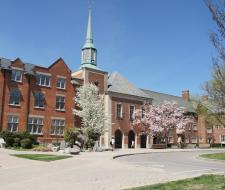 from 3995 $CAD / 2 weeks
 -
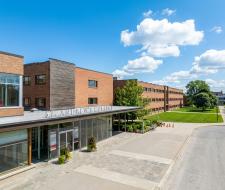 100 % University placement from each graduating class
CanadaToronto, OntarioCurrently watching: 7from 28340 $CAD / term
100 % University placement from each graduating class
CanadaToronto, OntarioCurrently watching: 7from 28340 $CAD / term -
 In 2020 the highest grade received towards the IB Diploma - 40
CanadaVictoria, British ColumbiaCurrently watching: 10from 65600.00 $CAD / year
In 2020 the highest grade received towards the IB Diploma - 40
CanadaVictoria, British ColumbiaCurrently watching: 10from 65600.00 $CAD / year -
 65 sport and clubs in PC's co-curriculum program
CanadaToronto, OntarioCurrently watching: 7from 475.00 $CAD / week
65 sport and clubs in PC's co-curriculum program
CanadaToronto, OntarioCurrently watching: 7from 475.00 $CAD / week -
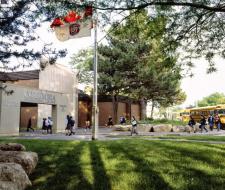 CIC has more top universities in the partnership program than any other school
CanadaToronto, OntarioCurrently watching: 10from 49400 $CAD / 10 months
CIC has more top universities in the partnership program than any other school
CanadaToronto, OntarioCurrently watching: 10from 49400 $CAD / 10 months -
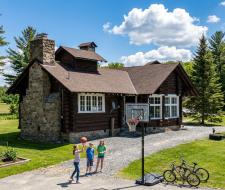 100 % University placement from each graduating class
CanadaToronto, OntarioCurrently watching: 10from 26200 $CAD / term
100 % University placement from each graduating class
CanadaToronto, OntarioCurrently watching: 10from 26200 $CAD / term -
 Top Areas of Study in 2023: STEM – 41 % Medical and Health – 12 %
CanadaOttawa, OntarioCurrently watching: 6from 4500.00 $CAD / 3 weeks
Top Areas of Study in 2023: STEM – 41 % Medical and Health – 12 %
CanadaOttawa, OntarioCurrently watching: 6from 4500.00 $CAD / 3 weeks -
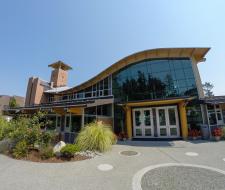 This past year, 70% of the graduating class received an offer of admission from their firs
CanadaVictoria, British ColumbiaCurrently watching: 10from 4835.00 $CAD / 2 weeks
This past year, 70% of the graduating class received an offer of admission from their firs
CanadaVictoria, British ColumbiaCurrently watching: 10from 4835.00 $CAD / 2 weeks -
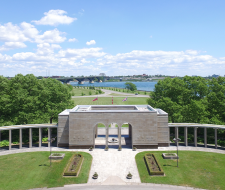 from 27925 $CAD / semester
 -
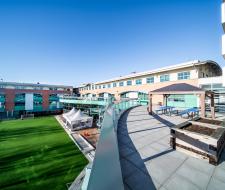 In 2023, 126 graduates received offers of admission from 84 universities in 13 countries
CanadaVancouver, British ColumbiaCurrently watching: 10from 1200.00 $CAD / month
In 2023, 126 graduates received offers of admission from 84 universities in 13 countries
CanadaVancouver, British ColumbiaCurrently watching: 10from 1200.00 $CAD / month
Upon graduation from Canadian schools, alumni have excellent chances to be admitted to the best colleges or universities due to their high-quality preparation. SMAPSE offers you a selection of the best private schools and colleges in Canada where foreign students can get excellent education.
By entering a private school, students can study under the provincial K-12 curriculum, with the International Baccalaureate or A-level programs available as options. It means that students obtain knowledge in basic subjects, a large number of valuable optional disciplines, opportunities for creative and sports development. Additionally, in Canada sport is almost a national value. Actually, every student is engaged in running or swimming, playing hockey or softball.
It is worth noting that most private schools practice bilingual studying. Students can learn both English and French equally well. Students can choose schools located in Toronto, Ontario, Vancouver, Ottawa, Montreal and other regions. Most students enter Canadian colleges at the age of 13,14,15 or 16 years. Schools in Canada, as a rule, are much cheaper than British and American schools, accounting to from 26,000 USD to 40,000 USD.
Below you can learn about the features of obtaining education at the best private schools and colleges in Canada. SMAPSE experts have prepared a list of educational institutions for you, their description and ranking, here you will also learn the approximate tuition.
In Canada it is possible to observe an informal division of the country into the corresponding areas, so the choice of Canadian private schools, colleges should be made taking into account this fact.

Alternative destinations
Best Private Schools in Canada: Complete Guide
The tuition in Canadian schools varies from 35,000 to 70,000 CAD annually. The cost of studying depends on various factors, such as the ranking of institutions, accommodation type, meals, educational materials, and number of extracurricular activities.
Entering the private school in Canada requires submission of the following documents:
-
A copy of passport or ID card.
-
Academic records for the last two years, plus current year quarterly/trimester grades.
-
Recent language certificates.
-
Recommendation letters from English and mathematics teachers.
-
A motivation letter (optional).
-
Relevant registration and school-specific forms.
-
An online interview with the student or an in-person visit to the school.
Additionally, internal mathematics and English tests are often required. These tests assess a student's readiness for private schooling in Canada.
For foreign students it is also required to have a trustee, who is a Canadian resident with accreditation. The main task of the trustee is controlling the student's welfare during the studies. Moreover a non-refundable registration fee in the amount of 200 CAD is required to pay to each educational institution where you apply to. Prior to the final decision of the admission committee, an interview with the school's representative is conducted.
For any queries, the SMAPSE team is ready to provide expert guidance and answers.
Why Choose the Best Private Schools in Canada?
-
World-recognized Certification: Graduates receive a prestigious secondary education certificate, recognized by top universities worldwide and numerous international companies.
-
Cost-effective Education: Despite their quality, tuition fees at Canadian private schools are generally lower than in schools in USA and the UK.
-
Welcoming Environment: Canada's amicable approach towards foreigners and its streamlined immigration process offer a great foundation for a prosperous life in a developed country.
-
Modern Teaching Approaches: Advanced teaching methods ensure a high-quality secondary education.
-
Holistic Development: Schools emphasize students' independence, responsibility, sports, and creative pursuits. Both mixed and gender-specific learning environments are available, allowing optimal choices for international students.
Highlights of Private Schools in Canada for International Students
Canadian secondary education comprises three levels, spanning 11-12 grades, with academic years running from September to May.
The uniqueness of private schools in Canada lies in their personalized learning approach. Students can select subjects aligned with their future academic and career interests. Furthermore, the Advanced Placement program offers in-depth subject knowledge, comparable to university standards. Successful completion provides a competitive edge for university admissions not just in Canada, but also in the UK, the US, and other countries.
Private institutions in Canada also provide extensive sports and arts programs. From advanced technological resources to sports stadiums and even hockey rinks, the infrastructure is world-class. Schools are proud of their sports teams, participating in local and regional competitions.
Student’s academic performance is mostly assessed by conducting written tests, which vary in the form - it can be multiple-choice questions or essays.
At the age of 18-19 years old, students graduate from Canadian private schools, after that pursuing higher education in Canada, the UK, or the USA. The best private schools offer guidance through guest lectures from university representatives and dedicated staff who assist with the university admissions process.
Selecting Among the Top Private Schools in Canada Begin your school selection process at least a year in advance to navigate bureaucratic formalities and ensure adequate academic preparation. During their final year, students in Canada's best private boarding schools get unparalleled support from specialists in higher education, ensuring a smooth transition to university.
What should be considered when choosing a school, besides the qualifications of teachers?
Extracurricular activities, because the interests of children differ. Some schools in Canada have an emphasis on sports (for example, hockey or basketball), someone develops music, someone offers to improve leadership skills, etc.
A very important general school philosophy is its values, atmosphere, tonality of every day. All this should correspond to your ideas about comfort and taste, the interests of your child.
Private schools in Canada. Cost and fees
Tuition Fees
Deciding on studying in Canada, foreign students are offered diverse educational programs, which results in significant variations of fee structures. Private or independent day schools usually charge from CAD 15,000 to CAD 30,000 per academic year, while private or independent boarding schools range from CAD 63,000 to CAD 83,000 per year. For comparison, tuition at public schools for international students falls between CAD 10,000 and CAD 17,000 per year. Fees in elite institutions can be even higher. They usually stipulates the core academic instruction and some basic extracurricular activities.
Additional Costs
In addition to tuition, parents of a child should take into account other associated expenses, which may include uniforms, textbooks, school trips, and participation in extracurricular activities or specialized courses. Many private schools in Canada also charge application or enrollment fees, which are non-refundable and are paid separately.
Scholarships and Financial Aid
Many private schools in Canada provide financial aid packages or scholarships for foreign students. Factors for awarding scholarship may include merit-based, academic achievements or specific talents, or need-based, which depends on the family's financial situation. It's recommended to scrutinize these financial aid options well in advance, allowing to significantly reduce the total costs of education in Canada.
Location and Cost Considerations
Also the location of a private school impacts the tuition. For example, studying in schools, located in urban areas, in cities such as Toronto, Vancouver, or Montreal, may be higher, which is stipulated by the higher operational costs and the general cost of living in those regions. Studying in educational institutions located in smaller towns or rural areas cost less.
Private schools in Canada provide high-quality education and a wide range of opportunities aimed at personal and academic growth, so it costs much. If parents are interested in studying their child in a Canadian private school, they should consider the tuition and additional costs, ensuring an informed decision. Studying in Canada is considered a significant investment in the future of a child, it is recommended to contact schools for detailed and current fee structures.
How to apply to private schools in Canada?
1. Research and Shortlist Schools. When applying, the first stage concerns thorough selection of educational institutions. Many private schools are located in Canada, which are featured by unique philosophy, educational programs, and extracurricular activities. When deciding on the educational institution, pay attention to such factors as the school's location, size, facilities, academic programs, and tuition fees. Taking into account these factors and personal goals, families should prepare a list of schools they're interested in.
2. Attend Open Houses or School Tours. Many private schools host open houses or offer guided tours to foreign students and their families. These events provide an excellent opportunity to immerse in the school environment, meet faculty and staff, and ask questions. Also foreign students can get acquainted with the culture of the institution, ethos, and values, which play an important role in determining a school's compliance with the student.
3. Application Package. When a family has decided on several schools, it's required to prepare the application materials. The general requirements stipulate submission of a completed application form, past academic performance records, letters of recommendation (often from previous teachers or school administrators), and sometimes standardized test scores. Some schools might request a personal essay from the student, which includes detailed information about their interests, achievements, and reasons for wanting to attend that particular institution.
4. Entrance Exams and Interviews. Many Canadian private schools conduct an entrance exam, aimed at determining a student's academic level and readiness for studying. It is a stage of the application process. After the exam, usually an interview is organized, stipulating a meeting of students with school representatives or admissions officers. It is a great opportunity for the school to get acquainted with the applicant, at the same time the student may ask any questions concerning the educational process.
5. Await Decisions and Next Steps. After submission of application, foreign students are waiting for exams or interviews, which may be required. In case of a student’s acceptance, the school usually sends an admissions package with information on next steps, such as enrollment contracts, tuition payment details, and any orientation or welcoming events.
Application process to private schools in Canada stipulates careful selection of educational institutions, academic preparation, and attention to detail. It's a multi-stage process that can be competitive, depending on the school's ranking and demand. Families should begin in advance, ensuring they meet all deadlines and requirements. Following this approach, foreign students increase their chances of entering the educational institution they have chosen.
What is a private school in Canada and how is it different from a public school?
A private school in Canada is not funded by the government. Also it is separated from the public education system. Non-Residents of Canada pay tuition at a public school, just as they do at a private school. Below you can get acquainted with core differences between private and public schools: Curriculum: Public schools conduct studying under the curriculum set by provincial or territorial education authorities. Private schools are allowed to provide more flexible educational programs, however, basic academic standards are met.. Class size: Number of students in a classroom of public schools is usually large. Private schools organize classes, where the number of students is small. This approach contributes to more personal attention from teachers. Learning styles and philosophies: Private schools may have their own approaches to studying and focus on specialization or certain teaching methods. They may offer alternative methodologies, more intensive programs or specialized courses. Variety of programs and activities: Private schools in Canada may offer a variety of programs and activities such as sports teams, art, music, drama, language programs and other additional subjects that can be incorporated into students' schedules. Nurturing Environment: Students are offered a special friendly environment, which complies with their specific philosophy and values.
What are the advantages of attending a private school in Canada?
Small class sizes: Private schools in Canada are more likely to have small class sizes. Academic Quality: Private schools are featured by their effective educational programs, compliance with international standards. Moreover, studying programs usually stipulate more in-depth studying or specialization in certain areas. Additional Resources: Private schools in Canada may have additional resources such as modern teaching materials, equipment, libraries and laboratories, allowing to obtain in-depth education. Additional programs and activities: students can participate in sports teams, art classes, music groups, field trips and other cultural activities. Specialized studies: Some private schools in Canada specialize in certain areas, such as arts, science, sports or languages. This can give students more opportunities to develop and excel in even the narrowest field. Networking: Studying at a private school allows students to effectively network and create valuable contacts for the future. A strong private school alumni network can be helpful when seeking employment or continuing education.
What programs of study are available at private schools in Canada?
A foreign student can study in a Canadian school in the junior, middle and high school programs of the Canadian system of education "K-12 Education", the international IB Diploma program, the British A-level program. Schools also offer ESL (English as a Second Language) and summer language camp programs.
What are the requirements for admission to a private school in Canada?
Student’s age and school type influence admission requirements. The main requirements concern excellent academic performance for the last 2 academic years, English language proficiency at the B1-B2 level, and successful passing of a math test. Pay attention that low academic performance does not impede entering Canadian school, as the main criterion for selecting students is personality of each student and potential. Grades do not always reflect a student's actual knowledge.
What are the costs of private school tuition for international students?
The tuition in a Canadian school significantly ranges, which is stipulated by its location, the studying programs chosen, the course duration and additional services. On average, the cost of studying at private schools varies from 15,000 to 40,000 CAD per year.
What scholarship or financial aid opportunities are available at private schools Canada?
Many private schools provide scholarships and financial aid based on academic or athletic achievement. They may also offer tuition discounts based on a family's financial situation. Those who wish to learn more about the programs available can obtain information from the private school of their choice.
What are the prospects for continuing education after graduating from a private school in the Canada?
After graduating from a private school in Canada, graduates have diverse prospects for continuing their education. Canada offers effective higher education programs and many career opportunities: university and college studies, technical and vocational programs, study abroad and others.
What standards of educational quality are met in private schools?
It also is required to meet certain quality standards, although they have a great deal of freedom to develop their own educational programs. Regulations and standards may vary from province to province and territory to territory, but generally private schools undergo regular quality assurance reviews.
What university preparation opportunities do private schools provide?
Most Canadian schools offer pre-university preparation, which can be helpful for foreign students. They may provide specialized courses, preparatory programs for standardized tests (such as the SAT or ACT), and advice on choosing schools and majors.
What opportunities are there for parents to collaborate with teachers in private schools?
Active cooperation between parents and teaching staff is an important aspect of the educational process. Schools usually organize parent meetings and conferences where parents can discuss their children's progress and needs. They may also engage in voluntary school committees or parent-teacher associations where important issues are addressed and activities are planned to support the school.
Study permit for private school students in Canada
International students must apply for and be granted a study permit before arriving in Canada. Applications are submitted online, with paper applications reserved for students with a disability or those holding refugee or stateless status. Younger students usually rely on a parent or a designated custodian in Canada to support the application and their care during studies.
The core documents are a letter of acceptance from a designated learning institution (DLI) and a provincial or territorial attestation letter (PAL/TAL). In Quebec the equivalent is the Quebec Acceptance Certificate (CAQ). A DLI is a school approved by a provincial or territorial government to host international students, and all elementary and secondary schools in Canada already hold this status, so any private school at the school level qualifies. Applicants may also be asked to provide biometrics, meaning fingerprints and a photograph.
Holding a study permit comes with ongoing obligations. The student must remain enrolled at a designated learning institution, show progress in their studies, and apply for a new permit when changing a post-secondary institution. A study permit covers education only. A student who wants to work during their studies applies separately for a work permit.
From January 2024 Canada began rolling out reforms and caps on the number of international students, prompted by pressure on housing and social services and by abuse of the program. School applicants should confirm current requirements and quotas for their province before planning admission.
Do you need to take the SSAT to apply to private schools in Canada?
Many private schools in Canada ask international applicants to submit results of the SSAT (Secondary School Admission Test), a standardised admission assessment that has been used by private schools since 1957. The test is offered in more than 5,000 testing locations worldwide.
The SSAT is available in three formats — paper-based, at-home and at Prometric centres. At-home testing is offered in the United States and Canada, which lets families pass the exam remotely and take it more than once when needed.
The test comes in three levels — Elementary, Middle and Upper — so it can be matched to the age and grade of the applicant. Alongside the exam, the Standard Application Online (SAO) lets families use one common application for over 400 schools, which simplifies applying to several private schools at once.
International students in Canada: latest statistics
Canada remains one of the leading destinations for international students, which shapes the environment that private schools operate in. At the end of 2024 the country counted 997,820 foreign students at all levels, a 4% decline compared with 2023. Some sources treat this figure as an underestimate, because Immigration, Refugees and Citizenship Canada (IRCC) counts only holders of a valid study or work permit, and students enrolled in programs shorter than six months are excluded.
The recent dynamics show a clear peak followed by a correction. In 2022 there were 804,370 international students, in 2023 the number rose to 1,040,985, and by the end of 2024 it settled at 997,820. For comparison, in December 2019 IRCC recorded 642,480 international students, a 13% increase over the previous year.
International students are distributed unevenly across the provinces. In 2016 Ontario hosted the largest group with 233,226 students (44.5% of the total), followed by British Columbia with 145,691 students (27.8%). Quebec, Alberta and Nova Scotia accounted for the next three largest populations.
From January 2024 the federal government began rolling out reforms and caps on the number of international students. The measures respond to pressure on housing and social services and to abuse of the program by some individuals and institutions, and they affect planning for families who consider studying in Canada.
Top 12 best schools in Canada 2027
| 1 | Brookes Shawnigan Lake |
| 2 | Rosseau Lake College |
| 3 | Albert College |
| 4 | Columbia International College |
| 5 | Ridley College |
| 6 | St Andrew's College |
| 7 | Brentwood College School |
| 8 | Pickering College |
| 9 | Bodwell High School |
| 10 | Trafalgar Castle School |
| 11 | Fulford Academy |
| 12 | Shawnigan Lake School |
Advantages and disadvantages of English schools
| Advantages | Disadvantages |
|---|---|
| The opportunity to enter the best universities in England, USA, Canada, Switzerland, Europe, the world | Expensive |
| High quality of education and academic standards | Strong workload |
| Perfect English after graduation | The need to change the social environment; it takes time to adapt |
| Useful contacts | The difficulty of choosing the most suitable school for the child, requires a qualified specialist |
Top 35 best schools in the USA - 2027 Smapse rankings
| 1 | North Broward Preparatory School |
| 2 | Phillips Academy Andover |
| 3 | The Storm King School New York |
| 4 | Red Bank Catholic High School |
| 5 | Windermere Preparatory School |
| 6 | Shattuck St Mary's School |
| 7 | Cheshire Academy |
| 8 | Cate School |
| 9 | Ross School |
| 10 | Deerfield Academy |
| 11 | The Village School |
| 12 | Amerigo Los Angeles – Bishop Montgomery High School |
| 13 | Webb Schools |
| 14 | Kent School USA |
| 15 | The Winchendon School |
| 16 | Darlington School |
| 17 | Marian Catholic High School Amerigo Education |
| 18 | Grier School |
| 19 | The MacDuffie School |
| 20 | CATS Academy Boston |
| 21 | The Cambridge School of Weston |
| 22 | Milton Academy |
| 23 | Amerigo Education Napa Valley |
| 24 | American Hebrew Academy |
| 25 | Northfield Mount Hermon School |
| 26 | Mater Dei Catholic High School San Diego Amerigo Education |
| 27 | American University Preparatory School Los Angeles |
| 28 | Webb Schools |
| 29 | Kent School USA |
| 30 | Groton School |
| 31 | Maine Central Institute |
| 32 | The Lawrenceville School |
| 33 | Grand River Academy Ohio |
| 34 | Saint John Paul II Academy |
| 35 | Chicago North Shore |
Top 14 best schools in Switzerland 2027
| 1 | College Du Leman |
| 2 | St. Georges School Montreux |
| 3 | Institut Monte Rosa |
| 4 | Lyceum Alpinum Zuoz |
| 5 | Saint-Charles Collège et Lycée |
| 6 | Leysin American School |
| 7 | Hochalpines Institut Ftan AG High Alpine |
| 8 | Aiglon College Switzerland |
| 9 | Institut Le Rosey School |
| 10 | Institut Montana Zugerberg |
| 11 | Champittet College |
| 12 | Brillantmont International School |
| 13 | Surval Montreux |
| 14 | Ecole Pre Fleuri |
