
23 best private schools in Cambridge 2027
- Academic rigor
- Extracurricular activities
- Small groups
- Campus and Facilities
- Online education opportunities
- Discipline
- Specialist training
- Communication skills
- Good connections
- Educational environment
- Day school and boarding fees compared (2026/27)
- Inspection and accreditation
- Literature and references
This content was developed and approved with active participation of Alison Peacock.
In the process of preparing the material, we referenced the following sources:
- https://www.theguardian.com/society/2019/jun/25/britains-top-jobs-still-in-hands-of-private-school-elite-study-finds
- https://www.telegraph.co.uk/news/2023/05/16/private-schools-university-entry-cambridge-state-schools/.
-
 55% of A Level students achieved A*- A results among top UK schools in 2023
United KingdomCambridgeCurrently watching: 10from 37600.00 £ / year
55% of A Level students achieved A*- A results among top UK schools in 2023
United KingdomCambridgeCurrently watching: 10from 37600.00 £ / year -
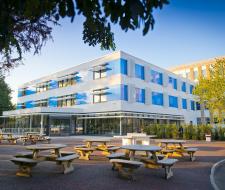 In 2023 - 98% pupils gained places at their first choice University
United KingdomCambridgeCurrently watching: 7from 20338 £ / term
In 2023 - 98% pupils gained places at their first choice University
United KingdomCambridgeCurrently watching: 7from 20338 £ / term -
 Awarding body of University of the Arts London and Trinity College London
United KingdomCambridgeCurrently watching: 10from 14707 £ / semester
Awarding body of University of the Arts London and Trinity College London
United KingdomCambridgeCurrently watching: 10from 14707 £ / semester -
 In 2023 - near 36% of A Level students achieved A*/A grades
United KingdomCambridgeCurrently watching: 7from 16500 £ / term
In 2023 - near 36% of A Level students achieved A*/A grades
United KingdomCambridgeCurrently watching: 7from 16500 £ / term -
 In 2023, 53% of students received A*–A grades based on A-level results
United KingdomCambridgeCurrently watching: 7from 17505 £ / term
In 2023, 53% of students received A*–A grades based on A-level results
United KingdomCambridgeCurrently watching: 7from 17505 £ / term -
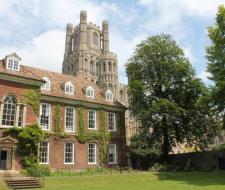 Over a quarter of all grades being the highest 9s-8s, equivalent to the old A*
United KingdomCambridgeCurrently watching: 8from 10658.00 £ / term
Over a quarter of all grades being the highest 9s-8s, equivalent to the old A*
United KingdomCambridgeCurrently watching: 8from 10658.00 £ / term -
 In 2023 - 52.5% of A Level students achieved A* - A
United KingdomCambridgeCurrently watching: 10from 5576.00 £ / year
In 2023 - 52.5% of A Level students achieved A* - A
United KingdomCambridgeCurrently watching: 10from 5576.00 £ / year -
 In 2023 - 59% of A Level students achieved A* - B
United KingdomCambridgeCurrently watching: 5from 6540.00 £ / term
In 2023 - 59% of A Level students achieved A* - B
United KingdomCambridgeCurrently watching: 5from 6540.00 £ / term -
 In 2021 - 81% of A Level students achieved A* - A
United KingdomCambridgeCurrently watching: 6from 18210 £ / term
In 2021 - 81% of A Level students achieved A* - A
United KingdomCambridgeCurrently watching: 6from 18210 £ / term -
 from 4688.00 £ / term
Private Schools in Cambridge: Guide for foreign students
When imagining the top private schools in Cambridge, we often picture students in sharp business attire, displaying impeccable manners, and benefiting from a world-class education.
Why Choose Private Schools in Cambridge?
Cambridge private schools offer a unique educational environment. They have the freedom to devise their own curricula, ensuring students study a wider range of compulsory subjects, including multiple foreign languages. In addition to the traditional subjects, there's a strong emphasis on fostering creativity through music, the performing arts, and visual arts.
A specific feature of these institutions is their dedication to nurturing individual talents. With an extensive range of hobby clubs, which can total between 60 to 70 in some schools, there's no shortage of opportunities for students to pursue their passions. These schools come equipped with top-notch facilities, such as libraries, theaters, concert halls, sports grounds, swimming pools, science labs, and specialized studios for music and art.
Admission Process for the Best Private Schools in Cambridge
Entering these prestigious schools is competitive. Families from around the globe are eager to secure spots in the best private schools in Cambridge. The admission process often involves rigorous tests, and children can begin their education here as young as four, starting with Reception (similar to kindergarten). The main entry points for students from outside the British system are ages 7, 11, 13, and 16, with curricula tailored to these age groups.
The transition to high school, also known as Senior or Secondary school, typically takes place at age 11. While public school admissions prioritize geographical proximity, private schools in Cambridge assess students based on test results taken from the age of 11. These tests include subjects such as mathematics, English, and verbal and non-verbal reasoning, followed by interviews.
Several standardised assessments are repeated throughout the process. UKiset, developed in partnership with Cambridge University Press & Assessment, gives applicants from any background a level playing field for top British independent schools and British-curriculum international schools. It assesses academic potential and English proficiency and compares each candidate with British students of the same age, and a single UKiset report can be sent to several schools at once, so that the child takes fewer entrance exams. UKiset was founded in 2013 by Gabbitas, an educational consultancy that has worked in the UK since 1873. Many Cambridge schools also use the assessments set by ISEB: the online, adaptive Common Pre-Tests taken in Year 6 or 7, which give an age-standardised measure of ability, and the Common Entrance examinations sat at 11+ or 13+ as part of an application to leading senior schools, with Common Academic Scholarship papers offered at 13+.
Private preparatory schools in Cambridge, which include prep schools and junior schools, assist students in preparing for these tests and interviews. In contrast, public school students often rely on their parents and private tutors for this preparation.
Studying programs in Cambridge Private Schools
All students, regardless of their school type, study and take exams at the end of the 11th year of study for the GCSE (General Secondary School Certificate). Compulsory disciplines include Math and English, but students are also encouraged to pursue a foreign language, a science, and a humanitarian subject. The brightest students often take around 10 GCSE subjects, and for admission into respected universities, at least six subjects are required.
Following the GCSEs, the majority of students proceed to the school's Sixth Form for two years, where they prepare for university in Years 12 and 13. During this period, they begin to specialize, narrowing their focus to only four subjects in the 12th grade and three in the 13th, usually aligning with their intended university course.
Types of Private Schools in Cambridge
-
By Gender: Male, female, and mixed institutions.
-
By Age Range: Comprehensive institutions (2-18 years old), preschools (2-7 years old), junior schools (7-13 years old), secondary schools (13-16 years old), high schools (16-18 years old), and combined cycle institutions (13-18 years).
-
By Education Format: Day schools and boarding schools. Boarding options include full-time, weekly (where students return home for the weekend), and flexible boarding (parents decide their child's stay schedule).
Best Private Schools in Cambridge. Cost and Fees for foreign students
When considering international private schools in Cambridge, potential fees and expenses are vital factors. The investment, however, guarantees access to some of the best education facilities, teaching staff, and holistic development opportunities in the world.
Whether you're looking for the very best private schools in Cambridge or just starting your research on Cambridge private schools fees and offerings, this city promises an unparalleled educational experience for all students.

Besides professional teachers, what else do parents consider when choosing a school?
Child care level, variety of extracurricular activities, location, reputation and prestige. Often, parents like to consult with educational agents, with friends, if their children are already studying / studying in the UK. Each school has its own character, which is why I strongly advise you to visit the campus and talk to the staff: the director, the representative of the admissions committee, etc. This way you will personally get an idea of what the school is like, what its values and advantages are.
Alternative destinations
Academic rigor
One of the most notable advantages of school education in Cambridge is that children study a national curriculum with a broad range of subjects. Children learn modern foreign languages and Latin, politics, psychology, history, art, and photography.
Independent educational institutions achieve excellent exam results, sending their students to leading universities.
Academic rigor yields outstanding results. Teachers conduct comprehensive assessments of students from day one and implement individualized strategies to help children fully realize their potential.
Extracurricular activities
Studying in Cambridge schools for international students is not limited to the national curriculum - children are given additional opportunities in all directions:
- Sport
- Music
- Drama.
Extra-curricular activities are varied!
These opportunities help to develop children's resilience, leadership skills and personal self-esteem, with over 100 clubs and activities covering a multitude of sports, music and creative clubs. Independent schools find something that a child can excel in.
Small groups
Top private schools in Cambridge provide an optimal student to teacher ratio, often with only 12 to 15 students in a class.
The key to the success of private schools and are these small classes that naturally create a supportive environment. Teachers devote more time to each child, teaching can be tailored to specific needs, which greatly reduces the achievement gap in the classroom and helps children remain confident in their abilities among their peers and engaged in their learning.
Campus and Facilities
Online education opportunities
Learning does not have to stop when a child is away from the classroom. Routine, steady study and staying in touch with friends and teachers all matter for a child's well-being, and private schools in Cambridge are introducing the necessary tools into everyday education. Students are given the equipment they need, including a personal laptop for schoolwork, so lessons and assignments continue smoothly whether they are at home or on campus. Virtual classrooms, shared course materials and online contact with teachers keep every student connected to the school community wherever they happen to be.
Discipline
Specialist training
Communication skills
Good connections
Educational environment
An important objective of the best private schools in Cambridge is to instill abilities such as confidence, perseverance, independence, resilience and the ability to interact with others. These are all fundamental principles of success.
Tuition at Cambridge private schools varies by institution and academic year. At The Perse School, term charges for 2026/27 reach £9,482, with a one-off registration payment of £240 and a securing and induction charge of £840 once an offer is accepted. At The Leys, day places for Year 9 to Sixth Form cost £11,835 per term (£35,505 a year), while boarding runs to £18,276 per term (£54,828 a year) and reaches £19,007 per term for foreign students. All figures include VAT where it applies, and schools usually confirm the following year's rates at the end of March.
Day school and boarding fees compared (2026/27)
Annual fees in Cambridge depend mainly on whether a child attends as a day pupil or a boarder, and the gap is wide. The figures below come from published 2026/27 fee tables and include VAT.
The Perse School is a mixed day school for ages 3-18 with no boarding, so families pay day rates only: £9,482 per term for the 2026/27 year.
The Leys sets out separate rates for day pupils and boarders. From 9th to Sixth Form, the annual cost is:
- Day pupils — £11,835 per term, £35,505 for one year,
- Home Boarders — £13,570 per term, £40,710 for one year,
- Full boarders — £18,276 per term, £54,828 for one year,
- Foreign boarders — £19,007 per term, £57,021 for one year.
Younger pupils in Year 7 and 8 at The Leys pay less across the board:
- Day pupils — £8,547 per term, £25,641 for one year,
- Boarders — £13,337 per term, £40,011 for one year,
- Overseas boarders — £13,860 per term, £41,580 for one year.
The advantage for foreign families is that the boarding fee is approximately 20,000 pounds per year compared to a similar day stay in high schools, and foreign boarders are at the very top of the scale. Schools review these rates annually, so they provide for a small budget increase each year. Smapse specialists will guide you through each stage of admission.
Inspection and accreditation
Independent schools in Cambridge are subject to national oversight bodies that check the quality of teaching and the safety of children. Two of them are most important for families comparing schools.
The Independent Schools Inspectorate (ISI) is approved by the Secretary of State for Education to inspect association independent schools in England. That authority rests on section 87A of the Children Act 1989 and section 106 of the Education and Skills Act 2008. ISI publishes its findings every year, including the Annual review of inspections 2024–25 and the Annual Report 2023-24, so parents can read how the sector is performing.
Ofsted, the Office for Standards in Education, Children’s Services and Skills, is a non-ministerial department led by His Majesty’s Chief Inspector, Sir Martyn Oliver. It inspects services that provide education and skills for learners of all ages, and it also inspects and regulates services that care for children and young people.
When assessing a Cambridge school, the ISI or Ofsted report is a reliable starting point because it provides an independent view of academic standards, social security, and safeguards. Smapse specialists will guide you through every stage of enrollment.
Advantages and disadvantages of English schools
| Advantages | Disadvantages |
|---|---|
| The opportunity to enter the best universities in England, USA, Canada, Switzerland, Europe, the world | Expensive |
| High quality of education and academic standards | Strong workload |
| Perfect English after graduation | The need to change the social environment; it takes time to adapt |
| Useful contacts | The difficulty of choosing the most suitable school for the child, requires a qualified specialist |
Top 35 best schools in the USA - 2027 Smapse rankings
| 1 | North Broward Preparatory School |
| 2 | Phillips Academy Andover |
| 3 | The Storm King School New York |
| 4 | Red Bank Catholic High School |
| 5 | Windermere Preparatory School |
| 6 | Shattuck St Mary's School |
| 7 | Cheshire Academy |
| 8 | Cate School |
| 9 | Ross School |
| 10 | Deerfield Academy |
| 11 | The Village School |
| 12 | Amerigo Los Angeles – Bishop Montgomery High School |
| 13 | Webb Schools |
| 14 | Kent School USA |
| 15 | The Winchendon School |
| 16 | Darlington School |
| 17 | Marian Catholic High School Amerigo Education |
| 18 | Grier School |
| 19 | The MacDuffie School |
| 20 | CATS Academy Boston |
| 21 | The Cambridge School of Weston |
| 22 | Milton Academy |
| 23 | Amerigo Education Napa Valley |
| 24 | American Hebrew Academy |
| 25 | Northfield Mount Hermon School |
| 26 | Mater Dei Catholic High School San Diego Amerigo Education |
| 27 | American University Preparatory School Los Angeles |
| 28 | Webb Schools |
| 29 | Kent School USA |
| 30 | Groton School |
| 31 | Maine Central Institute |
| 32 | The Lawrenceville School |
| 33 | Grand River Academy Ohio |
| 34 | Saint John Paul II Academy |
| 35 | Chicago North Shore |
Top 14 best schools in Switzerland 2027
| 1 | College Du Leman |
| 2 | St. Georges School Montreux |
| 3 | Institut Monte Rosa |
| 4 | Lyceum Alpinum Zuoz |
| 5 | Saint-Charles Collège et Lycée |
| 6 | Leysin American School |
| 7 | Hochalpines Institut Ftan AG High Alpine |
| 8 | Aiglon College Switzerland |
| 9 | Institut Le Rosey School |
| 10 | Institut Montana Zugerberg |
| 11 | Champittet College |
| 12 | Brillantmont International School |
| 13 | Surval Montreux |
| 14 | Ecole Pre Fleuri |
Literature and references
-
The 10 most expensive private schools in Cambridge and how much they cost

-
Private schools in Cambridgeshire — Wiki
-
Cambridgeshire’s top private schools and how much they really cost
-
Graduates who went to private schools earn more than graduates who did not, finds study
-
Private school pupils more likely to get into Cambridge if they move to state sixth form — The Telegraph
-
Britain’s top jobs still in hands of private school elite, study finds — the Guardian