

Secondary education in Cambridge 2027
- Secondary schools in Cambridge. Guide for foreign students
- How to apply to best schools in Cambridge for international students?
- Extracurricular activities in Cambridge
- Best secondary schools in Cambridge. Cost and Fees for International Students
- Inspection and accreditation of independent secondary schools in Cambridge
- Literature and references
This content was developed and approved with active participation of Sarah Jayne Blakemore.
In the process of preparing the material, we referenced the following sources:
- https://www.economist.com/britain/2023/03/11/state-school-admissions-are-rising-at-oxford-and-cambridge
- https://www.bbc.co.uk/news/special/education/school_tables/secondary/12/html/873.stm.
-
 55% of A Level students achieved A*- A results among top UK schools in 2023
United KingdomCambridgeCurrently watching: 7from 37600.00 £ / year
-
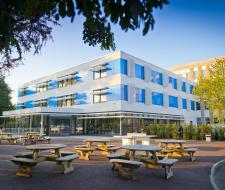 In 2023 - 98% pupils gained places at their first choice University
United KingdomCambridgeCurrently watching: 6from 20338 £ / term
-
 Awarding body of University of the Arts London and Trinity College London
United KingdomCambridgeCurrently watching: 9from 19623 £ / semester
-
 In 2023 - near 36% of A Level students achieved A*/A grades
United KingdomCambridgeCurrently watching: 10from 16500 £ / term
-
 In 2023, 53% of students received A*–A grades based on A-level results
United KingdomCambridgeCurrently watching: 7from 17505 £ / term
-
 Over a quarter of all grades being the highest 9s-8s, equivalent to the old A*
United KingdomCambridgeCurrently watching: 9from 10658.00 £ / term
-
 In 2023 - 52.5% of A Level students achieved A* - A
United KingdomCambridgeCurrently watching: 8from 5576.00 £ / year
-
 In 2023 - 59% of A Level students achieved A* - B
United KingdomCambridgeCurrently watching: 6from 7100.00 £ / term
-
 In 2021 - 81% of A Level students achieved A* - A
United KingdomCambridgeCurrently watching: 6from 18210 £ / term
-
 from 4688.00 £ / term
Cambridge is best known for its ancient university, but the city is also one of England's strongest destinations for secondary education, and international teenagers come here to study at independent schools long before they think about a degree. The town is located close to London, in Cambridgeshire, and its academic atmosphere shapes everyday life at the schools around it. Families from any country choose Cambridge for a disciplined, classical secondary education that prepares students for the most selective universities in Britain and abroad.
Independent schools in Cambridge teach the national curriculum through GCSE and A-level, and many also offer the International Baccalaureate. Classes are small, pastoral care is close, and boarding houses provide foreign students with a settled place to live during term. The leading schools belong to HMC, which describes itself as the collective heads of world-leading independent schools and was founded as the world's first heads' association more than 150 years ago, so a place at one of them signals a recognized standard of teaching.
Modern education in Cambridge provides international qualifications and is famous for its highest level in a wide range of subjects. Centuries-old traditions are combined with the latest methodological pedagogical developments and excellent technical equipment of educational buildings - this is how the famous English quality is achieved. A diploma from a Cambridge school is recognized in more than 180 countries around the world and opens up excellent career opportunities. Smapse experts will accompany you through every stage of admission.
Alternative destinations
Secondary schools in Cambridge. Guide for foreign students
Cambridge International structures its school programs across several stages, from Cambridge Early Years and Cambridge Primary through Cambridge Lower Secondary to Cambridge Upper Secondary and Cambridge Advanced. The upper secondary stage groups the Cambridge IGCSE, Cambridge O Level and Cambridge ICE qualifications, while the advanced stage covers Cambridge International AS & A Level, the Cambridge AICE Diploma and the Cambridge IPQ. Together, these options lead a teenager from elementary school to the place of admission to university.
Entry to secondary schools in Cambridge usually starts around age 11 to 13, with the GCSE or IGCSE taken over two years and completed by about 16. Students who join later can enter a two-year A-Level program, the International Baccalaureate (IB) or a one-year University Foundation Course, and admission to these options is open from age 16 with a minimum English level of around 5.5 IELTS. Younger applicants take a school entrance test and an interview rather than a formal language exam.
A significant benefit of secondary education in England is the exemption from university entrance exams. Places are awarded mainly on the marks earned in the final GCSE and A-Level results, so the qualifications gained at school become the direct key to a British university.

What makes British schools special? Why are they chosen by parents from all over the world for their children?
Schools in the UK continue to be the gold standard of education and offer the highest quality teaching.
How to apply to best schools in Cambridge for international students?
The admission procedure for Cambridge Secondary schools is very different from the UCAS procedure used for admission to universities in Cambridge. With over 2000 independent schools in the UK, families start by choosing a shortlist of institutions, then move through an application, entrance assessments, interviews and offers.
Most leading senior schools in Cambridge rely on one of two assessment options:
-
UKiset, developed in partnership with Cambridge University Press & Assessment, which assesses academic potential and English proficiency and compares each candidate with British students of the same age group,
-
The examinations set by the Independent Schools Examinations Board (ISEB), used by the UK's leading schools for pupils transitioning from prep and junior schools to senior schools.
UKiset was founded in 2013 by Gabbitas, an educational consultancy that has operated in the UK since 1873. One advantage for international families is that a single UKiset report can be used to apply to several independent schools within the UKiset network, which reduces the number of entrance exams a child has to take.
The ISEB option covers the main entry points into British senior schools. The online, adaptive Common Pre-Tests (CPT) are taken by pupils in Year 6 or 7 and give an age-standardised measure of ability, while the ISEB Pre-Tests are the online admissions tests used by leading senior schools at 11+. Registration for the ISEB Pre-Tests is completed by a parent or guardian through the Guardian Admin Portal, and it is currently open for children due to take the tests in the 2026-27 academic year.
Common Entrance (CE) examinations are taken at either 11+ or 13+ as part of the application to leading UK senior schools, and Common Academic Scholarship (CASE) examinations are offered at 13+. For younger pupils, the ISEB Project Qualification (iPQ) is available for Years 5 to 6 and 7 to 8, offering a skills-based, pupil-led project learning journey. Interviews with the school usually follow the written assessments, and offers depend on how a child performs across these stages.
Extracurricular activities in Cambridge
Studying in Cambridge isn't solely academic-focused. Students are immersed in a culturally rich environment, with a plethora of extracurricular opportunities. From engaging in sports activities like horse riding, football, tennis, swimming, rowing, and golf to participating in internal events like thematic discussions, debates, and group outings to theaters, museums, and exhibitions, Cambridge promises a holistic educational experience.
Best secondary schools in Cambridge. Cost and Fees for International Students
An education at the University of Cambridge, one of the best secondary schools in Cambridge, does come with its associated costs:
-
Advanced and short-term programs: Starting from £2,450.
-
Bachelor's degree: Beginning at £21,000 per year.
-
Master's degree: From £24,000 per year.
-
MBA programs: Starting at £16,000 annually.
-
Doctoral programs: From £24,000 per year.
-
Preparatory courses: Ranging between £7,000 to £10,000 per trimester.
Annual tuition costs can vary significantly, ranging from £10,000 to £22,000, contingent on the specific university and faculty. Humanities faculties are generally more affordable, seldom surpassing £12,000, while technical specialties may cost around £17,000. Business disciplines such as economics, political science, law, and management at leading institutions can sometimes demand up to £20,000. Medical education in Cambridge typically costs between £17,000 to £22,000 annually.
While Cambridge doesn't offer budgetary options, international students can pursue scholarships or grants to mitigate education expenses. Additionally, students are permitted to work part-time, up to 20 hours weekly during the trimester. If employment aligns with academic pursuits, it can even be considered as a valuable internship or work experience on the student's resume.
Inspection and accreditation of independent secondary schools in Cambridge
Independent secondary schools in Cambridge are under official supervision, which confirms the quality of teaching and the safety of students. Two bodies carry out this work, and knowing which one applies to a given school helps families read its reports with confidence.
The Independent Schools Inspectorate, approved by the Secretary of State for Education, inspects association independent schools in England and British schools overseas. This approval rests on section 87A of the Children Act 1989 and section 106 of the Education and Skills Act 2008. The Department for Education also appoints ISI to inspect the British schools overseas accreditation scheme, and the Home Office appoints it to inspect private further education colleges and language schools in England and Wales. ISI has inspection experience in over 50 countries across five continents.
Ofsted, the Office for Standards in Education, Children's Services and Skills, is a non-ministerial department that inspects services providing education and skills for learners of all ages and also inspects and regulates services that care for children and young people. For schools outside the ISI remit, Ofsted inspects non-association independent schools in England and publishes official statistics on these inspections and their outcomes, with the most recent release covering August 2026. The methods it follows are set out in its School inspection toolkit, operating guides and information guidance.
Learning programs-summary information
| Name | Meaning | Equivalent | Min. age | Duration, years |
Next stage | Cost |
|---|---|---|---|---|---|---|
| GCSE | General certificate of secondary education | secondary education (non-accomplished) | 14 | 1–2 | A-Levels | 15,000 USD+ |
| A-Levels | Advanced level | secondary education (accomplished) | 16 | 2 | University | 15,000 USD+ |
| BTEC | Business and Technology Education Board | secondary special education | 14 | 2–3 | University/ work | 15,000 USD+ |
| Oxbridge Preparation | Preparing for Oxford and Cambridge | secondary education (accomplished) | 17 | 1 | University | 15,000 USD+ |
| International Baccalaureate | International baccalaureate | secondary education (accomplished) | 16 | 2 | University | 18,000 USD+ |
| Foundation/ Pathway Year | Preparatory year | admission to the 1st year of university | 17 | 1 | University | 14,000 USD+ |
| NCUK | The Northern consortium | 2 year university | 17,5 | 1 | 2 year University of NCUK | 13,000 USD+ |
| Special Preparation (Medics/Math/Business) | Specialized training | - | 14 | optional | optional | 4,000 USD+ |
| Academic English | Academic English | Language school | 8 + | 6–12 months | School or University | 8,000 USD+ |
Advantages and disadvantages of English schools
| Advantages | Disadvantages |
|---|---|
| The opportunity to enter the best universities in England, USA, Canada, Switzerland, Europe, the world | Expensive |
| High quality of education and academic standards | Strong workload |
| Perfect English after graduation | The need to change the social environment; it takes time to adapt |
| Useful contacts | The difficulty of choosing the most suitable school for the child, requires a qualified specialist |
Top 21 boarding colleges in England 2027
| 1 | Cardiff Sixth Form College |
| 2 | National Mathematics and Science College |
| 3 | Abbey College Cambridge |
| 4 | d'Overbroeck's College |
| 5 | MPW London |
| 6 | CATS Cambridge |
| 7 | Kensington Park |
| 8 | DLD London |
| 9 | King's College St Michael’s |
| 10 | Bellerbys Cambridge |
| 11 | Chelsea Independent College |
| 12 | MPW Cambridge |
| 13 | Bellerbys Brighton |
| 14 | CATS London |
| 15 | St Clare's Oxford |
| 16 | Bishopstrow College |
| 17 | CATS Canterbury |
| 18 | Bellerbys London |
| 19 | Ealing Independent College |
| 20 | Cambridge Tutors College |
| 21 | Abbey Manchester |
Literature and references
-
The 9 Cambridgeshire secondary schools performing 'well above' the national average

-
All the secondary schools rated outstanding by Ofsted in Cambridge
-
List of schools in Cambridgeshire — Wiki
-
International General Certificate of Secondary Education — Wiki
-
Cambridge High School
-
Secondary school league tables in Cambridgeshire — BBC
-
State-school admissions are rising at Oxford and Cambridge — the Economist