For over a century, the NCAA built a billion-dollar empire on the backs of "amateur" athletes, who were forbidden from earning a single dollar from their fame. California changed everything. When the state passed the Fair Pay to Play Act (SB 206) in 2019, it detonated a legal and financial earthquake that reshaped college sports forever. This is the story of that new gold rush—a chaotic, lucrative, and deeply unequal race for name, image, and likeness (NIL) money.

The Golden State's Tectonic Shift
California’s legislation wasn't just a state law; it was a declaration of war on the NCAA's amateurism model. By allowing athletes to profit from their NIL, the state instantly gave its schools—USC, UCLA, Cal, and Stanford—a massive recruiting advantage. Other states scrambled to pass similar laws, and the NCAA was forced to drop its ban in 2021, ushering in a new era. The floodgates had opened.
This "gold rush" is fueled by a complex ecosystem where the gold comes in two forms. The first is direct revenue sharing—a landmark $2.8 billion settlement (the *House* case) now allows schools to pay players directly, with a cap of $20.5 million in the first year. The second, and more chaotic, source is the NIL collective—private, booster-funded groups that serve as a workaround for direct payments.
The 'Wild West' and Its Heavyweights
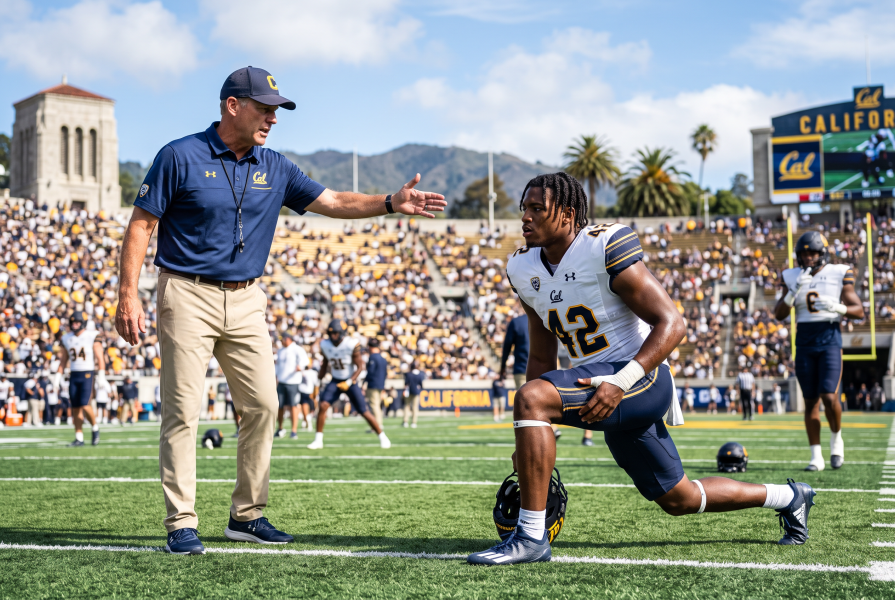
The true frenzy, however, has been driven by these collectives. Think of them as shadow athletic departments, armed with millions of donor dollars to attract and retain top talent. The fundraising can be breathtaking: Cal's "California Legends" collective raised over $1.2 million from 1,100 donors in just two days to help the Golden Bears remain competitive after their move to the ACC.
The wealth, however, is distributed with the ruthlessness of a free market. CalMatters conducted the first-ever analysis of NIL earnings at California public universities, and the data paints a stark picture. The majority of the money flows to a handful of elite male athletes in football and basketball. For example, former UC Berkeley basketball guard Jaylon Tyson netted roughly $390,000 from private donors** . At UCLA, a collective known as **Men of Westwood channeled nearly $2 million to the football, basketball, and baseball teams.

The Golden Ceiling: A Stark Gender Divide
While a few superstars like UCLA gymnast and Olympic gold medalist Jordan Chiles have secured deals (earning $3,000 from Grammarly in one reported case), the data reveals a deep gender chasm. "Most female college athletes made very little," the analysis concluded. The disparity is staggering: UCLA gymnasts earned over $2 million in the last three school years, while the university's championship-winning women's water polo team earned just $152 during the same period. Senator Nancy Skinner, the author of the original California law, has introduced new transparency legislation (SB 906) to collect data on NIL deals, specifically to investigate these glaring Title IX inequities.
The Counter-Revolution: Legal Challenges
However, the gold rush is not without its counter-revolutionaries. The House settlement, which created the College Sports Commission and a clearinghouse called NIL Go to review and regulate deals, has sparked immediate backlash. A new class-action lawsuit, led by USC linebacker Talanoa Ili and Stanford quarterback Charlie Mirer, argues that the new regulations illegally restrict NIL earnings by imposing a cap, violating California's state law that prohibits limiting athlete compensation. Ili claims he received a "substantial multi-year offer" from USC's collective before the settlement, only to see it vanish under the new rules.
The new system has created chaos. For a time, the clearinghouse even rejected deals from collectives, causing over $125 million worth of promised NIL compensation to be blocked or pending review. The system is so unstable that the College Sports Commission was forced to backtrack and allow collectives to operate again, effectively returning the sport to the "Wild West" status quo.
The New Reality
The new gold rush has fundamentally changed the nature of college sports. Student-athletes can now legally earn millions, but the system is plagued by massive disparities, legal uncertainty, and a scramble for resources that has seen schools like Cal Poly and Loyola Marymount cut entire sports programs to adapt. California, having started the revolution, now finds itself at the epicenter of a complex legal and financial struggle over what college athletics should be. The dust is far from settled, but one thing is clear: the era of the amateur student-athlete is over, and the new gold rush is only just beginning.