
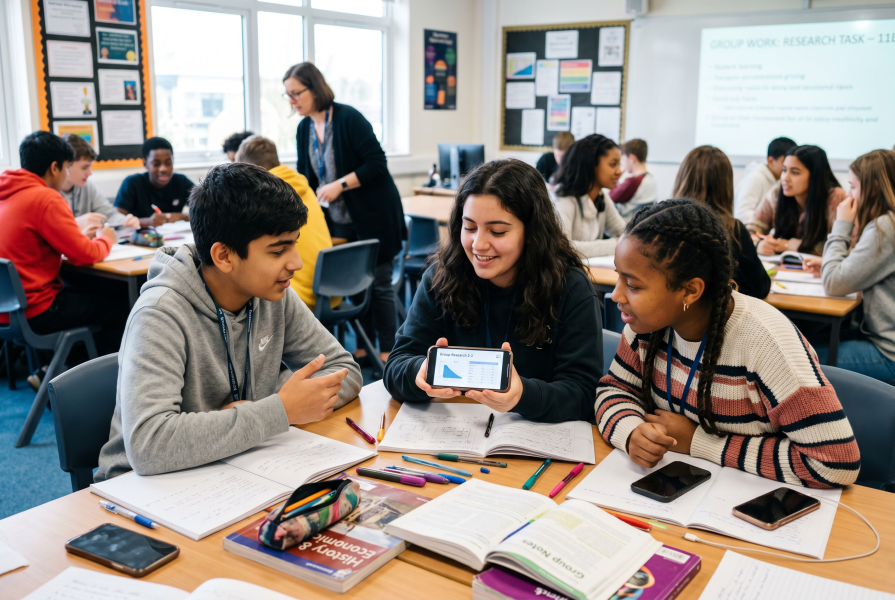
The topic of mobile phones in schools has revolved around their possible disadvantages for many years. Distraction, excessive use of social media, cyberbullying, and decreased focus on studying were reasons why the majority of schools in the United Kingdom began to impose bans on the use of smartphones. However, more and more teachers started to claim that with proper use, mobile devices may become a useful means of educating children.
With technology being an inherent element of our lives nowadays, it is not about whether mobile phones are to appear in schools, but about how to use them properly.


The Growing Role of Technology in Education
Technology has revolutionized the methods through which students obtain information. Smartphones give immediate access to various sources of learning information such as online libraries, research materials, and learning applications. Mobile phones have become indispensable learning tools for a good number of students even as they are out of class.
British schools are increasingly exploring ways to integrate technology into teaching while maintaining clear boundaries that prevent misuse. Mobile phones can be used as an extension of the learning environment provided they are well managed.
Supporting Research and Information Access
One of the main educational advantages offered by mobile phones is the opportunity for quick access to information. For instance, during classes, students may use their phones to:
-
Study certain issues or current events
-
Consult digital books and other learning resources
-
Visit educational sites and sources
-
Check some facts and find extra information.
Thus, teachers can develop more interactive classes where students will not only work with books but ask questions and think independently.
Enhancing Classroom Engagement
Many educators employ mobile-based educational websites which provide interactive and engaging sessions for their pupils. Smartphones help deliver:

-
Live quizzes and voting
-
Interactive testing
-
Educational games
-
Collaboration
-
Immediate feedback
Programs such as Kahoot!, Quizizz, and Microsoft Teams are some of the widely used programs which facilitate participation and dynamic learning experience.
Pupils generally prefer interactive lessons due to familiarity with electronic gadgets and enjoy interaction in class.
Developing Digital Literacy Skills
The development of digital literacy is currently one of the top priorities when it comes to succeeding at college and in the modern work environment.
By implementing cell phones into the learning process, students will be able to master competencies like:
-
Information source evaluation
-
Digital safety and privacy understanding
-
Digital communication management
-
Productivity and collaboration tool usage
-
Technological problem solving
The mentioned competencies have become increasingly important due to the impact of digital technologies on almost any profession nowadays.
Supporting Personalized Learning
Each individual learns in their unique way. With mobile phones, it is possible for such individuals to gain access to learning materials that suit their learning styles.
Such learning apps include those that provide:

-
Practice exercises
-
Language learning tools
-
Adaptive learning software
-
Revision materials
-
Learning accessibility materials
Those individuals requiring more attention or need enrichment will benefit from customized learning materials.
Improving Communication and Organization
However, mobile phones may assist students to organize themselves and be responsible for their studies. In many institutions, there are online tools through which students may:
-
Access homework assignments
-
See their timetables
-
Read announcements
-
Talk with their teachers
-
Monitor deadlines and course work
Such tools motivate self-reliance and teach students how to manage their time.
Addressing Concerns About Distraction

Despite the advantages, concerns about distraction remain valid. Social media alerts, chat apps, and entertainment will take your attention away if you do not control them.
This is why most educators prefer to have smartphones used in a controlled way. Some policies that could work include:
-
Using smartphones only as directed by teachers
-
Utilizing educational apps in class
-
Avoiding social networks during school time
-
Storing phones away when not used
-
Teaching how to use smartphones responsibly
These measures would allow for maximum educational benefits.
Preparing Students for the Future
Modern workplaces depend more and more on the use of digital communication, online cooperation, and mobile technology. The education system is accountable for getting students ready for these aspects of modern life.
Instead of prohibiting the use of mobile phones, teachers think that it would be better if schools taught students how to utilize technology in an appropriate manner. It is impossible to acquire these skills by simply prohibiting anything.
Looking Ahead
The debate over mobile phones in British schools is likely to continue as technology evolves. While concerns about excessive screen time and distraction remain important, there is growing recognition that smartphones can serve as powerful learning tools when used appropriately.
Future policies may focus less on outright bans and more on balanced approaches that combine educational opportunities with clear expectations for responsible use.
Conclusion
Mobile phones in British schools can support learning by providing access to information, enhancing classroom engagement, promoting digital literacy, and enabling personalized education. While challenges such as distraction and misuse must be carefully managed, smartphones can become valuable educational resources when integrated thoughtfully into teaching and learning.
As education continues to adapt to a digital world, the goal should not be to eliminate technology from the classroom, but to ensure that students learn how to use it effectively, responsibly, and in ways that enhance their academic success.