
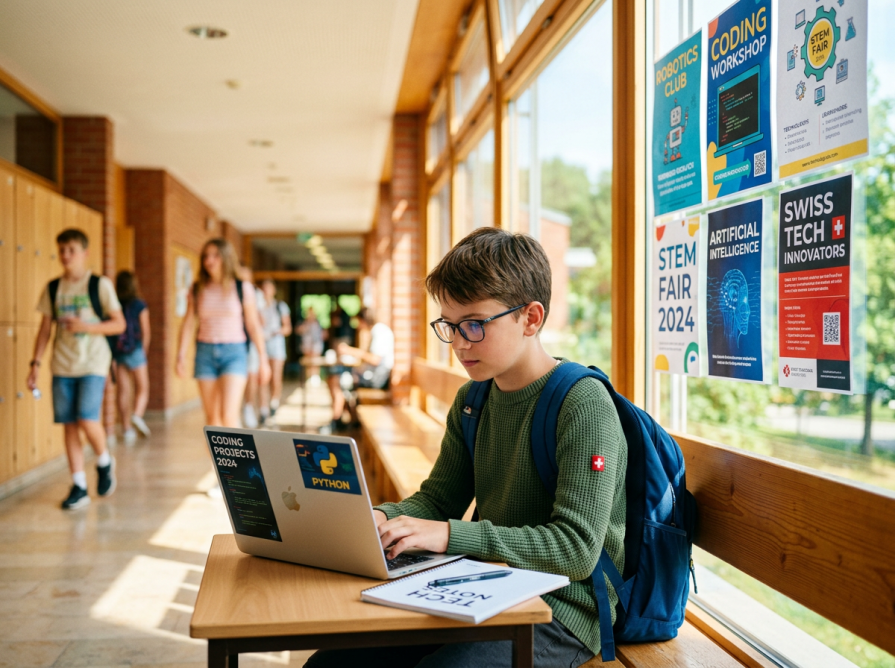
Switzerland has established itself as a country with an excellent educational system which provides students both vocational training and modern teaching methods. In 2026, Swiss schools face a new challenge which requires them to find a solution for combining fast digital technology adoption with maintaining student well-being and traditional educational methods. Educators throughout the country use classroom technology connections to create better educational experiences which technology should enhance instead of controlling.


A Digitally Advanced Education System
Switzerland has developed its digital school infrastructure during the last ten years. The cantons have adopted one-to-one device programs which include interactive whiteboards and digital textbooks and cloud-based learning platforms. The COVID-19 pandemic forced schools to implement remote learning tools and online collaboration systems which resulted in digital transformation across educational institutions.
Most Swiss students will use digital devices for research, project work, assessments, and communication in their classes by 2026. The expansion of digital learning resources has generated a public discussion regarding screen time and attention spans which affects learning outcomes.
The Need for Balance
Swiss education authorities state that technology should function as an educational instrument which preserves essential teaching methods. Policymakers, teachers, and parents increasingly agree that excessive screen use can affect concentration, social interaction, and mental health. The 2026 discussion now focuses on proper and effective use of technology in classrooms instead of questioning its existence in educational settings.
Key Areas of Focus
1. Digital Literacy and Critical Thinking
Swiss schools are expanding their digital literacy programs to teach students both technical skills and ability to evaluate information. Students are taught how to:

-
Assess online sources for credibility
-
Recognize misinformation
-
Protect personal data
-
Use artificial intelligence tools responsibly
-
Understand digital ethics
This method guarantees students develop necessary skills for technology-based environments while they maintain their ability to think critically.
2. Limiting Distractions
Several cantons have established more precise regulations which govern student smartphone usage during school hours. The schools enforce a rule which prohibits smartphone use during classes except for educational needs. The policy serves two purposes which include reducing distractions and increasing student focus on their study materials.
Teachers receive instruction on how to manage digital classrooms because it helps them sustain student focus while they use technology for their teaching purposes.
3. Blended Learning Models
Swiss educational institutions now implement blended learning systems because they want to improve their teaching methods beyond traditional digital educational systems. The teaching methods of this approach blend digital technology with traditional educational practices which include group discussions, handwritten assignments, and face-to-face student interaction.
Students will perform online research yet they will present their results through face-to-face debates and their hands-on experiments. The system helps students develop their social abilities while keeping them involved with their studies.
4. Artificial Intelligence in Education

The AI-powered tools are being used in Swiss schools for personalized learning pathways by 2026. The adaptive learning platforms work by detecting knowledge gaps which then lead to specific exercise recommendations.
The authorities require that AI systems exist to assist teachers while keeping teachers in their primary instructional role. Educators maintain their essential position to direct student growth and create interest while they offer emotional support.
5. Student Well-Being and Screen Time Awareness
Health experts in Switzerland have raised concerns about prolonged screen exposure among children and adolescents. Schools are responding by:
-
Encouraging regular breaks from screens
-
Promoting outdoor activities
-
Integrating physical education and creative arts
-
Educating students about healthy digital habits
Swiss schools aim to ensure that digital learning does not come at the expense of physical and mental health.
The Role of Cantonal Autonomy
The Swiss education system includes a unique element through its decentralized educational system. The educational policies of each canton operate independently because they have the power to decide their own digital integration methods.
Some cantons have introduced comprehensive digital strategies with structured frameworks while others take a more cautious approach that prioritizes traditional teaching methods. The system provides various options which enable organizations to test different methods and modify their operations according to the specific requirements of their local environment.
Vocational Education and Technology
Switzerland's vocational education system through its dual system of vocational training demonstrates technological balance. The apprenticeship system now integrates digital technologies, robotics, data analysis, and contemporary manufacturing methods into its training programs.

The main focus of training remains on practical experience. Students learn to apply technology in real-world contexts which demonstrates that digital skills work together with technical craftsmanship.
Challenges and Concerns
Despite progress, several challenges remain:
-
Ensuring equal access to digital devices across socio-economic backgrounds
-
Training teachers to use new technologies effectively
-
Preventing over-reliance on automated systems
-
Protecting student data and privacy
-
Maintaining academic integrity in the age of AI tools
The required solution for these challenges needs ongoing communication among schools, government officials, technology companies, and families.
Looking Ahead
As Switzerland continues to innovate, the goal is not to create fully digital classrooms but to develop thoughtful, balanced learning environments. The country’s approach reflects its broader educational philosophy: combining tradition with innovation, theory with practice, and independence with collaboration.
The Swiss educational system intends to establish itself as a model for responsible digital technology use by 2026, which will demonstrate how technology improves educational outcomes through established ethical principles and strong educational foundations.
Conclusion
Balancing technology in Swiss classrooms in 2026 is about thoughtful integration rather than unchecked expansion. With careful planning, cantonal flexibility, and a strong focus on student well-being, Switzerland is shaping an education system that embraces innovation while preserving human-centered learning.
In a rapidly evolving digital world, Swiss schools are proving that the key to successful education lies not in more technology — but in smarter, more balanced use of it.