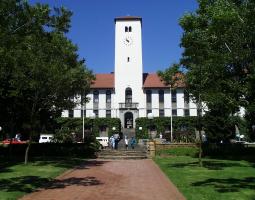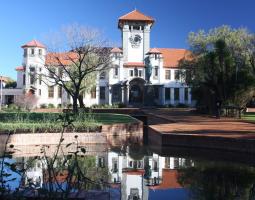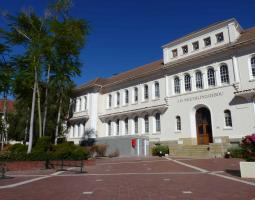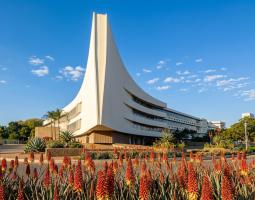
Nelson Mandela Metropolitan University




Programs and prices, tuition fees in Nelson Mandela Metropolitan University

Specify information on the program on the official site of an educational institution.
Specify information on the program on the official site of an educational institution.
Description of Nelson Mandela Metropolitan University
Nelson Mandela Metropolitan University (abbreviated NMMU ) is a state type institution of higher education that has been active in academic and academic work in South Africa since the beginning of 2005. At this point in time, NMMU University has at its disposal a small campus within Port Elizabeth.
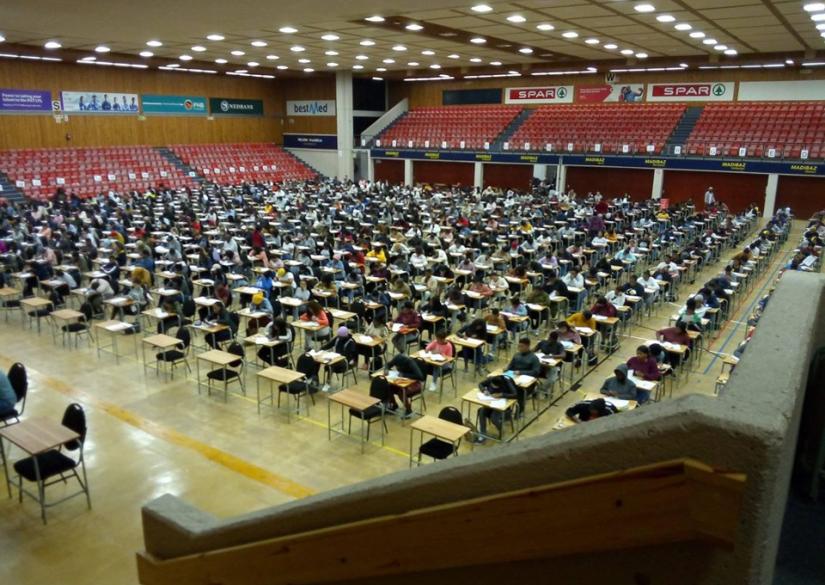
Nelson Mandela Metropolitan University is a large African university that accommodates about 24,000 students annually. At the same time, the university itself has formed over the years of its activities an excellent professional composition. This is a team of 2500 teachers of the highest category.
Educational process
Many academic programs include internships, allowing graduates to immediately engage in real professional activities. The university provides a wide range of student support services: counseling and medical services, as well as a disability support service (UADS) with assistive technologies and specially equipped workstations.
Faculties and colleges
The university is represented on seven campuses: faculties are distributed across different sites, and individual programs are available at several locations simultaneously. This approach makes education more accessible and allows the university to be closer to the communities it serves.
The university offers a full range of educational programs — from short-term certificates and diplomas to bachelor's, master's, and doctoral degrees.
Scientific achievements
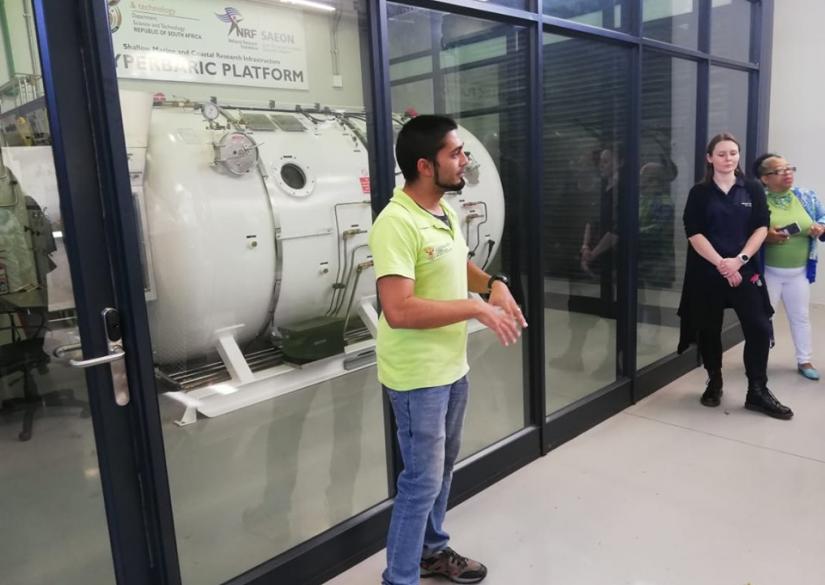
The university conducts world-class research and holds South African Research Chairs (SA Research Chairs) in nanophotonics, automotive engineering, mechatronics, and HIV/AIDS education research. The university is actively involved in the development of the ocean economy.
Nelson Mandela University is the most multinational university in South Africa: students from 34 countries of the African continent study here.
Things to know about
Accommodation, meals, prices
The university provides accommodation in residences on campuses in Gqeberha (Port Elizabeth) and in the city of George. For students who could not secure a place in campus residences, accredited off-campus housing is available.
International students can choose to live either on campus or off campus. Placement and allocation of spots is handled by a dedicated student housing service.
Activities Nelson Mandela Metropolitan University
The university's extracurricular life is rich: numerous associations, cultural societies, and sports clubs operate on campus. The sports sphere is represented by the Madibaz Sport brand, and the Arts, Culture & Heritage Unit is active.
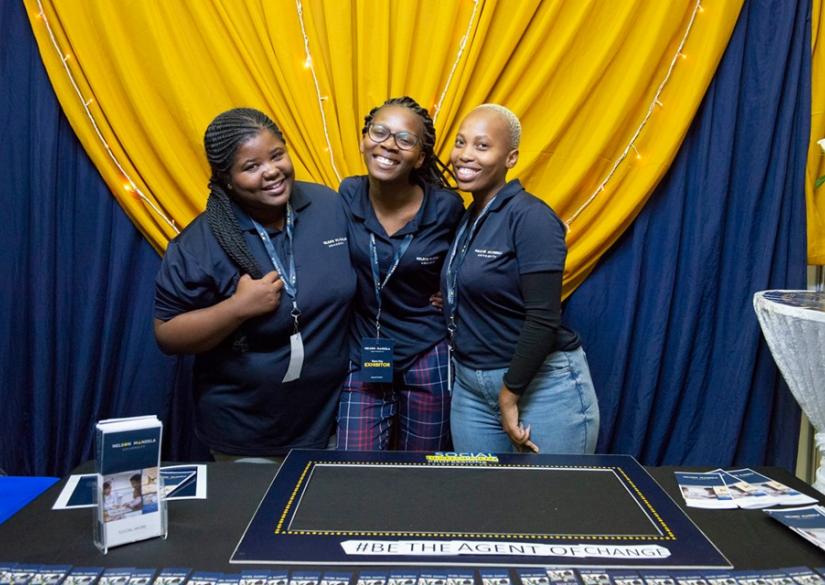
Students are offered a wide range of social and cultural events that allow them to combine studies with active leisure and socializing.
Advantages
This African university is considered the best on the continent, as it is in the TOP-20 higher educational institutions of South Africa.
Facilities and equipment at Nelson Mandela Metropolitan University
The university infrastructure assumes that students have a large scientific library at their disposal. The university itself offers students accommodation in a comfortable student hostel at affordable prices. There is also on the campus everything for recreation and active sports. The university is known worldwide as an active member of the Association of African Universities (AAU), and is also a member of Higher Education South Africa (HESA).
Admission dates and extra charges
Before registration, students make advance payments (deposits): a registration fee, a residence deposit, and an initial payment for the chosen program. International students pay tuition in full upfront.
Online application submission is free for local applicants; international applicants are subject to an annual application fee. In addition to tuition, students should budget for textbooks, equipment, transportation, accommodation, and daily expenses.
Enrolment process
Admission is organized in four stages: program selection (Discovery), application submission (Application), enrollment (Admission), and registration (Registration). Applications are submitted online — separately for undergraduate, graduate, and international students. After enrollment, an orientation program for new students is held in January–February.
Smapse specialists will guide you through all stages of the admission process, guaranteed.
Entry requirements, how to apply, what is required to enrol
Reception freshmen each year holds a special selection committee. In their decision, experts rely on the previous academic performance of each applicant. They are also influenced by the overall results of the entrance exams. Both local residents and visitors can get to the university. Statistics show that approximately 60 percent of applicants receive approval from the admissions committee for enrollment. However, here the situation may differ slightly depending on what kind of faculty and specialty in question. Therefore, it is recommended to check all information about the work of a particular higher education institution through the official website (the address of the portal https://www.nmmu.ac.za ) and the pages of the higher education institution in social networks through the official website.
Tuition fees at Nelson Mandela Metropolitan University
Each academic year the university traditionally divides into classical semesters. The tuition is paid, but each student can pay part of the cost, receiving a scholarship subject to good academic performance. For each semester, students pay approximately $ 2,500. Future bachelors and masters have the right to choose the most convenient system of education for themselves - internally or in absentia (remotely). NMMU University also offers teachers and students to participate in various international exchange programs.
Scholarships Nelson Mandela Metropolitan University
The university provides financial support to full-time students in the form of scholarships, merit awards, named scholarships, and student loans. Aid is distributed taking into account the family's financial needs, academic achievements, and athletic accomplishments, and does not always cover the full cost of tuition.
Institution on the map
Residence permits, citizenship and other services
- Guardianship services during the studies
- Student supervision
Review about Nelson Mandela Metropolitan University
Recommendations on when to apply
| Language courses, schools and children's language camps | Primary and secondary education - private schools | Preparation programmes for entering universities - higher education | Higher education (after completing accredited programs A-level, IB, High School) - Bachelor, Master, MBA |
| - we recommend to apply 6-9 months before the start of the course (some camps and schools offer discounts for early booking or for lengthy study programs) - there are some very popular and high demand children's camps, where the applications need to be submitted 1 year in advance (in particular Switzerland , Great Britain , USA , Canada , Austria) | - we recommend to apply one year before the start of the training program, - some schools have a specific time frame (September-November - please specify an individual school) - some schools require tests in several stages (UKISET, internal tests of the school: English, mathematics, logics, subjects, interview, some require a personal visit) | - we recommend to apply one year before the start of the program, - for Foundation and Pathway programs, IELTS and TOEFL certificates are usually required, respectively | - recommended submission one year before the start of the program, - the deadline normally closes in January, for TOP HEIs and, as a rule, in March in other universities - for a bachelor, a Foundation or Pathway preparatory program a completed A-level, IB, High School + IELTS / TOEFL are required - for Masters you need a graduated higher education, in some cases you need a pre-Masters program - MBA requires completed higher education, work experience preferably at least 2-3 years, etc. |