
Study chemistry in New York 2027
-
 According to information for 2019, an average SAT score made up 1220
USANew YorkCurrently watching: 6from 30000 $ / semester
According to information for 2019, an average SAT score made up 1220
USANew YorkCurrently watching: 6from 30000 $ / semester -
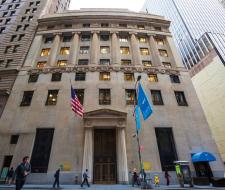 Leading boarding school right in the heart of Manhattan
USANew YorkCurrently watching: 6from 2250.00 $ / 2 weeks
Leading boarding school right in the heart of Manhattan
USANew YorkCurrently watching: 6from 2250.00 $ / 2 weeks -
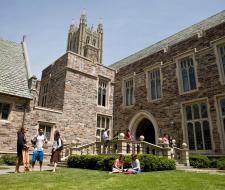 #1 out of 443 National Universities
USANew YorkCurrently watching: 6from 8625.00 $ / 3 weeks
#1 out of 443 National Universities
USANew YorkCurrently watching: 6from 8625.00 $ / 3 weeks -
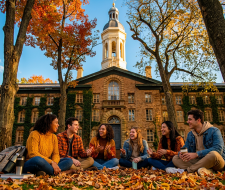 from 43700 $ / semester
 -
 from 46900 $ / semester
 -
 According to information for 2019, an average SAT score made up 1310
USANew YorkCurrently watching: 9from 44625 $ / semester
According to information for 2019, an average SAT score made up 1310
USANew YorkCurrently watching: 9from 44625 $ / semester -
 from 9547.00 $ / semester
 -
 from 6430.00 $ / term
 -
 from 925.00 $ / week
 -
 #133 in National Universities
USANew YorkCurrently watching: 4from 28422.00 $ / year
#133 in National Universities
USANew YorkCurrently watching: 4from 28422.00 $ / year
Chemistry is one of the popular disciplines around the world. Chemistry schools in New York City provide an understanding of the internal and external earth environment using the principles of mathematics, chemistry, biology, physics, and medicine. The study of chemistry solves many acute environmental, social and political problems, chemistry is the basis of:
- New sources of energy,
- Alternatives to materials that deplete the ozone layer,
- New drugs that can fight any disease,
- New methods of chemical waste reduction,
- Reducing the impact of harmful substances on workers and consumers.
Alternative destinations
Studying chemistry in New York
Studying chemistry at universities in New York is available to international students in the following programs:
- Specialist — 2+ years,
- Bachelor's degree — 4 years,
- Master's degree — 1–3 years,
- Doctoral degree — minimum 4 years.
During their studies, students attend lectures, complete coursework and research projects. Studying chemistry in New York fosters the development of creative abilities, rigor and flexibility in problem-solving, and the ability to communicate ideas and processes in the context of chemistry clearly and precisely. Students open new horizons as members of the scientific community, gaining solid knowledge for a wide range of professions. Small classes and laboratories promote mentoring relationships and one-on-one dialogue. Professors encourage students to pursue independent projects and collaborate in the course of conducting independent research.
Studying chemistry in New York for international students encompasses several branches, each dedicated to a specific chemical aspect:
- General Chemistry,
- Forensic Chemistry,
- Polymer Chemistry,
- Chemical Physics,
- Organic Chemistry,
- Biological Chemistry,
- Environmental Chemistry,
- Inorganic Chemistry and Materials,
- Physical Methods of Chemical Analysis,
- Organic Synthesis Toward the Improvement of Human Health, etc.
Schools offering chemistry studies in New York teach students to:
- Apply scientific reasoning to explain chemical phenomena, as evidenced by standardized exam results (breadth of chemical reasoning),
- Demonstrate the ability to carry out sustained research projects (chemical research),
- Understand the impact of chemistry on society, with attention to ethics and inequality in science, on the basis of which decisions in the field of science policy are made (impact of chemistry).
Studying chemistry in New York for international students offers relevant topics:
- Nuclear Chemistry,
- Physical Chemistry,
- Chemistry of Disasters,
- Metals in Biology,
- Structural Biology,
- Chemical Research,
- Science, Technology and Society,
- Inorganic Materials,
- Topics in Organic Synthesis,
- Enzyme Reaction Mechanisms,
- Advanced Organic Spectroscopy,
- Molecular Symmetry, Structure and Spectroscopy,
- Chemistry in Space: Chemical Dynamics of Planetary Bodies,
- Chemical Approaches to Solar Energy Conversion,
- Chemistry of Brewing Antibiotics — Water, Malt, Hops and Yeast, etc.
The courses lay a solid foundation of chemical principles that serve as a starting point for more in-depth study of chemistry and related fields:
- Physics,
- Biochemistry,
- Earth Sciences,
- Materials Science,
- Molecular Biology.
Studying chemistry at universities in New York for international students includes collaborative work with faculty on individual projects within a research program. The duration is 2 semesters. The project combines original scientific research with reading and understanding of scientific literature, and upon completion students produce a thesis, which they publicly defend in a presentation before faculty members and chemistry students.
Graduates receive a degree in:
- Bachelor of Chemistry,
- Bachelor of Science in Chemistry,
- Bachelor of Chemistry with a Focus on Forensic Science,
- Bachelor of Arts / Bachelor of Science in Chemistry,
- Bachelor of Science in Chemistry — Interdisciplinary Concentration.
Studying chemistry in New York for international students
Foreign students study chemistry at private and public educational institutions. Students must possess:
- Critical thinking,
- Analytical skills,
- Problem-solving skills,
- Strong knowledge in natural sciences and mathematics,
- The ability to create presentations and write essays about their findings.
Studying chemistry in New York involves working in research laboratories, conducting experiments and recording data, completing internships to gain employment-relevant experience in research laboratories and medical manufacturing.
Professional chemists develop new construction materials, pharmaceutical compounds, food preservatives, or cosmetic products. Graduates build careers in many industries, combining their education with academic degrees in the following disciplines:
- Chemistry,
- Physics,
- Engineering,
- Medicine,
- Education,
- Veterinary science,
- Toxicology,
- Biotechnology,
- Nanotechnology,
- Clinical research,
- Astronomy and astrophysics,
- Atmospheric sciences, meteorology,
- Food industry technology,
- Information technology, and others.
91% of graduates find employment within six months, with an average graduate salary of $25,575–42,000/year.
Cost of studying chemistry in New York
The cost of studying at a chemistry faculty in New York varies on average from $8,000 to $79,000/year, prices are recalculated and indexed annually. Additional expenses will be required primarily to cover accommodation, food, administrative and registration fees.