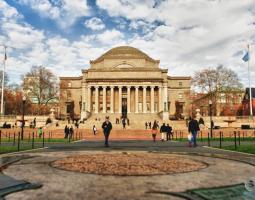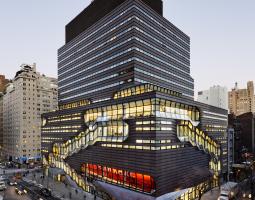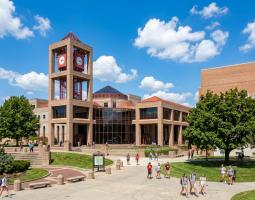
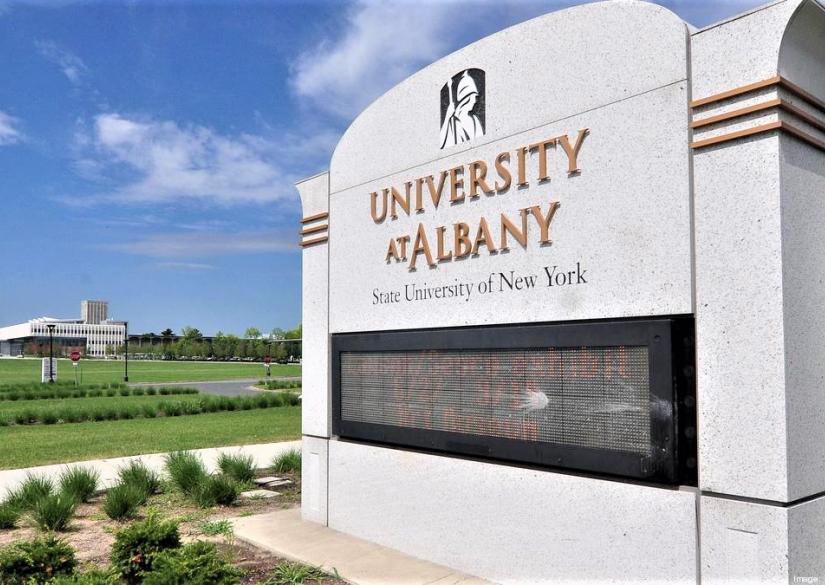
State University of New York at Albany



Programs and prices, tuition fees in State University of New York at Albany


Bachelor's program
- Age of students — from 18 years old,
- The studying period is three to four years.
The Undergraduate Department at SUNY Albany offers quality programs in more than 50 majors in 10 research directions, including:
- Arts and Sciences,
- Business,
- Education,
- Criminal justice,
- Security,
- Engineering,
- Public administration,
- Healthcare,
- Social well-being,
- Right.
The studying lasts three to four years, the year is divided into two semesters. Each semester, a certain number of subjects are studied, for which academic credits are awarded — credits are summed up by semester, year, and full course. Without a set of the required number of credits, the program is considered incomplete, and it is impossible to obtain a diploma.
The university's education system is very flexible: students have the right to choose their priority and additional courses — Major and Minor. Major is a specialty with a large number of advanced—level courses, while Minor is characterized by fewer disciplines, but helps expand skills, competencies, and employment opportunities. The academic programs meet the highest standards of the state and the country — the university employs the best teachers who easily find a common language with students and help them develop.
The schedule includes different types of classes:
- Lectures,
- Seminars,
- Research,
- Laboratory work,
- Group and individual work,
- Seminars and lectures with invited experts.
To check and self-check, students periodically perform tests and mini-exams, prepare presentations and make presentations. Much attention is paid to the development of critical thinking and perception of the world, the habit of verifying information experimentally. In addition to full-time education, online studying is available. In case of successful completion of the studies, the graduate is awarded a diploma of higher education with a bachelor's degree in the relevant field of sciences.
Master's program
- Age of students — from 21 years old,
- The studying period is one to two years.
The Master's degree at SUNY Albany is distinguished by the exceptional quality of education and preparation of specialists: all conditions are created here for the development of students, their research qualities, critical thinking skills and the ability to discover new things.
In total, about 70 programs are available, based on the results of which one of the following degrees is awarded::
- Master of Arts (M.A.),
- Master of Science (M.S.),
- Master of Fine Art (M.F.A.),
- Master of International Affairs (M.I.A.),
- Master of Public Administration and Policy (M.P.A.),
- Master of Public Health (M.P.H.),
- Master of Regional Planning (M.R.P.),
- Master of Business Administration (M.B.A.).
The Master's degree program has a fundamental foundation and is supported by brilliant staff, where all teachers and researchers are rightfully considered exceptional professionals and help develop the best qualities in students. The studying lasts one to two years and includes a range of disciplines and courses, for each of which credits are awarded.
In addition to regular full-time education, online courses or evening classes are available. Masters have all the opportunities for development, they learn to overcome difficulties, set goals and solve problems of any level of complexity, a lot of time is devoted to independent research and research, and serious employment support is provided. The university provides an opportunity to obtain double degrees in certain fields (Dual Degree Program), which significantly expands opportunities and professional skills. You can take professional courses and get a certificate in your chosen field. Subject to the required number of credits and completion of all work, graduates are awarded a master's degree in the relevant field of sciences.
Master of Business Administration (MBA)
- Age of students — from 21 years old,
- The studying period is one to two years.
The standard full-time program lasts one to two years. There are several specializations available to choose from:
- Cybersecurity,
- Entrepreneurship,
- Finance,
- Information systems, business analytics,
- Information systems of personnel management,
- Marketing.
During the first year of study, students attend the same general courses and disciplines, take common subjects and understand trends in the business world at all levels. From the 3rd semester, general subjects and disciplines of the chosen specialization are studied. The University is aimed at educating a new type of leader; the courses are conducted by highly qualified specialists and experts, many of whom have achieved success in business.
The convenient evening studying is designed to help those who do not have the opportunity to study full-time. This format can take from two to six years, but the vast majority complete their studies in three years.
The academic schedule is very flexible — usually classes at the university are scheduled once a week.
Upon completing their studies, students receive a diploma and a Master of Business Administration (MBA) degree in the relevant field or a double MBA (PT)/JD degree (Albany Law). Graduates are highly valued by employers and easily find prestigious jobs, develop their careers and professionally.
Doctoral program
- Age of students — from 23 years old,
- The duration of studying is from three years.
The Doctoral Department at SUNY Albany offers the opportunity to obtain a PhD in the following directions:
- Anthropology,
- Chemistry,
- Behavioral Neuroscience,
- Biostatistics,
- Atmospheric science,
- Clinical Psychology,
- Computer science,
- Economy,
- Educational policy, leadership,
- Educational psychology,
- Environmental sciences, health,
- Epidemiology,
- History,
- English language,
- Nanotechnology.
The standard duration of study is 4 years, but it may vary depending on the specific program. Students spend a lot of time doing independent work and research.
Doctoral studies require exceptional concentration and perseverance, and the level of competence must be very high. The awarded doctoral degrees make it possible to achieve high achievements in research and professional activities, grow up the career ladder and engage in fundamental science.
In addition to the standard programs, there are several dual specialization programs available.
Description of State University of New York at Albany
- Location: Albany, New York, USA,
- Year of foundation: 1844,
- Number of students: about 16,700,
- Language of instruction: English,
- Type of study: mixed.
The State University of New York at Albany (SUNY Albany) is a public research university that is part of the academic system of the State University of New York. The institution is one of the best universities in the USA, offering excellent conditions for higher education.
Its history began in 1844 with the opening of a school for teachers, which developed into a college a few decades later. In 1948, the educational institution was awarded the title of university, becoming one of the four academic departments of SUNY. Today, SUNY Albany occupies positions in many national and international rankings due to the quality of teaching, the diversity of scientific specialties and the multinational student community. More than 50 bachelor's degree programs, about 150 master's degree programs are available here, and active research is underway.
The University has several academic sites in New York State, each of which is equipped with the best technologies and equipment for obtaining theoretical knowledge and practical skills. Specialized facilities, dozens of recreation areas and extracurricular activities are open to students. During extracurricular hours, students can realize their talents in a thematic community, participate in sports competitions or creative performances, pay attention to charity and volunteering.
Educational process
Employees of academic and administrative departments comprehensively support students in achieving their goals: in extracurricular time, they are offered additional subject classes, career support and the search for internships, invitations to external events.
Faculties and colleges
SUNY Albany has a number of specialized schools and colleges offering higher education in the following areas:
- Arts, Sciences,
- Emergency preparedness, homeland security and cybersecurity,
- Integrated Medical Sciences,
- Nanotechnology, Science, Engineering,
- Business
- Public affairs, politics,
- Education.
Scientific achievements
SUNY Albany's scientific research aims to improve the quality of life of the world's population. In the specialized centers at the university, research is being carried out to solve such issues as a clean environment, a sustainable climate, a long and healthy life for people, the security of the country, and a reasonable policy. Not only qualified researchers with many years of experience, but also students of all faculties and courses participate in the work.
Accommodation, meals, prices
SUNY Albany students are accommodated in several residential complexes located near academic buildings. University housing includes five residences with standard rooms, three buildings with apartments for undergraduates.
Types of rooms are:
- Standard: single, double and triple rooms with shared bathrooms,
- Apartments with four bedrooms, two or four bathrooms,
- Designer single bedrooms with superior furnishings, located in apartments with a shared bathroom.
The residences have prepared common recreation areas, kitchens, self-study classrooms, fitness centers, laundries and other facilities that create a comfortable atmosphere for life. If a student does not have enough space in residential buildings or would like to live off-campus, they can request contacts from verified landlords in the city and register to stay with one of the host families.
While staying at the residence, students need to arrange a meal plan. It includes a certain number of meals, additional points for purchases in campus stores, and can be applied in all cafeterias and dining halls of the institution.
Subjects, specialties
Activities State University of New York at Albany
The university adopted a system of comprehensive development - students actively engaged in sports and creativity, with them coaches and mentors. On the campus there is a large number of clubs and sections on interests, where everyone will find a lesson for themselves. Available sports:
1. Male and female professional teams:
- Baseball
- Basketball
- Cross Country
- American football
- Lacrosse
- Football
- Track
- Golf (female)
- Volleyball (female)
- Softball (female)
2. Sports clubs and communities:
- Badminton
- Baseball
- Basketball
- Cricket
- Horseback Riding
- Fencing
- Karate
- Shooting
- Tennis
- Volleyball
- Fight.
Available types of creativity:
- Literary mastery (poetry, prose, journalism, criticism, script art)
- Theatrical art
- Actor play
- Cinema
- Painting, drawing
- Dancing
- Musical directions.
A lot of extra-curricular activities are held that help students relax, expand their horizons, and help them adapt:
- Festivals and holidays
- Conferences
- Master classes
- Talent show
- Meetings with experts
- Theater performances
- Fashion shows
- Excursions around the city and the surrounding area
- Visits to the offices of companies and organizations
- Tourist trips
- Theaters and Cinemas, museums and galleries
- Shops, shopping centers and shopping.
Advantages
- Included in the ranking of the 390 best colleges according to the Princeton Review 2025,
- No. 51 in the list of the best national universities for contribution to the public good — Washington Monthly 2024,
- No.59 among the leading public colleges in the USA — Wall Street Journal 2025,
- Excellent value for money in the Washington Monthly rating,
- No. 2 among New York City government agencies in the US News & World Report 2025 ranking,
- The R1 classification is "Very high research activity," with STEM fields considered to be the main focus of work.,
- Multinational community with international students from 100+ countries,
- Extended additional support, including career counseling,
- Active extracurricular activities.
Facilities and equipment at State University of New York at Albany
SUNY Albany is located on three academic sites that meet current educational trends. The main campus of the university is located on Washington Avenue in Albany, where there are:
- Administrative offices,
- Classrooms, lecture halls,
- Specialized laboratories, studios,
- The Economic Research Corps,
- Meteorological Laboratory of the National Service,
- Data Processing Center,
- Dining halls, cafeterias,
- Recreation areas with TV, board games,
- Self-study rooms, additional classrooms.
The second campus is located in the city center, and is a complex of Georgian-style buildings. Academic and practical classes are held here for students studying in the fields of law, law, politics, sciences and engineering.
Laboratories, computer rooms and lecture halls are located in several buildings of specialized colleges.:
- Rockefeller College of Public Affairs, Politics,
- School of Criminal Justice,
- School of Social Welfare,
- College of Nanotechnology, Sciences, Engineering,
- College of Emergency Preparedness, Internal Security, and Cybersecurity.
SUNY Albany's third studying area is a campus for future medical professionals. It is located in Rensselaer and is one of the fastest growing biological research centers. In the center of the academic site is the College of Integrated Medical Sciences, whose scientific divisions include the Cancer Research Center, the Center of Excellence in Cancer Genomics, and the Center for Functional Genomics.
Admission dates and extra charges
Classes start in January, September. The academic year is divided into two semesters:
- Autumn: August-December,
- Spring: January-May.
Summer sessions lasting 4, 6 or 12 weeks are held between the end of May and the end of August. Classes are held on weekdays, and recreation is organized during seasonal vacations, holidays, and weekends.
Additional fees include:
- Registration and administrative fees,
- Accommodation, meal plan and related expenses,
- Some extracurricular activities,
- Additional academic opportunities not included in the curriculum,
- Personal educational materials,
- Contributions to student associations,
- Medical insurance,
- Personal expenses.
Enrolment process
The Admissions Committee expects applicants to complete the registration form, receipt for payment of the application fee, and the required documents. Candidates will be invited for an interview and possible tests, after which a decision will be made on admission.
Perspectives
SUNY Albany's alumni network includes hundreds of highly qualified professionals who are actively developing their careers in their specializations. Among the outstanding figures:
- Sally W. Chisholm – National Medal of Science Laureate,
- Hamdi Ulukaya – CEO of Chobani,
- Omar M. Yagi – Wolf Prize Laureate in Chemistry
- Francis Allen – Turing Award Laureate
- Alanna Shepartz is a chemist at Yale University and a member of the National Academy of Arts and Sciences.
Entry requirements, how to apply, what is required to enrol
For undergraduate:
1. Age: from 17 years old
2. Diploma of completion of school
3. High scores of exams
4. IELTS 6.0 / TOEFL 70 certificates (or equivalents)
5. Confirmation of solvency
6. Portfolio of creative works and achievements.
For magistracy:
1. Age: from 20 years old
2. Bachelor's degree (high performance in profile subjects)
3. Knowledge of English: IELTS 6.5-7.0 / TOEFL 79
4. The text of the final bachelor's work
5. Two letters of recommendation
6. An extensive essay substantiating the purpose of entering the magistracy
7. Portfolio.
For doctoral studies:
1. Age: from 20 years old
2. Bachelor's or Master's Degree (International Standard)
3. Knowledge of English: IELTS 6.5-7.0 / TOEFL 79
4. Results of specialized tests
5. High level of knowledge
6. High research skills
7. Letters of Recommendation
8. High moral qualities.
Scholarships State University of New York at Albany
The University and its individual departments support talented students through grants, financial assistance and scholarships. Most scholarships are designed for citizens and residents of the United States, but for foreign bachelors and masters there are some options available. To participate in the contest it is necessary to have a high level of knowledge and achievements in various fields, as well as strictly follow the application rules.
Literature and references
-
University at Albany, SUNY — Wiki

-
University at Albany-SUNY - Profile, Rankings and Data — U.S. News & World Report
-
SUNY University at Albany — World University Rankings THE
-
University at Albany SUNY : Rankings, Fees — Top Universities
-
University at Albany, SUNY — Forbes
-
University at Albany Overview — College Factual
Institution on the map
Residence permits, citizenship and other services
- Guardianship services during the studies
- Student supervision
Review about State University of New York at Albany
Recommendations on when to apply
| Language courses, schools and children's language camps | Primary and secondary education - private schools | Preparation programmes for entering universities - higher education | Higher education (after completing accredited programs A-level, IB, High School) - Bachelor, Master, MBA |
| - we recommend to apply 6-9 months before the start of the course (some camps and schools offer discounts for early booking or for lengthy study programs) - there are some very popular and high demand children's camps, where the applications need to be submitted 1 year in advance (in particular Switzerland , Great Britain , USA , Canada , Austria) | - we recommend to apply one year before the start of the training program, - some schools have a specific time frame (September-November - please specify an individual school) - some schools require tests in several stages (UKISET, internal tests of the school: English, mathematics, logics, subjects, interview, some require a personal visit) | - we recommend to apply one year before the start of the program, - for Foundation and Pathway programs, IELTS and TOEFL certificates are usually required, respectively | - recommended submission one year before the start of the program, - the deadline normally closes in January, for TOP HEIs and, as a rule, in March in other universities - for a bachelor, a Foundation or Pathway preparatory program a completed A-level, IB, High School + IELTS / TOEFL are required - for Masters you need a graduated higher education, in some cases you need a pre-Masters program - MBA requires completed higher education, work experience preferably at least 2-3 years, etc. |