

Best universities in Italy 2027
- Study at Top Italian Universities for foreign students
- Application Process to Universities in Italy
- How to Apply to Universities in Italy for foreign students
- Universities in Italy. Cost and fees for international students
- Scholarships and income-based tuition for international students in Italy
- Literature and references
-
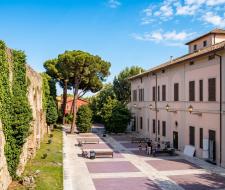 The university ranks the position 17th as one of the Top 25 Best Fashion Universities
ItalyRomeCurrently watching: 7from 16400 € / semester
-
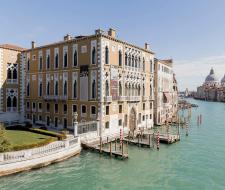 The university ranks the position 17th as one of the Top 25 Best Fashion Universities
ItalyVeniceCurrently watching: 5from 17000.00 € / year
-
 Cooperation with Valentino, Chanel, Dior, Dolce & Gabanna, Gucci, Fendi, Versace
ItalyMilanCurrently watching: 4from 13300 € / semester
-
 The university ranks the position 17th as one of the Top 25 Best Fashion Universities
ItalyMilanCurrently watching: 4from 8100.00 € / semester
-
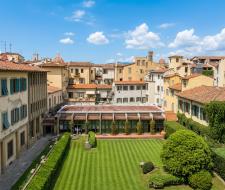 The university ranks the position 17th as one of the Top 25 Best Fashion Universities
ItalyFlorenceCurrently watching: 5from 8100.00 € / semester
-
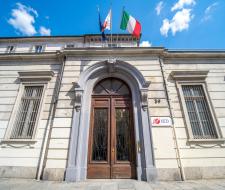 The university ranks the position 17th as one of the Top 25 Best Fashion Universities
ItalyTurinCurrently watching: 6from 15450 € / semester
-
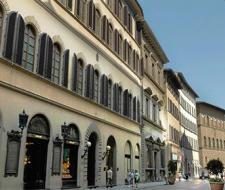 Cooperation with Valentino, Chanel, Dior, Dolce & Gabanna, Gucci, Fendi, Versace
ItalyFlorenceCurrently watching: 5from 16300 € / semester
-
 The university ranks the position 17th as one of the Top 25 Best Fashion Universities
ItalyCagliariCurrently watching: 4from 8950 € / semester
-
 from 4310 € / term
-
 from 30000.00 € / year
Italy draws international students with strong academic traditions, a broad choice of degree programs and comparatively accessible costs. Its universities combine long-established research schools with modern teaching, and many run courses in English alongside Italian. SMAPSE lists 73 of the best universities in Italy, where international students can earn a well-rounded higher education that opens up wide career opportunities.
Smapse specialists will guide you through every stage of admission.
Alternative destinations
Study at Top Italian Universities for foreign students
Entering the ranks of the best universities in Italy is an aspiration for many foreign students. However, this endeavor entails aligning one's education with the Italian educational system. Italian students typically undergo 12 years of education, culminating in secondary education, before seeking admission to a university. Foreign students, on the other hand, are often required to complete 1-2 years of university studies in their home countries before applying to an Italian institution.
Italian Educational System
The Italian educational system is characterized by a remarkable degree of flexibility. One striking feature is the absence of fixed schedules and rigid exam dates. Students are granted the autonomy to choose the number of subjects and design their semester schedules, with only a handful of compulsory disciplines.
State vs. Private Universities in Universities in Italy
Studying at a state university generally offers a more cost-effective option, while private universities have their unique advantages, including a robust academic component, qualified instructors, and smaller class sizes.
English-Language Programs in Universities in Italy
Italy has been steadily expanding its repertoire of programs conducted in English. This trend is particularly prominent in English Master's programs, covering a wide range of specialties, including physics, sociology, design, agricultural sciences, biology, political sciences, and geology. At the undergraduate level, English-language programs are also available in fields like economics, engineering, biotechnology, and biology. Italy has established itself as a premier destination for high-quality preparation in creative fields such as fashion, design, architecture, painting, choreography, and culinary arts. Faculties specializing in philosophical and linguistic disciplines are also in high demand among European students, with top universities consistently offering such programs.

What firstly should be considered when choosing a university?
It depends on the student - everyone determines the most important criteria for himself. I would advise you to take several rankings and compare them with each other, plus take into account the cost of the course, the location of the university and its scale, the percentage of graduates' employment. See where graduates continue their studies or where they go to work.
Application Process to Universities in Italy
For international applicants aspiring to study in Italy, thorough preparation is essential. The application process typically begins about six months before the desired start date. Key documents include a high school diploma and a certificate attesting to university enrollment in the home country. It's worth noting that specific grades in these certificates are less critical, and Italian universities consider the overall profile of applicants, taking into account various factors.
Applicants must translate their documents using a professional translator, obtain an apostille, and complete a questionnaire. In any given year, students can apply to only one university in Italy. These assembled documents are then submitted to the Italian Embassy, where, upon receiving a positive response, a student visa is readily issued.
Entry to Universities in Italy
Foreign students seeking admission to the best universities in Italy must meet a fundamental requirement: a 12-year education, regardless of whether it was obtained in a school, college, technical school, or university. Starting on September 1st, the application process for these universities commences. Proficiency in Italian or English is a pivotal consideration for humanities programs (languages, philosophy, history), while creative or technical specialties may necessitate showcasing talent, passing entrance tests, and presenting a portfolio. Command of Italian or English serves as an initial benchmark, but it does not guarantee admission.
Several Italian universities offer specialized preparatory courses aimed at developing fundamental language skills. Moreover, students attending the best universities in Italy are permitted to work part-time, with a maximum of four hours per day. Annually, these universities offer on-campus positions, such as library or student office roles.
Language of Instruction
The choice of teaching language shapes what you prepare. Italy runs a growing number of English-taught programs, so you are not limited to Italian-language degrees: the national education system offers more than 600 courses taught in English, and an independent overview counts over 500 English-taught study programs across the country. Keep in mind that English is not widely spoken outside academic settings, so learning at least basic Italian before and during your studies helps with daily life and with working in Italy after graduation.
Student Visa and Residence Permit
Non-EU citizens must apply for a student visa at the Italian Consulate in their country of residence before traveling to Italy. A valid visa does not by itself guarantee entry, because Schengen border officers may re-check the visa-application documents on arrival. After entering the country, non-EU students who stay longer than three months must apply for a residence permit (permesso di soggiorno) within eight working days. The permit for stays of up to one year generally costs €116.46 (a €16 revenue stamp, €70.46 for the electronic permit and €30 for shipping), while a permit for studies shorter than one year is usually around €40. Renewals must be requested at least 60 days before the permit expires. EU students do not need a residence permit, but for stays over three months they register a temporary residence at the Anagrafe, and that registration lasts 12 months.
How to Apply to Universities in Italy for foreign students
Foreign students studying at the best universities in Italy enjoy various benefits, including access to public transport, visits to museums, theaters, and cinemas, as well as the option to open a bank account.
To apply to an Italian university, the following documents are typically required:
- High school diploma
- Documents from previous educational institutions, such as technical schools or universities
- Language test certificates
- Recommendation letters from teachers
- A motivation letter
- A certificate from a bank confirming financial support for the student's studies.
Universities in Italy. Cost and fees for international students
Italy, with its rich academic traditions dating back centuries, is home to a number of the world's oldest universities. The University of Bologna, established in 1088, frequently appears as the oldest continuously operating university in the world. Over the years, Italy's higher education sector has expanded to include a range of universities, polytechnics, and specialized institutions spread throughout the country, offering a diverse mix of undergraduate and postgraduate programs. Italian institutions are well-regarded for their research and teaching, mainly in fields like art, architecture, engineering, and the humanities.
Tuition for Foreign Students
The cost of attending universities in Italy varies, but it is generally more affordable than in many other Western countries. Public universities usually set tuition based on the student's family income and the chosen program, so at income-tied universities such as Rome Tor Vergata the annual charge runs from a low minimum of around 150 euros to a maximum of about 5,000 euros. On average, a public university in Italy charges around 1,000 euros per year, which is relatively cheap compared with the rest of Europe. For EU students the figure typically stays between 900 and 3,500 euros per year. Non-EU students, however, may encounter higher charges, often ranging from 900 to about 4,000 euros per year, depending on the course and the university. Some specialized or prestigious programs can be more expensive regardless of the student's nationality.
Private Universities and Additional Costs
Private universities in Italy, although fewer in number than public institutions, generally charge more. Their tuition can range from 6,000 to 20,000 euros or more per year. Beyond the cost of study, international students should also account for living expenses, which can be substantial, especially in cities like Rome, Milan, or Florence. Spending on accommodation, meals, transport, and personal needs varies widely with the city and the lifestyle a student chooses.
Cost of Living in Rome and Milan
In Rome, Numbeo's July 2026 estimates put monthly costs for a single person at about 844 euros excluding rent, and for a family of four at around 3,025 euros on the same basis. A one-bedroom apartment in the city center rents for roughly 1,098 euros a month (between 950 and 1,600 euros), and one outside the center for about 810 euros. A meal at an inexpensive restaurant costs 15 euros, a monthly public-transport pass 35 euros, and basic utilities for an 85 m² flat about 182 euros. The average net salary after tax comes to around 1,745 euros a month.
Milan is noticeably more expensive than Rome. In the same July 2026 estimates, monthly costs for a single person reach about 1,054 euros excluding rent. A one-bedroom apartment in the city center rents for roughly 1,504 euros (between 1,200 and 1,900 euros), and one outside the center for about 1,058 euros. A monthly public-transport pass costs 39 euros and a meal at an inexpensive restaurant 20 euros, against an average net salary of around 1,930 euros a month.
Italy offers a blend of historic academic prestige and modern research facilities, which makes it an attractive destination for international students. Because the cost of education stays relatively affordable, especially at public universities, prospective applicants should still research specific institutions, available scholarships, and the cost of living in their chosen city before deciding.
Scholarships and income-based tuition for international students in Italy
Beyond the standard tuition, international students in Italy can lower their costs through government scholarships and income-linked pricing. The Italian government offers MAECI scholarships, also known as Farnesina grants. Submitting an application is free of charge.
The MAECI grants cover several study paths:
- Master's degree programs,
- AFAM higher education in fine arts, music and dance,
- PhD programs,
- Research projects,
- Intensive courses in Italian language and culture.
The scholarship supports only on-site attendance of academic courses on Italian territory, so online study is not eligible. Eligibility is limited to applicants from a published List of Eligible Countries: candidates whose country is not on that list cannot apply.
Many Italian universities also tie tuition to family income, so what a student pays depends on the household's income.
9 best universities in Italy 2027 rankings
| 1 | IED Rome |
| 2 | Istituto Marangoni Milano |
| 3 | IULM University Milan |
| 4 | Accademia Costume & Moda |
| 5 | Ca' Foscari University of Venice |
| 6 | Accademia Riaci Florence |
| 7 | John Cabot University |
| 8 | Nuova Accademia di Belle Arti Rome |
| 9 | Domus Academy |
Top 14 best universities in Switzerland 2027
| 1 | Glion Institute of Higher Education Switzerland |
| 2 | Les Roches International School Montana |
| 3 | César Ritz Colleges Switzerland |
| 4 | IHTTI School of Hotel Management |
| 5 | Ecole Hoteliere de Lausanne |
| 6 | Geneva Business School |
| 7 | HIM Hotel Institute Montreux |
| 8 | Swiss Hotel Management School |
| 9 | Webster University Geneva |
| 10 | Business and Hotel Management School |
| 11 | Luzern IMI |
| 12 | Swiss Hotel Management School (SHMS) Caux |
| 13 | International University in Geneva |
| 14 | Culinary Arts Academy Switzerland |
Top 10 best universities in Netherlands 2027
Top 35 best universities and colleges in Canada 2027
| 1 | University of Toronto |
| 2 | McGill University |
| 3 | University of British Columbia |
| 4 | University of Alberta |
| 5 | Simon Fraser University |
| 6 | Montreal University |
| 7 | University of Windsor |
| 8 | York University |
| 9 | University of Guelph |
| 10 | McMaster University |
| 11 | University of Manitoba |
| 12 | University of Waterloo |
| 13 | Royal Roads University |
| 14 | Vancouver Film School |
| 15 | Kwantlen Polytechnic University |
| 16 | University of Calgary |
| 17 | Dalhousie University |
| 18 | Fanshawe College |
| 19 | University of Ottawa |
| 20 | Laval University |
| 21 | Sheridan College |
| 22 | University of Regina |
| 23 | Brock University |
| 24 | Thompson Rivers University |
| 25 | Humber College |
| 26 | Vancouver Island University |
| 27 | Mohawk College |
| 28 | Centennial College Toronto |
| 29 | Niagara College |
| 30 | Capilano University |
| 31 | Seneca College |
| 32 | Algoma University |
| 33 | Saint Clair College |
| 34 | Douglas College |
| 35 | LaSalle College |
Literature and references
-
Le migliori università al mondo e in Italia: la classifica 2023

-
Università, la classifica dei migliori atenei al mondo: l’Italia migliora, settima nazione al mondo per numero di posti in graduatoria
-
Lista delle università in Italia — Wiki
-
Università in Italia — Wiki
-
Università statali — Ministero dell'Università e della Ricerca
-
Le 10 migliori università italiane
This content was developed and approved with active participation of Sam Jones.
In the process of preparing the material, we referenced the following sources:
- https://quifinanza.it/lavoro/video/migliori-universita-mondo-italia-classifica-2023/711171/
- https://www.orizzontescuola.it/universita-la-classifica-dei-migliori-atenei-al-mondo-litalia-migliora-settima-nazione-al-mondo-per-numero-di-posti-in-classifica/