
 For partners
 Secondary education in Germany for international students
This content was developed and approved with active participation of Jamie Perfect, who is a Director of the International School of Bremen
In the process of preparing the material, we referenced the following sources:
- https://howtogermany.com/education/german-schools/
- https://en.wikipedia.org/wiki/Education_in_Germany.
-
 In 2022 an average IB score made up 34
GermanyPotsdamCurrently watching: 9from 13500.00 € / year
In 2022 an average IB score made up 34
GermanyPotsdamCurrently watching: 9from 13500.00 € / year -
 In 2021 an average IB score made up 33,4
GermanySalemCurrently watching: 6from 27300 € / semesters
In 2021 an average IB score made up 33,4
GermanySalemCurrently watching: 6from 27300 € / semesters -
 School is in top 10 best bilingual boarding schools in Germany
GermanyBerlinCurrently watching: 6from 17892 € / semesters
School is in top 10 best bilingual boarding schools in Germany
GermanyBerlinCurrently watching: 6from 17892 € / semesters -
 from 24000.00 € / year
 -
 In 2022 an average IB score made up 35
GermanyBremenCurrently watching: 3from 11300.00 € / year
In 2022 an average IB score made up 35
GermanyBremenCurrently watching: 3from 11300.00 € / year -
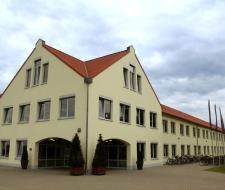 In 2023 IGCSE results - 90% of our exams were graded A*- C
GermanyCologneCurrently watching: 3
In 2023 IGCSE results - 90% of our exams were graded A*- C
GermanyCologneCurrently watching: 3 -
 In 2021 an average Abitur score made up 2.29
GermanyMunichCurrently watching: 2from 24000 € / semesters
In 2021 an average Abitur score made up 2.29
GermanyMunichCurrently watching: 2from 24000 € / semesters -
 from 48000.00 € / year
 -
 from 37500.00 € / year
 -
 from 20100 € / semesters
Foreign secondary education attracts thousands of foreign students every year. One of the most popular destinations among expats is Germany. Parents and guardians of foreign students choose German private boarding schools and public institutions for various reasons, including the favorable tuition fees in Germany, prospects for further studies in Germany and abroad, at leading international universities and colleges.
The German secondary education system includes:
- 13 academic years,
- Abitur certificate after graduation,
- Accessibility of education is not only for local students, but also for foreigners.
Children from other countries can enter private schools in Germany after they complete 5th, 6th or 7th grade in their country. Another popular option for admission is grades 8, 9, and 10. Foreign students can study in both German and English.
The German system is partly similar to that in the United Kingdom, for example, in that private schools in Germany can also complete an IB-based education program.
Alternative destinations
Schools in Germany: the primary and secondary school system
Like primary education in the UK, a certificate in Germany can be obtained in a public institution: this sector, despite free education, is characterized by a fairly high quality and opportunities for optional studying. Public institutions are open to the education of local and foreign children in Germany, and the same applies to middle schools.
Depending on the location and local laws of each federal state, German institutions provide for different start and end dates and different academic fields. The general rule is compulsory education for 9 years. In general, there are 3 main stages of studying in Germany for foreign students: primary level and two stages of secondary level. Secondary education of the first stage lasts until the 10th grade, and after that only students who plan to enter a university continue their studies. Intensive specialized preparation for the future profession is conducted in grades 11-12. Applicants who take the Abitur exams at the end of the year go to grade 13, as these indicators are taken into account by university commissions.
After completing the compulsory degree, children choose one of five types of educational institutions to continue their studies in Germany: gymnasium, general, basic, and vocational schools. The most popular among German children are gymnasiums, which allow them to continue their studies up to grade 13 (8-9 years spent in them provide in-depth study of humanitarian, technical or social subjects).
The catalog of institutions in Germany compiled by Smapse experts includes the most famous educational institutions in this category.
Additionally, we have collected institutions in the section that combine the capabilities of the first two types of institutions. In them, children study both technical and humanitarian subjects in a comprehensive manner. The best general education institutions do not provide interest-based education, they prepare future students in all subjects, and strong and weak students study in the same classes here.
Professional studying institutions focus on the knowledge required for work. Smapse experts recommend that you pay attention to one detail: studying in Germany for foreign students at a German gymnasium may be free, but you will have to pay for taking the Abitur exams. In addition, these exams can only be taken in private educational institutions.


Why do parents value primary and secondary schools in Germany so much?
German primary and secondary schools offer a balanced education that prioritizes critical thinking, discipline, cultural understanding, and practical skills. The International Baccalaureate (IB) program, offered by many international schools including ISB, is highly esteemed worldwide.
Private schools in Germany after grades 8, 9, 10: secondary education
The German educational infrastructure includes more than 2,000 educational institutions, many of them private. However, in Germany, whether a school belongs to the state or the private sector does not affect the quality of education, because the German Ministry of Education monitors this very closely. Curricula and programs in independent schools in Germany are necessarily consistent with the state academic vector, they are checked and assessed by special commissions.
Children and teenagers can partially draw up their own academic plan for the year, for example, they can choose several advanced disciplines. Usually, foreign students choose 2 advanced subjects and up to 10 basic subjects. In general, many subjects in private German schools are intensively studied, even if students do not choose them as core subjects. A similar academic approach is being implemented in English schools after 9th grade. Compulsory subjects in the curriculum of private schools in Germany are foreign languages: children learn at least 2 languages, and they can choose the rest on their own as an additional burden. Third-party electives include natural and exact sciences, sports, creative workshops and practical exercises in individual subjects.
The main difference between one type of school and another is the approach to caring for students: private German schools have more resources, they can provide a higher level of comfort for their students: from accommodation to technical equipment in classrooms. Therefore, expats most often choose boarding schools in Germany for entering.

Private German schools provide foreign students with several opportunities:
- Prepare for the Abitur exams,
- Take two-year academic courses for further entering the world's leading universities under the IB program.
You can get a diploma in the international Baccalaureate program if a teenager successfully masters 6 disciplines and gets at least 24 points on graduation tests. Such a document opens the doors for foreign students to thousands of English-speaking universities and colleges in Europe and the USA.
How can foreign students enter schools in Germany?
For foreign children, the opportunity to study should be planned from grades 7-8. Our list of educational centers will help you quickly and free of charge select priority institutions for obtaining a national certificate or IB diploma. Knowledge of German and English is required for admission. German is required at a high level, but the degree of English proficiency depends on the class the child enters. Studying abroad after 11th grade will require additional preparation (language and subject) from the student and the collection of all necessary documents for submission to the educational institution.
Foreign students should be prepared to provide an extract with grades for the last 2 years, take the entrance exams and undergo an oral interview. Additionally, it is advisable to take a positive characteristic from a native school.
A year of study at a private boarding school in Germany can cost up to €40,000 (including tuition, meals, accommodation), but this is a great opportunity to study a foreign language in a comfortable environment, receive a high-quality European education and prepare well for university. Independent living will help a child develop responsibility and readiness for student life.
How to Apply to Top-40 Secondary Schools in Germany
In these institutions, students have a wide range of core subjects to choose from, all taught at either an intensive or standard level. Additionally, these schools offer optional courses in subjects like math, chemistry, and languages, as well as various sports clubs, creative courses, and practical classes.
Preparing for the International Baccalaureate
The best schools in Germany also prepare students for the International Baccalaureate (IB), a two-year program that facilitates admission to major universities worldwide. Achieving a score of at least 24 points across six subjects guarantees an international IB diploma, enabling hassle-free admission to schools in the UK and the US.
When applying to schools in Germany, a good command of both German and English is essential. While high-level German proficiency is a must, the required level of English varies depending on the grade level. Students planning to study abroad after the 11th grade will need additional preparation in both language and subject matter.
Schools in Germany Costs and Fees
The annual cost of attending a private boarding school in Germany can go up to €40,000, including tuition, food, and accommodation. However, this is a worthy investment for quality European education and language acquisition, providing an excellent foundation for university education.
By choosing from the list of top-40 educational centers in Germany, you're not only investing in a high-quality education but also in personal development, preparing yourself for the challenges and opportunities that lie ahead in university and beyond.
Top 6 best schools in Germany 2026
| 1 | Schule Schloss Salem |
| 2 | Zinzendorfschulen |
| 3 | Berlin Brandenburg International School |
| 4 | Gymnasium Stift Neuzelle |
| 5 | St George's International School Cologne |
| 6 | CJD International School Braunschweig Wolfsburg |
Learning programs-summary information
| Name | Meaning | Equivalent | Min. age | Duration, years |
Next stage | Cost |
|---|---|---|---|---|---|---|
| GCSE | General certificate of secondary education | secondary education (non-accomplished) | 14 | 1–2 | A-Levels | 15,000 USD+ |
| A-Levels | Advanced level | secondary education (accomplished) | 16 | 2 | University | 15,000 USD+ |
| BTEC | Business and Technology Education Board | secondary special education | 14 | 2–3 | University/ work | 15,000 USD+ |
| Oxbridge Preparation | Preparing for Oxford and Cambridge | secondary education (accomplished) | 17 | 1 | University | 15,000 USD+ |
| International Baccalaureate | International baccalaureate | secondary education (accomplished) | 16 | 2 | University | 18,000 USD+ |
| Foundation/ Pathway Year | Preparatory year | admission to the 1st year of university | 17 | 1 | University | 14,000 USD+ |
| NCUK | The Northern consortium | 2 year university | 17,5 | 1 | 2 year University of NCUK | 13,000 USD+ |
| Special Preparation (Medics/Math/Business) | Specialized training | - | 14 | optional | optional | 4,000 USD+ |
| Academic English | Academic English | Language school | 8 + | 6–12 months | School or University | 8,000 USD+ |
Advantages and disadvantages of English schools
| Advantages | Disadvantages |
|---|---|
| The opportunity to enter the best universities in England, USA, Canada, Switzerland, Europe, the world | Expensive |
| High quality of education and academic standards | Strong workload |
| Perfect English after graduation | The need to change the social environment; it takes time to adapt |
| Useful contacts | The difficulty of choosing the most suitable school for the child, requires a qualified specialist |
Top 21 boarding colleges in England 2026
| 1 | Cardiff Sixth Form College |
| 2 | National Mathematics and Science College |
| 3 | Abbey College Cambridge |
| 4 | d'Overbroeck's College |
| 5 | MPW London |
| 6 | CATS Cambridge |
| 7 | Kensington Park |
| 8 | DLD London |
| 9 | King's College St Michael’s |
| 10 | Bellerbys Cambridge |
| 11 | Chelsea Independent College |
| 12 | MPW Cambridge |
| 13 | Bellerbys Brighton |
| 14 | CATS London |
| 15 | St Clare's Oxford |
| 16 | Bishopstrow College |
| 17 | CATS Canterbury |
| 18 | Bellerbys London |
| 19 | Ealing Independent College |
| 20 | Cambridge Tutors College |
| 21 | Abbey Manchester |
