University of Connecticut








Programs and prices, tuition fees in University of Connecticut


Bachelor's Degree Programs
- Age of students — from 18 years old,
- The studying period is three to four years.
The university offers more than a hundred bachelor's degrees with a choice of core and optional directions, so that students create their own curriculum and expand their professional skills and knowledge.
Some of the sought-after Bachelor's degree programs are:
- Acting skills,
- Accounting,
- Analytics, information management,
- Zootechny,
- Arab and Islamic civilizations,
- Biomedical Engineering,
- Chinese language,
- Chemical Engineering,
- Civil engineering,
- Communications,
- Digital Media Design,
- Electrical engineering,
- Financial management,
- Health management,
- Italian literature, cultural studies.
Master's Degree Programs
- Age of students — from 21 years old,
- The studying period is one to two years.
A Master of Science degree will provide students with a higher position and rapid career advancement. In one or two academic years, they will greatly improve their understanding of the chosen scientific field and gain research skills.
Dozens of master's degree courses are available at the university, including:
- Anthropology,
- Zootechny,
- Applied Financial Mathematics,
- Advanced manufacturing for energy systems,
- Agricultural economics,
- Leadership in the field of art, cultural management,
- Applied Genomics,
- Biostatistics,
- Business research,
- Civil engineering,
- Computer Science,
- Engineering,
- Dental Science,
- Dramatic art,
- Energy and environment management,
- Financial technologies.
PhD Program
- Age of students – from 23 years old,
- The duration of studying is from three years.
Studying in one of the doctoral programs will give students the opportunity to acquire research, teaching and practical skills of high quality, thanks to which they will be able to take a high position in their career. To date, UConn has several dozen doctoral specializations, including:
- Geological Sciences,
- Geography
- Health Promotion Sciences,
- Human development, family science,
- Engineering protection of the environment,
- Pedagogical Psychology,
- Economics
- Ecology, evolutionary biology,
- Linguistics
- Materials Science, Engineering,
- Mathematics
- Oceanography
- Philosophy
- Political science
- Public health.
Description of University of Connecticut
- Location: Storrs, Connecticut, USA,
- Year of foundation: 1881,
- Number of students: about 33,000,
- Language of instruction: English,
- Type of study: mixed.
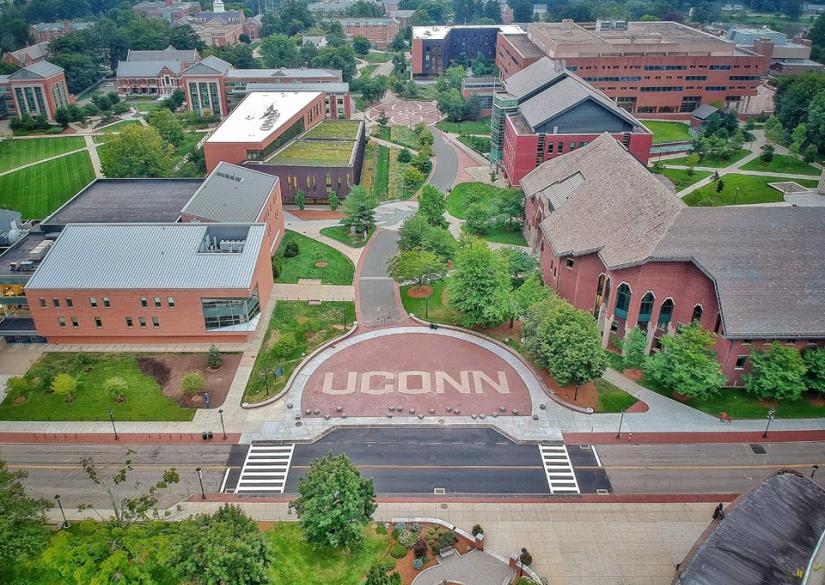
The University of Connecticut (UConn) is a public university system that includes several academic territories in the state of Connecticut with the main campus in Storrs. Educating approximately 33,000 students across all academic venues, UConn offers more than 250 bachelor's, master's, and doctoral degree programs at 14 science colleges.
The institution was founded in 1881 as the Storrs Agricultural School. A little less than ten years later, the school was transformed into a college, and then, in 1939, it received its current status and name. Today, UConn is considered one of the largest universities in America in terms of the number of students, has the highest research classification and regularly occupies positions in national and international rankings.
With full accreditation, strong teaching staff, and modern learning conditions, UConn has long gained the trust of local and international students. University students come from 110+ countries to obtain competitive degrees and take advantage of the opportunity to develop personal interests in a multinational community. During extracurricular hours, students can expect dozens of thematic groups, sports teams, volunteer associations and other societies that help them realize their potential and find a new hobby. For those who would like to get the most out of their stay at UConn, additional academic opportunities are being implemented: exchange programs, internships, and participation in research.
Educational process
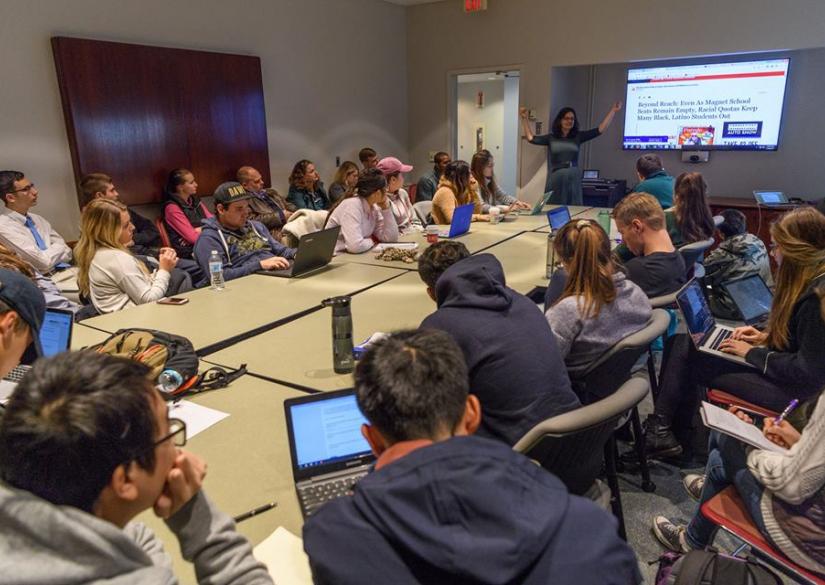
The staff offers a wide range of additional opportunities, thanks to which students achieve success both academically and for personal purposes. Specialized departments are ready to provide additional classes in subjects, career advice, support in research and thesis writing, internship search, and other matters.
A number of academic enrichment programs are available to students: the Honors Program for the strongest students, Learning Communities that unite students based on common interests, Education Abroad programs with internships, research and volunteerism around the world, as well as participation in scientific projects through the Office of Student Research, including grants for summer Research (SURF) and IDEA grants. The Career Development Center conducts individual career consultations, training interviews, as well as job fairs and internships.
Faculties and colleges
Programs are taught on the basis of several scientific faculties-colleges:
- Agriculture, Natural Resources, Healthcare,
- Business
- Stomatology
- Engineering
- Fine arts
- Higher school
- Jurisprudence
- Liberal arts, sciences,
- Medicine
- Education
- Nursing,
- Pharmacy
- Social work.
Scientific achievements
More than 2000 highly qualified researchers work in the research centers at UConn: by attracting undergraduate, graduate and doctoral students, they strive to expand opportunities and improve the quality of life of the global community. Some areas that currently underpin local research are:
- Treatment of the leading causes of death and disability in the U.S., including cancer, obesity, Alzheimer's disease, and substance abuse,
- Improvement of physical, cognitive functions in the aging process,
- Nuclear magnetic resonance technology for the diagnosis of various diseases, including cardiovascular disease, cancer and chronic kidney disease,
- Expanding understanding of autism,
- Understanding the neural mechanisms of language and reading, including in dyslexia,
- The process of language acquisition by deaf children,
- The impact of stress during pregnancy,
- Psychosomatic and bodily interventions to improve emotional well-being.
UConn graduates regularly receive recognition at prestigious national competitions.: In 2026, two university graduates became finalists in the Fulbright Program, which provides grants for individual research projects and teaching abroad.
Things to know about
The UConn campus in Storrs is not only lectures and laboratories, but also vibrant traditions, cozy places and interesting locations.:
- The mascot of the university is a stone statue of Jonathan the husky. Students believe that rubbing Jonathan's nose before an exam is good luck.
- Every year, more than 50,000 guests complete the routes with student guides.
- All excursions start from the Lodewick Center.
- There is a museum of puppet art on the campus.
- The Dairy Bar serves the university's own ice cream.
Accommodation, meals, prices
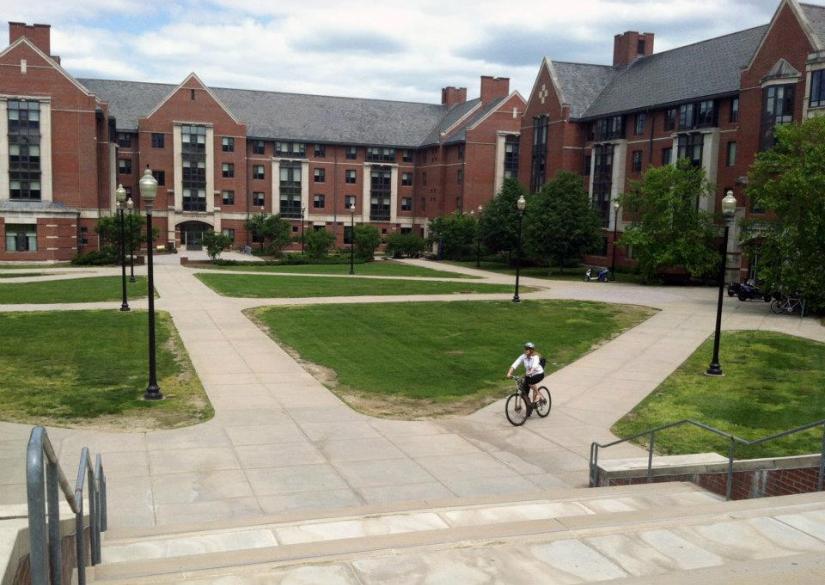
UConn students live in 20 residences offering different types of rooms: standard, suites, apartments. Mostly residential buildings provide double accommodation with full furniture for each tenant: a bed, wardrobe and bedside table, desk and chair. Men and women live on different floors. The common areas in the residences will be bathrooms, kitchens, living areas, and laundries.
Off the main campus, Stamford and Hartford offer furnished, modern apartments with all amenities. There are staff members living next door to the students, who are available around the clock.
University cafes and dining halls are located in or near each residential building, and most of them provide buffet meals throughout the week. Students can choose from an extensive menu that includes gluten-free, vegetarian, and halal dishes.
Activities University of Connecticut
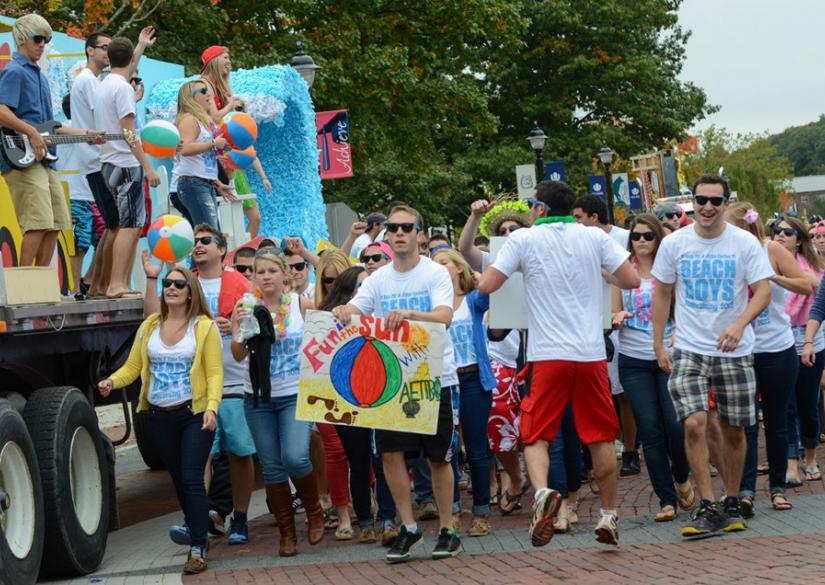
The university honors historical traditions by organizing many thematic events every year: for example, in February there is an Ice Cream Festival, which is prepared by students right at the counter, and at the end of the academic year a graduation ball is organized with performances by all UConn creative teams.
Throughout the year, there are more than 700 thematic communities on campuses, created on the basis of interests, hobbies, and similarities between students. Some of them are:
- 3D printing,
- A cappella Choir,
- Christian youth,
- Anime,
- Step and other dance groups,
- Greek women's and men's communities,
- Photo,
- Literature,
- The Red Cross,
- Irish language, culture,
- Animation,
- Islam,
- Knitting,
- Visual art,
- Artificial intelligence.
Some students devote their free time to charity and volunteering, for example, by participating in a project to build houses for low-income families.
One of the main extracurricular activities at UConn is sports — about 35 teams and more than 1,500 athletes defend the university's honor every year. The range of sports activities includes:
- Archery,
- Basketball,
- Horseback riding,
- Hockey,
- Gymnastics,
- Rugby,
- Figure skating,
- Lacrosse,
- Swimming,
- Football,
- Water polo,
- Volleyball,
- Softball,
- Tennis,
- Running.
For students who would not like to participate in competitions and pay special attention to athletic achievements, amateur clubs are open in the same areas, as well as a shared fitness room, which organizes training in yoga, pilates, dance, martial arts and other areas. The staff conducts regular trips around the region, giving students the opportunity to try sap surfing, mountain biking, rock climbing, canoeing and kayaking, and camping overnight.
Advantages
- The largest university in the State of Connecticut,
- Classification R1: "Very high research activity",
- Sports competitions at the NCAA Division I level,
- Four regional campuses and one main campus,
- It is included in the list of the best regional universities in the USA according to US News & World Report 2025,
- Accreditation by the New England Higher Education Commission,
- No. 3 in the list of 58 universities by graduation time: students complete the program either on time or just a little later than the deadline,
- 'Multinational student community from more than 110 countries.
Facilities and equipment at University of Connecticut
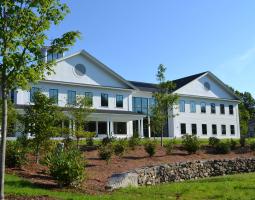
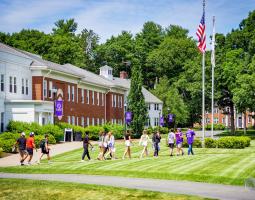
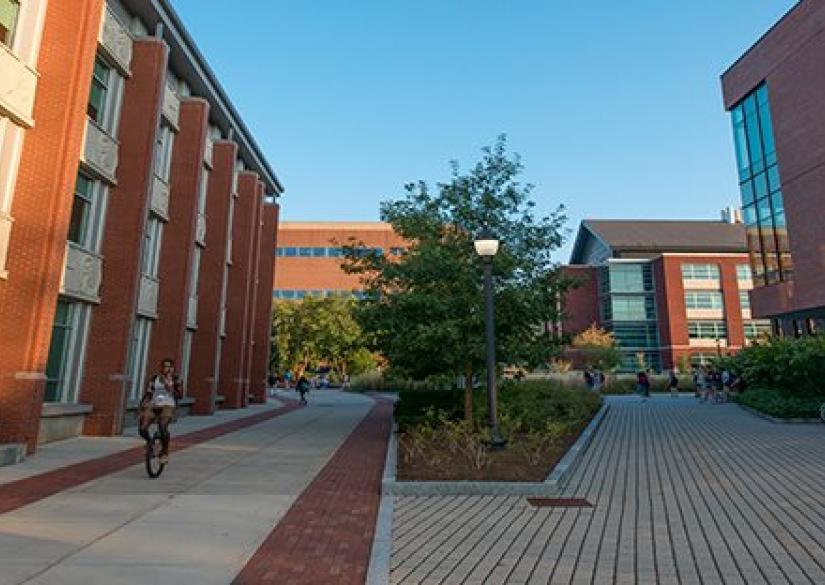
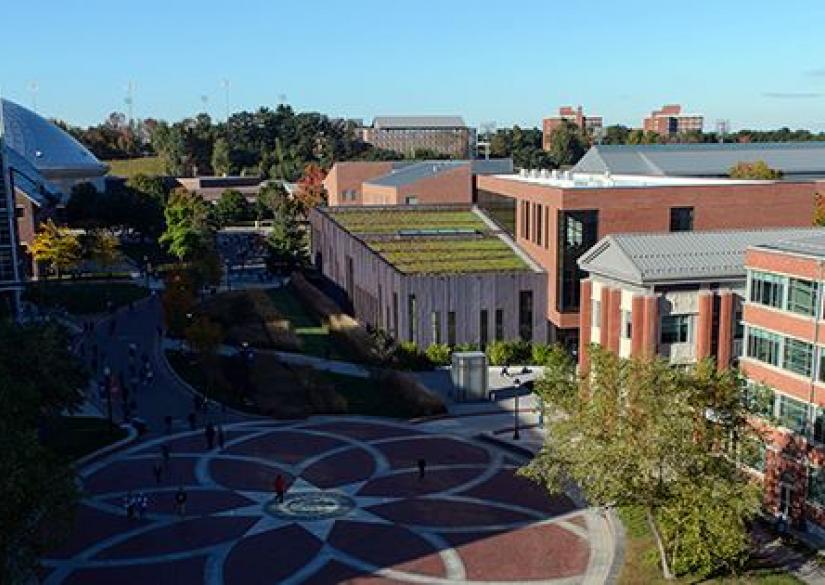
UConn's main campus is located in the heart of downtown Storrs, halfway between New York City and Boston. The university's rich, diverse, and inclusive community is supported by more than 700 clubs and organizations, 24 NCAA Division I athletic teams, seven cultural centers and programs, five theaters, and three museums. The learning grounds boast an extensive library, which ranks first among the state's university libraries, housing not only literary works and scientific resources, but also collections on music and even pharmacy.
Since the main campus is located in a rural area, it has facilities that allow it to be practically self-sufficient. All heating on campus is steam, where possible, sidewalks have been laid over the underground connections to keep snow out. In 2005, a cogeneration plant was put into operation, which generates most of the electricity for the campus and uses waste steam for the campus' central heating system.
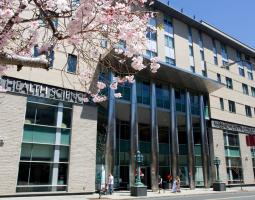
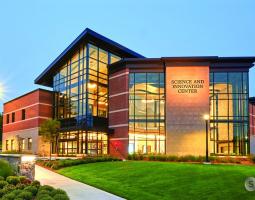
UConn's four regional campuses are in Avery Point, Hartford, Stamford, and Waterbury. Each of the academic sites has all the necessary infrastructure for the educational, sports, creative and social development of students: specialized laboratories and studios, computer and lecture halls, self-study and additional classes, sports facilities. All campuses have residential buildings, medical centers, administrative offices.
Admission dates and extra charges
The academic year includes two semesters.:
- Autumn: August-December,
- Spring: January-May.
From the end of May to the end of August, the university continues to operate, as classes in some US higher education programs are conducted during these months.
The academic schedule of students consists of five academic days per week. Rest is provided on holidays and weekends, during seasonal vacations.
Additional expenses include:
- Registration, administrative and international fees,
- Accommodation, meals and housing expenses,
- Some extracurricular activities, student community gatherings, external events,
- Additional academic support and opportunities not included in the curriculum,
- Medical insurance,
- Personal educational materials,
- Personal expenses.
Enrolment process
The admissions committee awaits a completed application, a paid registration fee and the required documents, after which it schedules an interview and possible testing. Applicants who have passed the introduction and verification stage receive an official invitation to enroll and assistance in obtaining a US visa.
Applications are considered according to the principle of holistic assessment: for both first—year applicants and transitioning students, the whole set of information is taken into account - academic performance and its dynamics, essays, extracurricular activities, leadership qualities and personal achievements, rather than one separate indicator. The provision of standardized test results (SAT/ACT) and letters of recommendation is optional. Smapse specialists will accompany you at all stages of admission.
Perspectives
According to the UConn Career Development Center, among graduates in 2025, 91% either got a full-time job by the end of the calendar year or continued their graduate studies during the same period; the average starting salary of a graduate rose to $67,500 (for the 2022 graduate, these figures were 90% and $ 55,830).
The university cooperates with local organizations, thanks to which more than 700 companies actively recruit students from among UConn students every year.
Entry requirements, how to apply, what is required to enrol
Foreign applicants must have a passport, medical insurance, visa or residence permit in order to study in the United States. To enroll in higher education programs, you must provide:
- Academic certificates from previous places of study: certificate equivalent to grades 9-12 of an American school, Bachelor's degree, Master's degree, Certificates of preparatory courses in core subjects, including English,
- Personal essay,
- Two letters of recommendation,
- Official transcripts,
- The results of one of the recognized language tests: TOEFL (from 79), IELTS (from 6.5), Duolingo (from 110) or equivalent.
Some specialties may require a candidate to pass entrance tests and have a portfolio.
Scholarships University of Connecticut
More than 60% of UConn undergraduate students receive assistance in the form of grants and scholarships. Scholarships are mostly awarded based on academic merit, while grants are awarded based on special criteria. Students can also benefit from financial assistance, which is determined by preferential criteria, or the work-study program.
Every year, the university allocates more than $261 million in non-refundable aid (grants and scholarships) to support students. First—year applicants are automatically considered for most academic merit scholarships awarded by the university - no separate application is required for this.
Literature and references
-
University of Connecticut — Wiki

-
University of Connecticut (Uconn) - Profile, Rankings — U.S. News & World Report
-
University of Connecticut — Niche
-
University of Connecticut : Rankings, Fees & Courses Details — Top Universities
-
78 University of Connecticut — Forbes
-
University of Connecticut — World University Rankings THE
-
University of Connecticut | Research, Education, Innovation — Britannica
-
University of Connecticut — Data USA
Institution on the map
Residence permits, citizenship and other services
- Guardianship services during the studies
- Student supervision
Review about University of Connecticut
Recommendations on when to apply
| Language courses, schools and children's language camps | Primary and secondary education - private schools | Preparation programmes for entering universities - higher education | Higher education (after completing accredited programs A-level, IB, High School) - Bachelor, Master, MBA |
| - we recommend to apply 6-9 months before the start of the course (some camps and schools offer discounts for early booking or for lengthy study programs) - there are some very popular and high demand children's camps, where the applications need to be submitted 1 year in advance (in particular Switzerland , Great Britain , USA , Canada , Austria) | - we recommend to apply one year before the start of the training program, - some schools have a specific time frame (September-November - please specify an individual school) - some schools require tests in several stages (UKISET, internal tests of the school: English, mathematics, logics, subjects, interview, some require a personal visit) | - we recommend to apply one year before the start of the program, - for Foundation and Pathway programs, IELTS and TOEFL certificates are usually required, respectively | - recommended submission one year before the start of the program, - the deadline normally closes in January, for TOP HEIs and, as a rule, in March in other universities - for a bachelor, a Foundation or Pathway preparatory program a completed A-level, IB, High School + IELTS / TOEFL are required - for Masters you need a graduated higher education, in some cases you need a pre-Masters program - MBA requires completed higher education, work experience preferably at least 2-3 years, etc. |