University College London UCL

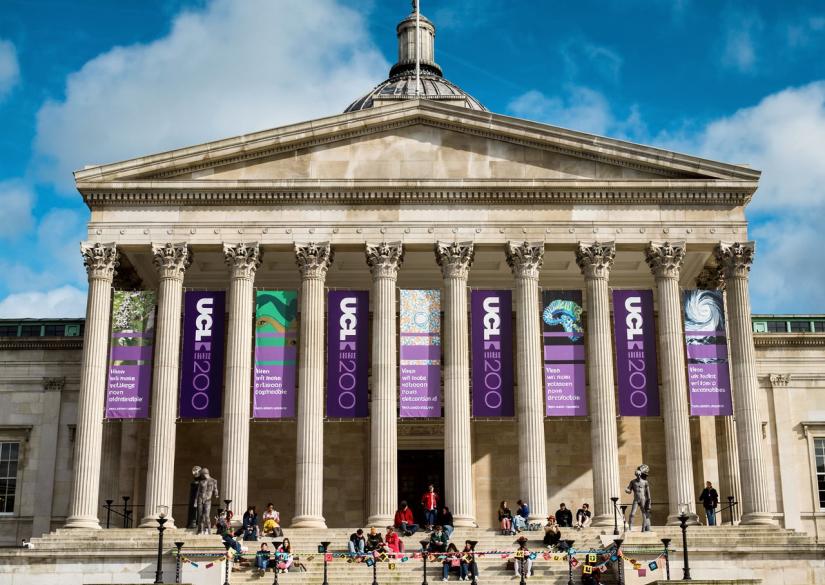
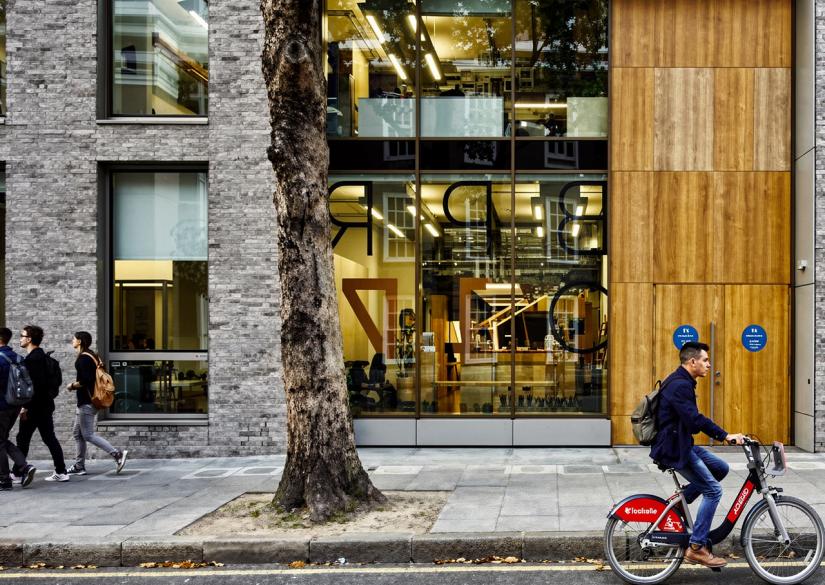





Programs and prices, tuition fees in University College London UCL


Short information: A one-year course of preparation for university education, including language and subject modules.
About the program - The preparatory program is available in two ways:
- Humanities;
- Scientific and engineering specialties.
The course provides for deepening students' knowledge of relevant disciplines within the chosen specialty and improving English for academic purposes.
Students Age: 17+.
Start Dates: September, January.
Admission requirements: IELTS 5.0 +.
Learning outcomes:
- Development of language skills;
- Development of learning skills;
- Adaptation to the British educational environment.
Tuition fees: 6000 pounds per trimester.
Short information: The course of prestigious higher education for students wishing to become specialists in specific fields of knowledge, from the humanities to medicine.
About the program:
- The program includes theoretical and practical blocks;
- In the first courses, undergraduate students are offered mainly to study general disciplines within the chosen direction;
- The last year of training is practical. It provides for the development of students' specific professional skills necessary for effective work in a particular field;
- Bachelor's programs are offered in college at all 10 faculties.
Students age: 18+.
Start dates: September.
Requirements for admission:
- IELTS 6,5 - 7,5 (TOEFL 92 - 100);
- IB or GCSE;
- A-level;
- Interview.
The result of training:
- Bachelor's degree;
- Career prospects in Britain and other countries in English Group.
Tuition fees: 15,000 GBP, medicine faculty- from 29,000 GBP.
Short information: The profile postgraduate course of research and academic direction.
About the program:
- Practically oriented program for those who want to focus on research and / or scientific activity is characterized by intensity;
- It provides a large number of hours for the implementation of independent and collective projects, internship in the profile;
- The Master's program gives students a fundamental theoretical basis with an emphasis on the research direction in the chosen field of activity.
Students age: 21+.
Start dates: September.
Requirements for admission:
- IELTS 6,5+ (or TOEFL 92+);
- Academic / professional references;
- Bachelor's degree;
- Resume;
- Motivation letter;
- Interview.
The result of the training:
- A worldwide diploma;
- Career prospects International level;
- The opportunity to continue academic development at the doctoral studies at the University of London.
Tuition fees: 16,000 pounds.
Description of University College London UCL
- University: University College London (UCL),
- Global standing: ranked 8th in the QS World University Rankings 2027 and 2nd in the UK for research power,
- History: founded in 1826 as London's first university and the first in Britain to admit students of all faiths and backgrounds, including women alongside men,
- Community: around 65,000 students and staff across the Bloomsbury and East London campuses,
- Achievements: 33 Nobel Prize laureates among its alumni and current and former staff.
University College London offers an extensive range of undergraduate and postgraduate programs across 11 faculties, attracting students and academics from around the world. UCL's teaching is supported by research, giving students direct access to current discoveries and ideas.
The 11 faculties cover a broad range of academic disciplines:
- Arts & Humanities,
- Bartlett (Built Environment),
- Brain Sciences, including psychology, psychiatry, neurology, ophthalmology, audiology and related sciences,
- Engineering Sciences,
- Institute of Education,
- Laws,
- Life Sciences,
- Mathematical & Physical Sciences,
- Medical Sciences,
- Population Health Sciences,
- Social & Historical Sciences.
UCL is consistently ranked in the QS World University top 10. It is particularly distinguished in education, where it has ranked No. 1 worldwide since 2014, medicine, where it ranks 6th in the world and No. 1 in London, and sustainability, where it ranks 3rd in the QS Sustainability Rankings 2026. The university ranks in the global top 10 in 12 subject areas, including two first-place rankings.
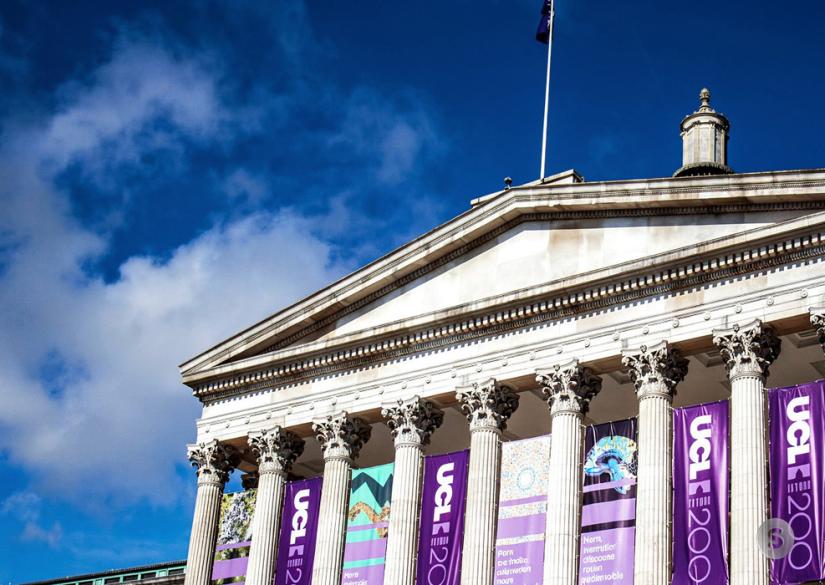
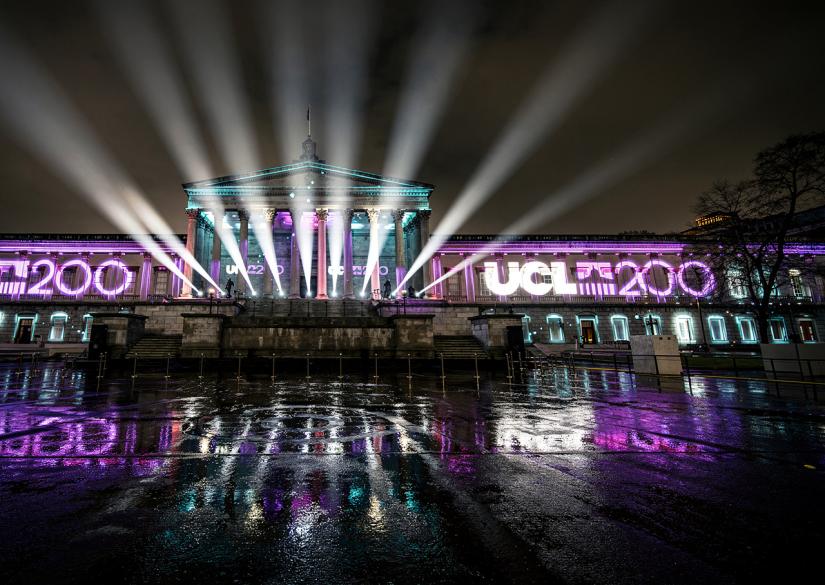
Founded in 1826, UCL was the first university in London and the first in Britain to admit students regardless of faith or social background. The university celebrated its 200th anniversary in 2026. Across two centuries, 33 Nobel Prize laureates have been associated with UCL as alumni or staff, with at least one Nobel Prize winner linked to UCL in every decade since the awards began in 1901.
Educational process
UCL combines research with teaching, giving students access to current ideas and the academics who develop them. All undergraduate courses are taught in person. UCL does not offer full-time undergraduate courses delivered entirely online.
The academic year runs from September to June. Study structures vary by faculty and program and may combine lectures, seminars, laboratory work, tutorials and independent study. Students are expected to undertake substantial self-directed learning, supported by UCL's libraries and digital resources.
UCL encourages study across disciplines. Its links with London's industries, hospitals, cultural institutions and research centers give students access to guest lectures, collaborative projects and placement opportunities during their degrees.
Faculties and colleges
UCL is structured around 11 faculties, each bringing together multiple departments and research centers. This structure gives students access to subject-specific expertise and opportunities for cross-disciplinary study.
- Arts & Humanities: ranked 8th in the Times Higher Education World University Rankings 2026,
- Bartlett Faculty of the Built Environment: covers architecture, planning, urban design and related fields,
- Faculty of Brain Sciences: brings together psychology, psychiatry, neurology, ophthalmology, audiology and related neuroscience disciplines,
- Faculty of Engineering Sciences: covers a broad range of engineering and applied science disciplines,
- UCL Institute of Education: ranked No. 1 worldwide for Education in the QS World University Rankings every year since 2014,
- Faculty of Laws: combines theoretical rigor with legal practice,
- Faculty of Life Sciences: covers molecular biology, cell biology, ecology, genetics, biochemistry and related fields,
- Faculty of Mathematical & Physical Sciences: includes mathematics, physics, chemistry, astronomy, statistics and earth sciences,
- Faculty of Medical Sciences: ranked 6th in the world for Medicine in the QS Rankings. UCL has educated doctors and scientists since 1834,
- Faculty of Population Health Sciences: includes seven institutes focused on understanding and improving health worldwide,
- Faculty of Social & Historical Sciences: covers anthropology, archaeology, economics, history, political science, sociology and related disciplines.
Scientific achievements
UCL has a record of achievement in research, education and public life:
- 33 Nobel Prize laureates among its alumni and current and former staff, with at least one prize linked to UCL in every decade since the award began in 1901,
- Recent Nobel laureates include Professor Geoffrey E. Hinton, who received the Nobel Prize in Physics 2024 and founded UCL's Gatsby Computational Neuroscience Unit, Sir Demis Hassabis, a UCL PhD alumnus and co-founder of Google DeepMind who received the Nobel Prize in Chemistry 2024, and Professor Philippe Aghion, a former UCL Professor of Economics who received the Nobel Prize in Economic Sciences 2025,
- 8th in the QS World University Rankings 2027,
- 2nd in the UK for research power in the Research Excellence Framework 2021,
- University of the Year 2024 in The Times and Sunday Times Good University Guide,
- No. 1 in the UK and 3rd globally in the QS Sustainability Rankings 2026,
- Ranked in the global top 10 in 12 subject areas in the QS by Subject 2026 rankings, including two first-place rankings,
- No. 1 globally for Education in the QS World University Rankings every year since 2014,
- 6th in the world for Medicine and No. 1 in London in the QS Rankings.
Things to know about
- UCL was founded in 1826 as London's first university. It was the first in Britain to admit students regardless of religion, class or background and the first to admit women alongside men,
- UCL celebrated its 200th anniversary in 2026 with a year-long program of events, exhibitions and public activities,
- UCL's Bloomsbury campus borders the British Museum, and the university's grounds have been used as a filming location for films, television series and music videos,
- The philosopher and social reformer Jeremy Bentham has a longstanding connection to UCL. His preserved remains have been kept at the university since the 19th century,
- UCL's student radio station, Rare FM, is run entirely by students,
- UCL keeps Wednesday afternoons free of scheduled teaching so students have time for sports, societies and other activities,
- UCL East opened in 2022 at Queen Elizabeth Olympic Park in Stratford and is the university's newest campus,
- UCL makes a substantial annual contribution to the UK economy.
University destinations
UCL graduates enter employment or further study across a wide range of sectors.
UCL's central London location provides access to careers in finance and banking, law, healthcare and medical research, technology and artificial intelligence, media and creative industries, government, public policy and international organizations. The university also has links with major London hospitals.
UCL's entrepreneurship support provides resources and professional networks for graduates who choose to start their own businesses.
Accommodation, meals, prices
UCL Accommodation offers halls and room types in central London and at UCL East in Stratford. All accommodation is self-catered. Meals are not provided as standard, but kitchens are available in all residences.
New students are given priority in the allocation process. Available room types include:
- Single rooms with shared bathroom and kitchen facilities,
- Single ensuite rooms with a private bathroom and shared kitchen,
- Studios with a private bathroom and kitchenette,
- Duplex ensuite rooms,
- Double and twin rooms,
- Accessible studios,
- One- and two-bedroom family flats.
A new UCL hall opened in Canary Wharf in 2026, adding 1,672 beds across two towers and offering several room types. Accommodation costs vary by hall and room type.
Rent includes Wi-Fi, basic contents insurance, utilities, cleaning of communal areas and maintenance. Students who prefer to live outside UCL halls may choose intercollegiate halls run by the University of London or private accommodation in London.
Subjects, specialties
Activities University College London UCL
UCL offers a varied student life. Students become members of Students' Union UCL and gain access to one of the largest student communities in the UK.
Students' Union UCL runs more than 300 clubs and societies covering drama, music, fine arts, politics, culture, entrepreneurship, volunteering and other interests. Activities and facilities include:
- UCL's student radio station, Rare FM,
- The Bloomsbury Theatre, a professional campus venue for theater, live music and comedy,
- TeamUCL, which offers more than 60 sports, including surfing, lacrosse, gliding and judo,
- Bloomsbury Fitness gym and access to Somers Town Community Sports Centre, Shenley Sports Ground and Hackney Marshes,
- Organized social events, including parties, boat trips on the Thames, pop-up cinemas and games nights,
- Students' Union cafés, bars and shops across the Bloomsbury campus.
UCL keeps Wednesday afternoons free of scheduled teaching so students have time for social, sports and extracurricular activities. The central London location also gives students access to museums, galleries, theaters, events and networking opportunities.
Advantages
- UCL is consistently ranked among the world's top 10 universities in the QS World University Rankings 2010–2027. It ranks 8th globally in 2027 and 2nd in the UK for research power in the Research Excellence Framework 2021,
- The university has 11 faculties covering a broad range of undergraduate and postgraduate programs, specializations and interdisciplinary combinations,
- 97% of undergraduate graduates are employed within the first six months of completing their bachelor's degree. The figure for postgraduate graduates is 98.8%,
- UCL attracts students and researchers from around the world and has a multicultural academic community,
- UCL's educational programs combine research and teaching to develop theoretical knowledge and practical skills,
- UCL Careers supports current students and recent graduates with career planning, applications, internships and employment opportunities,
- UCL makes a substantial annual contribution to the economies of London and the wider UK.
Facilities and equipment at University College London UCL
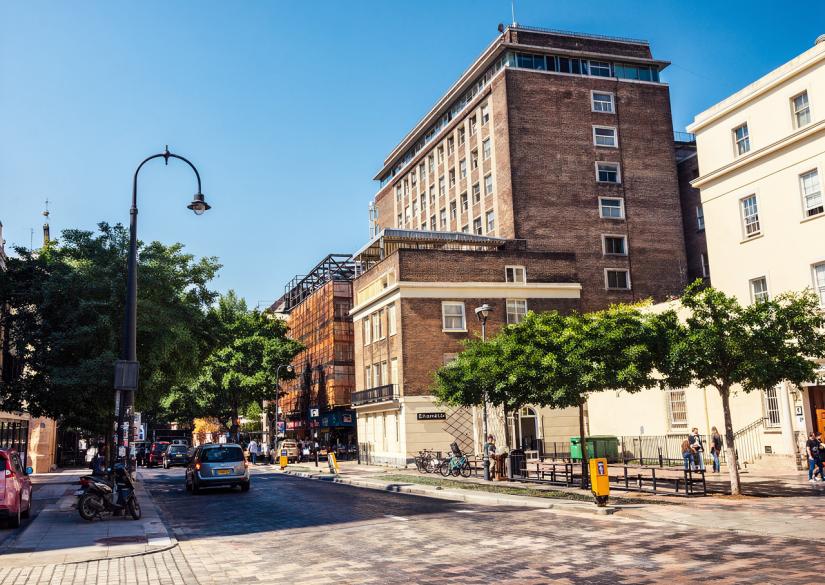
UCL's estate includes more than 200 buildings in London and elsewhere, supporting around 65,000 students and staff. The university has two main campuses: the historic Bloomsbury campus in central London and UCL East, which opened in 2022 at Queen Elizabeth Olympic Park in Stratford. UCL School of Management is based at Canary Wharf.
The Bloomsbury campus is near the British Museum, Google's London offices, the BBC, Bloomsbury Publishing and several UK research institutions and hospitals.
Key campus facilities include:
- A library system across 17 sites, with more than 1.5 million books, journals and electronic resources,
- Museums, galleries and art spaces accessible to students,
- Bloomsbury Fitness gym on the main campus,
- Somers Town Community Sports Centre, a 15-minute walk from Bloomsbury,
- A sports ground in Shenley and access to football pitches at Hackney Marshes,
- Students' Union facilities, including four cafés, four bars and a shop on the Bloomsbury campus,
- The Bloomsbury Theatre, which hosts theater, live music and stand-up comedy,
- Study spaces, recreation areas and student service centers across both campuses.
UCL has committed to achieving net-zero carbon across its estate.
Admission dates and extra charges
All undergraduate programs at UCL begin in September. There is no January intake, and the academic year typically runs from September to June.
Students in certain programs may incur additional costs beyond tuition. Examples include specialist equipment or materials for Architecture and Fine Art courses and fieldwork costs for Earth Sciences and Archaeology. These costs vary by department and course.
Enrolment process
Undergraduate applications to UCL are submitted through UCAS. All courses start in September, and there is no January intake.
Application deadlines depend on the course. Medicine applicants apply earlier than applicants to other undergraduate programs.
Applicants may apply to more than one course at UCL, with each course using one of their five UCAS choices. UCL uses the UCAS personal statement in its assessment. An additional personal statement is requested only when a course requires one.
International students whose qualifications are not accepted for direct undergraduate entry may apply for UCL's Undergraduate Preparatory Certificate. This foundation program prepares students for entry into UCL undergraduate degrees, and applications are submitted directly rather than through UCAS.
Specialists at Smapse will support you at every stage of the admissions process, from choosing a program to submitting the application.
Enrolment statistics
UCL is one of the most competitive universities in the UK. During the 2025 admissions cycle, it received nearly 91,000 undergraduate applications through UCAS, placing it among the British universities receiving the most applications.
Students and academic staff come from more than 150 countries. The university has approximately 65,000 students and staff across its campuses.
Perspectives
A UCL degree supports progression into employment or further study across a wide range of fields.
UCL Careers provides personalized support to current students and recent graduates. It helps them explore career paths, develop skills, prepare applications and find internships and graduate positions. UCL's central London location gives students access to organizations in finance, law, science, technology, medicine, media, policy and the arts.
UCL also supports entrepreneurship through programs for students who want to start a business or develop employment skills.
International graduates may use the UK's Graduate Route visa to remain in the UK and work or look for work for up to two years after completing their studies.
Entry requirements, how to apply, what is required to enrol
UCL accepts a range of qualifications for undergraduate entry. The university does not use UCAS tariff points and instead assesses specific grades and subjects.
- A levels: standard offers range from A*A*A to ABB based on three A levels. General Studies, Critical Thinking and Global Perspectives are not accepted,
- International Baccalaureate Diploma: accepted for all courses. An A*A*A equivalent requires 40 points overall with 20 points in three Higher Level subjects. Offers typically range from 34 to 40 points overall,
- Scottish qualifications: three Advanced Highers are required, or two Advanced Highers plus three Highers in five distinct subjects,
- Access to HE Diploma: 60 credits overall, with at least 45 at Level 3. This qualification is not accepted by all courses,
- BTEC Level 3 Extended Diploma: accepted for some courses, depending on their individual requirements,
- Cambridge Pre-U: accepted, with A* equivalent to D1 or D2, A to D3 and B to M1,
- International students: country-specific entry requirements apply. UCL also offers the Undergraduate Preparatory Certificate, an international foundation program for students whose home qualifications are not accepted for direct undergraduate entry.
Contextual offers are available to eligible applicants through the Access UCL scheme.
Scholarships University College London UCL
UCL offers scholarships and financial support for UK and international students at undergraduate and postgraduate levels.
- A Scholarships Finder tool helps students identify awards for which they may be eligible,
- Financial support is available for undergraduate students, postgraduate taught students, postgraduate research students and those in PGCE and teacher training programs,
- US students may be eligible for US Federal Financial Aid, including federal loans and grants,
- Architecture students in RIBA Part 1 and Part 2 programs have access to specific funding routes,
- Individual academic departments may offer additional funding.
Institution on the map
Residence permits, citizenship and other services
- Guardianship services during the studies
- Student supervision
Review about University College London UCL
Dumitru I., Romania
- Graduated from: ABBEY COLLEGE CAMBRIDGE
- Studying program: A- Level, Upper Sixth
- Subjects: Biology - A, Chemistry - B, Mathematics - A, Physics - A
- Received: University College London (UCL)
- Program: Biological Sciences
Abbey Cambridge is not just a college, it's a very large family, and that's exactly what you're looking for when you leave your family in your home country. Amazing individual support is available every day, and teachers and educators are always ready to help you, they always answered all the questions that I had. As the head of the student council, I really enjoyed helping to organize a variety of activities and discussed solutions to problems occurring during the school year, it was an amazing time! Abbey Cambridge helped me develop as a personality and achieved the highest results.
Recommendations on when to apply
| Language courses, schools and children's language camps | Primary and secondary education - private schools | Preparation programmes for entering universities - higher education | Higher education (after completing accredited programs A-level, IB, High School) - Bachelor, Master, MBA |
| - we recommend to apply 6-9 months before the start of the course (some camps and schools offer discounts for early booking or for lengthy study programs) - there are some very popular and high demand children's camps, where the applications need to be submitted 1 year in advance (in particular Switzerland , Great Britain , USA , Canada , Austria) | - we recommend to apply one year before the start of the training program, - some schools have a specific time frame (September-November - please specify an individual school) - some schools require tests in several stages (UKISET, internal tests of the school: English, mathematics, logics, subjects, interview, some require a personal visit) | - we recommend to apply one year before the start of the program, - for Foundation and Pathway programs, IELTS and TOEFL certificates are usually required, respectively | - recommended submission one year before the start of the program, - the deadline normally closes in January, for TOP HEIs and, as a rule, in March in other universities - for a bachelor, a Foundation or Pathway preparatory program a completed A-level, IB, High School + IELTS / TOEFL are required - for Masters you need a graduated higher education, in some cases you need a pre-Masters program - MBA requires completed higher education, work experience preferably at least 2-3 years, etc. |