Toronto Summer School





Programs and prices, tuition fees in Toronto Summer School


Summer course on Artificial Intelligence
- Age of students — 15-18 years,
- Dates — July,
- The studying period is two weeks.
You can understand modern technologies, assess the opportunities of artificial intelligence and master its basic concepts, and touch the real cases of large companies during the summer course in Toronto. Through team projects and interactive sessions, students develop coding and analysis skills in preparation for university admission and the start of an IT career.
The curriculum includes four main modules:
- Introduction to Programming and AI,
- Machine learning and AI applications,
- Data science and artificial intelligence development,
- An AI project and software development.
The first three modules are related to theoretical studying and training exercises, and the last one is related to the full—fledged development of proprietary software based on artificial intelligence. The total academic workload for two weeks is 40 hours, in addition to which sessions with invited specialists and individual meetings with teachers are held.
Summer course in Psychology
- Age of students — 15-18 years,
- Dates — July,
- The studying period is two weeks.
Toronto is considered one of the best cities in Canada, partly because it pays a lot of attention and professional resources to the mental health and well—being of citizens. During the specialized summer course, students will learn relevant information that relates to the basic concepts of cognitive psychology, behavioral science, and mental health. The program provides students with the opportunity to gain a deeper understanding of human behavior and prepares them for future academic research in psychology and social sciences.
The course includes several modules:
- Cognitive Psychology and Neuroscience,
- Behavioral Psychology,
- Family Psychology,
- Interpretation of behavior: how to avoid cognitive biases in research,
- Stereotypes, prejudice, discrimination,
- Social psychology and group behavior, a research project in psychology.
For two weeks, students attend theoretical and practical classes, seminars with invited specialists, individual sessions with teachers — the total academic load reaches 40 hours.
Medicine
- Age of students — 15-18 years,
- Dates — July,
- The studying period is two weeks.
Students interested in medical sciences and careers in this field will gain a theoretical background in topics such as human anatomy, biomedical sciences, and patient care. Along with lectures, students attend workshops where teachers model everyday medical situations: students will try themselves as doctors and nurses, and discuss world health news with teachers.
Course modules are:
- Medical research: from laboratory to clinical practice,
- Functional genomics, epigenetics,
- Anatomy, histology,
- Physiology of the cardiovascular and respiratory systems,
- Physiology of the musculoskeletal system, endocrine system,
- Neuroscience and Neuropsychology,
- Pharmacology,
- Emergency medicine.
Students will also have to present their own medical research — this is the most practice-oriented stage, where students explore real medical cases, focus on the diagnosis and treatment of the patient. This module develops critical thinking, problem solving skills, and the practical application of medical concepts in real-world healthcare scenarios.
International Relations
- Age of students — 15-18 years,
- Dates — July,
- The studying period is two weeks.
During the course, students will study topics such as international law, conflict resolution, and global governance. The practice in the program is planned in the format of debates and discussions. In the course of both theoretical and practical lessons, students prepare for future studies at university programs in the field of global politics or diplomacy.
Studying modules in this directions are:
- Introduction to international relations,
- Competing "twins": realism and liberalism,
- The role of ideas in international relations, the UN and its opponents,
- Global governance and international law,
- Diplomacy and conflict resolution,
- The role of technology in international relations,
- Global trade and economic interdependence,
- Climate diplomacy, environmental cooperation.
Over two academic weeks, students will attend 40 hours of academic classes, sessions with invited specialists, and individual meetings with teachers if necessary.
Business Management
- Age of students — 15-18 years,
- Dates — July,
- The studying period is two weeks.
During the course, students explore topics such as entrepreneurship, corporate strategy, and leadership in the global economy. Teachers focus on analyzing real business cases, develop students' critical thinking, teach them how to make decisions, and prepare them for future academic and career achievements.
The curriculum consists of modules — the total academic load is 40 academic hours per two weeks.:
- Introduction to Business Management,
- Organizational behavior,
- Brand Management,
- Strategy,
- Operational excellence,
- Business and society,
- Conversation,
- Financial reporting and analysis.
Summer Engineering Course
- Age of students — 15-18 years,
- Dates — July,
- Course duration — two weeks,
- Cost of two weeks — from £4495 (day), from £5995 (boarding) (official website).
The two-week engineering course offers students an in-depth understanding of the fundamentals of engineering itself and related sciences, practical classes in specialized laboratories, and meetings with industry leaders. During the course, students will improve their existing knowledge and acquire new skills, thereby preparing for admission to engineering programs at universities and colleges.
The academic workload is 40 hours over two weeks — evenly distributed across several modules:
- Fundamentals of engineering design,
- Mechanics and structural design,
- Electrical and computer systems,
- Engineering solutions in ecology and sustainable development,
- Materials science and manufacturing technologies,
- Innovation and advanced technologies.
If they wish, students create an individual project that will add to their portfolio and give them additional advantages when applying.
Description of Toronto Summer School
- Location: Toronto, Canada,
- Age of students: 15-18 years old,
- Duration of studying: two weeks,
- Language of instruction: English,
- Type of study: mixed.
Toronto Summer School is a seasonal school offering courses for students aged 15-18. The two-week programs prepare high school students for entering universities and colleges by providing high-quality academic knowledge and practical skills in six scientific fields to choose from.
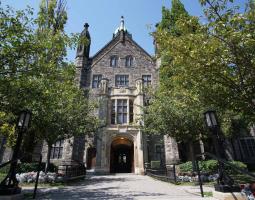
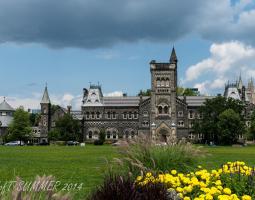
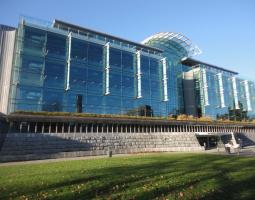
The courses are taught on the campus of one of the best universities in the country and the world — the University of Toronto. Students have access to its academic, administrative, and sports infrastructure, as well as comfortable residences, but there is no direct connection between the summer school (and the guarantee of enrollment) and the university.
In addition to the curriculum, which includes not only classroom activities, but also seminars with invited speakers, students can enjoy a diverse leisure program with sightseeing in Toronto, entertainment and cultural events.
Accommodation, meals, prices
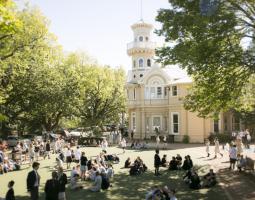
Accommodation is organized on the territory of one of the four colleges of the University of Toronto. Each residential building is located near academic buildings and is close enough to the city center to provide comfortable rooms with furniture, Wi-Fi and access to common amenities: bathrooms, recreation areas, laundries. Boys and girls are placed separately.
The program includes a daily breakfast and dinner served in the main dining room. The kitchen staff is familiar with many dietary, medical, and religious dietary restrictions, so they can easily provide alternative meals upon request.
Activities Toronto Summer School
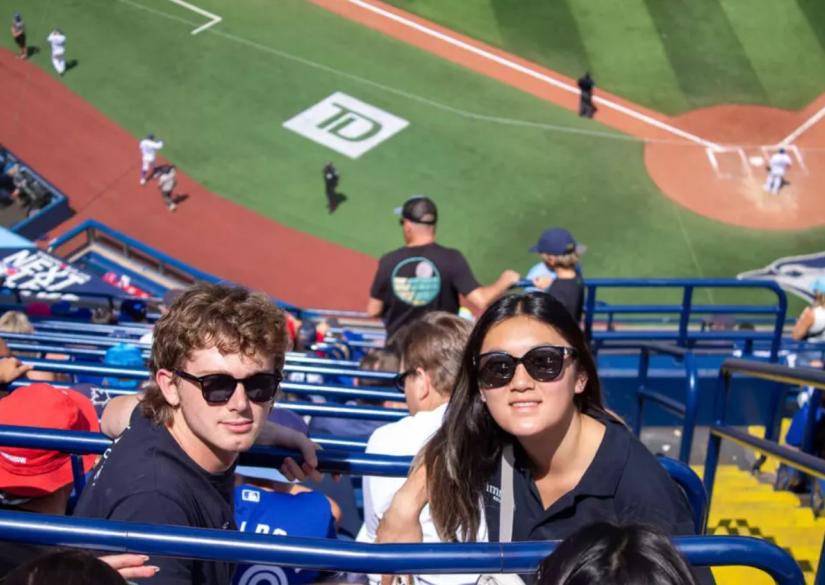
The cultural and entertainment part of the summer program in Canada includes on-campus events and field trips where students get to know the features and attractions of Toronto.
The list of sightseeing places must include:
- Niagara Falls,
- CN Tower, Royal Ontario Museum,
- Queens Park.
Sports games, parties, movie nights and other events are organized on the campus for students, bringing together a multinational team. The summer academic season ends with a graduation ball with the presentation of personal certificates and a gala dinner.
Advantages
- BAC accreditation,
- Six scientific fields to choose from,
- Qualified teachers with advanced scientific degrees, invited speakers with many years of experience in the industry,
- Individual support is included in the curriculum,
- Small studying groups of up to 12 people, a rich leisure program,
- Many services are included in the tuition fee.
Facilities and equipment at Toronto Summer School
Summer courses take place on the main campus of the University of Toronto — St George’s Campus: lecture halls, specialized laboratories, a library, recreation areas, and sports facilities have been prepared for studying.
Admission dates and extra charges
The courses last two weeks and usually take place in July. The flexible schedule allows students to devote enough time to academic preparation and exploring the sights of Toronto, as well as entertainment: classes are conducted in the morning, and leisure activities are organized in the afternoon and evening.
Students choose a suitable learning format for themselves: with or without accommodation.
The tuition with accommodation covers the costs of the following services:
- 13 nights in the residence, two meals a day,
- 40 hours of academic classes, necessary educational materials,
- All extracurricular activities, including guided tours and sessions of invited specialists,
- Graduation certificate, letter of recommendation from the teacher.
Additional expenses will be required for flights, transfers, visa services and other personal expenses.
Enrolment process
Admission process:
- Filling out the online form (subject to available places on the chosen course),
- Submitting the application and the required documents,
- Paying part or all of the course fee,
- Receiving information about arriving in the country and the necessary assistance with obtaining a visa,
- Arriving on campus by the start of classes.
Perspectives
Professional courses prepare students for their academic path and future careers, providing the opportunity to gain practical experience under the guidance of industry experts. At the end of the educational program, international teenagers receive certificates that they can use to strengthen their portfolio of achievements - such documents can add additional points when entering foreign schools and universities.
Entry requirements, how to apply, what is required to enrol
To study in Canada, foreign applicants need a passport, a visa or a residence permit, and medical insurance. The courses do not impose strict requirements on applicants other than age — children aged 15-18 are admitted for study. A confident level of English — from B2 — will be a plus, but the school will provide language support if needed.
Scholarships Toronto Summer School
You can win a full or partial scholarship in an essay competition, and international participants from 15 to 18 years old will have a wide range of topics to choose from.
Institution on the map
Residence permits, citizenship and other services
- Guardianship services during the studies
- Student supervision
Review about Toronto Summer School
Recommendations on when to apply
| Language courses, schools and children's language camps | Primary and secondary education - private schools | Preparation programmes for entering universities - higher education | Higher education (after completing accredited programs A-level, IB, High School) - Bachelor, Master, MBA |
| - we recommend to apply 6-9 months before the start of the course (some camps and schools offer discounts for early booking or for lengthy study programs) - there are some very popular and high demand children's camps, where the applications need to be submitted 1 year in advance (in particular Switzerland , Great Britain , USA , Canada , Austria) | - we recommend to apply one year before the start of the training program, - some schools have a specific time frame (September-November - please specify an individual school) - some schools require tests in several stages (UKISET, internal tests of the school: English, mathematics, logics, subjects, interview, some require a personal visit) | - we recommend to apply one year before the start of the program, - for Foundation and Pathway programs, IELTS and TOEFL certificates are usually required, respectively | - recommended submission one year before the start of the program, - the deadline normally closes in January, for TOP HEIs and, as a rule, in March in other universities - for a bachelor, a Foundation or Pathway preparatory program a completed A-level, IB, High School + IELTS / TOEFL are required - for Masters you need a graduated higher education, in some cases you need a pre-Masters program - MBA requires completed higher education, work experience preferably at least 2-3 years, etc. |