Scuola Superiore di Studi Universitari e di Perfezionamento Sant'Anna (SSSUP) di Pisa


Programs and prices, tuition fees in Scuola Superiore di Studi Universitari e di Perfezionamento Sant'Anna (SSSUP) di Pisa


Specify information on the program on the official site of an educational institution.
Specify information on the program on the official site of an educational institution.
Description of Scuola Superiore di Studi Universitari e di Perfezionamento Sant'Anna (SSSUP) di Pisa
- Name: Scuola Superiore di Studi Universitari e di Perfezionamento Sant'Anna (SSSUP) di Pisa (SSSA),
- Location: Pisa, Italy,
- Year of foundation: 1987,
- Type of institution: state institute with special status,
- Ranking: TOP-40 educational institutions in Italy and worldwide,
- Language of instruction for Laurea Magistrale: mainly English,
- Programs: Corsi Ordinari, Laurea Magistrale, PhD, first- and second-level Master, Alta Formazione, Seasonal School.
Educational process
Corsi Ordinari students attend classes and take exams for their chosen degree program at Università di Pisa. At the second level, they may also attend other partner universities. At the same time, students follow a personalized supplementary program at Sant'Anna, with internal courses, language classes, research, studying abroad, and internships at partner companies and organizations.
A faculty tutor supports students throughout their education, helping them prepare an annual plan for their university and Sant'Anna coursework. Each tutor works with seven students. Internal courses have groups of 10–15 participants and combine lectures, seminars, simulations, and an introduction to research. Students learn two foreign languages, attend internal classes and practical sessions, and complete periodic assessments. They must maintain an average grade of at least 27/30, with no individual grade below 24/30.
Laurea Magistrale programs offer advanced specialization. Depending on the program, the emphasis is on interdisciplinary work, an international dimension, or innovative approaches. PhD programs connect basic and applied research with the innovation needs of industry and public institutions. First- and second-level Master programs combine classroom instruction, independent work, exercises, and laboratory activities, concluding with an internship at a company or a public or private organization.
In 2025, the school signed an agreement with the Italian Scientists and Scholars in North America Foundation (ISSNAF) for educational and research visits to universities and research centers in North America. Doctoral students may be hosted by Italian researchers and faculty members working abroad when their research interests align. Students have participated in conferences, seminars, and summer schools and have undertaken educational and research activities at Sick Children Hospital in Toronto, Fermi Lab, JPL, institutions in the École Normale Supérieure system in France, and the London School of Economics.
Faculties and colleges
The school specializes in applied sciences and offers programs in the following areas:
- Economics and management,
- Law,
- Political science,
- Agricultural sciences and plant biotechnology,
- Medicine,
- Industrial engineering,
- Information engineering.
For economics and management, the available Università di Pisa programs are Banca, finanza e mercati finanziari, Economia aziendale, Economia e commercio, and Management for Business and Economics. The political science program is Scienze politiche, class L-36, and the law program is Giurisprudenza, class LMG-01.
Laurea Magistrale programs may be offered jointly with Italian and foreign universities. PhD programs last three or four years. First- and second-level Master programs may last one or two years. Second-level Master programs may be organized jointly with public and private organizations and institutions.
The school's diploma di licenza magistrale is equivalent to a second-level Master Universitario.
Scientific achievements
The school achieved the following results in international rankings:
- THE World University Rankings 2026: 201–250 worldwide and joint fourth in Italy with Politecnico di Milano and Università di Padova,
- THE Young University Rankings 2024: 13th worldwide, up from 19th,
- THE Young University Rankings 2024: first in Italy and seventh in Europe, up three places in the European ranking.
At the end of 2025, the school had nearly 600 active research projects. Its cumulative publication count in Scopus exceeded 16,000 documents. Faculty and researchers publish an average of nearly six research papers per person each year.
From 2020 to 2025, the school's publications received 101,967 citations, averaging 15.8 per publication. Its field-weighted citation impact (FWCI) for this period reached 2.09. In Web of Science, the school has more than 13,700 research publications, an H-index of 204, and an average of 24.57 citations per publication.
Through proceeds from the 5x1000 program, the school co-funded 16 research positions. Their work addressed human rights, health, healthcare management and service innovation, climate change, food economics, and translational medicine.
Things to know about
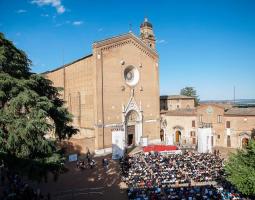
The school's main building occupies the former Sant’Anna convent for Benedictine nuns, dating from the 14th century. It was dissolved in 1786 by order of Pietro Leopoldo di Lorena.
Accommodation, meals, prices
Corsi Ordinari students live in the Sede Centrale residence and the A. Faedo, T. Terzani, Spolidoro, Montalcini, and Santa Croce in Fossabanda colleges in Pisa's historic center. They receive free accommodation and three meals a day: breakfast, lunch, and dinner. The residences offer single and double rooms, with or without a private bathroom. Room cleaning, wardrobe service, and laundry are available.
In 2025, the school's colleges had a combined capacity of 387 beds. The main building provides 84 places in 40 single and 22 double rooms.
For first-year PhD students in cycle XLII, 14 ensuite single rooms at Santa Croce in Fossabanda are available from October 2026 to September 2027. Allocation gives priority to foreign students, in addition to other criteria. Each room has a bed, wardrobe, nightstand, bookshelf, and chair. Rent includes utilities, weekly cleaning, and bed linens.
Resident doctoral students have access to a kitchenette with a microwave oven, refrigerator, and sink, as well as study rooms, Wi-Fi, a gym, bicycle parking, and a 24/7 concierge service. The canteen is available to them by reservation at an additional cost.
Activities Scuola Superiore di Studi Universitari e di Perfezionamento Sant'Anna (SSSUP) di Pisa
The DS3 organizing group and the L'EMbeDS Department of Excellence run the L'EMbeDS Data Science Seminar Series. The seminars bring together Italian and foreign researchers to explore data science methods and applications in economics and the social sciences.
The program addresses interdisciplinary questions, the societal implications of technology, ethics, and regulation.
Facilities and equipment at Scuola Superiore di Studi Universitari e di Perfezionamento Sant'Anna (SSSUP) di Pisa
The university is small. Only 2,000 students can study here at the same time, among whom are local citizens and foreigners. Students can participate in various international exchange programs.
The university taught 199 teachers.
Despite the small size of the university, you can mark its good reputation.
Students have access to a library with books available to borrow and rooms for independent work. The school has equipped gyms and music rooms, while the colleges provide a language laboratory and recreational areas.
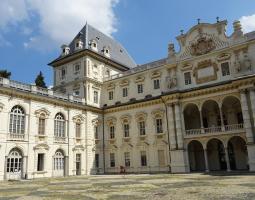
The main building is surrounded by greenery. Traces of frescoes and a 13th-century column survive in its courtyard. Classrooms, offices, and common spaces surround it. The school's facilities also include individual research institutes and a Guest House.
Admission dates and extra charges
Students can use the library, study rooms, and gym free of charge.
Successful candidates in the entrance competition are scheduled to arrive in early October.
Enrolment process
Admission to the school is through a national competition. Applicants can enter at the first level, corresponding to a bachelor's degree, or the second level, corresponding to a master's degree. The social sciences competition brings together economics, political science, and law.
Admission to first- and second-level Master programs is selective. The number of participants is limited so that faculty and tutors can provide individual guidance to each student.
Enrolment statistics
The school announced 58 PhD places for the 2026/2027 academic year. More places may become available if additional funding is secured.
Four places are allocated to the second-level competition in industrial and information engineering.
Entry requirements, how to apply, what is required to enrol
Be sure to take into account the performance and exam results of applicants. At the same time there is no difficult competition. Only 3 potential students apply for one place.
Requirements vary by program:
- PhD programs accept graduates from Italy and other countries following a competitive examination. Selection assesses their previous education and aptitude for research and interdisciplinary work,
- A first-level Master requires at least a bachelor's degree. A second-level Master requires a Laurea Magistrale or a Laurea under the previous system,
- First-level selection involves TOLC preselection, two written examinations, and an oral examination in disciplines related to the chosen academic area,
- Social sciences preselection accepts TOLC@Uni or TOLC@Casa tests from CISIA. The minimum scores are 19/36 for TOLC E, excluding the English section, 34/50 for TOLC SU, and 23/40 for TOLC SPS,
- Applicants with a foreign qualification whose native language is not Italian may take CEnT. The minimum score is 30/55,
- One social sciences written examination assesses critical thinking and comprehension of a text on issues in contemporary society. For the other, candidates choose history, philosophy, economics and law, or mathematics,
- The social sciences oral examination involves a discussion of two disciplines chosen from those offered in the second written examination, and an interview about motivation, aptitude for the chosen area, and readiness for college life,
- Social sciences examinations are conducted in Italian. Applicants with foreign qualifications whose native language is not Italian may take them in English. During the oral examination, the committee may assess whether a candidate's Italian is sufficient to participate in classes for the chosen program,
- The second-level competition in industrial and information engineering requires a qualification from an Italian or foreign university that provides access to Laurea Magistrale. Candidates still completing that qualification are also eligible. The preceding Laurea program must have been completed in no more than four years. Exceptions may be made for documented health or maternity circumstances,
- Second-level engineering applicants need a weighted average grade of at least 27/30 under the Italian system or B under the international system. Grades from foreign universities are compared using a conversion table. Applicants must have the required average or a grade recognized as equivalent,
- Second-level engineering applicants with a foreign qualification whose native language is not Italian need a declaration of Italian language proficiency. They must meet the requirements of their chosen Laurea Magistrale and pass its own entrance examinations, where applicable.
Scholarships Scuola Superiore di Studi Universitari e di Perfezionamento Sant'Anna (SSSUP) di Pisa
All announced PhD places are fully funded. Scholarships are renewed annually following an assessment by the program's faculty. Each year, the school provides scholarships for first- and second-level Master participants, funded from its own resources or sponsored by organizations and companies.
Students on the university program can receive reimbursement of university fees based on ISEE, the indicator of their household's financial circumstances. Reimbursement of entrance competition expenses also depends on this indicator.
ISSNAF scholarships support educational and research activities at universities and research institutes of global standing in North America. Funding comes from PNRR resources through the MERITA project. Up to five current doctoral students at the school may be selected, with additional recipients possible if funding is available. Italian citizens and foreign nationals residing in Italy are eligible. Funding takes account of available resources and any other scholarships that can be used for the same purpose. The school has also used part of the proceeds from the 5x1000 program to co-fund students' educational and research visits.
The school awarded scholarships through PNRR programs across several doctoral cycles:
| Cycle and program | Support awarded |
|---|---|
| 38th cycle, 2022/2023 academic year, DM 351/2022 | 11 scholarships. These included five PNRR research scholarships, three in public administration, and two in cultural heritage. |
| 38th cycle, DM 352/2022 | Seven scholarships for innovative PhD programs in partnership with organizations or companies. |
| 39th cycle, 2023/2024 academic year, DM 118/2023 | The program focused on public administration, cultural heritage, the digital and environmental transitions, and general PNRR topics. After the admissions process, the school awarded two scholarships in the digital transition, 18 in general PNRR topics, and eight in public administration. |
| DM 117/2023 | Three scholarships for innovative doctoral programs. |
| 40th cycle, 2024/2025 academic year, DM 629/2024 and DM 630/2024 | Funding was available for public administration, cultural heritage, the digital and environmental transitions, general PNRR topics, and innovative doctoral programs. After the admissions process, the school awarded one scholarship each in the digital transition, general PNRR topics, and cultural heritage, two in public administration, and two for the introduction of innovative doctoral programs. |
The school plans to use additional funding under Decrees 351/2022, 352/2022, 117/2023, and 118/2023 for doctoral students' activities and initiatives benefiting them, in line with PNRR priorities.
Institution on the map
Residence permits, citizenship and other services
- Guardianship services during the studies
- Student supervision
Review about Scuola Superiore di Studi Universitari e di Perfezionamento Sant'Anna (SSSUP) di Pisa
Recommendations on when to apply
| Language courses, schools and children's language camps | Primary and secondary education - private schools | Preparation programmes for entering universities - higher education | Higher education (after completing accredited programs A-level, IB, High School) - Bachelor, Master, MBA |
| - we recommend to apply 6-9 months before the start of the course (some camps and schools offer discounts for early booking or for lengthy study programs) - there are some very popular and high demand children's camps, where the applications need to be submitted 1 year in advance (in particular Switzerland , Great Britain , USA , Canada , Austria) | - we recommend to apply one year before the start of the training program, - some schools have a specific time frame (September-November - please specify an individual school) - some schools require tests in several stages (UKISET, internal tests of the school: English, mathematics, logics, subjects, interview, some require a personal visit) | - we recommend to apply one year before the start of the program, - for Foundation and Pathway programs, IELTS and TOEFL certificates are usually required, respectively | - recommended submission one year before the start of the program, - the deadline normally closes in January, for TOP HEIs and, as a rule, in March in other universities - for a bachelor, a Foundation or Pathway preparatory program a completed A-level, IB, High School + IELTS / TOEFL are required - for Masters you need a graduated higher education, in some cases you need a pre-Masters program - MBA requires completed higher education, work experience preferably at least 2-3 years, etc. |