Private School of Ardingly College


Programs and prices, tuition fees in Private School of Ardingly College


Quick overview: an educational program of middle school is designed for international students.
About the educational program: the curriculum fully corresponds to the official national standard. At the end of the program, all students pass a general examination that reflects the level of knowledge reached and allows to move to the next school level. Classes are formed small, practiced individual, personal approach - teachers strive to maximize the potential and opportunities of each child, develop unique abilities and talents.
The list of compulsory subjects includes:
- Mathematics;
- Informatics;
- English;
- Natural science.
List of additional subjects to study:
- Swimming;
- Sport and physical culture;
- History;
- Geography;
- Dramatic art and theater;
- French;
- Art;
- Technology and Design;
- Music.
Quick overview: In the 10-11th grade, students learn the general GCSE program. It helps to successfully prepare for the passing of specialized examinations, get a certificate of secondary education and move on to the next, more complex level of education.
About the educational program: Subjects are divided into thematic groups, so some combinations become inaccessible - this is how impossible it is to repeat the training course, duplicate information in classes in related disciplines. Each student chooses 3-4 directions - the total number of subjects at the GCSE level should reach 8-10. Teachers are always ready to help to form the most balanced and competent curriculum that fully meets the interests and requirements of international students: for example, it is advised to choose a foreign language, humanitarian and applied science for studying.
Mandatory subjects include:
- English;
- Fundamentals of Life Safety;
- Mathematics;
- Philosophy;
- English literature;
- Physical Education and Sports;
- Natural Science (chemistry, biology or physics).
List of additional subjects to study:
- Theatrical art;
- Technology and design;
- Latin language;
- Art;
- Foundations of religion;
- History;
- Graphic design;
- Physical Culture;
- History of civilizations;
- Spanish;
- French;
- German;
- Product design;
- Geography;
- Music art.
Brief information: 12-13 grades - the time to choose an effective preparatory program for a successful entry into the university. This can be the British standard A-level or International Baccalaureate. Also there is an opportunity to study at a special Pre-IB course - this is an ideal option for foreign students who have graduated from high school in their home country and are just starting to get education abroad.
About the educational program: The A-level course provides for a profound, specialized study of three subjects for the student's choice. 4-5 disciplines in the first year are studied and only 3-4 of them are studied in the second year of study.
List of subjects to study:
- Drama and theatrical art;
- Music art;
- Technology and design;
- Biology;
- Physics;
- History;
- History of civilizations;
- French;
- English;
- Higher mathematics;
- Business fundamentals;
- Psychology;
- English literature;
- Art and design;
- Spanish;
- Medieval history;
- Physical Culture and sport;
- Economics;
- German;
- Italian language;
- Mathematics;
- Geography;
- Latin language;
- Chemistry;
- Philosophy.
About the educational program: an international program for students all over the world is designed according to standrats of IB program.
The curriculum of each student includes 6 disciplines, selected from 6 thematic scientific units:
- Literature in the native language;
- Art;
- Humanitarian sciences;
- Foreign languages;
- Mathematics;
- Natural Sciences.
Three subjects to choose from are studied at the standard level of complexity, and three - on the increased, in-depth. In addition, there are 3 mandatory disciplines, classes for all students without exception:
- Writing an expanded essay (literacy and accuracy of writing, analysis and material analysis skills);
- Theory of knowledge (the first 4 semesters are provided for 3 lessons per week). The philosophical subject helps develop the skill of critical thinking, see the role of knowledge in modern society;
- CAS (Creativity, Action and Service - creativity, action and service).
Lessons are held three times a week (a total of at least 150 hours per 1 year of training). International pupils can fully discover their talents and abilities:
- Classes on drama, art, painting and photography are provided;
- Different sport activities;
- Charity events;
- Volunteer projects.
Description of Private School of Ardingly College
- Location: a 240-acre campus in the Sussex countryside, 40 minutes from London,
- Boarding: more than 320 boarders,
- Sixth Form programs include A Level and IB Diploma,
- Co-curricular activities: more than 200.
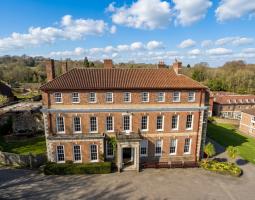
Ardingly College is a prestigious, well-known boarding school in the UK, founded in 1858. At the present location, the institution has been in existence since 1870: it is the south-eastern part of England (West Sussex county). Getting to London can be done in only 40 minutes, the distance to Heathrow International Airport is 63 kilometers, and to Gatwick - only 14 kilometers: this greatly facilitates travel and transfer.
Around 20% of senior-school students live overseas and represent more than 30 countries. The remaining students come from Sussex, Surrey, Kent and London.
The college was founded by Reverend Nathaniel Woodard. Its Christian ethos and values of compassion, engagement and collaboration guide school life, volunteering and charitable work.

What makes British schools so special for parents around the world?
British schools are so highly regarded for their prestige and tradition. For years, even centuries, high-ranking students from all over the world have graduated from British schools and universities: politicians, scholars, royalty. Each school is unique in its own way, but they all offer world-class education, top educators, small classes, a network of alumni, who will continue to communicate and support each other for years to come.
Educational process
Students belong to small pastoral groups and receive individual guidance when choosing an academic path. Boarding staff also support evening study.
In Years 7 and 8, students take part in an Outdoor Education program that prepares them for the Duke of Edinburgh’s Award. Many lessons, activities and events also use the college’s woodland and reservoir setting.
The music department has six full-time staff, two administrators and 25 visiting teachers. Students can study string, brass, woodwind, percussion and keyboard instruments, as well as voice, and prepare for graded examinations.
Faculties and colleges
- Drama is taught to all students in Years 7 to 9 and is then offered at GCSE, A Level, and as part of the IB Diploma,
- Music is taught in Years 7 to 9 and is then offered at GCSE, A Level, and as part of the IB Diploma, with several leavers going on to study music at Oxford, Cambridge, and leading conservatories,
- Students can study Ancient Greek and take it as a GCSE in Lower Sixth,
- Native German speakers in Remove and Fifth can join the German Enrichment program and take the German GCSE at the end of the school year.
Scientific achievements
- The 2026 IB Diploma cohort achieved an average score of 39.5 points,
- 59% of exams received the top two grades (A*-A, 7-6 or D*-D), while 25% received the highest grade (A*, 7 or Distinction*),
- 24 students achieved three or more A*-A grades at A Level, and 19 students scored 40 points or higher in the IB Diploma,
- 71% of GCSE grades were 9-7, with an overall student average of 7.17,
- Half of all GCSE exams received grades 9-8, and 37 students achieved at least eight GCSEs at grades 9-8.
Things to know about
- All students take part in congregational singing each week as they prepare for College chapel services, and the House Song and House Ensemble competitions are highlights of the school calendar,
- The school’s founder financed his new schools through donations and subscriptions.
University destinations
The most popular British universities among leavers, in descending order:
- University College London,
- King’s College London,
- Exeter,
- Warwick,
- Bristol,
- Durham,
- Imperial College London,
- Oxbridge,
- London School of Economics,
- Edinburgh.
Accommodation, meals, prices
Upon check-in, the age and gender of the students are taken into account. Most of the students (about 80%) occupy rooms for 1-2 people, 20% of students live in rooms for 3-4 pupils. Each hostel accommodates approximately 40 students, the exception being the residence for high school students; In each residence there is a special head and mentors, the medical staff is constantly on duty. Ardingly College dorms have spacious cozy lounges, a self-service kitchen, a computer room (all PCs have internet access).
The spacious common dining area provides schoolchildren with a full board meal, tasty and varied (mostly European traditional cuisine).
Subjects and sports
Activities Private School of Ardingly College
The co-curricular program spans intellectual curiosity, sport and adventure, life skills, creativity and music.
The Duke of Edinburgh’s Award is available at Bronze, Silver and Gold levels, and all Year 9 students take Bronze. The school also organizes academic, co-curricular and service trips in the United Kingdom and abroad.
Drama includes LAMDA lessons and exams for more than 100 students, six weekly clubs and three major senior school productions each year. Music students can join more than 30 choirs, ensembles and instrumental groups. The department stages about 60 concerts a year and offers international tours, professional master classes and concert trips.
Advantages
- Ardingly ranks among the top 10 schools in the United Kingdom for the IB Diploma,
- The school is in the top 1% for value added, with GCSE students achieving, on average, more than one grade higher per subject than their baseline tests predict,
- The June 2024 ISI inspection report found that students make very good academic progress at A Level and in the IB Diploma.
Facilities and equipment at Private School of Ardingly College
Sports facilities on the Sussex campus include a 25-meter swimming pool, a large indoor sports hall and a smaller multipurpose hall, two artificial-turf fields, six netball and tennis courts, two cricket fields, a first-team football field, more than 12 additional grass fields, a 400-meter grass running track and a squash court.
The grounds also include St Saviour’s Chapel, the senior school library, a cricket pavilion and Headmasters’ Pond. An outdoor activity center at Ardingly Reservoir supports water sports and outdoor learning.
The purpose-built Music School has a recital room, a percussion and ensemble room, a music classroom, a music library, a computer suite, a recording studio and 12 teaching and practice rooms.
Admission dates and extra charges
Extras:
- Registration fee (for a programme/course) 150 GBP
- Deposit for a course/programme 2000 GBP
- Visa fees 650 GBP
Enrolment process
Open mornings include a welcome from the Head, a personalized tour led by a student, and time with teaching staff who can answer families’ questions.
Perspectives
About 80% of students who choose UK universities go on to Russell Group institutions, while around 10% choose to study abroad. All students holding offers for medicine, veterinary science, or Oxbridge confirmed their university places on results day.
Entry requirements, how to apply, what is required to enrol
Applicants must provide a detailed description from the previous school, as well as a report card with grades for the last two years.
Scholarships Private School of Ardingly College
The school offers scholarships at 11+, 13+ and 16+. Across these entry points, awards recognize achievement in academic subjects, art, dance, drama, design and technology, music and sport. At 16+, the school offers academic scholarships and awards in art, drama, music and sport. Music scholarships provide financial support toward tuition and musical education.
Bursary applications are reviewed annually against parents’ financial circumstances and are available only to students who hold a scholarship or equivalent award. Each year, a limited number of transformational bursaries fully fund students who have experienced significant disadvantage or displacement throughout their time at the College. Applications to the Transformational Bursary program are made through the Royal National Children’s Springboard Foundation.
Institution on the map
Residence permits, citizenship and other services
- Guardianship services during the studies
- Student supervision
Review about Private School of Ardingly College
Recommendations on when to apply
| Language courses, schools and children's language camps | Primary and secondary education - private schools | Preparation programmes for entering universities - higher education | Higher education (after completing accredited programs A-level, IB, High School) - Bachelor, Master, MBA |
| - we recommend to apply 6-9 months before the start of the course (some camps and schools offer discounts for early booking or for lengthy study programs) - there are some very popular and high demand children's camps, where the applications need to be submitted 1 year in advance (in particular Switzerland , Great Britain , USA , Canada , Austria) | - we recommend to apply one year before the start of the training program, - some schools have a specific time frame (September-November - please specify an individual school) - some schools require tests in several stages (UKISET, internal tests of the school: English, mathematics, logics, subjects, interview, some require a personal visit) | - we recommend to apply one year before the start of the program, - for Foundation and Pathway programs, IELTS and TOEFL certificates are usually required, respectively | - recommended submission one year before the start of the program, - the deadline normally closes in January, for TOP HEIs and, as a rule, in March in other universities - for a bachelor, a Foundation or Pathway preparatory program a completed A-level, IB, High School + IELTS / TOEFL are required - for Masters you need a graduated higher education, in some cases you need a pre-Masters program - MBA requires completed higher education, work experience preferably at least 2-3 years, etc. |