The roar of the plane engines was a physical manifestation of the butterflies in my stomach. I was 17, clutching a passport that felt both alien and official, and flying over the English Channel. My destination: a small coastal town in England for a four-week language camp. My goal: to transform my robotic, textbook English into something fluid and natural. As the wheels touched down, a terrifying thought struck me: What if I can’t understand a single word they say?


Day 1: The Arrival and The Test
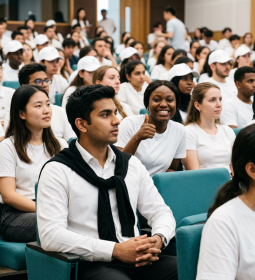
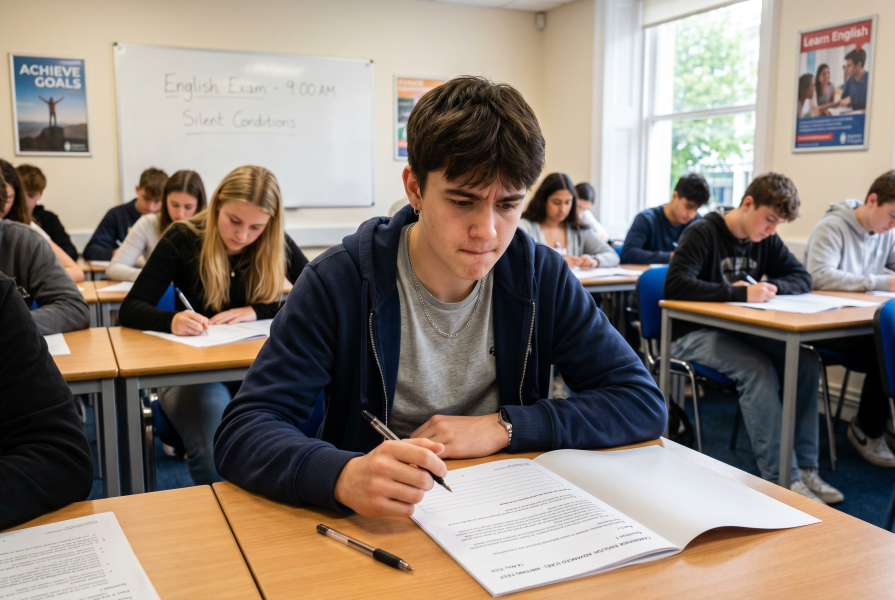
The first hurdle was the airport check-in. Standing alone, I had to ask a staff member for directions. My carefully rehearsed sentence came out as a jumbled mess, but the kind woman just smiled and pointed. That small victory felt monumental. The real shock came at the camp's welcome center: the placement test. We were herded into a large hall, and a paper test was placed before us. It was like a bad dream, a sudden pop quiz on grammar rules I’d only ever seen in a classroom. My confidence from the airport evaporated. After the test, they assigned us to our ‘houses’—dormitories named after famous authors. I was in "Dickens," and my roommate, a lanky, easy-going guy from Italy named Marco, was the first person to genuinely welcome me. He spoke with a thick accent, but his smile was universal.
Day 2: The First Day of Class
My class was kind of a tangle of students from Japan, Brazil, France,and Spain. The teacher, a vibrant man named Mr. Davies, did this thing where he just kinda swept in and broke the ice straight away. The first day wasn’t really about tenses or vocabulary, it was about one main thing: confidence. We played this game, you know the one, where you describe an object to your partner but you cannot say its name. Marco and I got paired up, and our frantic descriptive gesturing turned into this sudden burst of laughter. That was the exact point where my attention shifted. I saw that the real aim wasn’t to speak perfect English, but to speak English that makes sense, and also to understand other people. In that whole process, grammar errors didn’t weigh as much as the connection we were building.
Days 3-7: Finding a Rhythm
The routine quickly became a rhythm. Mornings were for classes,and afternoons were for activities. We had football tournaments, drama workshops, and this scavenger hunt that dragged us through the labyrinthine streets of the town. I ended up learning that my new friends were almost like the main teachers. At breakfast, I’d sit with a group and we’d try to talk about our dreams in broken English, very slowly sometimes. At dinner, a traditional British meal—fish and chips, which was a huge hit, and a terrifying dish called “spotted dick”—became this shared experience of unfamiliar tastes. The rules were pretty plain: an 11:00 PM curfew and a strict “English only” policy in the common rooms. Honestly it was annoying at first, but it worked as the best learning instrument we had. The food was, well, a mixed bag. Some days it was delicious; other days I missed my mom’s cooking so badly it felt unbearable.

Days 8-14: The Challenges and The Triumphs
The biggest challenge was a weekend excursion to London. Navigating the Tube, ordering food in a crowded restaurant, and asking for directions when I was lost was terrifying. I felt completely overwhelmed, a tiny fish in a massive, fast-moving pond. But my friends rallied around me. We figured it out together, using a map, our phones, and a lot of hand signals. The triumph of successfully getting us all to the London Eye on time is still one of my proudest moments. It was in that immense, bustling city that I realized I wasn't just a student anymore; I was a traveler.
Days 15-21: Becoming a Local
By the third week, stuff started to shift, like really. We weren't just camp attendees anymore; we were sort of locals. I knew where the best ice cream was, the fast way to reach the beach, and yeah, even the names of the shopkeepers down the street. The “English only” thing wasn’t a wall anymore. It became our go to habit. I remember overhearing myself telling this joke to a friend from Germany, and honestly I expected… not much, but we both got it, and we laughed. The accent I used to dread was slowly becoming part of me, and my vocabulary filled up with these everyday colloquial bits I’d never seen in any textbook.
Days 22-28: The Final Week and The Goodbyes
The last week was kinda blurry in a good way, and also sad. There was one final talent show, where we did this absurd little skit and everyone ended up in stitches. The friendships I built there felt deeper than most things back home ever did. These people had watched me when I was completely frustrated, and also when I was weirdly triumphant. The final goodbye at the airport was basically a flood, tears, hugs, and promises to stay in touch. Then the flight pulled away, and I looked down at the country that had felt so unfamiliar just a month ago. Suddenly it didn’t feel only strange. It felt like loss, but also like accomplishment, like both at once.

My Main Conclusions and Advice to "Myself in the Past"
This experience taught me more than just English. It taught me resilience, empathy, and this genuinely beautiful power of non verbal communication. My main conclusion is pretty simple: real learning happens outside the classroom. It happens in the shared laughter when a word gets misunderstood, it happens when you’re scared of getting lost, and it also happens in that relief, the joy of finding your way anyway.
So yeah, here’s my advice to that terrified 17-year-old about to get on the plane: “Just say yes.” Say yes to the awkward chats, say yes to those scary little excursions, and say yes to the strange food. You’re going to mess things up, probably, and that’s fine. In fact, that’s the point. You will feel lonely and overwhelmed at times, but those moments are the ones that will build your character and your language skills the most. Don't worry about being perfect. Worry about being present. The people you meet aren't here to judge your grammar; they're here to get to know you. The real souvenir isn't the keychain you'll buy; it's the confidence you'll discover and the global family you'll gain. You are braver than you think, and this adventure is just the beginning.