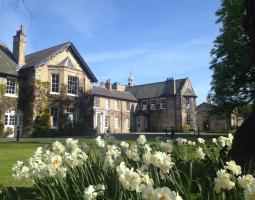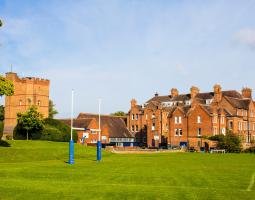
Queen Ethelburga's College Boarding school










In the process of preparing the material, we referenced the following sources: GOV.UK, Wikipedia
Programs and prices, tuition fees in Queen Ethelburga's College Boarding school


Sixth Form: 12-13 Grades
- Age of students — from 16 to 18 years,
- The studying period is two years.
The final stage of school education is Key Stage 5: it offers students absolute flexibility in choosing the subjects they study and additional electives.
At the beginning of the 12th grade, students choose the most suitable path for themselves.:
- Four A-Level subjects and a mandatory EPQ qualification + an additional optional to expand knowledge,
- Three A-Level or BTEC subjects + optional elective to choose from.
The wide range of subjects available for study includes:
- Business,
- Art,
- Design,
- Dance,
- Computer Science,
- Chemistry,
- Economy,
- Fashion, textiles,
- English language,
- History,
- German language,
- Physical education,
- The music,
- Mathematics,
- Statistics,
- Psychology.
BTEC disciplines make an emphasis on practical skills: students spend a lot of time in laboratories, studios and at thematic events in order to master professional skills and continue their studies in specialized institutions.
A-Level subjects focus on theory, too, through which students implement knowledge in project activities and research.
When choosing the first study option, students need to complete the EPQ elective, which involves writing an extended scientific essay on a free topic. The second option allows students to complete a professional sports program, complete their studies at a language club, or pay more attention to developing in creative areas.
Completing the Sixth Form stage will allow students to enter leading universities in the UK and abroad, as A-Level, EPQ and BTEC qualifications are highly valued and can be counted without entrance exams.
Primary School
- Age of students — from 3 to 10 years,
- The term of study is seven years.
The primary school program covers two stages:
- Key Stage 1 — preparatory and 1-2 grades,
- Key Stage 2 — training from grades 3 to 5.
Based on the skills they acquired in kindergarten, students gradually master more complex topics, gaining new knowledge and skills. So, at the Key Stage 1, the curriculum stipulates active physical education classes, lessons at the Forest School, interactive classes using various materials for modeling, drawing, counting and studying natural sciences. All the lessons that take place in the first three years of elementary school will help build an excellent academic foundation for further transition to a more difficult stage — Key Stage 2.
In grades 3-5, students actively study natural sciences, English and mathematics, attend physical education classes and various creative electives. At this stage, it is extremely important that the child finds a hobby that will be an excellent addition to high-quality academic knowledge. Gradually, the topics of scientific subjects begin to become more complex in order to prepare the student for the transition to secondary school.
Middle School
- Age of students — from 11 to 14 years,
- The studying period is four years.
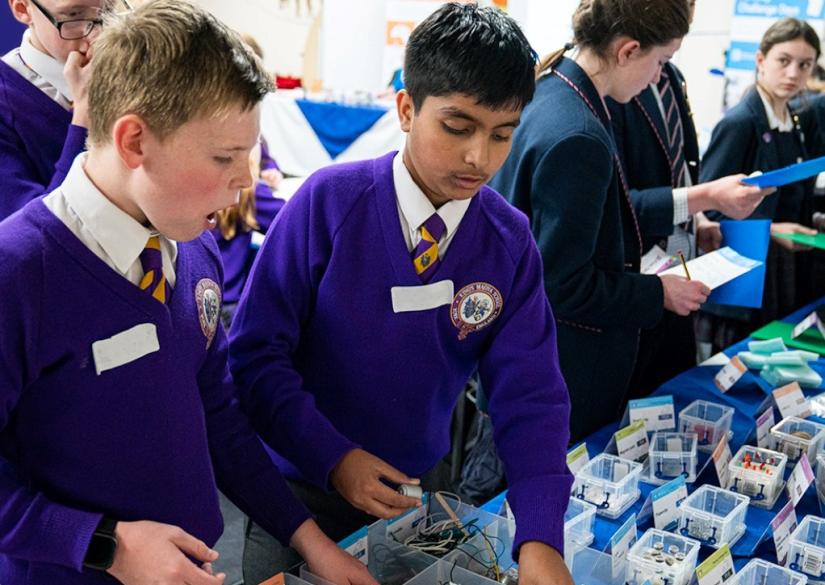
The program for grades 6-9 is based on the UK National Curriculum and includes one academic stage, Key Stage 3. Over the course of four academic years, students study a wide range of subjects, choosing two electives each trimester based on their interests. In addition to the rich curriculum, there are a variety of extracurricular activities, including a professional sports program, classes at the English language club, creative circles and regular excursions.
In the 9th grade, students begin to look more deeply at the scientific topics of the main disciplines, as they will have to start preparing for the GCSE next year. With the help of qualified teachers, they immerse themselves in the subject to see if it suits them well enough, and then begin to expand the topics and areas to gain a sufficient understanding of the discipline.
After completing grade 9, students move on to Grade 10, where intensive exam preparation begins almost immediately.
GCSE Program: 10-11 Grades
- Age of students — from 15 to 16 years,
- The studying period is one or two years.
Queen Ethelburg's offers more than 30 GCSE and BTEC subject courses for advanced study and subsequent exams at the end of 11th grade. The GCSE program is provided in two formats: accelerated and standard: in the first case, students take half of the exams in grade 10 and the rest in grade 11, and in the second, they have the opportunity to obtain BTEC qualifications and study gradually.
The curriculum of Key Stage 4, covering grades 10-11, consists of compulsory and optional subjects. Compulsory are natural sciences (biology, chemistry, physics), mathematics, and English. In addition to these, each student needs to choose three or four disciplines based on their interests, for example:
- Computer science,
- Dances,
- Business,
- English literature,
- French language,
- History,
- Psychology,
- Statistics,
- 3D design,
- Physical Education.
There are also BTEC subjects to choose from, which are dominated by practice. By attending classes in laboratories and participating in specialized events, students acquire competitive skills and can continue their further studies in a specialized institution. Among the BTEC directions are:
- Business,
- Applied law,
- Art and design practice,
- Creative digital media production,
- Esports,
- Marketing,
- Performing Arts Practice,
- Creative media practice.
By studying a personalized curriculum for 1-2 years, students will be ready to take exams and move on to the Sixth Form stage.
Standard one-year program is designed for students from 15 years old without sufficient knowledge of English. Pre-A-level is a preparatory program for foreign students before the A-level course. The main focus of the program is on learning English. It also provides for a thorough mastering of mathematics, natural sciences and art in preparation for the International GCSE. Especially the Pre-A-level course is suitable for foreign students who plan to continue to study under the BTEC educational program. Usually the year of study begins in September, but accelerated studying for two terms is also envisaged. The intensified course can begin in January.
BTEC
- Age of students: from 18 years old
- Dates: September-June
- Duration of studying: 2 years.
The Business and Technology Education Council educational program is an in-depth study of a selected subject from the field of applied sciences. Available for study on two levels:
- Extended Certificate (BTEC Extended Certificate).
- Diploma (Edexcel BTEC Diploma).
Obtaining a certificate in the field of applied sciences includes the study of 4 scientific blocks in 2 years:
- Principles of science;
- Scientific procedures and methods;
- Research Skills;
- Physiology of human body systems.
The program includes a combined study of the basic natural sciences - chemistry, physics, biology. The final grade is based on the grades obtained for each block under study (Pass, Merit or Distinction).
The BTEC diploma in applied sciences includes the study of 8 subject blocks for 2 years. Students also write their own research paper, which is assessed separately. Study blocks for graduation are the following:
- Principles and application of science I and II;
- Physiology of human body systems;
- Research Skills;
- Scientific procedures and methods;
- Laboratory methods;
- Forensics.
Nursery, Kindergarten
- Age — from 3 months to 3 years,
- Duration of study — three years.
The kindergarten program is based on the National EYFS Program and divides students into three age groups: 3-18 months, 18 months-2 years, and 2-3 years.
Staying at the kindergarten is organized in a playful format, where each child is under the close supervision of qualified staff. The main goal of the preschool program is to develop essential skills that are instilled in students over 2-3 years. Over these years, children will learn to take care of themselves, communicate with peers and adults, safely explore the world around them, and realize their talents through sports, creativity, and science.
The school day at kindergarten offers flexible formats:
- Stay for half a day,
- Child's full-day stay in the group.
The family can choose the number of days their child will attend kindergarten. Extended day groups will also help parents make their weekdays easier — childcare is provided from 7:30 AM to 6:00 PM.
English Language Course
- Age of students — from 11 to 17 years old,
- Duration of study — from one to six years.
The English as a Second Language program is implemented in parallel with the main curriculum — students in grades 6-12 attend language classes after completing their regular subject lessons according to schedule. For each age group, the course involves its own study plan:
- Grades 6-9 — will help students master the core curriculum by reviewing topics covered in class and providing personalized support in the classroom. The classes will improve reading, speaking, listening, and writing skills, which will help students consolidate their academic skills in English,
- Grades 10-12 — the course involves preparation for one of the popular exams needed to enter university. Students continue to improve basic language skills while studying materials and test-taking techniques.
Classes are held in small groups with a strong focus on the abilities of each student. Thanks to comprehensive support, students effectively improve their English language skills, adapt more quickly to an English-speaking educational environment, and successfully continue their academic path after completing school.
International Foundation Course
- Age of students — from 16 years old,
- Duration of study — one year.
The International Foundation Year program is aimed at high school students who would like to continue their education in a university specialty they already know. Queen Ethelburga's offers two specialized preparatory programs:
- Business,
- Science to choose from: biology, mathematics, chemistry or physics.
The studying lasts one academic year and runs in parallel with the study of the core curriculum. Additional hours of classes are added to the schedule for the chosen specialization, where in-depth topics and related areas will be discussed.
The preparatory course will allow high school students to gain a strong academic foundation, which will ensure their successful and effective start at university.
International Summer School
- Age of students — from 7 to 17 years old,
- Duration of study — two, three or four weeks.
During the summer months, a number of short courses for different ages are held on the Queen Ethelburga's campus:
- Football camp for students aged 10-17
Regular football training under the guidance of qualified coaches. The course is suitable for students with any skill level: from beginner to advanced.
- International camp for students aged 7-12
A program with a variety of leisure activities that will allow students to learn about the culture, customs and history of the country. The schedule includes regular excursions and on-campus events, 10 hours of English language study per week.
- Academic preparation for students aged 13-17
A variety of profiles to choose from, including forensics, esports, photography and performing arts, + 10 hours of English language study per week.
Each option includes a variety of leisure activities, excursions to attractions, and entertainment and sports trips. During their stay at the camp, students are accommodated in comfortable residences, receive balanced three meals a day, and have 24/7 support from qualified staff.
Description of Queen Ethelburga's College Boarding school
- Location: York, North Yorkshire, England,
- Year of foundation: 1912,
- Number of students: about 1600,
- Language of instruction: English,
- Type of studying: mixed.
Queen Ethelburg's College (QE) is a private boarding school that combines five stages of school education: from kindergarten to the final 13th grade. Children from 3 months to 18 years old study at the school.
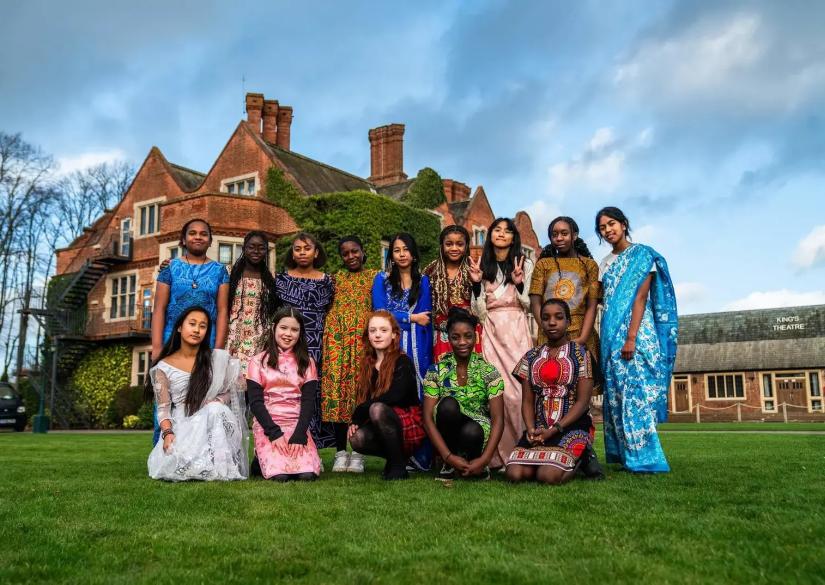
Dating back over a hundred years, since 1912, today Queen Ethelburg's College is one of the best schools in the UK. The outstanding aspects of her educational activities are annually confirmed by high ratings from international and national agencies. One of the advantages is the multinational student community with representatives of more than 40 nationalities. Each of the foreign students is provided with comprehensive support, qualified academic assistance and career advice — a wide variety of additional services that are provided after school hours is also considered one of the advantages of Queen Ethelburg's. Thanks to the involvement of teachers, modern teaching methods and extracurricular consultations, students achieve excellent exam results, which confirms the high quality of education.
The main purpose of the learning process is to provide students with all the necessary resources and materials to achieve their goals. In addition to a rich, diverse curriculum, children receive opportunities for extracurricular development in sports, creativity, and social activities. Through campus and field events, participation in thematic groups, sports and creative clubs, students develop important qualities that ensure their admission to leading universities in English-speaking countries.

What advice can you give to potential applicants who choose UK schools?
I would advise you to actively study English, read more - it actively develops understanding of the language, knowledge of grammar, construction of sentences and phrases. Try to talk to as many people as possible, look for resources on the Internet, watch movies - be more active!
Educational process
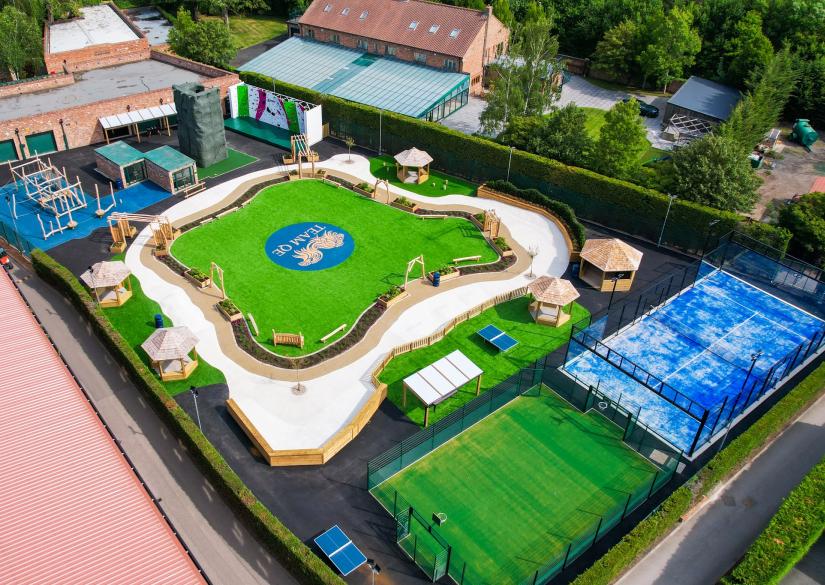
The open spaces of the campus are effectively used in the educational process: younger students learn at the Forest School, and older students engage in research, gardening, and social work. Safe and multifunctional areas allow students to gain valuable knowledge and skills, learn to care for nature while exercising caution, and develop leadership qualities through teamwork.
A wide range of additional services includes various consultations, whether it's assistance with adaptation issues, English language learning, or finding a suitable university. Staff provide support even outside of school hours, organizing classes either one-on-one with students or in small groups.
Faculties and colleges
The academic system at Queen Ethelburga's includes several stages:
- Nursery — from 3 months to 3 years old,
- Chapter House (Pre-Prep School, Primary up to Grade 5) — from 3 to 10 years old,
- King’s Magna (Middle: Grades 6-9) — from 11 to 14 years old,
- College (GCSE, Sixth Form: Grades 10-13) — from 15 to 18 years old.
Scientific achievements
Queen Ethelburga's College consistently ranks among the top positions in national rankings and has an impressive list of awards:
- Winner of the Sunday Times Independent School of the Year for Academic Results North award (2025),
- The Faculty of Queen Ethelburga's — winner of the ISA Senior School of the Year award,
- Gold Artsmark Award from Arts Council England (the school as a whole, King's Magna and Chapter House — separately),
- Certificate of Excellence from World Camps 2024 — QE summer school,
- Two wins in the ISA Photography Key Stage 5 competition (2022 and 2023); two Highly Commended Awards in the ISA Key Stage 4 Sketchbook and ISA Key Stage 5 3D categories (2023),
- In 2023, the first cricket team won the U18 Yorkshire & North East Regional Plate and the Emeriti Schools' T20 Cricket Festival,
- Included in the Top 100 Senior Schools in the UK for Cricket according to The Cricketer Magazine (2024–2025),
- In 2024, all five students who sat the LAMDA Grade 8 exam received Distinction and won the Gold Medal,
- In 2023, three QE students took 1st place, 2nd place, and received the jury prize at the ISA Young Musician of the Year competition; the final was held at Warwick Arts Centre,
- In 2023, QE received ISA Junior Musician of the Year (Chapter House), ISA Senior Musician of the Year (College), and first place in the ISA Band Competition Middle School (King's Magna),
- King's Magna won the Physics Olympics at St. Peter's School,
- A school alumnus set a new Yorkshire record in 2025: the fastest centurion in List A — 100 runs off 53 balls,
- A school alumnus became a Durham Cricket player and was selected for the England Under-19 squad,
- A school alumnus received a professional contract at Coventry City (football),
- A school alumnus took first place in the national Oxford University Bebras Challenge in computer science and placed in the top 10% of the Oxford University Computing Challenge,
- QE College recorded a hit together with well-known producers that was released on Capital FM,
- A school alumna competes for Great Britain in biathlon and was selected for the Swim England Talent Pathway,
- In 2025, one of QE's athletics athletes was selected for the UK Athletics Futures 400m Relay Training Group,
- In 2025, five QE netball players were selected for U19 Leeds Rhinos or Programme Player Development teams,
- QE's proactive use of AI in education earned it recognition in Forbes,
- QE hosted the New Zealand national team during the Rugby League World Cup.
Things to know about
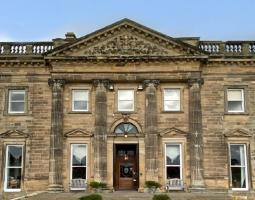
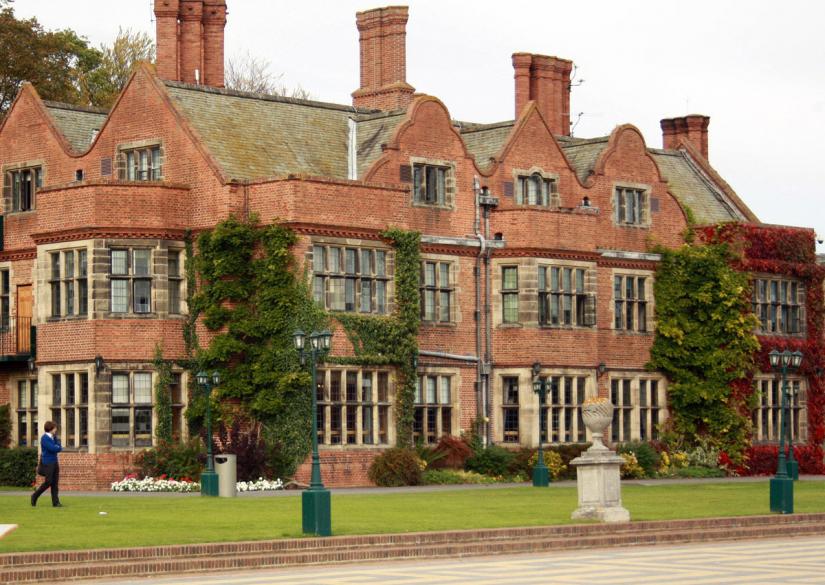
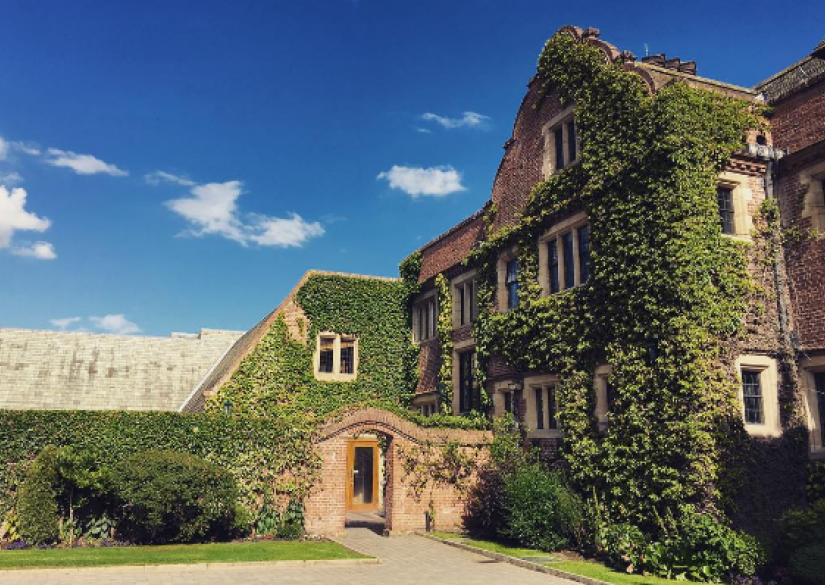
- The campus is located in the historic estate of Thorpe Underwood Hall — the former home of Anne Brontë. The wood-panelled library and English language classrooms are situated in Armorial Hall, the very building where the writer lived.
- Every year in October, the school celebrates its birthday: a traditional celebratory dinner, cutting a cake with a sword, and a performance of Auld Lang Syne — this tradition has existed for over 100 years.
- The activity centre is called Muggles — a reference to the Harry Potter universe.
- The women's cricket team appeared on BBC iPlayer in the programme Freddie Flintoff's Field of Dreams (Series 3, Episode 3).
- The Ghost Night tradition at King's Magna: older pupils act out the story of Queen Æthelburh for the younger ones.
- The cricket coach has an 18-year professional career, including five seasons in the Indian Premier League.
- The football coach is a former professional player with a 22-year career who scored a goal at Wembley Stadium in a youth international match between England and Italy.
- The school has a special reading dog named Carson: one pupil improved their reading level by two years in a single term with her help!
- King's Magna and Chapter House took part in the MARSBalloon project in 2023: launching capsules into the stratosphere for an experiment simulating Martian conditions.
- The school has partnered with the British Armed Forces for over 100 years.
- The longest-standing pupils of King's Magna traditionally write their name on the back of an honours card.
- QE is one of the few independent schools in Yorkshire to offer an Esports course; QE teams made history by participating in an international championship.
- The QE Esports team has competed in national competitions in Valorant, F1, and Minecraft.
- An annual Christmas concert at Ripon Cathedral.
Accommodation, meals, prices
The residences provide comfortable accommodation for students in grades 3-13, offering several forms of accommodation: permanent, weekly and one-time. Full—time students can also stay for up to 14 nights during the year.
- The residential building for children aged 7-11 has specialized furniture and outdoor areas for walking and outdoor sports. Students live in rooms located next to the rooms of staff who provide round-the-clock supervision and care for them.
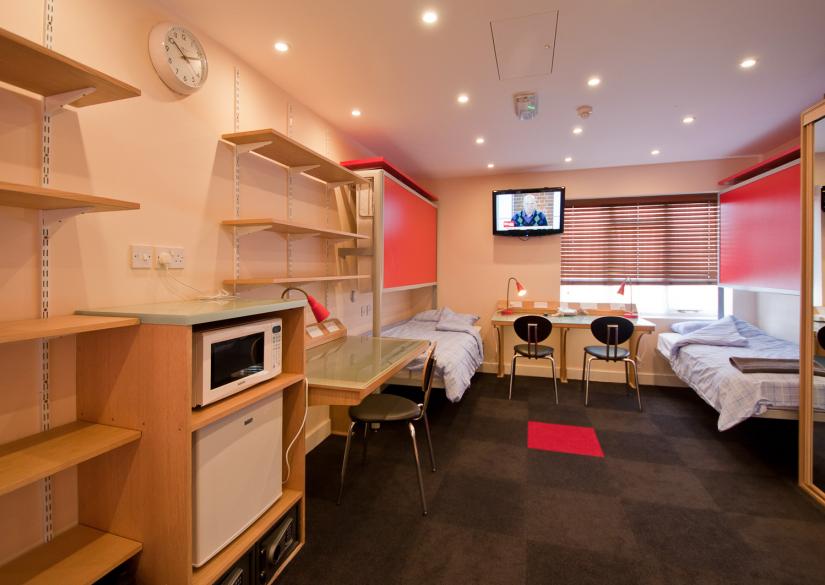
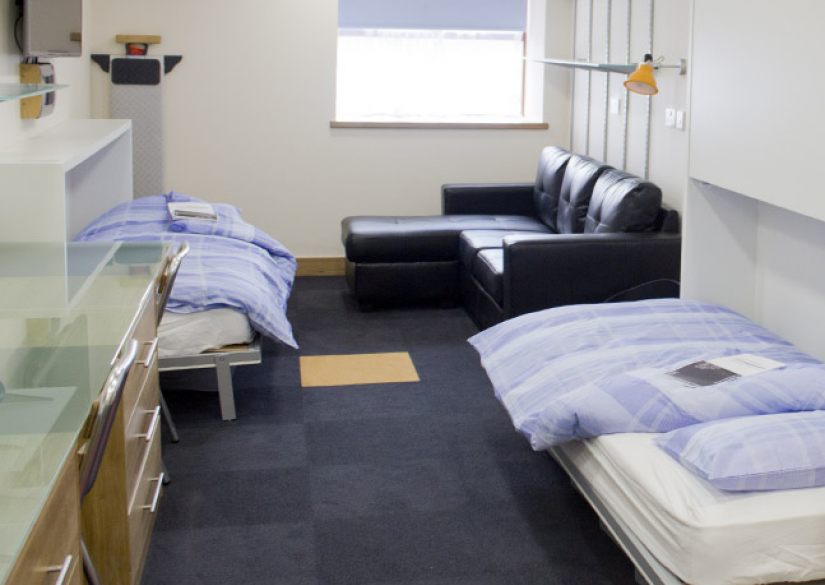
- Students aged 11-14 are accommodated in one of the nearby buildings, occupying double and triple bedrooms with a bathroom and access to common areas, including walking areas, recreation rooms.
- High school students live in a multi-level building that provides accommodation in single and double bedrooms with bathrooms, access to entertainment and recreation rooms, laundry rooms, and a fully equipped kitchen.
When staying in residences, students receive balanced meals every day. Meals are served in the main dining room and students are offered an extensive selection of salads, snacks, hot and cold dishes, and drinks.
Subjects and sports
Activities Queen Ethelburga's College Boarding school
Queen Ethelburga's boasts a wide range of extracurricular activities organized for all ages and offered to both boarders and day pupils – each week, students can choose from over 70 hours of leisure activities.
The main focus of extracurricular development is sports, which is included in the curriculum of all classes. Teams participate in competitions at interschool, regional and national levels, achieving collective and individual awards. Sections are taught by outstanding coaches, each of whom has their own achievements. The list of offered sports includes:
- Basketball,
- Cricket,
- Football,
- Hockey,
- Rugby,
- Netball,
- Swimming,
- Athletics,
- Cross-country running.
The sports achievement program offers students training at a near-professional level, which provides students with opportunities for career development in the future.
The second large area of extracurricular leisure is regular excursions and extended thematic trips. Depending on age, students are offered:
- Canoe trips with rowing, rock climbing, archery,
- Team building at Allerthorpe Lakeland Park,
- Visiting theaters, the historical military camp «Eden»,
- A week-long trip to France with accommodation,
- Ski tour to Europe,
- Cultural tours of cities in the UK, Belgium, Thailand, Australia, USA.
Almost no campus event takes place without the participation of creative groups: students regularly stage theatrical performances, musicals, orchestra and solo performances to showcase their talents at large concerts. Art in school is represented by design, drawing, and crafts clubs — these and other areas are implemented in specialized studios offering children all the necessary tools to realize their ideas.
Advantages
- The best private school in terms of price-quality ratio in The Telegraph rating,
- Gold award from QECUK in the nomination "Service to international students",
- "Excellent" rating from ISI in 2021,
- High ranking of BSA 2024 for the quality of housing services,
- A multicultural community with representatives of 40 nationalities,
- 95% of the UK GCSE grades reach 9-4,
- 98% of A-Level exams at A*-C,
- A number of preparatory international programs, additional English language courses,
- Active development in sports sections, allowing them to compete at the national level and join the national teams of the country.
Facilities and equipment at Queen Ethelburga's College Boarding school
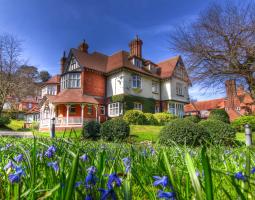
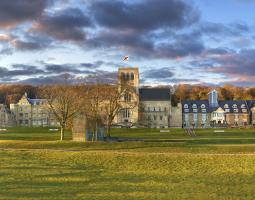
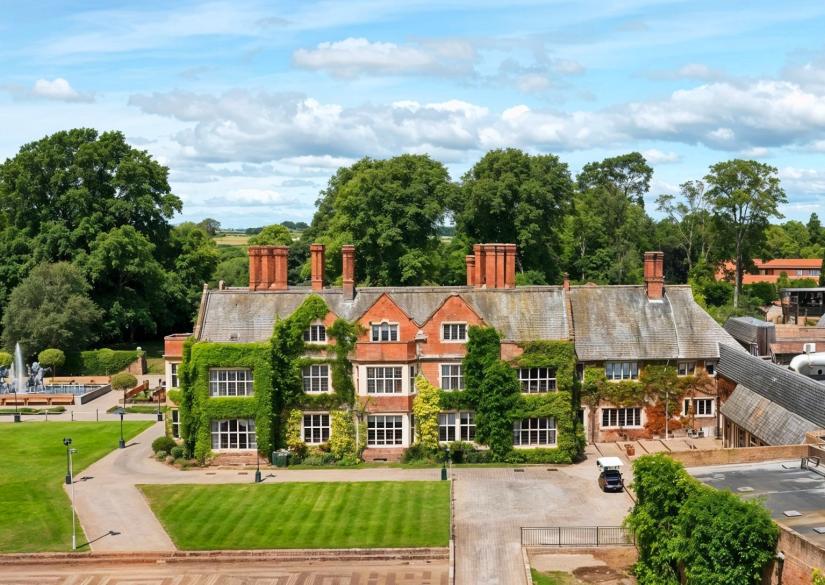
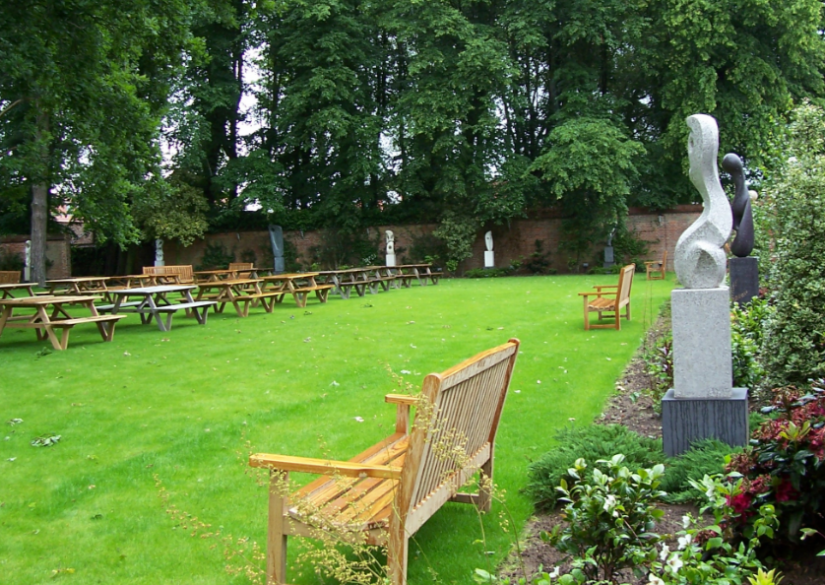
The British college campus not only has excellent facilities, but also a beautiful spacious territory: a park area with a wonderful pond, a rose garden with fountains, green lawns, even a "secret garden" hidden behind a stone wall.
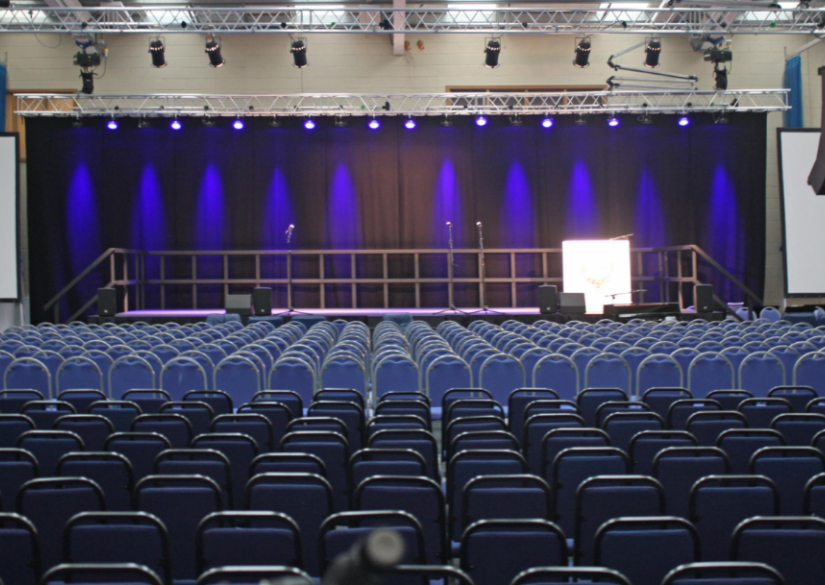
Queen Ethelburg's College has everything you need for successful education and comfortable leisure. It is equipped with computer and multimedia equipment. The school has centers for business education, design, foreign languages, a music school, a theater, and a library. The school also has many well-equipped clubs. Wireless internet is available throughout the school.
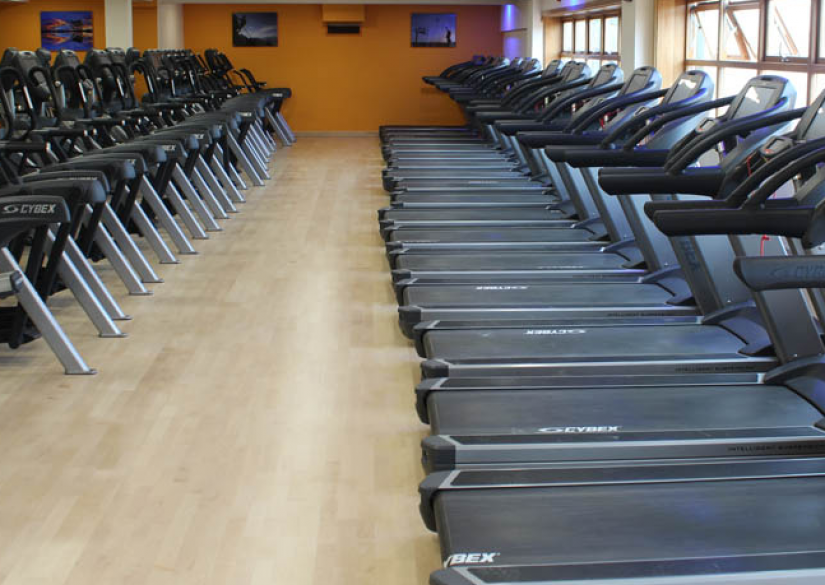
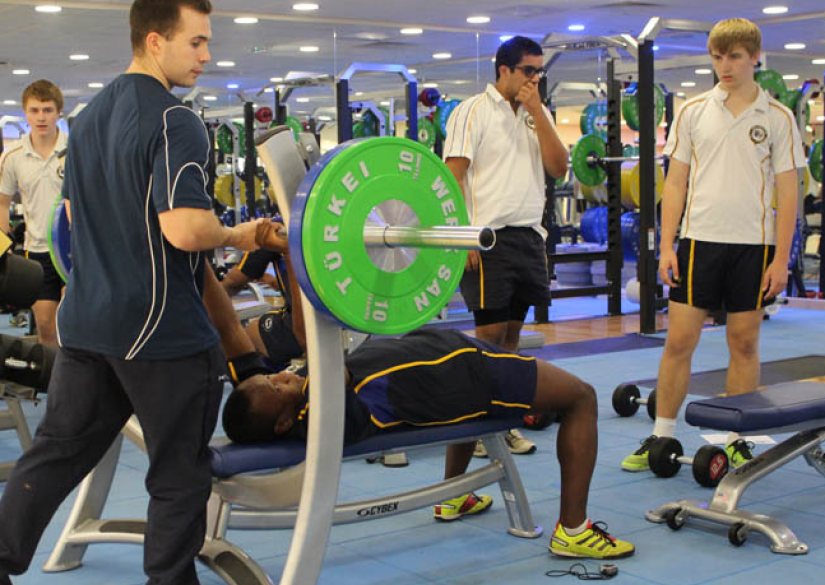
A unique "Sports Village" is offered to the attention of sports enthusiasts on the territory – a complex that has no analogues in England. It includes the Genesis indoor sports hall with a total area of 1.5 thousand square meters.m., where there are 3 basketball, volleyball and netball courts, 12 badminton courts, 3 mini-football courts, and a gymnasium. There are electronic displays in the rooms and outdoors. The village also has a gym, made at a professional level according to Olympic standards: 125 new exercise equipment, air conditioning, surround sound system and satellite TV.
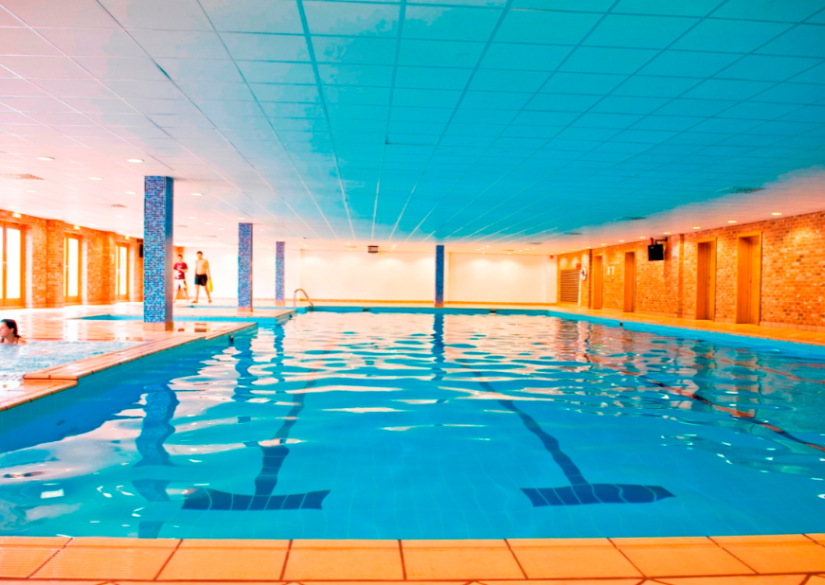
The Sports Village also has its own water sports center. Everything is also organized at a professional level: a 25-meter swimming pool with a digital time stamp, three pools with Endless Pool simulators and an underwater treadmill, Aquatic Treadmills, designed for physiotherapy, recovery or preparation for triathlon competitions.
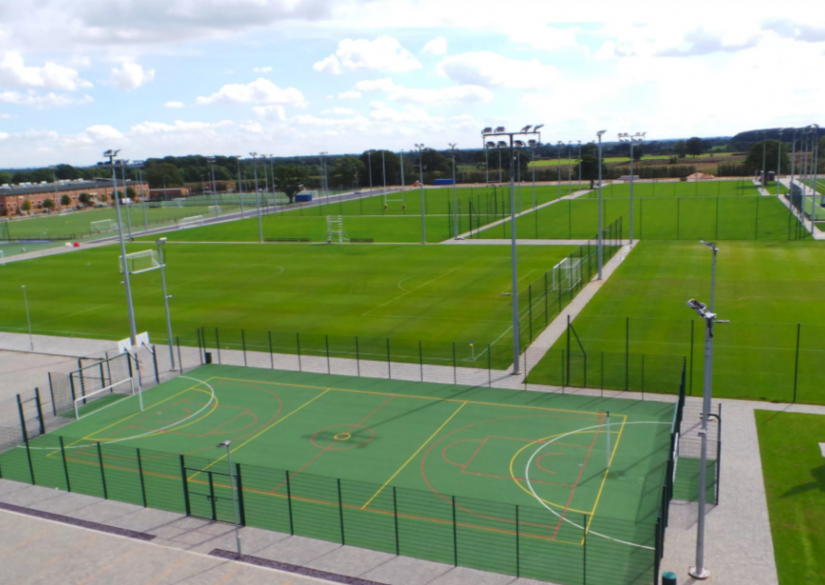
The outdoor sports facilities in the village include 3 football fields, 5 rugby pitches, 5 tennis courts, hockey and cricket pitches, and an athletics stadium with artificial turf running tracks.
The Royal Court Equestrian Center is a 20-minute drive from the college. After the renovation in 2014, the stables were moved from the school's campus to a separate sports complex. Both beginners and professionals can practice equestrian sports here. You can also take an examination for the qualifications of a trainer and assistant trainer with the accreditation of the British Equestrian Community at the center. The training program includes individual and group sessions with a coach. The youngest students learn how to ride a pony.
Admission dates and extra charges
The Queen Ethelburg's academic year consists of three trimesters:
- Autumn: September-December,
- Spring: January-March,
- Summer: April-June.
Lessons are conducted on weekdays, rest is provided on weekends and holidays, during seasonal vacations. Most leisure activities are organized after classes, sometimes on weekends.
An approximate list of additional expenses includes:
- Registration and administrative fees,
- Accommodation and meals (included in the price when choosing a boarding house),
- Medical insurance, additional services if necessary,
- Some extracurricular activities, including long trips,
- School uniform,
- Additional academic support, private lessons,
- Personal educational materials,
- Personal expenses.
Extras:
- Registration fee (for a programme/course) 295 GBP
Enrolment process
The future student’s family needs to fill out the registration form, pay the admission fee, and provide the required documents. The admissions committee reviews applications in order of receipt, inviting candidates for an interview, a trial school day, and English language testing. Based on the results of the entrance stages, employees send official letters regarding readiness for enrollment, after which the applicant’s family pays a deposit and arrives at campus before the start of the trimester.
Before applying, the school recommends visiting the Queen Ethelburga's campus for a visit or arranging an online meeting to answer any questions the family may have.
Enrolment statistics
The total number of students in the three main schools (Chapter House, King's Magna, College) exceeds 1,000, and with all campus divisions taken into account, approximately 1,600 pupils are enrolled. The typical class size in Key Stage Four is 11 students, which ensures an individual approach to each pupil.
QE is not considered a selective school and does not conduct strict academic screening: admission is determined by the availability of places and the results of the CAT4 assessment test, which is then used to build an individual learning pathway for each student.
Perspectives
In 2025, graduates of senior classes enrolled in 49 universities across the UK, with 45% of them – in institutions of the Russell Group:
- Durham University,
- Queen Mary University of London,
- Leeds Beckett University,
- University of Sussex,
- University of Reading,
- University of Exeter,
- City University London,
- University of Kent,
- University of Bath,
- Imperial College London and other prestigious universities.
Entry requirements, how to apply, what is required to enrol
- Personal documents: international passport, health insurance and financial statements, visa or residence permit,
- Academic transcripts for the last two academic years,
- Any certificates of achievement and individual accomplishments.
English is important for comfortable and effective learning, however, additional classes and courses are offered to all international students to improve their basic skills and adapt to the English-speaking academic environment.
Scholarships Queen Ethelburga's College Boarding school
In the current academic year, the school does not offer scholarships and grants to new families: the introduction of VAT on private education has led to a significant increase in operating costs, and the school has directed its available resources toward maintaining the quality of education without reducing it. For up-to-date information on financial support, we recommend consulting Smapse specialists.
Literature and references

Institution on the map
Residence permits, citizenship and other services
- Guardianship services during the studies
- Student supervision
Review about Queen Ethelburga's College Boarding school
Recommendations on when to apply
| Language courses, schools and children's language camps | Primary and secondary education - private schools | Preparation programmes for entering universities - higher education | Higher education (after completing accredited programs A-level, IB, High School) - Bachelor, Master, MBA |
| - we recommend to apply 6-9 months before the start of the course (some camps and schools offer discounts for early booking or for lengthy study programs) - there are some very popular and high demand children's camps, where the applications need to be submitted 1 year in advance (in particular Switzerland , Great Britain , USA , Canada , Austria) | - we recommend to apply one year before the start of the training program, - some schools have a specific time frame (September-November - please specify an individual school) - some schools require tests in several stages (UKISET, internal tests of the school: English, mathematics, logics, subjects, interview, some require a personal visit) | - we recommend to apply one year before the start of the program, - for Foundation and Pathway programs, IELTS and TOEFL certificates are usually required, respectively | - recommended submission one year before the start of the program, - the deadline normally closes in January, for TOP HEIs and, as a rule, in March in other universities - for a bachelor, a Foundation or Pathway preparatory program a completed A-level, IB, High School + IELTS / TOEFL are required - for Masters you need a graduated higher education, in some cases you need a pre-Masters program - MBA requires completed higher education, work experience preferably at least 2-3 years, etc. |