King's College in Alicante


Programs and prices, tuition fees in King's College in Alicante


Early Years
- Age of students — 3–5 years,
- Duration of study — 2 years.
During this period, basic education and daily life skills are stipulated; children develop self-discipline, responsibility, and respect for others. Classrooms are decorated with children's work and themed materials, creating a cozy language environment that gently supports the children's first steps in reading and writing.
Studying is conducted in a creative and playful atmosphere and follows early development goals within the English Early Years curriculum. Main areas are represented by:
- Communication and language,
- Early literacy through speech, phonics, stories and rhymes,
- Mathematics — through exercises and basic counting.
Children explore the world around them, develop social and emotional skills, learn to work in groups, master movement and coordination, and express themselves through creativity.
Key Stage 1
- Age of students — 5–7 years,
- Duration of study — 2 years.
Learning follows the British primary curriculum and gives children a balanced set of subjects: from English and mathematics to the basics of health, religious education, and ICT. Special attention is paid to English and literacy: children learn to read with comprehension, fluently and with interest, smoothly developing writing skills in a comfortable language environment.
Mathematics and natural sciences are connected to real life and other subjects, so that students better understand how knowledge is applied in practice.
Spanish is introduced from the first year in accordance with the requirements of the Spanish Ministry of Education and is studied through practical tasks. Valencian is added from the second year.
Key Stage 2
- Age of students — 7–11 years,
- Duration of study — 4 years.
The curriculum is similar to the second key stage of the British national program. Classes at this level help students develop confidence, curiosity, and independence through active and inquiry-based learning; lessons are added with off-campus trips and interdisciplinary projects.
The compulsory curriculum includes English, mathematics, natural sciences, technology, history, geography, computer science, music, physical education, Spanish and Valencian languages, and fundamentals of civic and social education. From Year 5, subjects are taught by specialist teachers.
Key Stage 3
- Age of students — 11–14 years,
- Duration of study — 3 years.
In Years 7–8, students study a wide range of subjects on the British curriculum: English, mathematics, natural and social sciences, art and design, music, drama, French, computer science, PSHE, Spanish and Valencian, and physical education. Each lesson lasts 60 minutes.
In Year 9, the curriculum remains equally diverse, but mathematics and natural sciences transition into a format of preparation for future GCSE exams. Biology, chemistry, and physics are added, while humanities and creative subjects continue. By the end of the first term, students are helped to choose subjects for Years 10–11, including consultations for students and parents.
During studies, students regularly track their educational progress, and parents receive feedback from teachers.
Key Stage 4
- Age of students — 14–16 years,
- Duration of study — 2 years.
In the upper years, preparation begins for (I)GCSE exams: this is an important and highly intensive stage of education, where students are expected to demonstrate maximum independence, regularly reviewing material ahead of final tests at the end of Year 11. It is generally recommended to dedicate approximately one and a half hours per day to independent work, not limited to homework alone.
The curriculum includes compulsory subjects:
- English language,
- English literature,
- Mathematics,
- Spanish,
- Natural sciences (biology, chemistry and/or physics).
Additionally, students choose up to four elective subjects depending on their interests and plans for college or university.
Diploma Program
- Age of students — 16–18 years,
- Duration of study — 2 years.
The school offers one of the most extensive International Diploma programs in the region, providing the opportunity to obtain a bilingual diploma after the thirteenth grade. Instruction is conducted primarily in English, except for modern foreign languages.
The Diploma Program is a two-year course that combines in-depth study of six subject areas: mathematics, natural sciences, languages, humanities, and the arts. Additional components help develop research skills, critical and creative thinking, forming a well-rounded and balanced education.
A-level
- Age of students — 16–18 years,
- Duration of study — 2 years.
This is an academic program that helps teenagers focus on chosen subjects and prepare for university study. A-level is considered the gold standard of British secondary education, opening the path to leading universities in Spain, the United Kingdom, and other countries.
Future graduates choose 3 or 4 subjects to develop their strengths and explore areas of interest more deeply. Small educational groups, teacher support, and a strong academic environment are the advantages of studying in the senior years at King's College Alicante.
Description of King's College in Alicante
- Location: Alicante, Spain,
- Year of foundation: 2000,
- Total number of students: 1250,
- Language of instruction: English,
- Type of study: mixed.
- Location: Alicante, Spain,
- Year of foundation: 2000,
- Number of students: 1300,
- Language of instruction: English,
- Type of studying: mixed,
- Age of students: 2 to 18 years.
King's College Alicante is a private premium-class British school for children aged 2 to 18. It is among the leading international schools in Spain, ranks in the top three British schools in the network (according to El Mundo), is included in Forbes' list of Spain's leading schools, and in 2026 entered the ABC and Micole rankings.
A separate achievement is the status of the first British school in Spain with a Google Reference School certificate: this confirms the high level of digital learning and the use of modern technologies for student development across all areas. It is the only registered British Google Reference School in Alicante.
It is part of the Inspired Education Group.
Educational process
King’s College Alicante follows the British national curriculum: in addition to the Diploma program, from September 2025 students have access to the British A-level course, which offers greater flexibility in subject selection and clarity in planning for the future.
All children and teenagers study Spanish; for those who are not native speakers, additional classes are provided according to their level. French, German and Chinese are additionally offered as part of the DP program.
In Lower School, children develop their skills in both English and Spanish. Students use both languages during recess. For Spanish students, the required number of Spanish classes per week depends on their age.
Secondary School students receive career advice and guidance on choosing disciplines that suit their abilities. A-Level students receive university admissions counseling. Sixth Form classes are small, with individual support. Year Group Leaders arrange for student buddies to help newcomers become familiar with school life. The group’s Director of Digital Learning coordinates digital education with support from the school’s Digital Learning coordinators.
- Early Years and Primary: children are expected to read regularly at home. Primary students have no formal homework. At a family’s request, the class teacher can suggest online resources and additional activities. Spelling words are sent home regularly, but there are no formal spelling tests. Occasionally, projects related to classroom topics are assigned through Class Dojo,
- Key Stage 3: homework helps students consolidate or build on what they have learned. Students are expected to read for 30 minutes in English and 30 minutes in Spanish, review the day’s lessons, and note key vocabulary,
- IGCSE preparation: homework becomes more regular and involves reviewing class material, answering practice exam questions, and completing coursework components,
- Sixth Form: students are expected to devote substantial time to independent work, including reading ahead, research, teacher-assigned activities, exam practice, and coursework,
- Final exams at the IGCSE and Sixth Form stages are taken in English.
English Summer Camp combines English instruction with interactive games and creative activities. Expressive Arts Summer Camp is led by the team at Art Corpore, a professional performing arts studio in Alicante.
Faculties and colleges
- Education begins in Pre-Nursery and continues through Year 13,
- IGCSE: a two-year program in Years 10 and 11,
- IBDP: a two-year program in Years 12 and 13. Language courses offered are Chinese A, Chinese Ab Initio, Spanish A and B, French B, and German B,
- A-Level: a two-year program in Years 12 and 13 with a choice of 3–4 disciplines. Pearson International Advanced Level is available to students aged 16–18,
- English Summer Camp: an English-language summer program for children aged 3–15,
- Expressive Arts Summer Camp: an English-language summer program for children aged 6–11.
Scientific achievements
The school received the British International School’s Award for Outstanding IT project. Its students earn medals at Olympiads.
Things to know about
- The school has been implementing its digital education program since 2015,
- The school’s values include Honesty, Faith and Courage.
Accommodation, meals, prices
At King's College Alicante, meals are provided by the school's own catering service, Nexalia, which prepares dishes directly on-site. The menu is regularly reviewed by independent experts to ensure that the diet remains balanced, nutritious, and suitable for students' daily nutrition.
The school menu is planned and updated monthly.
Activities King's College in Alicante
At King’s College Alicante, extracurricular activities help students develop various skills and interests outside of lessons.
- Music: playing instruments — piano, bass guitar, drums, electric guitar, guitar, and violin — develops ear, motor skills and confidence, and supports academic skills,
- Language learning, including Spanish Booster, German and French, helps students switch more easily between systems of thinking and communication, and feel more confident in an international environment,
- Creative and applied activities — Creative Workshop, painting, book club, choir, chess, the Little Chefs course, Nanobots / Bytebots / Megabots clubs — develop imagination, self-expression and practical skills,
- Sports sections — football, basketball, judo, figure skating and ballet — teach discipline, teamwork and respect for rules, and help develop leadership and resilience to challenges.
Other sports offered are tennis, volleyball, hockey, gymnastics, badminton, and athletics. Optional after-school classes run from 4.30 to 5.30 pm.
Performing arts and public speaking sessions are conducted weekly. Every two weeks, all students in Years 5–13 take part in an afternoon enrichment program to develop new skills or contribute to the community. Activities include scuba diving, public speaking, muay thai, and beach cleaning.
A-Level students participate in community service, research projects, and life-skills programs. The school organizes theme days and collaborative activities with an adjusted timetable, as well as fairs and charity fundraisers.
Expressive Arts Summer Camp offers drama, dance, and music in the summer.
Advantages
- At King’s College Alicante, qualified British teachers provide education following the English national curriculum. Foreign languages are taught by native speakers, including Spanish and Valencian lessons.
- Educational groups usually consist of less than 25 students, with 3 classes per year group: this number of pupils and structure helps maintain a comfortable learning environment and give maximum attention to each child.
- The school community is very diverse and international: approximately 52% of students are Spanish, while the remaining 48% represent 53 nationalities, including children and teenagers from the United Kingdom, China, the USA, Italy, Germany, Denmark, France, the Netherlands, and other countries.
Facilities and equipment at King's College in Alicante
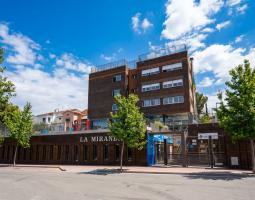
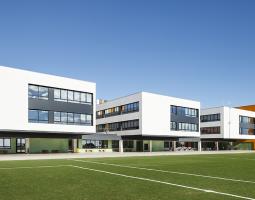
King’s College Alicante is located on the outskirts of Alicante, conveniently accessible from the city by car and public transport. The school occupies a modern, purpose-built building with state-of-the-art facilities designed for children aged 3 to 18. The campus includes a separate building for preschoolers, football and mini-football pitches, basketball and multi-purpose courts, 7 brand-new science laboratories, music classrooms equipped with 28 iMacs, a multi-purpose hall, and a cafeteria. All rooms are equipped with air conditioning and heating.
The preparatory groups (ages 3–5) have their own bathrooms, direct access to a playground with a safe surface and modern equipment. Each classroom is equipped with interactive whiteboards and has access to Wi-Fi.
The digital environment is actively developing and regularly updated: middle school students have their own Chromebooks and access to 3D printers, robotics, VR, and other technologies. iPads and laptops are already used in primary school, and from fifth grade onward there is a gradual transition to working with Chromebooks.
The school has computer labs. Its football pitches accommodate teams of five and seven players. Green Screens are available for classroom activities.
The school provides a bus service. Buses comply with the latest European regulations and have seat belts and appropriate seating for small children. A responsible adult supervises each bus route.
Admission dates and extra charges
At King's College Alicante, the academic year is divided into 3 trimesters.
- The first starts from early September to mid-December, after which winter holidays begin — from late December to early January,
- The second lasts until early April, followed by spring holidays in April,
- The third continues from late April to the end of June, after which summer holidays begin, lasting through July and August.
The school day runs from 9.00 am to 4.00 pm. A one-time enrollment fee is required to secure a place.
Summer camps run from late June to late July. Normal Day runs from 08.45 to 13.00 without lunch. Extended Day runs from 08.45 to 15.00 with lunch.
Enrolment process
Admission is open year-round. Families considering the school can tour the campus, explore its facilities, and meet members of the academic team. If an in-person visit is not possible, the school can arrange an online interview.
Enrolment statistics
A limited number of Primary places are available for children aged 2–6 who do not speak English and have demonstrated academic ability.
Perspectives
At King's College Alicante, students in the 2024/2025 academic year achieved an average score of 36 points in the Diploma program (out of a maximum of 45). According to the Education Advisers Ltd ranking, the school took first place among institutions offering the International Diploma program in Spain.
In 2026, the average IB Diploma score was 35, and the highest was 43. Bilingual diplomas accounted for 50% of the total. In IGCSE exams, 42% of grades were A*, 58% were A*–A, and 74% were A*–B.
Each year, around 80 graduates enter leading universities worldwide. Many continue their studies in the United Kingdom, including the London School of Economics, Imperial College London, Warwick University, and University College London. Some applicants choose universities in Spain, primarily in Madrid and the Valencian Community, as well as in other European countries and in the USA.
The school ranks among the top 10 IB schools in Europe. Results for students in Years 12 and 13 regularly exceed global averages across all programs. IGCSE results are well above global averages and are the highest among more than 80 schools in the Inspired Education Group. The pass rate for the Spanish PAU exams is 100%.
Entry requirements, how to apply, what is required to enrol
King's College Alicante accepts students at different stages of education, taking into account age and English level.
- Children with no knowledge of the language can enroll in preschool and early school groups (ages 2–6),
- For children aged 3–4, a school introduction visit together with parents is available. Children entering Early Years to Reception can meet their teachers at a Stay and Play event,
- From age 7, a good level of English is required.
For admission to the first grade, an assessment is conducted by the deputy head of the primary school; it is preferable that the child has already studied in an English-speaking environment and is able to read and write in English.
When transferring to primary and secondary school, students take entrance tests in English, mathematics, and non-verbal reasoning; previous grades, behavior, and interview results are also taken into account.
For admission to the eleventh grade, it is important that students have already completed the first year of (I)GCSE. Entrance exams are generally not required if the English level is confirmed, but academic performance plays a key role. For the twelfth grade, a mandatory interview is held and previous academic results are taken into account: for example, admission to A-level requires at least five (I)GCSE subjects with a grade of C or above, and good grades in the chosen subjects.
From Year 1 onward, applicants are assessed in English and mathematics. Academic reports are required for applicants who have attended school before. The minimum duration of enrollment is usually one full academic year.
Scholarships King's College in Alicante
Nsouli Scholarship Programme is a global grant project of the Inspired network, aimed at supporting talented students. At any one time, around 50 students can receive a full scholarship to study at one of the network's prestigious schools. The program is available to students aged 13–18 from around the world who demonstrate strong academic results and show talent in sport, art, or performing arts.
The Nsouli Scholars scholarship is awarded for the full duration of the recipient’s education. Several scholarships are reserved for applicants of Lebanese origin.
Institution on the map
Residence permits, citizenship and other services
- Guardianship services during the studies
- Student supervision
Review about King's College in Alicante
Recommendations on when to apply
| Language courses, schools and children's language camps | Primary and secondary education - private schools | Preparation programmes for entering universities - higher education | Higher education (after completing accredited programs A-level, IB, High School) - Bachelor, Master, MBA |
| - we recommend to apply 6-9 months before the start of the course (some camps and schools offer discounts for early booking or for lengthy study programs) - there are some very popular and high demand children's camps, where the applications need to be submitted 1 year in advance (in particular Switzerland , Great Britain , USA , Canada , Austria) | - we recommend to apply one year before the start of the training program, - some schools have a specific time frame (September-November - please specify an individual school) - some schools require tests in several stages (UKISET, internal tests of the school: English, mathematics, logics, subjects, interview, some require a personal visit) | - we recommend to apply one year before the start of the program, - for Foundation and Pathway programs, IELTS and TOEFL certificates are usually required, respectively | - recommended submission one year before the start of the program, - the deadline normally closes in January, for TOP HEIs and, as a rule, in March in other universities - for a bachelor, a Foundation or Pathway preparatory program a completed A-level, IB, High School + IELTS / TOEFL are required - for Masters you need a graduated higher education, in some cases you need a pre-Masters program - MBA requires completed higher education, work experience preferably at least 2-3 years, etc. |