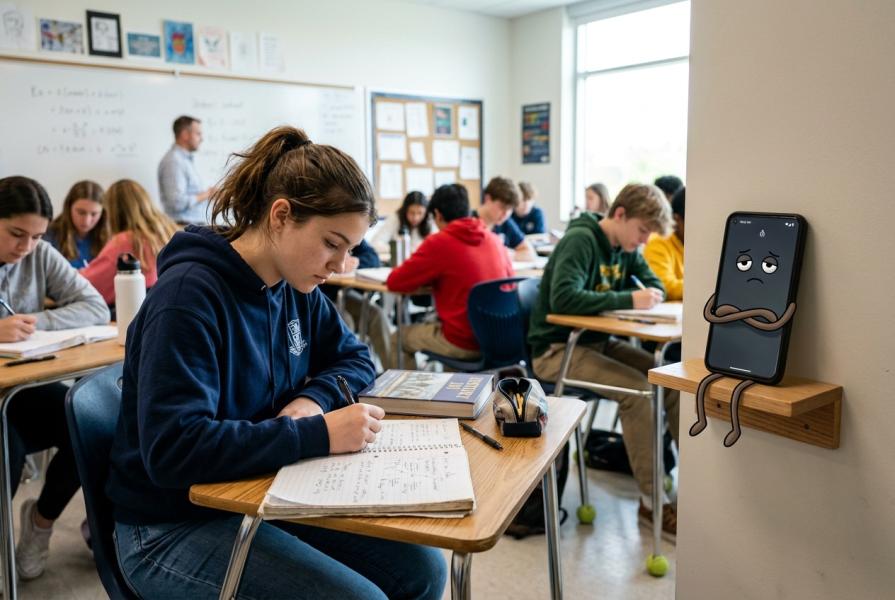
American schools have long been restricting smartphone use during the school day: restrictions have already been introduced in 39 states, as well as in Washington, D.C.
However, strict and uncompromising restrictions provoke strong pushback from children and teenagers, which is why they are increasingly being brought into the conversation on regulating this issue. Surprisingly, many support certain limits but advocate for a gradual approach rather than abrupt bans.
Students emphasize that smartphone use is not simply an escape into the digital world — it is also a way to relieve social and academic pressure, overcome social isolation, bolster self-confidence, and gain approval from online users. Since this is a generation that literally grew up with phones and tablets in hand, cutting them off from the digital world all at once is impossible — or at least very painful. Rather than confiscating phones for 6–8 hours, it is better to think through alternative ways to rest and relieve stress, and to consider digital literacy and safety.


What alternatives and solutions students have already proposed
- Introduce digital well-being and hygiene courses in schools: an objective examination of the impact of social media and AI on psychological health, sleep, and concentration levels.
- As part of a project, an advisory group tested three phone use policy options. Their decision: smartphones may not be used during classes, but may be used during breaks.
- In San Diego County, a GENUp commission was assembled from students at local schools: they stay in contact with representatives of the education system and devise ways for screen time restrictions to function as support rather than punishment.
- Valley Stream North High School (New York, USA) plans to open a digital detox room by the start of the new school year: with books, toys, and squishies, and soft ambient sound.

The nonprofit organization #HalfTheStory created the Teen Tech Council — a youth initiative that provides students with small grants to carry out phone-free projects. Over the past year, the program has supported 50 schools and reached 17,000 students. Here are the projects that received grants:
- “Creative Cart”: students can take art supplies from it during or after class to draw or make something by hand. The carts are mobile and can be moved around the entire campus.
- A phone-free quest — participants were given disposable cameras to photograph their tasks.
- A Wellness Day during exams at Democracy Prep Endurance High School (Bronx): nearly 100 students played basketball and board games, socialized, and relaxed — without access to their phones.

Participants in these initiatives already note that the atmosphere in schools implementing reasonable smartphone restrictions becomes more lively and active, with group activities growing more popular. In-person forms of interaction emerge even for shy and quiet children who previously buried themselves in the digital world.
Students are unequivocal in stating that it is fundamentally important to take their views into account in situations that directly concern them. Also government organizations are listening to them more and more often.