For partners
 Columbia University Summer Camp, Summer Camp at Columbia University


Programs and prices, tuition fees in Columbia University Summer Camp, Summer Camp at Columbia University


Economics & Finance
- Age of students: 16–18 years
- Duration: 2 weeks.
The summer program in economics and finance is aimed at high school students who want not only to study basic economic theories, but also to learn how to apply them in real-world conditions. The program is recommended for students planning to enter economic, business, and financial universities, and those who want to broaden their horizons in a key global discipline.
Participants immerse themselves in key topics, ranging from micro- and macroeconomics to investment, market dynamics and international finance —, and immediately consolidate knowledge in the format of case studies, simulations and team assignments.
The course stipulates 35 hours of academic classes, workshops, presentation and debate days. Students develop strategic thinking, data analysis skills, presentations and public speaking skills, undergo entrepreneurship preparation and gain teamwork experience. The program is built around key questions: how capital moves, why markets change, what happens when theory meets global instability.
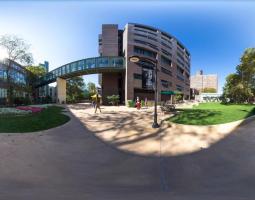
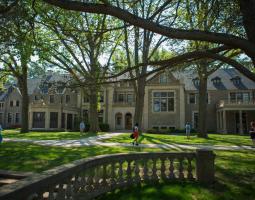
Studying is conducted on the campus of Barnard College as part of Columbia University — in the very center of Manhattan, a step away from Central Park and a few subway stops from Wall Street. This is a unique opportunity not only to study in an academic atmosphere, but also to literally find yourself at the heart of the global financial system.
Upon completing studies, participants receive an official certificate signed by management, recording the program name, dates and campus of study.
Experimental Psychology
- Age of students: 16–18 years
- Duration: 2 weeks.
The Experimental Psychology program is an opportunity for high school students to immerse themselves in modern psychology as a science: from the structure of the brain to behavioral models, personality formation, memory and cognitive biases. Participants not only study theory but also apply it in practice: they develop their own research, analyze real data, participate in simulations and group projects. Special attention is paid to topics that go beyond the school curriculum: ethics of experiments, mental disorders, the influence of childhood experience on adult life, how psychology helps cope with the challenges of the modern information environment.
The course includes 35 hours of academic classes, practical preparation, research sessions, group presentations and two key events — Challenge Day and Exhibition Day. The program develops analytical thinking, skills in working with hypotheses and the ability to structure argumentation, which is especially important for admission to psychological, social and medical faculties.
The New York city environment is organically woven into the learning experience: free time includes excursions to museums, thematic walks, cultural events. Upon completing the program, participants receive an official certificate that will serve as a good addition when entering a university.
History, Philosophy & Literature
- Age of students: 16–18 years
- Duration: 2 weeks.
The program in history, philosophy and literature is designed for high school students who want to delve deeper into the intellectual heritage of humanity — from ancient philosophical treatises to modern prose. Participants will explore how ideas have shaped culture, politics and society, learn to build compelling arguments — oral and written.
The curriculum stipulates 35 academic hours, intensive workshops, collaborative research and a final project. Students analyze texts, discuss philosophical concepts, participate in debates and writing assignments. The focus is on developing critical thinking skills, public speaking skills and in-depth work with sources.
The program provides an opportunity not only to master the theoretical foundations, but also to apply them in a modern context: within the framework of Exhibition Day and Challenge Day participants present their own projects linking humanitarian ideas to the realities of the 21st century.
Extracurricular activities include daily walks, cultural events and lectures by guest speakers from prestigious universities on the east coast. Participants receive a certificate of completion confirming academic activity, which can strengthen their portfolio when applying to universities (especially in the humanities).
Description of Columbia University Summer Camp, Summer Camp at Columbia University
- Year of foundation/opening: 2004
- Location: Barnard College campus, Manhattan, New York, USA
- Number of students: ~500
- Type of education: mixed
- Type of institution: summer school/summer camp
- Language of instruction: English.
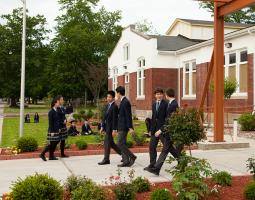
Columbia University Summer Camp in New York is a two-week academic program for high school students held in Manhattan, on the campus of Barnard College. Since 2004, it has been available as a summer school format combining intensive academic study, practical exercises and immersion in the intellectual culture of leading world universities. The program is structured as a «trial run»: classes are held in small groups, the learning process is added with discussions, practical laboratories and meetings with guest speakers.
Educational process
The studying combines academic intensity with a practical focus. Over two weeks, participants complete 35–40 hours of classes on the chosen topic – from economics to psychology. Classes are held in small groups of up to 15 people and include lectures, seminars, interactive discussions, team projects, and master classes. Special attention is paid to formats that develop critical thinking and the ability to apply knowledge in practice. Among the key elements are The Great Debate, where students defend positions on current issues, The Living Lab, which implements applied projects: from developing business ideas to modeling scientific situations.
The school day includes two academic blocks, free time for preparation, consultations with teachers, and evening discussions.
Things to know about
World-class speakers often perform at events here — among them, for example, Professor Brian Cox, a science popularizer and physicist, politicians and public figures from the USA, Canada, the EU and Great Britain.
Accommodation, meals, prices
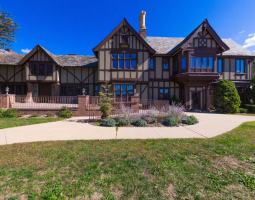
Participants of the summer camp are accommodated on the Barnard College campus, which is the residential part of Columbia University in Manhattan. Accommodation and meals are included in the program cost. Rooms are student-style, mostly with separate accommodation and shared facilities, there may be restrictions on choosing roommates.
Safety is guaranteed by 24/7 access control, accompanying counselors and a strict schedule: students under 18 are prohibited from leaving the campus without supervision.
Transfer from JFK airport is included in the cost.
Activities Columbia University Summer Camp, Summer Camp at Columbia University
Students participate in themed evenings, team quests, intellectual games and creative competitions, in the camp's signature events — The Great Debate and Exhibition Day. Guest lectures with famous scientists and experts are organized, including speeches by speakers at the level of Professor Brian Cox.
Special attention is paid to excursions around New York City. Participants visit iconic places in the city: Central Park, Times Square, The High Line, the Museum of Natural History, Brooklyn Bridge, Statue of Liberty, UN Headquarters and historical districts of Manhattan. The program may include trips to skating rinks, evening tours, bowling, karaoke, themed festivals and a graduation party. Outside the campus, students move around only accompanied by mentors.
Advantages
- Study and accommodation in the center of Manhattan on the campus of Barnard College, which is part of Columbia University.
- Small study groups (up to 15 people), 35–40 hours of lessons per shift.
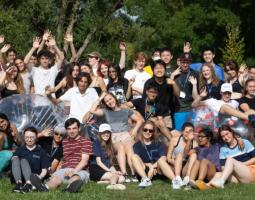
- International environment: participants from 175+ countries.
- Interactive formats: debates, workshops, project days.
- Guest lectures by renowned scientists and practitioners.
- Safe territory with 24/7 security and adult supervision.
- Diploma and academic report at the end of the studies.
Facilities and equipment at Columbia University Summer Camp, Summer Camp at Columbia University
The campus is located in the Morningside Heights area on the north of Manhattan — a quiet and safe part of the city where several universities, parks and cultural sites are situated. Nearby — Riverside Park, Teachers College campus, Columbia Law School buildings, within walking distance — 116th Street subway station (line 1), from which you can quickly reach Central Park, Times Square, museums and the business center of New York.
Classes are conducted in classrooms of Barnard College and Columbia University, based on an operating university. Students use full-fledged university classes and studios equipped for lectures, workshops, project and group work, at their disposal — a library, sports grounds, Wi-Fi, public areas.
The program stipulates both theory and practical blocks: Living Lab, debates, presentations and situation modeling. Participants have access to extensive academic and household resources, while the entire organization is focused on the safety and comfort of teenagers.
Enrolment process
- First, select a course and the date.
- Then fill out the online application (Apply Now), and register your personal account with a consultant.
- Pay the registration fee to reserve a place on the program.
- Wait for confirmation of participation and an invoice for the remaining amount. Full payment must be made no later than 90 days before the start of the course.
- Fill out the participant questionnaire, providing information about health, diet, and accommodation preferences.
- The school will send you organizational materials, including check-in instructions, transfer details, and a list of necessary items.
- Upon arrival on campus, students must register on campus, receive keys, a schedule, and participate in an introductory briefing.
Entry requirements, how to apply, what is required to enrol
The summer program in New York is designed for two weeks and takes place in several sessions, usually in June–July. Each session includes an academic block, practical classes, a cultural program, culminating in a final project presentation and graduation ceremony. There are no exam sessions here — assessment is based on participation, project work, and the final report.
Additional fees may be charged:
- for airport transfers, except JFK (transfers from/to JFK are included in the cost),
- insurance (if not arranged separately),
- visa services,
- pocket money (excursions, souvenirs, cafes),
- administrative fees for late payment or changes to the booking.
Scholarships Columbia University Summer Camp, Summer Camp at Columbia University
The summer camp periodically holds competitive scholarship and full grant programs for education. The format may vary from year to year: for example, in previous seasons, full scholarships were awarded based on essays or participation in academic olympiads; sometimes discounts were provided through partner organizations. The main criteria are — academic motivation, English language proficiency at least C1 level, and age appropriateness for the program.
You can apply together with a cover letter and supporting documents through our manager (if such an option is available from the organizing school in a specific year).
Institution on the map
Residence permits, citizenship and other services
- Guardianship services during the studies
- Student supervision
Review about Columbia University Summer Camp, Summer Camp at Columbia University
Recommendations on when to apply
| Language courses, schools and children's language camps | Primary and secondary education - private schools | Preparation programmes for entering universities - higher education | Higher education (after completing accredited programs A-level, IB, High School) - Bachelor, Master, MBA |
| - we recommend to apply 6-9 months before the start of the course (some camps and schools offer discounts for early booking or for lengthy study programs) - there are some very popular and high demand children's camps, where the applications need to be submitted 1 year in advance (in particular Switzerland , Great Britain , USA , Canada , Austria) | - we recommend to apply one year before the start of the training program, - some schools have a specific time frame (September-November - please specify an individual school) - some schools require tests in several stages (UKISET, internal tests of the school: English, mathematics, logics, subjects, interview, some require a personal visit) | - we recommend to apply one year before the start of the program, - for Foundation and Pathway programs, IELTS and TOEFL certificates are usually required, respectively | - recommended submission one year before the start of the program, - the deadline normally closes in January, for TOP HEIs and, as a rule, in March in other universities - for a bachelor, a Foundation or Pathway preparatory program a completed A-level, IB, High School + IELTS / TOEFL are required - for Masters you need a graduated higher education, in some cases you need a pre-Masters program - MBA requires completed higher education, work experience preferably at least 2-3 years, etc. |