Chigwell School


In the process of preparing the material, we referenced the following sources: Wikipedia, GOV.UK
Programs and prices, tuition fees in Chigwell School


Quick overview: British two-year course for the certificate of the General Certificate of Secondary Education, indicating the completion of the course of incomplete secondary education.
The curriculum includes 8-10 subjects - some are compulsory, some are chosen as electives. In general, at GCSE, you can study the following areas:
- English Language and Literature;
- Mathematics;
- Modern foreign language: Spanish, German, French;
- Natural sciences: chemistry, physics, biology;
- Dramatic and theatrical art, acting skills;
- History;
- Art and Design;
- Graphic design;
- Music art;
- Classical Latin;
- Geography.
Brief information: The traditional in the UK course of pre-university training is designed for 2 academic years. During this period, international students study only 3-5 of their chosen subjects: this gives the opportunity to focus on the most priority areas of knowledge, effectively prepare for admission and study at the chosen faculty.
You can choose from the following options:
- English literature;
- Mathematics;
- Design and technology;
- Economics;
- German;
- Physical culture and sports;
- Drama art;
- Spanish;
- Chemistry;
- Biology;
- Higher mathematics;
- Classical civilization;
- Greek language;
- Religious studies;
- Art and design;
- Geography;
- French;
- Latin language;
- ICT (information and communication technologies);
- History;
- Physics;
- Music art;
- Policy.
A-level certificate with high enough points gives an opportunity to enter even the most privileged universities of the country without additional examinations and entrance tests.
Description of Chigwell School
Private Chigwell School provides British and foreign children with a full education cycle - from 4 to 18 years (Pre Prep School for students 4-7 Years began its work in 2013). Founded Chigwell School was back in 1629 by the Archbishop of York, Cambridge Vice Chancellor Samuel Harsnett. Nowadays, the school very carefully treats its traditions, while not being afraid to introduce in the educational process modern pedagogical techniques and innovative approaches, the latest technology and equipment. The school was founded as a male: in 1975, girls were able to enter the senior graduation classes, and in 1997, Chigwell School completely switched to a mixed type of education.
- Boarding level: Sixth Form.
Most Chigwell pupils live locally. International students join this predominantly local school community.
The school is very welcoming to foreign students: it is believed that the rich national and cultural composition of students helps children become more open and sociable, tolerant, develops horizons and mutual respect.
Chigwell School is divided into several departments:
- Pre Prep School = 4-7 years;
- Sixth Form (graduation classes) = 16-18 years old.
Academic indicators of the school are high - every year the educational institution is included in the TOP-100 best boarding schools in the UK, and 99% of students successfully enter selected British universities from the national TOP-20, including Oxford and Cambridge. The success is facilitated by a flexible academic program (free choice of priority disciplines from a broad, diverse list), as well as attention not only to academic, but also moral development of students. They are taught to learn: to be independent, responsible, persistent and hardworking, to take your business seriously, to develop harmoniously and comprehensively. The curriculum of schoolchildren includes the following main subjects:
- English language;
- Religious Studies (Required from grades 3 through 9);
- French language (required - from 3 to 8 class, further as an elective);
- Mathematics;
- Modern foreign language;
- Physics;
- Geography (required - from 3 to 9 classes);
- Information technology;
- Biology;
- Art (required - from 3 to 9 classes);
- Chemistry;
- History (required - from 3 to 9 classes);
- Music art ( Mandatory - from 3 to 9 class).
Each student Helps not only the teaching staff, but also the personal curator, as well as the guardian (the latter is assigned to every foreign student who came to study in the UK).
Special rules are largely introduced for the representatives of the graduating classes Sixth Form. Senior students can participate in the management of the school, help solve educational, social and organizational issues, working together with the administration and teachers, organize events and general holidays. High school students attend special consultations from the school administration: they help them choose subjects and future specialties, conduct vocational guidance classes, monitor the quality of pre-university preparation. Students are told about the peculiarities and advantages of different universities, the requirements of admission commissions, help to formalize documents and register in the electronic filing system.
Students help shape school life through leadership roles, Student Councils, and participation in staff interview panels.

What makes British schools unique?
British schools stand out for their rich traditions, deep-rooted appreciation of history, and enduring values.
Educational process
The High Performance Programme offers additional support and development for high-achieving students. Once a term, participants discuss their involvement with the Academic Deputy Head, the Head of High Achievers, and a student mentor.
Every student has access to a staff team that supports their well-being. The house system works alongside the Wellbeing Curriculum, which covers five areas: emotional, career, social, financial, and physical well-being.
Year 7 students have dedicated well-being lessons taught by the physical education department. In Years 7 and 8, the enrichment program includes short mindfulness courses.
Teachers guide music scholarship recipients, monitoring their progress, helping them balance their commitments, and supporting their musical development.
Scientific achievements
In its 2023 assessment, the Independent Schools Inspectorate (ISI) rated students' academic attainment and progress as excellent.
Things to know about
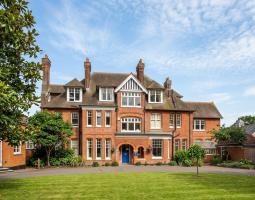
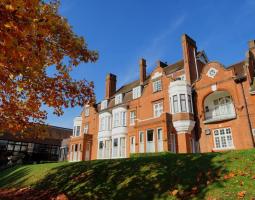
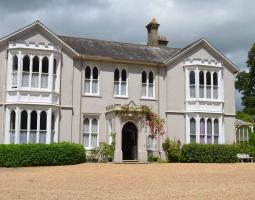
- The oldest part of Church House is thought to date to 1600. The exact construction date is unknown,
- According to school tradition, Charles Dickens stayed at Church House while writing Barnaby Rudge,
- Hainault House was built in 1874 in the Victorian Gothic style,
- The school supports its Old Chigwellians alumni community and helps former students stay in touch.
University destinations
International students leaving Chigwell School secured places at the universities below. The lists are grouped by their final year at Chigwell.
2024
- University of Edinburgh: Architecture,
- University of Cambridge: Medicine,
- Imperial College London: Material Science and Engineering,
- London School of Economics and Political Science: Economics,
- University College London: Economics,
- University of Manchester: Economics and Finance,
- University of Durham: Philosophy, Politics, and Economics,
- University College London: Economics and Business.
2023
- Sciences Po, Paris: Politics and International Studies,
- University of Amsterdam, Netherlands: Liberal Arts and Sciences,
- Minerva University, US: subject not specified,
- Oxford Brookes University: Art and Design,
- University of Bath: Economics and Mathematics,
- Imperial College London: Chemical Engineering,
- University of Bristol: Mechanical Engineering,
- King's College: European Studies,
- University of Loughborough: Sport and Exercise Science.
2022
- Charles University, Czech Republic: Philosophy, Politics and Economics,
- University of Bristol: Aerospace Engineering,
- University College London: Biological Sciences,
- University of Cambridge: Natural Sciences,
- King's College London: Physics and Philosophy,
- Queen Mary University: Medicine,
- University of St Andrews: Biology,
- Architectural Association School of Architecture, London: Architecture,
- Long Island University, USA: Pharmacology,
- University of St Andrews: Computer Science.
2021
- University of Hong Kong: Architecture,
- King's College London: Physics,
- University of Nottingham: Medicine,
- University of Surrey: Automotive Engineering,
- University of Cambridge: Engineering,
- University of St Andrews: Mathematics,
- University College London: Biochemistry,
- IE University, Madrid: International Relations,
- University of York: International Relations,
- University College London: Medicine,
- University of Hong Kong: Economics.
2020
- University College London: Economics and Business,
- University College London: Psychology with Education,
- University of Manchester: Law,
- University of Cambridge: Land Economy,
- University of Oxford: Biomedical Sciences,
- University College London: Economics,
- University College London: Mathematics,
- University of Leeds: Business Management,
- Stanford, US: major undeclared,
- University of Durham: Computer Science.
Accommodation, meals, prices
Boarders live on campus in small houses, with up to 10 students of different nationalities living alongside houseparents and their families. The houses are close together and a short walk from school facilities.
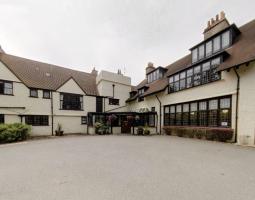
Church House and Harsnett's accommodate girls, while Hainault House is for boys. Christie's, the newest boarding house for Sixth Form girls, combines a renovated 18th-century Grade II listed building with modern accommodation.
Students in Year 3 and above can buy breakfast.
Subjects, specialties
Activities Chigwell School
Saturday sports include:
- Soccer,
- Hockey,
- Cricket.
Each sport is played for one term. Netball is also one of the school's focus sports. Sixth Form has five soccer teams, allowing boarders of different abilities to compete. In the evenings, boarders play basketball and use exercise equipment in the sports center. They can also use the swimming pool and run or walk around the school grounds.
Students can join musical groups including:
- Orchestras,
- Choirs,
- Chamber ensembles,
- Wind bands,
- Jazz groups.
The groups perform at major concerts during the year, including concerts in the local community. Visiting teachers offer individual lessons on a range of instruments.
Art and Design scholars contribute to school exhibitions and take part in internal and external competitions. Drama scholars take part in major school productions and help with the Lower School Drama Club.
Boarders regularly visit London's landmarks, museums, and exhibitions and attend university lectures. Winter activities include ice skating.
Boarding life includes formal dinners, sports nights, and screenings of classic movies in the school theater. The houses celebrate birthdays, hold parties and barbecues, decorate for Christmas, and regularly cook dinner together on Fridays.
Advantages
- The Independent Schools Inspectorate (ISI) identified a Significant Strength at the school,
- The music department has four full-time staff members and 21 visiting teachers,
- Sports scholarship recipients have access to strength and conditioning training, nutrition advice, specialist seminars, and mentoring from a sports department staff member,
- Chigwell Conversations is a series of events for parents. Guest experts include Dr Dominique Thompson and Dr Maryhan Baker. Topics include digital well-being, safety at social events, resilience, and adolescence. Informal morning meetings with school leaders are held regularly,
- Faith-based societies are available to students with different beliefs.
Facilities and equipment at Chigwell School
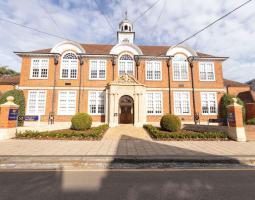
The school campus is located in the small town of Chigwell, Essex: this is the north-eastern region of London, just 17 kilometers from the center of the English capital. You can walk to the metro station in 10 minutes of the same name: it makes it easier for children to transfer and travel, gives the opportunity to regularly visit the sights and cultural sites of London.
The total campus area reaches 100 acres: there are enough historical and majestic buildings, and modern innovation centers, well-established infrastructure and the latest equipment. The structure of the campus includes:
- Modern classes and lecture halls with interactive Equipment;
- Multiple Libraries;
- Computer labs (all PCs have Internet access);
- Own Theater;
- Great Music School;
- The fields for Team games and competitions (total area - more than 50 acres);
- Modern sports center with a gymnasium;
- Cricket fields (indoor and outdoor);
- 2 hockey grounds;
- A spacious indoor pool with heated water;
- Fields for netball;
- 6 tennis courts.
In some buildings, primary school students are engaged: the kids have their own classrooms, a library and a computer class, their playgrounds and fields in the open air for games and recreation.
It lies in Green Belt countryside with views of the City of London.
The medical center is open from 08:00 to 17:00 GMT. Students can use the Wellbeing Room to take a break, reflect, or seek help from school counselors. The chaplain leads regular services in the chapel.
Hainault House is surrounded by a large garden. Christie's was fully refurbished in 2026.
Admission dates and extra charges
Tuition fee already includes:
- Studying the course;
- Tutorials, books and materials, stationery;
- Extracurricular Activities Leisure and entertainment activities, mugs and sections, excursions and walks;
- Using the entire campus infrastructure;
- Accommodation and meals (residence, full board, including lunch and snack);
- Laundry services.
Some services are paid additionally to tuition fee:
- Registration fee (Non-refun;
- Educational deposit (refundable);
- Examination Fees;
- Additional lessons (including individual lessons), English language courses EAL;
- Music and drama studios;
- Some additional Sports;
- Guardianship (registration with the agency + guardian services);
- Additional excursions and activities (optional);
- Flights to both Side;
- Transfer in both directions;
- Visa fees and services, translation and certification, courier delivery of documents;
- Consular (Paid at the Embassy);
- Mandatory medical insurance;
- Personal pocket expenses.
Extras:
- Registration fee (for a programme/course) 100 GBP
- Application Fee 400 GBP
Enrolment process
A private school tour can be arranged for your child and family.
Entry requirements, how to apply, what is required to enrol
Most children come to Chigwell School at 4, 7-8, 11-13 and 16 years - outside the main stream applications can also be considered, but individually and only with Availability of seats on the selected course. Applicants are waiting for an individual interview with the director or representative of the school, as well as testing the level of knowledge (the number and composition of the exams depend on the chosen program).
Literature and references

Institution on the map
Residence permits, citizenship and other services
- Guardianship services during the studies
- Student supervision
Review about Chigwell School
Recommendations on when to apply
| Language courses, schools and children's language camps | Primary and secondary education - private schools | Preparation programmes for entering universities - higher education | Higher education (after completing accredited programs A-level, IB, High School) - Bachelor, Master, MBA |
| - we recommend to apply 6-9 months before the start of the course (some camps and schools offer discounts for early booking or for lengthy study programs) - there are some very popular and high demand children's camps, where the applications need to be submitted 1 year in advance (in particular Switzerland , Great Britain , USA , Canada , Austria) | - we recommend to apply one year before the start of the training program, - some schools have a specific time frame (September-November - please specify an individual school) - some schools require tests in several stages (UKISET, internal tests of the school: English, mathematics, logics, subjects, interview, some require a personal visit) | - we recommend to apply one year before the start of the program, - for Foundation and Pathway programs, IELTS and TOEFL certificates are usually required, respectively | - recommended submission one year before the start of the program, - the deadline normally closes in January, for TOP HEIs and, as a rule, in March in other universities - for a bachelor, a Foundation or Pathway preparatory program a completed A-level, IB, High School + IELTS / TOEFL are required - for Masters you need a graduated higher education, in some cases you need a pre-Masters program - MBA requires completed higher education, work experience preferably at least 2-3 years, etc. |