

Study biology in Wales - 2 institutions
Current page last update date: 2026-08-08
Schools
2institutions
Show on map
Sort:
Show by:
10
18
36
72
-
 from 2950.00 £ / 10 weeks
 -
 from 6053.00 £ / term
Similar educational institutions




Show by:
10
18
36
72
The biological science industry has been actively gaining momentum and attracting young students in recent years. Science advances in different fields and opens up new opportunities for those who study it. Studying biology in Wales is a great start for a future successful career in academia and manufacturing. European standards of education, an individual approach to students, a practical orientation - all this strengthens and distinguishes the curricula in schools with the study of biology in Wales at universities comparing with other universities in neighboring countries.
Alternative destinations
Career prospects after the Wales biofaculty
Graduates of Welsh biology schools for international students and biology programs at universities in Wales can work in areas such as:
- Research fields,
- Work in HR departments,
- Pharmaceuticals,
- Ecology,
- Food industry,
- Biobank management,
- Working with established scientists,
- Education (teaching),
- Healthcare.
Top universities offering biology studies in Wales for international students
- Cardiff University. The School of Biological Sciences at the university provides students with access to world-leading research, innovative teaching, and a welcoming atmosphere. From the first days of study, students find themselves in a dynamic and stimulating research environment with modern equipment and highly qualified, research-active staff. The university offers unique courses that provide hands-on experience with cutting-edge methods and practical skills in field biology. Undergraduate programs offer the opportunity to study biology, biochemistry, biomedical sciences, zoology, and more.
- Swansea University. The university's Department of Biology has a strong reputation and attracts students from around the world. Study here is conducted under the guidance of inspiring, world-renowned scientists. The university has modern teaching and research facilities, including the Centre for Sustainable Aquatic Research, a Zoology Museum, a purpose-built research vessel, and a unique visualization center displaying multidimensional information from animal tracking data. In addition to compulsory disciplines, students can choose elective subjects from a provided list. Classes are predominantly conducted in-person, but the university also has resources such as virtual laboratories and simulated learning environments.
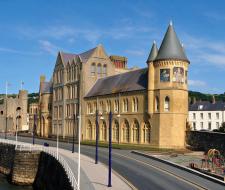
- Aberystwyth University. One of the university's institutes is the Institute of Biological, Environmental and Rural Sciences, which is an internationally recognized research and teaching center providing a unique base for research in response to global challenges: food security, bioenergy, sustainable development, and the consequences of climate change. Scientists and students at the institute conduct research on genes and molecules, whole organisms, and the environment. Academic programs at the institute include: genomics, phenomics, industrial crops, forage crops, and more.
- University of South Wales. Education in the field of biological sciences at the university is available at undergraduate and postgraduate levels. Through a well-balanced combination of scientific knowledge, practical experience, and field research, the university's graduates become well-rounded scientists. Students can additionally obtain degrees in medical sciences, covering anatomy, biochemistry, and physiology. At undergraduate level, students can choose from the following programs: biology, biomedical sciences, international wildlife biology, and medical sciences.
- Bangor University. Students in the university's biological sciences department are taught by leading global experts and award-winning lecturers who participate in various biology-related research projects using the university's first-class equipment. For additional study, the university has a natural history museum, a botanical garden, freshwater and marine aquariums, the largest underground soil laboratory in Europe, an ocean research vessel, and a working research farm. Biology can be studied at the university in the following areas: molecular ecology, biogeochemistry and plant science, microbiology, parasitology and biotechnology, evolutionary biology and conservation biology.
Reviews/Comments/Questions
There are no comments here yet