

Study biology in Germany - 23 institutions
-
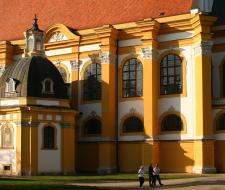 School is in top 10 best bilingual boarding schools in Germany
GermanyBerlinCurrently watching: 3from 17892 € / semester
School is in top 10 best bilingual boarding schools in Germany
GermanyBerlinCurrently watching: 3from 17892 € / semester -
 from 24000.00 € / year
 -
 In 2021 an average Abitur score made up 2.29
GermanyMunichCurrently watching: 2from 24000 € / semester
In 2021 an average Abitur score made up 2.29
GermanyMunichCurrently watching: 2from 24000 € / semester -
 from 2750.00 € / 2 weeks
 -
 from 37500.00 € / year
 -
 from 20100 € / semester
 -
 In 2022 an average IB score made up 33
GermanyHannoverCurrently watching: 2from 23370 € / semester
In 2022 an average IB score made up 33
GermanyHannoverCurrently watching: 2from 23370 € / semester -
 from 39660.00 € / year
 -
 from 30975.00 € / year
 -
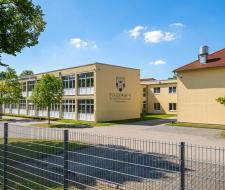 For 3 years, the average IB score is 34.9, which is higher than the world result
GermanyDüsseldorfCurrently watching: 2
For 3 years, the average IB score is 34.9, which is higher than the world result
GermanyDüsseldorfCurrently watching: 2
Many students choose to study biology in Germany because of the high quality of education at German universities and non-standard teaching methods that provide unique opportunities for students to study in depth and quality at the Faculty of Biology. In Germany, there are about 150 biology majors at universities which programs are taught in English, and there are even more German-language ones.
Prestigious educational institutions, good prospects after graduation, a fundamental theoretical foundation and solid practical skills for application in modern biochemical research programs and not only – this is just a part of what you get during and after graduation from a German university in the field of Biology. Also by choosing a state university to study, a foreign student can apply even for a state-funded place with minimal administrative costs!
Alternative destinations
Advantages of studying biology in Germany for international students
- A wide selection of research groups to join.
- Well-equipped laboratories.
- Opportunities for field trips, fieldwork, and conducting experiments.
- A large number of German master's programs are interdisciplinary, providing the extensive knowledge required in the international labor market.
Career prospects after graduating from German biology schools for international students
- Work in human resources (HR) departments,
- Environmental sector,
- Pharmaceuticals and healthcare,
- Food industry,
- Forensic medicine,
- Microbiology,
- Soil science,
- Laboratory work,
- Public administration, including environmental agencies.
Schools with biology studies in Germany at universities
- Humboldt-Universität zu Berlin. The undergraduate Biology program offers students extensive foundational preparation in organismal biology, botany, zoology, physiology, microbiology, molecular and cellular biology, and ecology. Compulsory subjects are additionally combined with mandatory disciplines: mathematics, chemistry, and physics. A unique component of the program is its close connection with the biophysics course and an emphasis on foundational knowledge of immunology. Students may optionally choose courses in the areas of parasitology, developmental biology, and theoretical biology at an advanced stage. When selecting any elective courses, students have the opportunity to practice and participate in research projects.
- Heidelberg University. The Faculty of Biological Sciences at this university is one of the most attractive faculties for life sciences in Europe in terms of research and teaching. It covers a wide range of research areas: from molecular biological sciences to biodiversity. Research questions are addressed using various experimental and computational methods: from structural biology to systems biology.
- University of Konstanz. The university has a biology faculty whose educational goals and objectives focus on the future challenges of fundamental science and promote the growing importance of biological sciences in society. Before the start of the academic year, first-year students have the opportunity to take a two-week preparatory mathematics course that helps refresh school-level knowledge, fill in gaps, and provides a "preview" of the university-level mathematics course in the biology faculty.
- University of Tuebingen. This is where Germany's first faculty of natural sciences was founded in 1863! In keeping with this tradition, the biology faculty continues to grow and develop, and today ranks among the biology faculties with the highest research performance in Germany. The biology faculty's curriculum features an ideal combination of traditional areas of biology with the most modern techniques. The focus is on practical topics in molecular biology, microbiology, neurology, evolutionary biology and ecology, plant molecular biology, cell biology, developmental biology, and ethics in life sciences.
- University of Bonn. To master the curriculum, students are given foundational knowledge in all areas of biology and in the fields of natural sciences, physics, chemistry, and mathematics during their first semesters. Alongside the theoretical foundation, students are regularly given practical assignments and exercises that develop their competencies in independent laboratory work. The university's teaching and research activities are focused on organismal biology, plant sciences, neurobiology, molecular biotechnology, molecular biomedicine, and microbiology.