

Study history in Scotland - 13 institutions
-
 In 2018 68.48% of A Level students achieved A* - A
ScotlandEdinburghCurrently watching: 8from 8465.00 £ / term
In 2018 68.48% of A Level students achieved A* - A
ScotlandEdinburghCurrently watching: 8from 8465.00 £ / term -
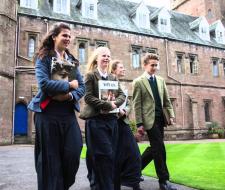 In 2019 more than 12% of A Level students achieved A*
ScotlandPerthshireCurrently watching: 7from 12500.00 £ / term
In 2019 more than 12% of A Level students achieved A*
ScotlandPerthshireCurrently watching: 7from 12500.00 £ / term -
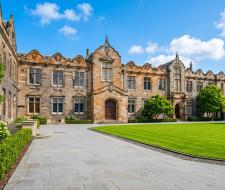 from 5410.00 £ / term
 -
 In 2018 - 97% of St Leonards entries achieved grades A*-C
ScotlandSt. AndrewsCurrently watching: 6from 31956.00 £ / year
In 2018 - 97% of St Leonards entries achieved grades A*-C
ScotlandSt. AndrewsCurrently watching: 6from 31956.00 £ / year -
 In 2018 Form IV produced a strong performance at National 5 level with 72.8% of A grades
ScotlandEdinburghCurrently watching: 5from 9630.00 £ / term
In 2018 Form IV produced a strong performance at National 5 level with 72.8% of A grades
ScotlandEdinburghCurrently watching: 5from 9630.00 £ / term -
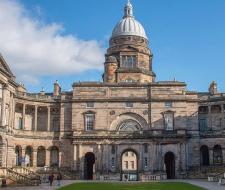 from 4000.00 £ / term
 -
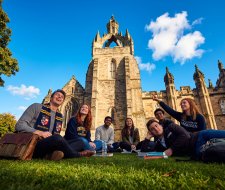 158th in the world and 22nd in the UK
ScotlandAberdeenCurrently watching: 4from 15650.00 £ / year
158th in the world and 22nd in the UK
ScotlandAberdeenCurrently watching: 4from 15650.00 £ / year -
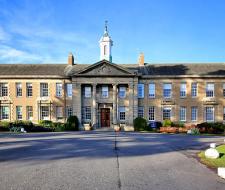 In 2018 a full 38% of A Level students achieved A*/A grades
ScotlandEdinburghCurrently watching: 4from 11960.00 £ / term
In 2018 a full 38% of A Level students achieved A*/A grades
ScotlandEdinburghCurrently watching: 4from 11960.00 £ / term -
 from 12800.00 £ / term
 -
 Excellent Teaching, Employability, Internationalisation, Facilities and Inclusivness
ScotlandGlasgowCurrently watching: 2from 4430.00 £ / term
Excellent Teaching, Employability, Internationalisation, Facilities and Inclusivness
ScotlandGlasgowCurrently watching: 2from 4430.00 £ / term
Scotland is a popular destination for world-class education: every year children from more than 180 countries come to educational institutions. History schools in Scotland are known for their strong reputations, excellent teaching quality, and innovative research.
History is a fascinating study of humanity. Students study different types of source materials and draw conclusions in a broader historical context, deepen their understanding of the past, and form an understanding of the future.
History applies to all aspects of society – political, social, economic, technological, scientific, and artistic. Studying history in Scotland for international students leads to a broadly applicable qualification and a huge variety of career paths. Graduates choose a profession as:
- Writer
- Politics
- Analytics
- Diplomat
- Journalist
- Researcher
- Teacher
- Military historian,
- Keeper of the Archives.
Alternative destinations
Studying history in Scottish schools: general information
Schools offering history studies in Scotland are among the best in the world, where distinguished historians teach and talented students learn. Expert faculty covering a wide range of topics regularly publish their own scholarly works, receive numerous international awards, and collaborate with leading world scholars whose research is incorporated into teaching.
Scottish history schools for international students offer a wide range of topics:
- The Ancient World,
- Global Empires,
- Political Radicalism,
- The Industrial Revolution,
- History and Philosophy of Science,
- The Chinese Economic Miracle,
- History of Financial Crises,
- The Late Medieval Period,
- History of Russia and Eastern Europe.
Studying history in Scotland develops many valuable skills, including:
- A deep understanding of the historian's profession,
- Writing and presenting one's own projects,
- Developing clear arguments based on independent research and analysis,
- Compiling and assessing large amounts of complex and contradictory evidence,
- Understanding various aspects of human society and culture.
Duration of study in Scotland is:
- Bachelor's degree — 4 years,
- Master's degree — 1 year.
In years 1–2 of the bachelor's program, the curriculum involves compulsory and elective topics that enrich the study of history and provide a broader, more flexible education — before specialising in a particular field, students will explore diverse subjects. Courses are available in the following directions:
- Law,
- Physics,
- Sociology,
- Political Science, and others.
The year 1–2 curriculum includes lectures and small-group meetings with instructors; students are assessed through written assignments and examinations. In years 3–4, the focus shifts to more specialized, seminar-based courses and independent study. Students write essays, pass examinations, and in year 4 conduct independent research under faculty supervision.
History schools in Scotland offer a variety of study facilities:
- Modern studying spaces equipped with computers and reference collections,
- Classes at the National Museum of Scotland,
- Teaching laboratories for archaeological research,
- Libraries with collections that include manuscripts, books, and museum artefacts gathered by alumni and researchers over many centuries, of national and international significance.
Admission requirements
- Age 18 and above (for undergraduate),
- International passport and a copy thereof,
- Photos,
- Visa,
- Certificate confirming English proficiency level (IELTS),
- Academic qualification equivalent to A-Level.
Cost of studies
Additional fees include:
- Security deposit,
- Administrative fee,
- Medical insurance.
History Schools in Scotland: Features of Study
Scottish history schools for international students offer a Bachelor's degree in History. The wide range of Master's degrees also includes:
- History and Politics,
- Economics and History,
- Archaeology and History,
- History and Sociology,
- History and Philosophy,
- Anthropology and History,
- English Language and History,
- Business Management and History,
- History and International Relations,
- History and Legal Studies,
- History and Music Studies,
- History and Spanish/Latin American Studies.
Studying history in Scotland for international students is a promising direction for obtaining a degree recognized worldwide. To enrol in an undergraduate program, students must hold a school-leaving certificate equivalent to A-Levels.
Pathway and Foundation programs are the first step towards academic success and obtaining a degree in Scotland: they help students smoothly transition into the Scottish education system, develop language and subject skills, get acquainted with student life, and join a like-minded community. The course duration is 3 semesters. At some history schools, the preparatory program is equivalent to the first year of an undergraduate degree. Upon achieving high grades, students are enrolled directly into the 2nd year of study.
Studying history in Scotland requires a good command of the English language: to obtain a degree, students must understand lectures, read, complete written assignments in academic English, and communicate fluently.
Courses are offered of two types:
- Directly on campus,
- Online classes.