INTO University of Stirling







In the process of preparing the material, we referenced the following sources: Wikipedia, Top Universities, Scotland.org, Complete University Guide, The Guardian, Computer Weekly, STV News
Programs and prices, tuition fees in INTO University of Stirling


About the educational program: Intu University of Stirling offers foreign students special educational programs for admission to the department of bachelor's degree. Applicants must have a high school diploma with good marks (12 full years of study) and the required level of English proficiency. Programs last 2, 3 or 4 semesters (6, 9 or 12 months). The length of the program depends on the level of language proficiency. If the applicant does not have the required level, he can improve it by enrolling in English language courses.
Each program consists of compulsory subjects and additional / special courses. The set of subjects is very extensive and enables each student to study those areas that interest him. For each successfully completed course, students receive "credits", by the end of education the total number of credits should reach 120. The number of hours per week is 21. Each program includes an English course for academic purposes.
A distinctive feature of the educational programs at INTU Stirling University is that after graduating from the programs graduates can enter the bachelor's degree not only in this university, but also in other universities in Scotland. The choice of available bachelor's programs is very extensive, and each graduate will find himself the sphere of interest in which he wanted to build a career in the future.
International Foundation in Business, Finance, Economics and Marketing.
- Duration of the course:
- 3 semesters (9 months);
- 4 semesters (12 months).
- Beginning: January, June, September;
- Level of English for participation in the program:
- Main modules:
- English for Academic Purposes - 20 credits;
- Mathematics & Statistics - 20 credits;
- Introduction to British culture and society - 10 credits;
- Information and communication technologies, research and training skills - 10 credits.
- Special modules:
- Calculations for business - 20 credits;
- Economy - 20 credits;
- Introduction to business - 20 credits;
- Introduction to Psychology - 20 credits;
- Law and legal systems - 20 credits;
- Principles of accounting - 20 credits;
- Media resources - 20 credits.
- Bachelor's programs:
- Accounting;
- Accounting and Business Studies;
- Accounting and Economics;
- Accounting and Finance;
- Accounting and Business Law;
- Accounting and marketing;
- Business Studies;
- Business Research and Economics;
- Business Studies and Finance;
- Business research and human resources management;
- Business Studies and Law;
- Business research and marketing;
- Economics;
- Economics and Finance;
- Economics and Marketing;
- Finance;
- Human Resource Management;
- Human Resources Management and Law;
- Management of Human Resources and Marketing;
- Management;
- Marketing;
- Retail Marketing;
- Law and Marketing;
- Sport Business Management.
International Foundation in Media, Humanities and Social Sciences.
- Duration of the course:
- 3 semesters (9 months);
- 4 semesters (12 months).
- Beginning: January, June, September;
- Level of English for participation in the program:
- 3-semester program: IELTS 5.0;
- 4-semester program: IELTS 4.5.
- Main modules:
- English language - 20 credits;
- Introduction to mathematics and statistics - 20 credits;
- British Culture and Society - 10 credits;
- ICT, research and study skills - 10 credits.
- Special modules:
- Introduction to Business - 20 credits;
- Introduction to international politics - 20 credits;
- Introduction to journalism - 20 credits;
- Psychology - 20 credits;
- Introduction to Law - 20 credits;
- Social studies - 20 credits;
- Contemporary Media - 20 credits.
- Bachelor's programs:
- Business Law;
- Business research in film and media;
- Business Studies and Law;
- Business research and marketing;
- Business Studies and Psychology;
- Criminology and Law;
- Criminology and Social Policy;
- Criminology and Sociology;
- English Studies;
- European Film and Media;
- Cinema and Media;
- Cinema and Media and Marketing;
- Cinema and Media and Psychology;
- Cinema and Media and Sociology;
- Human Resource Management and Law;
- Global Cinema;
- History;
- Human Resource Management and Psychology;
- International Politics;
- Journalism;
- Law;
- Law and Marketing;
- Marketing and Psychology;
- Philosophy;
- Politics;
- Religion;
- History of Scotland;
- Sociology and Social Policy.
International Foundation in Science, Computing and Engineering.
- Duration of the course: 2 semesters (6 months);
- Starting educational program: April;
- Level of English for participation in the program: IELTS 5.5;
- Main modules:
- Academic English - 20 credits;
- Mathematics and applied mathematics - 20 credits;
- Introduction to British culture and social studies - 10 credits;
- ICT and research skills - 10 credits.
- Special modules:
- Biology and Psychology of Man - 20 credits;
- Chemistry - 20 credits;
- General Psychology - 20 credits;
- Physics - 20 credits;
- Principles of calculations - 20 credits.
- Bachelor's programs at the University of Stirling:
- Animal Biology;
- Aquaculture;
- Biology;
- Biology and Mathematics;
- Biology and Psychology;
- Business computing;
- Computational Science;
- Computational Science and Mathematics;
- Biology of Environmental Protection and Management;
- Ecology;
- Geography of the environment;
- Environmental Science;
- Environmental Science and Mathematics;
- Information systems;
- Marine Biology;
- Mathematics and its application;
- Mathematics and Psychology;
- Psychology;
- Software Engineering.
- Bachelor's programs at the University of Dundee:
- Civil Engineering;
- Electronic Engineering;
- Electronic Engineering and Physics;
- Mechanical Engineering;
- Pharmacology.
International Foundation for Science, Sport, Computing and Engineering.
- Duration:
- 3 semesters (9 months);
- 4 semesters (12 months).
- Beginning of classes: January, June, September;
- English language level for participation:
- 3-semester program: IELTS 5.0;
- 4-semester program: IELTS 4.5.
- Main modules:
- English for Academic Education - 20 credits;
- Mathematics & Statistics - 20 credits;
- Introduction to British culture and society - 10 credits;
- Research skills in education - 10 credits.
- Modules to choose from (according to the desired specialization):
- Biological Science and Human Psychology - 40 credits;
- Chemistry - 20 credits;
- Business Research - 20 credits;
- Introduction to Computing - 20 credits;
- Introduction to general psychology - 20 credits;
- Introduction to Sport - 20 credits;
- Physics - 20 credits;
- Mathematical Sciences and Applied Mathematics - 40 credits.
- Bachelor's programs:
- The same programs that are available after the direction "Education in Science, Computing and Engineering".
About the educational course: The program of preparation for entering the Master's program is designed for international applicants with a bachelor's degree or 3-5 years of education under the Diploma program. The program lasts two semesters (6 months) and starts in January or April. For each successfully acquired subject, the student receives a certain number of credits, in total for the period of study each student must earn 120 credits. There are 21 hours of classes a week.
During the education the following types of work are applied:
- Written works;
- Writing extended essays;
- Listening tests;
- Presentations;
- Research projects.
Details of the educational program:
- Level of English to participate in the program: IELTS 6.0;
- Level of education for participation in the program: bachelor's degree or Diploma certificate (from 3 to 5 years of study);
- Modules:
- English in Master's Studies;
- Research and ICT skills for master's purposes;
- Advanced research skills;
- Mathematics in Science and Engineering;
- Empirical research and critical thinking.
- Master programs:
- For admission are available programs of all directions listed in the section "Graduate Diploma Preparation Programs".
Quick overview: English language courses are designed for international students who need to improve their level of knowledge.
Types of educational courses:
- Academic English (1-4 semesters);
- Pre-sessional English (3, 6 or 12 weeks).
Academic programs are available at the beginning of semesters, and "in-session" programs are available in the summer months. The learning process is built around the main sections of the language:
- Grammar;
- Speaking;
- Listening;
- Letter;
- Academic skills of English.
Details of educational programs:
- Academic English:
- Age: From 16 years old;
- Beginning of classes: September, January, April, June;
- Duration: 1 to 4 semesters;
- Level of English: IELTS 3.0;
- Courses:
- Development of language skills (5 hours a week);
- Integrated language skills (15 hours per week);
- Communication Skills (5 hours a week);
- English for Academic Purposes (15 hours a week);
- Preparation for the international test in English (IELTS) (5 hours a week).
- Pre-session English:
- Age: From 16 years old;
- Beginning of classes: June, July, August;
- Duration: 3, 6 or 12 weeks;
- Level of English: IELTS 5.0 - 6.0;
- 24 hours a week.;
- Aims and objectives of the program:
- The study of research English and adaptation to the device and rules of conduct in British universities;
- Study requirements, the task and expectations of higher education, culture and public life in Britain;
- Skills of correct and competent presentation in various fields and subjects of academic knowledge;
- Adaptation to life and study in Britain before starting their studies in the chosen specialty.
Quick overview:
The course at INTO University of Stirling is offered in 2 versions:
- Preparation for the university and enrollment for the 2nd year:
- Academic English Course (20 credits);
- ICT, research and academic skills (10 credits);
- Introduction to British culture and sociology (10 credits);
- Fundamentals of Mathematics and Statistics (20 credits);
- Students who plan further education in mathematical and exact specialties can also take the course "Mathematics and Applied Mathematics" (40 credits).
- University study and enrollment for the third year:
- Academic skills and ICT (10 credits);
- British Cultural Institutions (10 credits);
- English - university level (20 credits);
- Mathematics and statistics for management (20 credits).
To receive a bachelor's degree, a 4-year educational course is required. The duration of both programs is 3-4 trimester, you can start education in June, September and February. The minimum level of English for enrollment is IELTS from 5.0 and higher.
Faculty accessible to students after the completion of the course:
- Arts and Humanities;
- Sport and health sciences;
- Natural Sciences;
- Sociology and related sciences;
- Stirling Management School.
Suggested directions of bachelor's degree:
- Accounting;
- Business and Accounting;
- Accounting, business and legislation;
- Accounting and Economics;
- Finance and accounting;
- Accounting and marketing;
- Zoology;
- Applied Mathematics;
- Aquaculture;
- Biology;
- Biology and psychology;
- Business legislation;
- Business and economics;
- Business courses and film industry;
- Business & Finance;
- Business and Human Resource Management;
- Business and marketing;
- Business and Psychology;
- Cytology (cell biology);
- Computer science;
- Computer Science + Mathematics;
- Forensic science and law;
- Biology + Management;
- Forensic science + sociology;
- Ecology;
- Economics;
- Economics and finance;
- Economics and marketing;
- Environmental Sciences and geography;
- Cinematography and media;
- Cinematography and psychology;
- Finance and investment;
- Human Resource Management (+ marketing / psychology / legislation);
- Journalism;
- Law;
- Management;
- Marine Biology;
- Marketing;
- Marketing and Psychology;
- Policy;
- Psychology;
- Psychology + Sociology;
- Marketing and Sales;
- Sociology and Social Policy;
- Software Engineering;
- Management in the sports business;
- Sport and physical development.
Description of INTO University of Stirling
- Founded: 1967,
- location: Stirling, Scotland, UK,
- age: 17 and older for pathway and Academic English programs, with Pre-Sessional English available from age 16,
- language of instruction: English,
- institution type: public university,
- number of students: around 14,000,
- number of faculty members: around 1,500,
- programs: International Foundation for undergraduate preparation, Pre-Master's for entry to graduate study, Graduate Diploma, and the Academic English and Pre-Sessional English courses,
- more than 300 study options: students can begin with a broad range of subjects and specialize later,
- accommodation: residence.
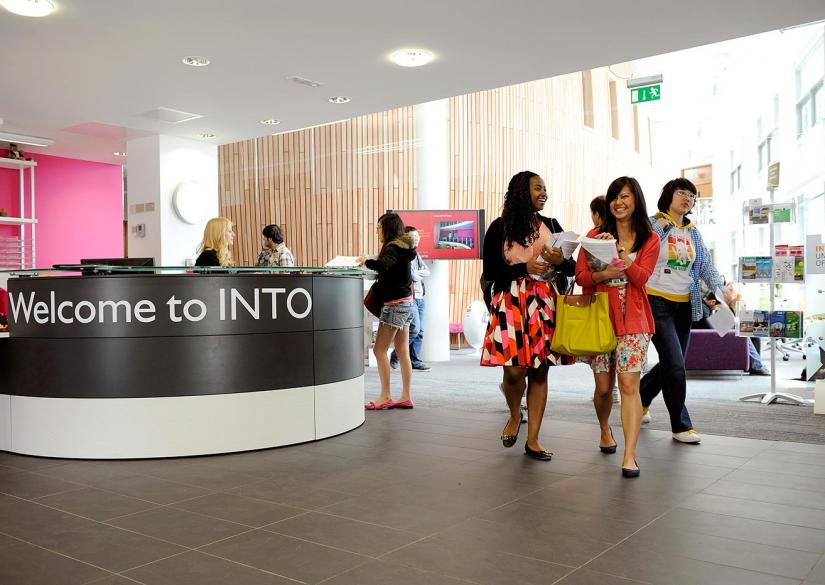
INTO University of Stirling offers preparation for undergraduate and master’s study, alongside English-language courses. Students develop academic knowledge and adapt to university education and daily life in Britain. Academic preparation lasts two to four semesters. English courses range from several weeks to four semesters and support applicants who need to improve their English or adjust before academic study. After completing preparation, students can progress to the University of Stirling or other universities in Scotland.
The University of Stirling, founded in 1967, is one of the leading universities in Scotland and Britain. Its community includes 120 nationalities, and international students account for 20% of the student body. The university belongs to the Association of Commonwealth Universities (ACU), European University Association (EUA), and Universities UK.
The university’s faculties and schools include:
- Arts and Humanities, with Communication, Media and Culture, History and Politics, Law and Philosophy, and Literature and Languages,
- Natural Sciences, with Aquaculture, Biological and Ecological Sciences, Computational Science and Mathematics, and Psychology,
- Social Sciences,
- Stirling Management School,
- Health and Sports Sciences,
- The university’s graduate school.
Strategic Plan 2030 guides the university’s development through 2030. Its five faculties bring together departments, institutes, and centers, supported by professional-service directorates. The university’s guiding principle is that students’ ability, rather than their background, determines their place.
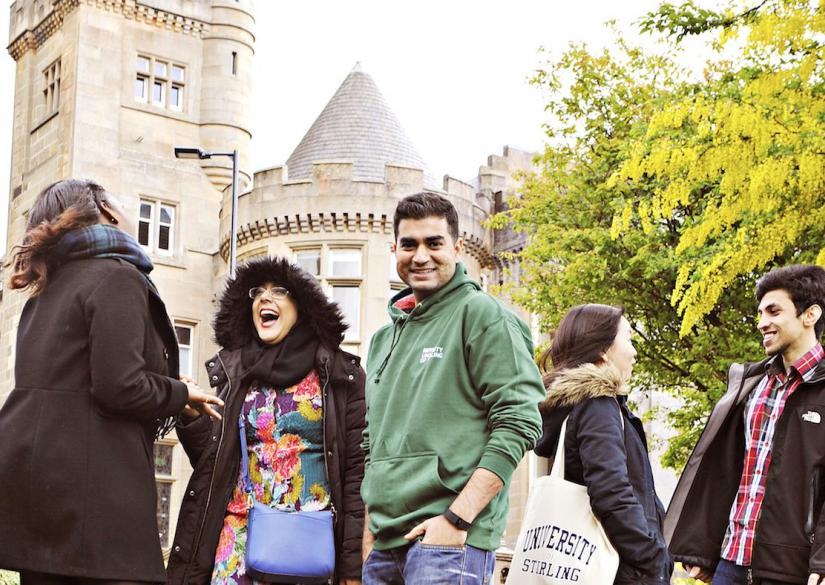
Qualified teaching staff provide academic, adjustment, and career guidance. Students take part in sports, creative activities, campus events, and excursions around Stirling and elsewhere in Britain. The university appears in British and international rankings.
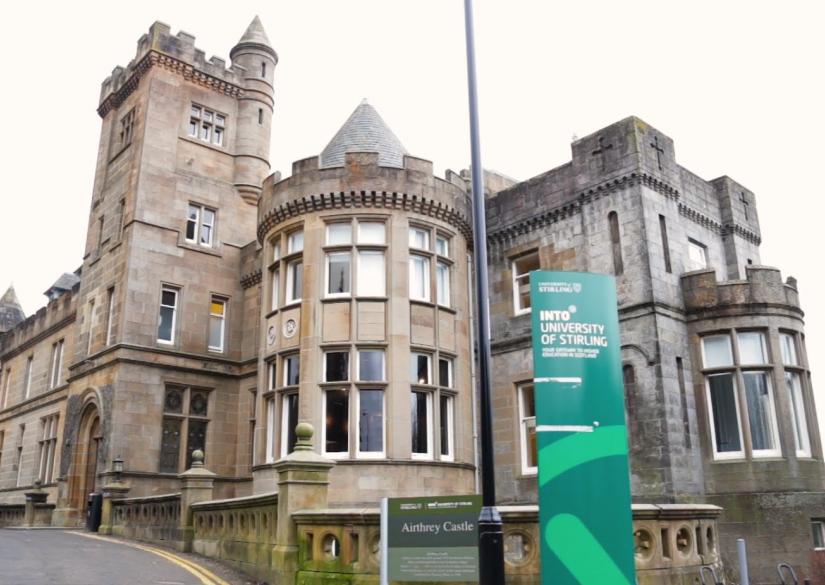
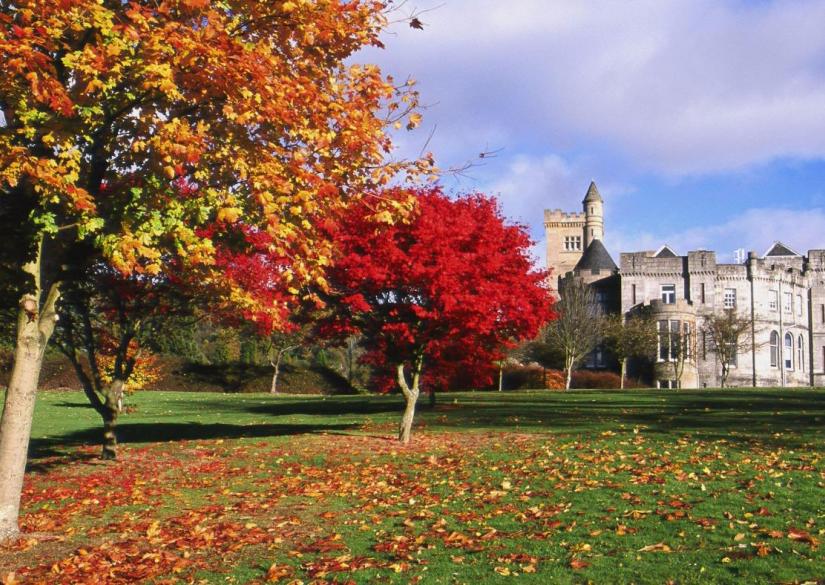
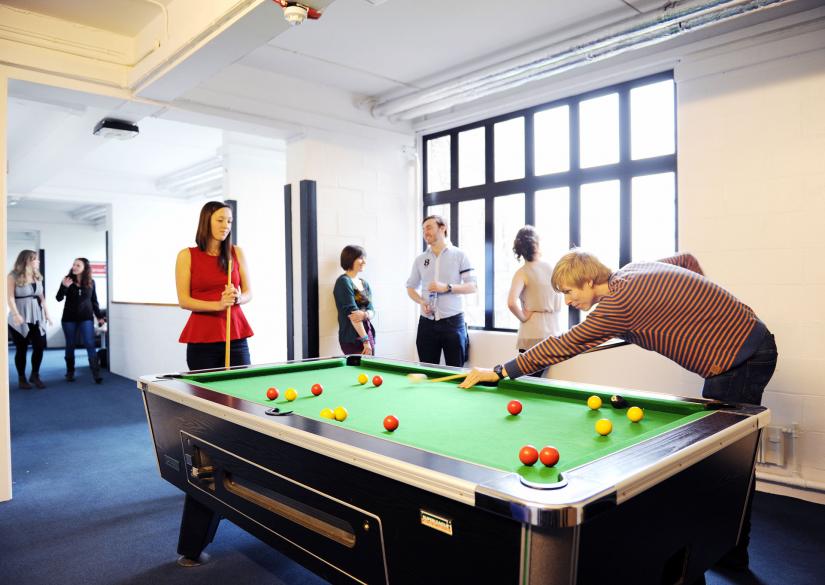
Stirling is a small city in central Scotland with a population of about 35,000. Its surroundings offer attractive scenery, clean air, and an environment free from heavy industry. The 320-acre campus includes residences, sports and leisure centers, parks, and recreation areas.
International students may face homesickness, language barriers, and adjustments to a different country, culture, and teaching style. UK universities provide support with these challenges.
Faculties and colleges
University of Stirling has five faculties that include departments, institutes, and centers.
Scientific achievements
- Daily Mail University Guide 2027 named University of Stirling UK Sports University of the Year,
- the university rose 12 places in Daily Mail University Guide 2027 and entered the UK top 50,
- at the Glasgow 2026 Commonwealth Games, 22 university athletes won a record 24 medals,
- University of Stirling was Team Scotland's Official University Partner for Glasgow 2026,
- International Student Barometer 2024 ranked the university first in the UK and among the world's top 10 for its campus environment,
- International Student Barometer 2024 ranked the university's sports facilities first in the UK and second in the world,
- QS Stars University Ratings 2024 awarded the institution five stars for teaching, employability, global engagement, research, facilities, and environmental impact.
Accommodation, meals, prices
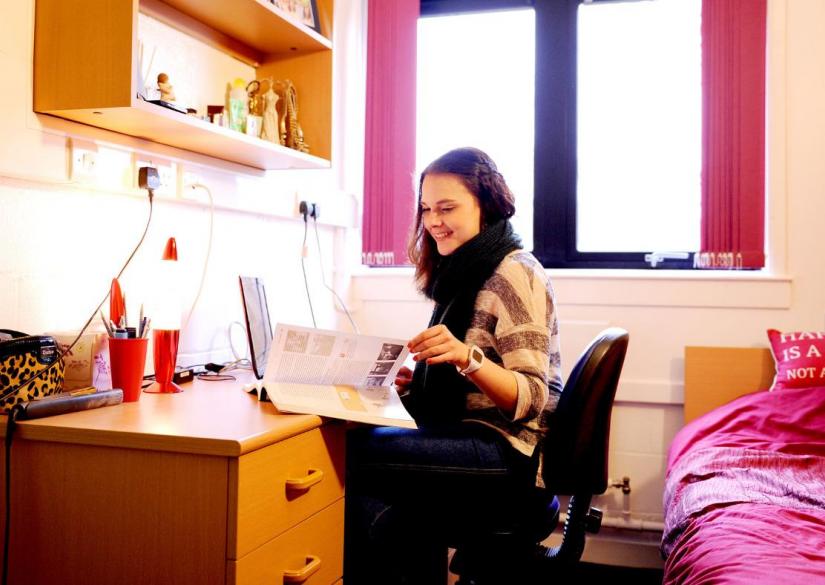
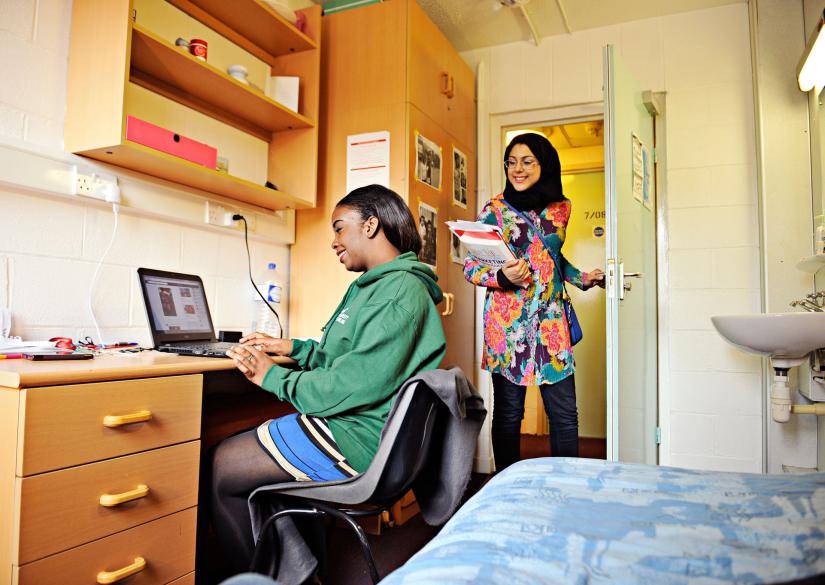
The university offers more than 2,800 rooms in housing on its grounds and in off-campus residences. Accommodation options include Beech Court and John Forty's Court. Beech Court occupies a newer building in the center of campus, a five-minute walk from the academic building. John Forty's Court is off campus, a 5–10-minute bus ride away. Students under 18 receive additional support from residence and university staff.
Room features include:
- a private bedroom with a study area,
- large beds,
- fully furnished rooms,
- a private bathroom,
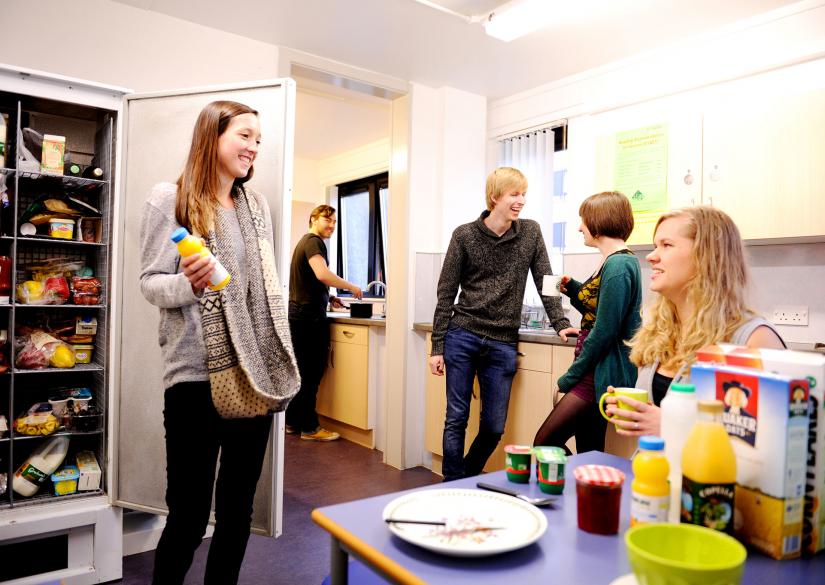
- a shared kitchen with a stove, refrigerator, microwave, kettle, and other appliances,
- an individual kitchen cupboard for each student,
- high-speed internet,
- televisions and common areas,
- standard and upgraded rooms,
- reception desks that help with day-to-day needs,
- a 24-hour support line.
Rent for university housing includes heating, electricity, contents insurance, WiFi, and housekeeping assistance. University residences have 24/7 security and emergency support. They are close to academic buildings, cafes, a cinema, the library, Students' Union, sports and health centers, and a supermarket.
There is no fixed meal plan. Campus dining options include:
- Haldane's and Pathfoot Eatery restaurants serving Scottish and international cuisine,
- Refresh bar and bistro, serving salads, hamburgers, and pizza,
- Market Street, serving home-style breakfasts and hamburgers,
- Sidewalk Deli, serving sandwiches, soups, and hot dishes,
- Studio bar, serving pizza and hot dishes,
- two Clive Ramsay's stores offering snacks, American and Italian dishes, soups, and sushi,
- four cafeterias serving coffee, snacks, and soups.
Students can also visit cafes, bars, restaurants, and stores in Stirling.
Smapse specialists can advise on accommodation and meals.
Subjects, specialties
Activities INTO University of Stirling
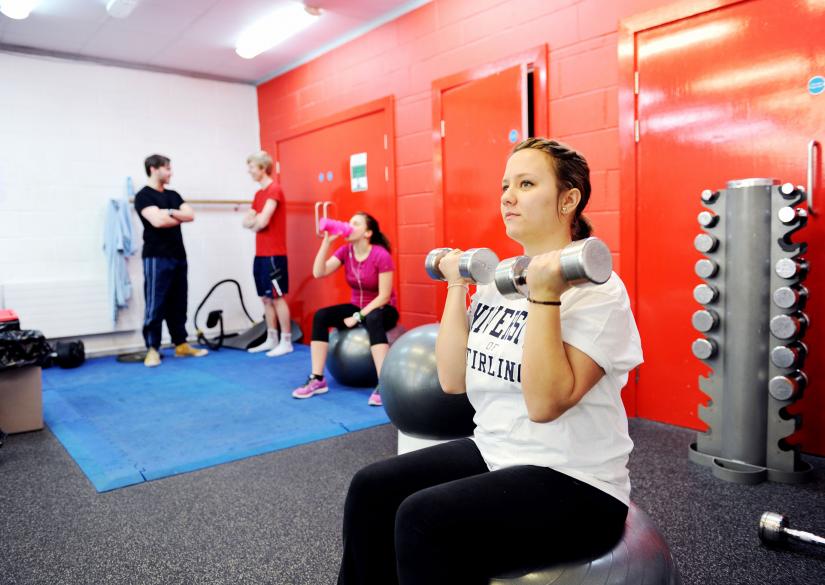
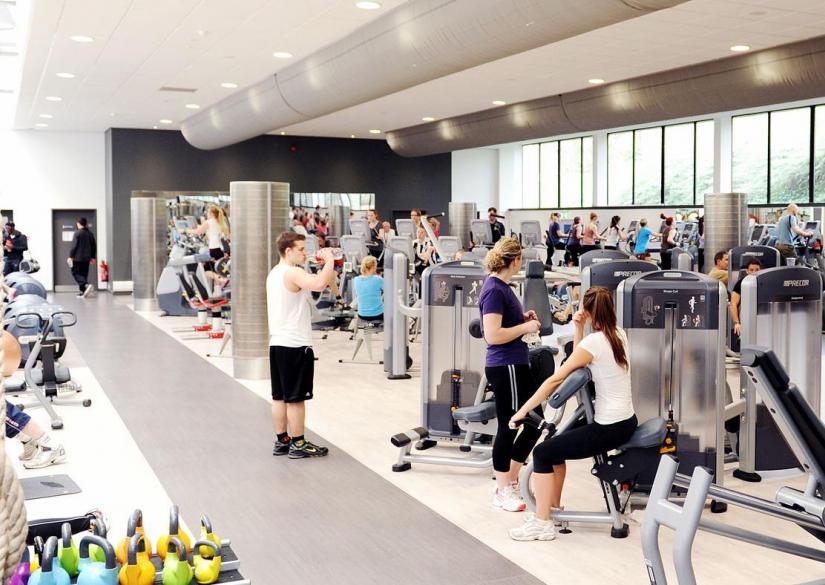
Students can choose from more than 50 sports, join clubs and sections, and train with professional coaches and mentors. Participants compete in sporting events and contests. The university's national centers deliver 6,000 swimming and tennis lessons each year.
Available sports include:
- soccer,
- basketball,
- volleyball,
- archery,
- karate and aikido,
- wrestling,
- underwater hockey,
- gymnastics and track and field,
- yoga and fitness,
- tennis and golf.
The student sport program includes clubs and the recreational Just Play Sport program. The health, fitness, and wellbeing program offers classes, workshops, consultations, and individual support.
Creative activities include:
- acting and theater,
- film,
- painting and drawing,
- engraving, printmaking, and sculpture,
- photography as an art form,
- musical instruments and ensembles.
Students work with skilled teachers, attend workshops, stage plays, and make films. Events take place on campus, while the tourist center organizes trips around Stirling, to nearby cities, and to other parts of Scotland.
Activities that help international students adjust include:
- International Night, celebrating cultures from around the world,
- dances and movie nights,
- a treasure hunt,
- sports days and games,
- attendance at soccer matches,
- excursions to the Scottish Parliament and Edinburgh Castle.
Stirling attractions and events include:
- walking and cycling,
- medieval and Renaissance architecture,
- Stirling Castle and fortress,
- Wallace Monument,
- The Smith Art Gallery and Museum,
- Highland Games,
- Cycling Festival,
- Scottish Festival of Paranormal Events,
- Festival of Museums.
Other options include:
- excursions to Glasgow and Edinburgh,
- trips to the mountains,
- hiking and other sightseeing trips,
- shopping tours.
Advantages
- University of Stirling ranked among the UK's top 16 for sports infrastructure,
- the university has Scotland's best Students' Union,
- student satisfaction with the quality of education and life was 86%, according to National Student Survey 2017,
- the university ranked first in Scotland and third in the UK for graduate employment: according to HESA 2016, nearly 97% of graduates found work or continued their studies within six months of graduation,
- the university ranked second in the UK and 47th worldwide in QS Top 50 Under 50,
- the university ranked 46th worldwide in the Young University ranking,
- the campus was named one of the six best UK “good campuses” by TARGETcareers 2016,
- University of Stirling ranked among the world's top 350 universities in World University Rankings 2018,
- preparatory programs are available for international students,
- students work with highly qualified faculty and staff,
- after completing a preparatory program, students can continue their education at universities and colleges in Scotland,
- graduates have an opportunity to find employment with companies in Scotland,
- University of Stirling holds the status of Scotland's University for Sporting Excellence.
Facilities and equipment at INTO University of Stirling
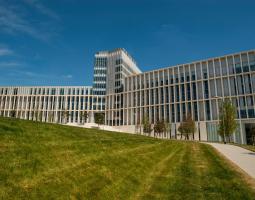
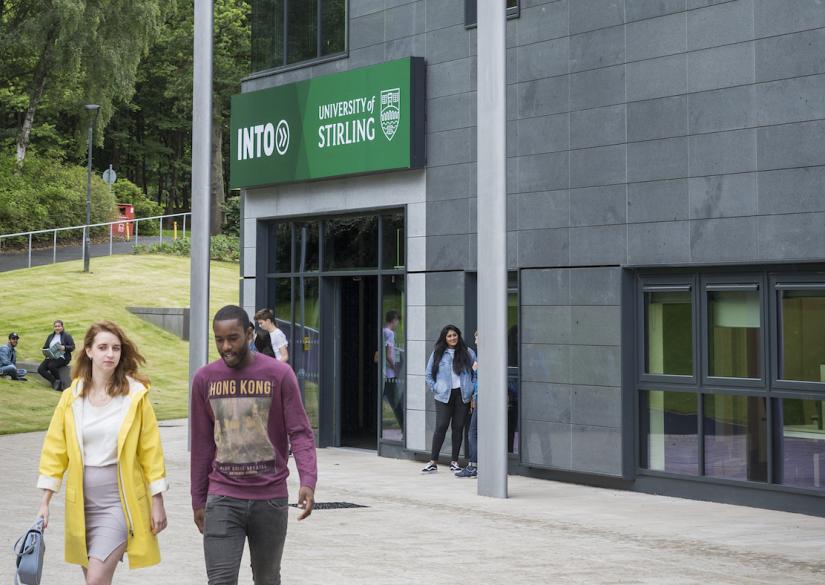
INTU Stirling University is rightfully considered one of the best in Scotland and throughout Britain in terms of quality equipment. The university is located on a campus with a total area of 320 acres on the shore of the lake. In fact, the campus is a whole city with developed infrastructure, various buildings, shops, cafes and restaurants. The route from the campus to Stirling takes no more than 10 minutes by public transport, and from Sterling to Glasgow - 40-50 minutes.
Infrastructure of the campus is well developed:
- Educational buildings;
- Administrative buildings;
- Student dormitories;
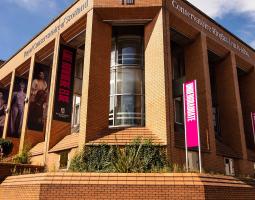
- Center for the Arts with its own cinema and theater hall;
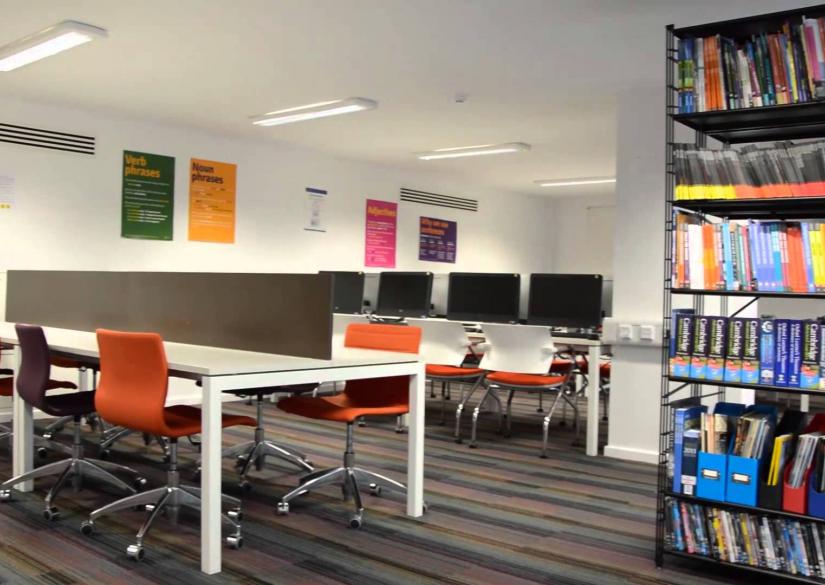
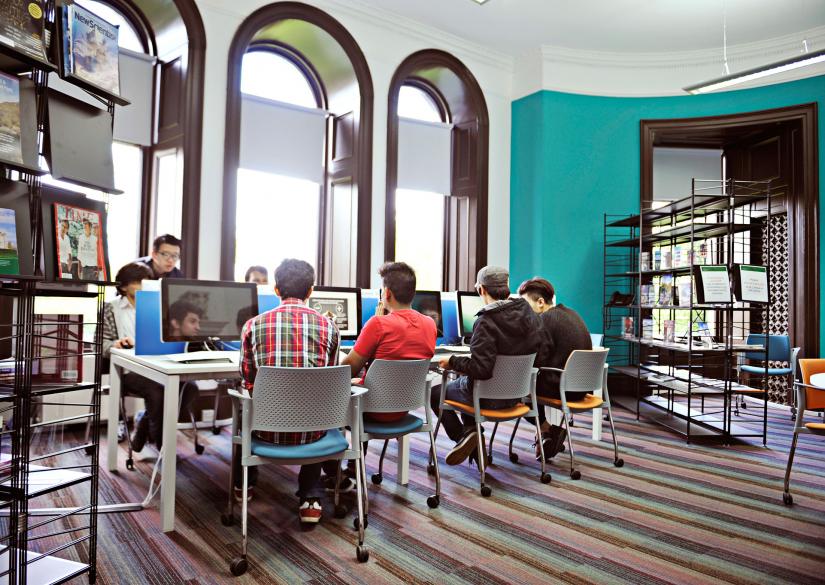
- Library;
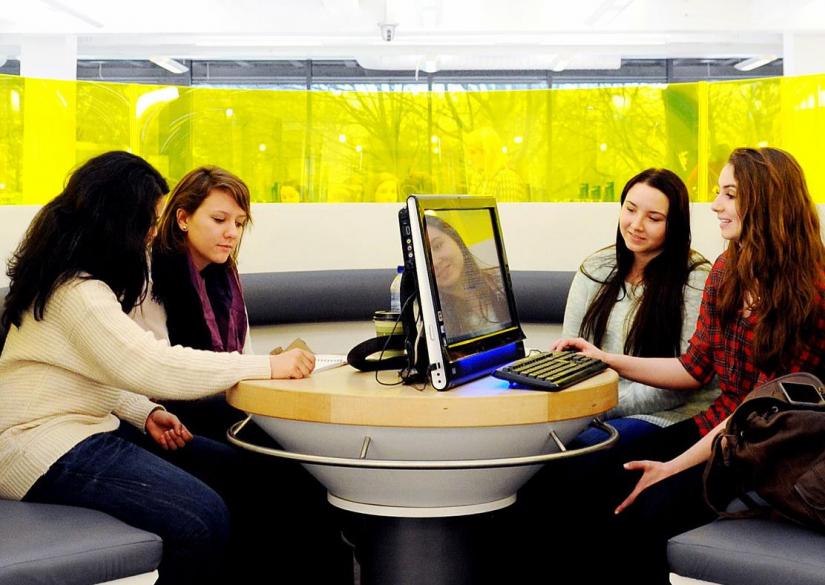
- Computer centers;
- Student center;
- Indoor pool;
- Golf course;
- Football and basketball courts;
- Fitness Centre;
- GYM's;
- High speed internet;
- Tourist agency;
- Bank, post office;
- Supermarket and pharmacy;
- Cafes and restaurants.
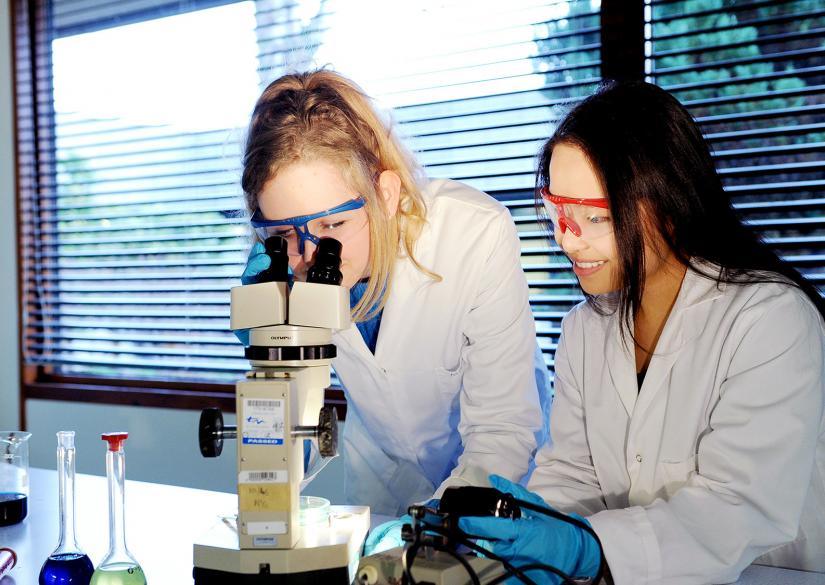
All campus premises are always in proper condition. The classrooms are bright and spacious and equipped with the latest technology. Sports facilities always have the necessary inventory.
Admission dates and extra charges
Program start periods:
- International Foundation — January, April, June, and September,
- Graduate Diploma — January and September,
- Pre-Masters — January and April,
- Academic English — January, April, June, and September,
- Pre-Sessional English — June, July, and August.
The academic calendar has autumn, winter, spring, and summer periods running approximately from September to December, January to March, April to June, and June to August, respectively.
Tuition can be paid in full before or at enrollment, or in monthly installments. Rent for university housing can be paid in full or in separate installments. In some cases, the university charges additional amounts for undergraduate and postgraduate programs.
Meal costs are calculated individually.
Additional expenses include:
- a registration charge,
- a refundable deposit,
- visa services and charges,
- study materials,
- insurance,
- a consular charge,
- airport transfers,
- round-trip airfare,
- transportation,
- personal spending money.
Enrolment process
Part-time study can begin in January or September. Smapse specialists support applicants throughout enrollment.
Perspectives
According to Graduate Outcomes 2023-24, HESA, 94% of University of Stirling graduates were employed or pursuing further study 15 months after graduation.
Entry requirements, how to apply, what is required to enrol
International Foundation requirements:
- age 17 or older,
- completion of secondary school with a good academic record,
- for the 2-semester program, an IELTS score of 5.5,
- for the 3-semester program, an IELTS score of 5.0,
- for the 4-semester program, an IELTS score of 4.5,
- an interview with a university staff member,
- a test to determine the applicant's level of knowledge.
Graduate Diploma requirements:
- age 17 or older,
- a bachelor's degree or Diploma certificate,
- an IELTS score of 5.5,
- an interview with a university staff member,
- a test to determine the applicant's level of knowledge.
Pre-Masters requirements:
- age 17 or older,
- a bachelor's degree or Diploma with high grades,
- an IELTS score of 6.0,
- an interview with a university staff member,
- a test to determine the applicant's level of knowledge.
Academic English requirements:
- age 17 or older,
- a minimum IELTS score of 3.0.
Pre-Sessional English requirements:
- age 16 or older,
- an IELTS score from 5.0 to 6.0.
Applicants who need a visa to study in the UK cannot enroll in part-time programs.
Scholarships INTO University of Stirling
- University of Stirling offers funding opportunities for students from different countries and social backgrounds,
- scholarships are available to participants in the high performance sport program, helping them balance their studies with training and competition.
Literature and references
-
University of Stirling — Wiki

-
University of Stirling — Scotland
-
University of Stirling : Rankings, Fees & Courses Details
-
University of Stirling Ranking UK 2023 / 2024 — Complete University Guide
-
University guide 2023: University of Stirling — The Guardian
-
University of Stirling taps into Alation data catalogue technology
-
Pioneering brain lab allows researchers to 'see into minds of toddlers'
Institution on the map
Residence permits, citizenship and other services
- Guardianship services during the studies
- Student supervision
Review about INTO University of Stirling
Recommendations on when to apply
| Language courses, schools and children's language camps | Primary and secondary education - private schools | Preparation programmes for entering universities - higher education | Higher education (after completing accredited programs A-level, IB, High School) - Bachelor, Master, MBA |
| - we recommend to apply 6-9 months before the start of the course (some camps and schools offer discounts for early booking or for lengthy study programs) - there are some very popular and high demand children's camps, where the applications need to be submitted 1 year in advance (in particular Switzerland , Great Britain , USA , Canada , Austria) | - we recommend to apply one year before the start of the training program, - some schools have a specific time frame (September-November - please specify an individual school) - some schools require tests in several stages (UKISET, internal tests of the school: English, mathematics, logics, subjects, interview, some require a personal visit) | - we recommend to apply one year before the start of the program, - for Foundation and Pathway programs, IELTS and TOEFL certificates are usually required, respectively | - recommended submission one year before the start of the program, - the deadline normally closes in January, for TOP HEIs and, as a rule, in March in other universities - for a bachelor, a Foundation or Pathway preparatory program a completed A-level, IB, High School + IELTS / TOEFL are required - for Masters you need a graduated higher education, in some cases you need a pre-Masters program - MBA requires completed higher education, work experience preferably at least 2-3 years, etc. |