
Secondary education in Ireland for international students
- Secondary Schools in Ireland
- How to apply to secondary Schools in Ireland for foreign students?
- Secondary Schools in Ireland. Cost and fees for foreign students
- Student visas and immigration rules for foreign secondary students in Ireland
- Structure of secondary education in Ireland
- Exams, grading and university entry from Irish secondary schools
- Literature and references
-
 from 9990.00 € / year
-
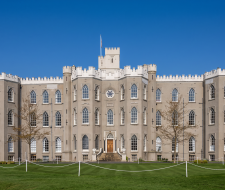 from 19700.00 € / year
-
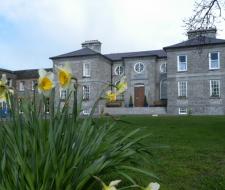 from 20450.00 € / year
-

-
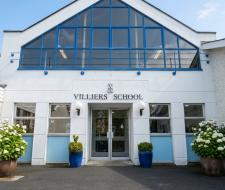 from 13900 € / semester
-
 from 10000.00 € / semester
-
 from 7050.00 € / year
-
 from 2960.00 € / 25 weeks
-
 from 10925.00 £ / term
-
 from 27800.00 € / year
Nowadays, TOP-15 Irish secondary schools accept international students from the age of 12, after grade 7,8,9,10. Foreign students can study in daytime private schools (with accommodation in a host family) and in private boarding schools and houses (with accommodation in the residence on campus). In addition, after graduating from the middle and high school, foreign students can enter prestigious universities in Ireland without entrance exams.
Alternative destinations
Secondary Schools in Ireland
Ireland provides a choice of 15 outstanding secondary schools that offer a variety of courses and programs which are fully aligned with the highest international educational standards. For international students, Ireland offers a compelling opportunity to pursue education while enjoying exciting culture and exploring the country's rich heritage.
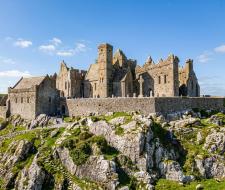
Ireland's landscape is steeped in legends and adorned with historical landmarks. Indeed, it's hard to find a region without ancient castles and forts, and awe-inspiring temple complexes. In addition, Ireland reveals its beauty, presenting velvety valleys and lush emerald green hills, all in a mild climate.
Ireland is known for its social well-being, and the Irish are among the friendliest nations in Europe. The cities and towns across the country offer a secure environment, it ideally suits for foreign students and tourists. Ireland caters to the needs of residents and visitors with well-established infrastructure, affordable housing, transportation services, and dining options.
Furthermore, many international students opt for an education in Ireland due to its exceptional blend of affordability and quality. The educational framework in Ireland closely mirrors the British system: students typically commence their academic journey in primary school, spanning up to 12 years, before transitioning to secondary school, culminating at the ages of 17 or 18 with the award of their certificates.
How to apply to secondary Schools in Ireland for foreign students?
In Ireland, secondary education is an essential phase in the academic journey of students, offering a foundation for higher education or vocational pursuits. Understanding the application process and the various nuances of the Irish educational structure is important to ensure an easy transition. Ireland boasts a mix of public, private, and voluntary secondary schools. Each school might have its own admission policy. Some schools might require an entrance examination, while others could prioritize an interview. Documentation is a pivotal part of the application process. Foreign students need to provide academic transcripts from their previous school, translated into English if necessary. Confirmation of residence, a copy of the student's passport, and even references will be required. Additionally, because of the difference in curriculums across countries, it is probably beneficial to provide a short description or syllabus of the courses the student has previously taken. Moreover, proficiency in English is mostly a prerequisite, so non-native speakers are required to submit scores from English language exams like IELTS or TOEFL. While applying to secondary schools in Ireland as an international student involves multiple steps, thorough research and timely preparation can simplify the journey. Understanding school requirements and ensuring all documentation is in order will extensively increase the chances of a successful application.
Secondary Schools in Ireland. Cost and fees for foreign students
Secondary education in Ireland is often seen as an attractive option for foreign students due to its high standards and globally recognized qualifications. However, while education at the primary and post-primary levels in public schools is free for Irish nationals and EU citizens, foreign students from non-EU countries may be required to pay fees. The cost structure varies depending on the type of secondary school. Public schools, often referred to as "community" or "comprehensive" schools, are funded by the state. For non-EU students, these schools might charge from €3,000 to €7,000 per annum. Private or fee-paying schools, which do not rely solely on state funding, can have annual charges ranging from €6,000 to as high as €20,000 or more, especially at elite institutions. These amounts cover tuition, school infrastructure, and other related costs. Apart from the tuition, there are additional expenses to factor in. Books, uniforms, extracurricular activities, and school trips can add to the overall budget. Furthermore, as many foreign learners opt for boarding facilities, it's essential to consider residential charges, which vary substantially depending on the school and the amenities it provides. Boarding fees can range anywhere from €4,000 to €12,000 annually.
While Ireland offers an excellent secondary education system, foreign students, particularly those from non-EU countries, need to be prepared for the associated costs. It's crucial for families to conduct thorough research and plan their finances accordingly to ensure a smooth and enriching educational experience for their children in the Emerald Isle.
Student visas and immigration rules for foreign secondary students in Ireland
Students who need a visa to study at an Irish secondary school need a Short Stay 'C' visa for stays of up to 90 days, or a Long Stay 'D' visa for longer stays.
Every applicant needs a letter of enrollment, and school fees must be paid before arrival. Non-EEA secondary students may receive Stamp 2A permission. For an academic year, visa applicants must show access to at least €10,000 in addition to course fees. Private medical insurance is mandatory, and students present confirmation of cover when they register their permission.
First-time immigration registration is in person for non-EEA students who are required to register. Children under 16 are generally exempt from registration. The standard registration fee is €300, but students under 18 are exempt. Unaccompanied students under 18 need a guardian in Ireland.
For unaccompanied students under 18, Garda clearance is required for their accommodation.
Structure of secondary education in Ireland
Education is compulsory in Ireland from the age of six until sixteen or completion of three years of second-level education, whichever is later. Secondary education combines two cycles with an optional Transition Year that helps international students progress through school.
- Junior Cycle — a three-year program leading to the Junior Cycle examinations,
- Transition Year — an optional year after Junior Cycle, used for work experience, projects, and wider study,
- Senior Cycle — a two- or three-year program, depending on whether Transition Year is taken, that prepares students for the Leaving Certificate examination.
The Leaving Certificate is the final school examination in Ireland, and its results are used for admission to Irish universities. This structure gives international students a clear path from the Junior Cycle through the Senior Cycle and on to higher education.
Exams, grading and university entry from Irish secondary schools
The Leaving Certificate's revised grading scale aligns the certificate more closely with other European secondary qualifications, including the Scottish Highers, English A-Levels and the International Baccalaureate. Its results are recognized as a university entrance qualification across much of Europe. There is no automatic mutual recognition of secondary qualifications within the EU, so students planning to continue abroad should confirm requirements with the receiving institution in advance.
Applicants for Irish higher education usually also show confirmation of English-language proficiency as part of the entry requirements. Students who need extra preparation before enrollment can take preparatory English courses, offered at many universities and at dedicated English schools.
Learning programs-summary information
| Name | Meaning | Equivalent | Min. age | Duration, years |
Next stage | Cost |
|---|---|---|---|---|---|---|
| GCSE | General certificate of secondary education | secondary education (non-accomplished) | 14 | 1–2 | A-Levels | 15,000 USD+ |
| A-Levels | Advanced level | secondary education (accomplished) | 16 | 2 | University | 15,000 USD+ |
| BTEC | Business and Technology Education Board | secondary special education | 14 | 2–3 | University/ work | 15,000 USD+ |
| Oxbridge Preparation | Preparing for Oxford and Cambridge | secondary education (accomplished) | 17 | 1 | University | 15,000 USD+ |
| International Baccalaureate | International baccalaureate | secondary education (accomplished) | 16 | 2 | University | 18,000 USD+ |
| Foundation/ Pathway Year | Preparatory year | admission to the 1st year of university | 17 | 1 | University | 14,000 USD+ |
| NCUK | The Northern consortium | 2 year university | 17,5 | 1 | 2 year University of NCUK | 13,000 USD+ |
| Special Preparation (Medics/Math/Business) | Specialized training | - | 14 | optional | optional | 4,000 USD+ |
| Academic English | Academic English | Language school | 8 + | 6–12 months | School or University | 8,000 USD+ |
Advantages and disadvantages of English schools
| Advantages | Disadvantages |
|---|---|
| The opportunity to enter the best universities in England, USA, Canada, Switzerland, Europe, the world | Expensive |
| High quality of education and academic standards | Strong workload |
| Perfect English after graduation | The need to change the social environment; it takes time to adapt |
| Useful contacts | The difficulty of choosing the most suitable school for the child, requires a qualified specialist |
Top 21 boarding colleges in England 2027
| 1 | Cardiff Sixth Form College |
| 2 | National Mathematics and Science College |
| 3 | Abbey College Cambridge |
| 4 | d'Overbroeck's College |
| 5 | MPW London |
| 6 | CATS Cambridge |
| 7 | Kensington Park |
| 8 | DLD London |
| 9 | King's College St Michael’s |
| 10 | Bellerbys Cambridge |
| 11 | Chelsea Independent College |
| 12 | MPW Cambridge |
| 13 | Bellerbys Brighton |
| 14 | CATS London |
| 15 | St Clare's Oxford |
| 16 | Bishopstrow College |
| 17 | CATS Canterbury |
| 18 | Bellerbys London |
| 19 | Ealing Independent College |
| 20 | Cambridge Tutors College |
| 21 | Abbey Manchester |
Literature and references
-
Best Secondary Schools in Ireland

-
Best schools in Dublin and Ireland considered by expats
-
Cost of living and tuition fees in Ireland
-
Education in Ireland
-
A Basic Guide to the Irish School System
-
School terms in primary and post-primary school in Ireland
-
Structure of Educational System of Ireland
-
Education in the Republic of Ireland — Wiki